
Listen to this Post
🌆 Introduction: A New Era of Smart Traffic in Europe
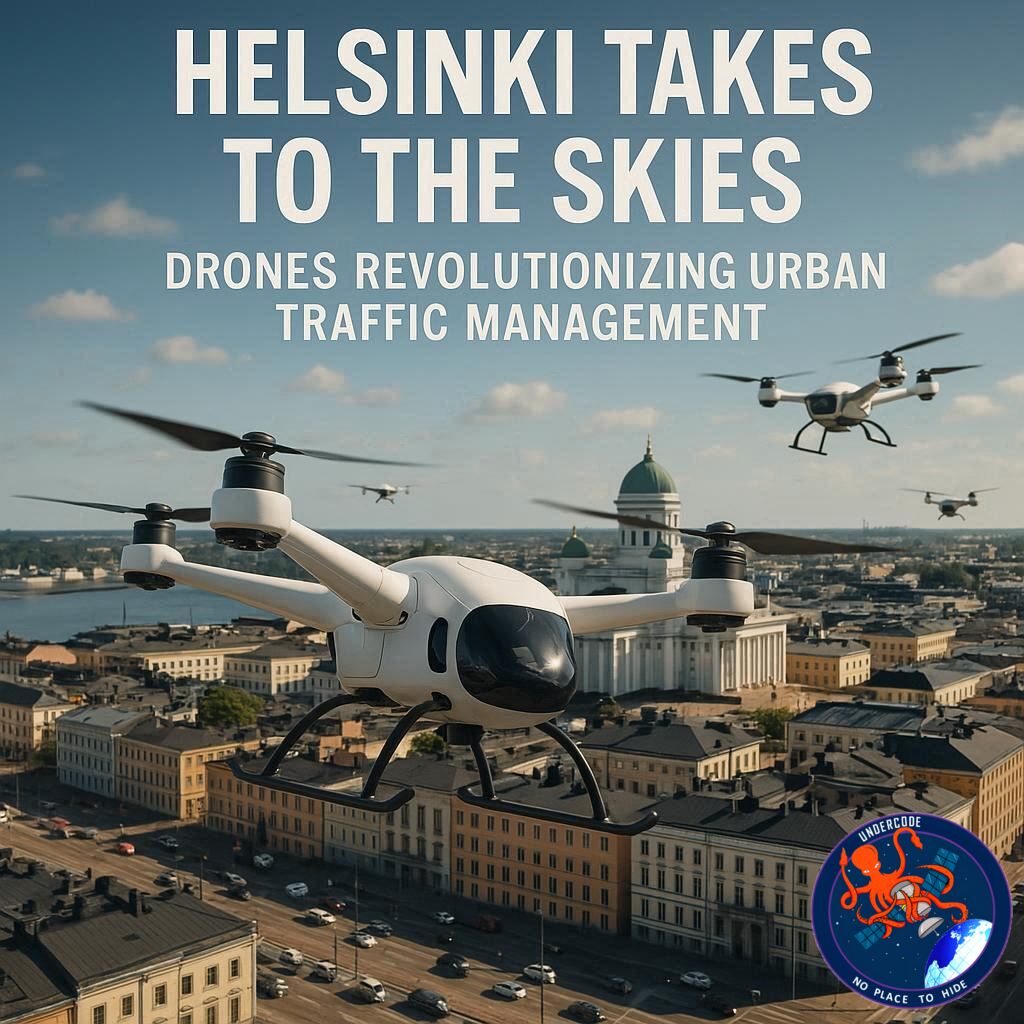
In the bustling capital of Finland, a silent revolution is unfolding above the streets. Helsinki is using drones and artificial intelligence (AI) to untangle one of the most complex urban challenges — traffic congestion. From ferry passengers to electric scooters, this AI-powered aerial network observes, analyzes, and predicts how every movement impacts the city’s rhythm. This groundbreaking initiative could redefine how modern cities manage transportation, balancing efficiency, sustainability, and privacy.
🛰️ Smart Eyes in the Sky: A the Initiative
Since 2023, Helsinki has launched fleets of drones to monitor its busiest transport hub — the West Harbour, which handles over six million ferry passengers annually. These drones track cars, trams, scooters, cyclists, and pedestrians to collect data that AI then processes to simulate and improve city-wide traffic flow.
The project, led by Forum Virium Helsinki, aims to use AI for better coordination between public transport modes and reduce peak-time congestion. Data captured by drones are processed by Swiss startup Mobilysis, whose AI systems classify vehicles, track movement patterns, and build “digital twins” — virtual replicas of the real-world traffic ecosystem. These digital twins allow engineers to test and optimize solutions before deploying them on the streets.
Privacy remains a concern. Mobilysis ensures compliance with GDPR laws, emphasizing that only anonymized data are used. Yet, experts like Dr. Alina Wernick from the University of Tübingen caution that citizens might still feel uneasy about drones recording overhead, as transparency doesn’t always guarantee trust.
The EU-funded ACUMEN Project, involving multiple European countries, supports this effort under the Horizon Europe programme. It explores how AI-guided recommendations — like suggesting alternative routes or off-peak travel incentives — could promote eco-friendly mobility and meet climate goals. Helsinki’s final AI traffic management framework is expected in May 2026, potentially serving as a blueprint for cities across Europe.
💡 What Undercode Say:
The integration of drones and AI into traffic systems isn’t just about convenience — it’s a transformation in how cities think, plan, and evolve. Let’s break down the deeper implications and insights from this ambitious Finnish experiment.
🚗 Data-Driven Mobility
The core value of this project lies in data precision. Drones can monitor thousands of micro-movements simultaneously, allowing AI to identify patterns invisible to traditional sensors or cameras. For example, by observing ferry arrivals, AI can predict how tram or taxi demands surge within minutes — optimizing transit readiness in real time.
🧠 Digital Twins and Predictive Urbanism
The creation of AI-powered digital twins represents a leap toward predictive urban management. Instead of reacting to traffic jams, Helsinki can now simulate and prevent them. This aligns with the broader shift in urban planning — from reactive control to proactive intelligence.
🌍 Sustainability in Motion
By analyzing multimodal travel behaviors, Helsinki’s drones could encourage green mobility. Imagine an app that suggests biking over driving, not just for convenience but based on live environmental data. If implemented widely, this could significantly reduce the city’s carbon footprint, aligning with the EU’s Green Deal goals.
🔐 Privacy vs. Progress
Even with GDPR safeguards, drone surveillance raises ethical questions. The trust gap between technology and the public remains a key challenge. Citizens often see drones as intrusive, and even anonymized footage can be misinterpreted. To bridge this, cities must ensure radical transparency — informing citizens not just that data is collected, but how it benefits them directly.
🏙️ Economic and Social Ripple Effects
A smoother traffic system means reduced fuel waste, better logistics, and increased productivity. For port cities like Helsinki, efficient transport directly supports tourism, shipping, and trade. Moreover, this tech could improve emergency response times — predicting congestion around hospitals or critical routes in real-time.
⚙️ Europe’s Vision for Connected Cities
The ACUMEN project symbolizes Europe’s collective vision for smart, connected cities. With similar pilots in Amsterdam, Athens, and Luxembourg, the results could inform a continent-wide model of AI-driven mobility. This also positions Europe as a global leader in ethical AI deployment, where innovation meets privacy protection.
🚦 The Human Factor
Ultimately, the success of this initiative depends on citizen engagement. Without public trust, even the most advanced AI systems face backlash. Helsinki’s proactive communication strategy — openly sharing how drones are used — sets a benchmark for civic transparency in tech adoption.
🔍 Analytical Outlook
If successful, Helsinki’s AI-drones could save millions in annual traffic management costs, cut emissions by up to 15%, and reduce commute times by 20% across busy routes. However, the real breakthrough lies not in technology alone but in data ethics and inclusive innovation — ensuring that every citizen benefits equally from digital transformation.
✅ Fact Checker Results
The ACUMEN project is officially funded by the EU Horizon Europe Programme.
Data collection follows GDPR-compliant standards, confirmed by Forum Virium Helsinki and Mobilysis.
Privacy concerns are valid but mitigated through anonymized, bird’s-eye data processing.
🔮 Prediction
In the coming years, Helsinki’s AI-drones will likely become the foundation for smart mobility systems across Europe. Expect a surge in AI-integrated traffic simulations, eco-transport incentives, and privacy-first urban planning tools. As drone-based analytics mature, cities will evolve from chaotic road networks into intelligent ecosystems, where every movement counts — and every second is optimized.
🕵️📝✔️Let’s dive deep and fact‑check.
References:
Reported By: www.euronews.com
Extra Source Hub:
https://www.quora.com/topic/Technology
Wikipedia
OpenAi & Undercode AI
Image Source:
Unsplash
Undercode AI DI v2
🔐JOIN OUR CYBER WORLD [ CVE News • HackMonitor • UndercodeNews ]
📢 Follow UndercodeNews & Stay Tuned:
𝕏 formerly Twitter 🐦 | @ Threads | 🔗 Linkedin | 🦋BlueSky | 🐘Mastodon


