
Listen to this Post
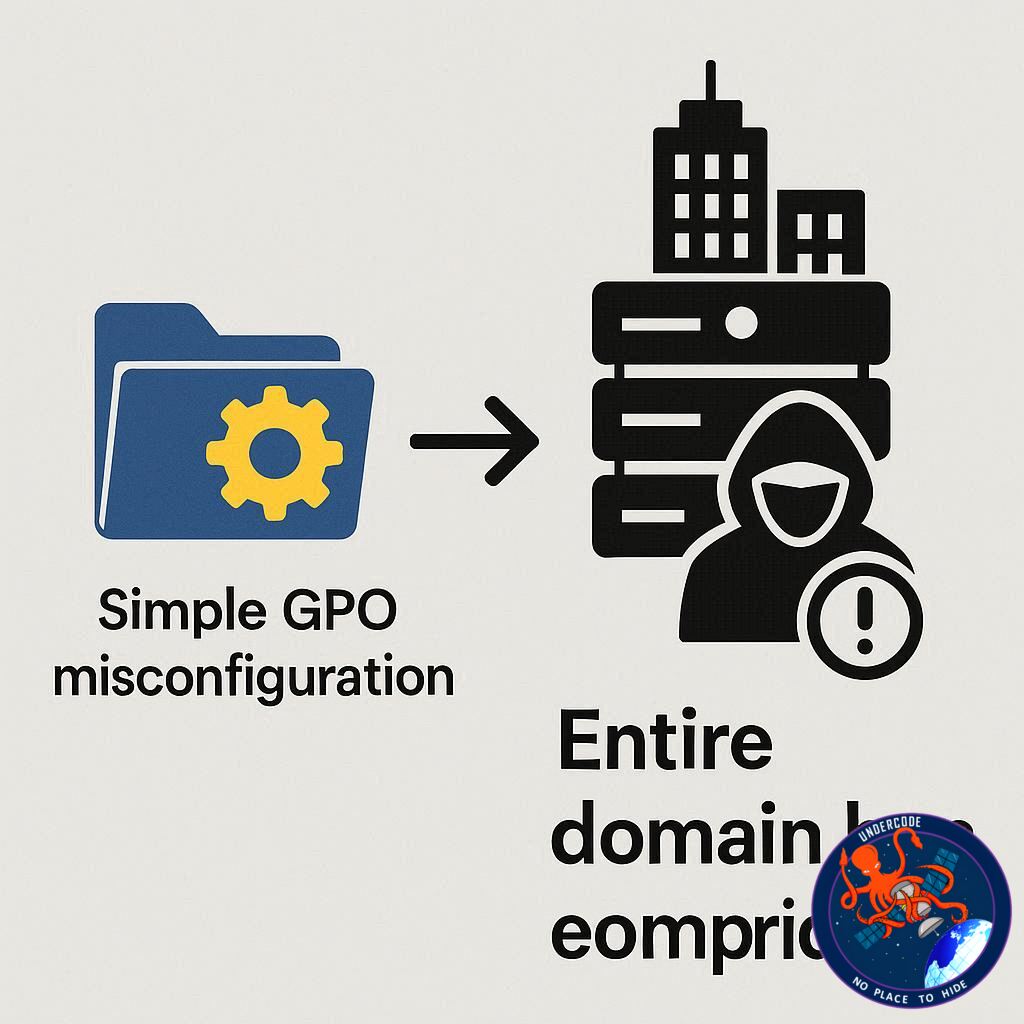
Introduction: A Silent Door Into Active Directory
In the world of cybersecurity, not every breach begins with sophisticated malware or zero-day exploits. Sometimes, the most dangerous vulnerabilities are hiding in plain sight, quietly embedded in everyday configurations. One such overlooked risk lies in Group Policy Objects, commonly known as GPOs. These are essential tools used by administrators to manage systems across a network, but when misconfigured, they can become a powerful weapon in the hands of attackers.
A recent cybersecurity alert highlights how low-privilege users with delegated permissions can abuse GPOs to execute malicious scripts, escalate privileges, and ultimately gain control over an entire domain. This issue is not theoretical. It is actively being exploited using publicly available tools such as pyGPOAbuse and SharpGPOAbuse. The implications are severe, especially for organizations that rely heavily on Active Directory without strict permission controls.
At the same time, a separate ransomware incident involving a company in Germany linked to a threat actor known as Qilin adds further urgency to the conversation. It reinforces the idea that attackers are constantly evolving, and even small missteps in configuration can lead to major breaches.
The Hidden Risk Behind GPO Delegation
Group Policy Objects are designed to simplify system administration. They allow administrators to enforce rules, deploy software, and run scripts across multiple machines. However, when edit permissions are delegated to users who are not fully trusted or properly monitored, the entire system becomes vulnerable.
Low-privilege users with delegated rights can modify GPOs in ways that are not immediately obvious. By injecting malicious scripts or scheduled tasks into these policies, they can execute code across all systems that the GPO affects. This creates a powerful entry point for attackers who may already have limited access to the network.
The real danger lies in the trust that systems place in GPOs. Once a malicious change is introduced, it is automatically propagated across the network without raising immediate suspicion. This allows attackers to move laterally, escalate privileges, and establish persistence without triggering traditional security alerts.
Tools That Turn Misconfigurations Into Full Compromise
The rise of tools like pyGPOAbuse and SharpGPOAbuse has made it easier than ever for attackers to exploit these weaknesses. These tools are specifically designed to manipulate GPOs, allowing attackers to inject malicious payloads, create scheduled tasks, and modify security settings.
What makes these tools particularly dangerous is their accessibility. They are publicly available and relatively easy to use, lowering the barrier for entry for less sophisticated attackers. This means that even individuals with limited technical expertise can carry out advanced attacks if they gain access to a vulnerable system.
Once a GPO is compromised, attackers can escalate their privileges to domain administrator level. From there, they gain full control over the network, including the ability to create new accounts, access sensitive data, and disable security measures.
From Low Privilege to Domain Controller Control
The escalation path from a low-privilege user to full domain control is surprisingly straightforward in these scenarios. It begins with identifying a GPO that the attacker has permission to edit. From there, they inject a malicious script that runs with elevated privileges when applied to target systems.
As the script executes, it can perform actions such as adding the attacker to privileged groups, extracting credentials, or creating backdoors for future access. Over time, this leads to complete control over the domain controller, which is the central authority in an Active Directory environment.
This level of access is the ultimate goal for many attackers. It allows them to manipulate the entire network, deploy ransomware, and exfiltrate sensitive data without resistance.
Persistence That Survives Detection
One of the most concerning aspects of GPO abuse is the persistence it provides. Even if an attacker is detected and removed, the malicious changes to the GPO may remain in place. This means that the attacker can regain access simply by reconnecting to the network.
Traditional security tools often struggle to detect these types of attacks because they rely on legitimate system functions. Since GPOs are a standard part of Windows environments, malicious activity can blend in with normal operations.
This makes it essential for organizations to implement strict monitoring and auditing of GPO changes. Without proper oversight, these attacks can go unnoticed for extended periods.
A Broader Context: Ransomware Still Thriving
The mention of a ransomware incident in Germany linked to the Qilin threat actor serves as a reminder that these vulnerabilities are not isolated. Attackers often combine multiple techniques to achieve their اهداف, and GPO abuse can be a key component in a larger attack chain.
Ransomware groups are constantly looking for ways to gain initial access and escalate privileges. Misconfigured GPOs provide an ideal opportunity to do both. Once inside, attackers can deploy ransomware across the network, encrypting critical systems and demanding payment for their release.
The lack of detailed information about the incident suggests that many organizations are still struggling to fully understand and disclose the extent of such breaches.
What Undercode Say:
The Illusion of Control in Enterprise Networks
Organizations often assume that their internal networks are secure simply because they are behind firewalls and protected by antivirus software. This belief creates a false sense of security that attackers are quick to exploit. GPO abuse is a perfect example of how internal weaknesses can be more dangerous than external threats.
Delegation Without Accountability Is a Recipe for Disaster
Delegating permissions is necessary in large organizations, but it must be done carefully. When users are given edit rights without proper oversight, it creates opportunities for abuse. This is not just a technical issue. It is a governance problem that requires clear policies and accountability.
Tools Are Neutral, But Access Changes Everything
The existence of tools like pyGPOAbuse and SharpGPOAbuse is not inherently a problem. These tools can be used for legitimate security testing. However, in the wrong hands, they become powerful weapons. The real issue is not the tools themselves, but the access that allows them to be used effectively.
Detection Is Falling Behind Exploitation
Security solutions are often reactive, focusing on known threats and signatures. GPO abuse, on the other hand, leverages legitimate system behavior, making it difficult to detect. This highlights the need for more advanced monitoring techniques that focus on behavior rather than signatures.
Persistence Is the New Battlefield
Modern attackers are not just looking for quick wins. They want long-term access. GPO abuse provides a level of persistence that is hard to remove, making it a valuable technique in their arsenal. Organizations need to shift their focus from prevention to resilience and recovery.
The Human Factor Cannot Be Ignored
Technology alone cannot solve this problem. Human decisions play a critical role in security. Misconfigurations, poor permission management, and lack of awareness all contribute to vulnerabilities. Training and awareness are just as important as technical controls.
Ransomware Is Evolving, Not Slowing Down
The ransomware incident mentioned is a reminder that this threat is far from over. Attackers are becoming more strategic, combining different techniques to maximize their impact. GPO abuse fits perfectly into this strategy, providing both access and control.
Active Directory Remains a Prime Target
Active Directory is the backbone of many enterprise networks. This makes it a high-value target for attackers. Any weakness in its configuration can have far-reaching consequences. Securing Active Directory should be a top priority for any organization.
Prevention Requires a Multi-Layered Approach
There is no single solution to this problem. Organizations need to implement multiple layers of security, including strict access controls, regular audits, and continuous monitoring. This approach reduces the risk of a single point of failure.
The Cost of Neglect Is Too High
Ignoring these risks can lead to severe consequences, including data breaches, financial losses, and reputational damage. The cost of prevention is significantly lower than the cost of recovery. Organizations must take proactive steps to secure their systems.
Fact Checker Results
GPO abuse as a privilege escalation method is a well-documented and real-world attack vector. ✅
Tools like pyGPOAbuse and SharpGPOAbuse are publicly available and actively used in security testing and attacks. ✅
Ransomware groups frequently exploit misconfigurations to gain deeper access into networks. ✅
Prediction
GPO abuse will become a standard technique in future ransomware campaigns due to its stealth and effectiveness. 🔮
Organizations will begin investing more in Active Directory auditing and privilege management solutions. 🔮
Attackers will increasingly combine configuration abuse with automation tools to scale their operations. 🔮
🕵️📝✔️Let’s dive deep and fact‑check.
References:
Reported By: x.com
Extra Source Hub (Possible Sources for article):
https://www.reddit.com/r/AskReddit
Wikipedia
OpenAi & Undercode AI
Image Source:
Unsplash
Undercode AI DI v2
Bing
🔐JOIN OUR CYBER WORLD [ CVE News • HackMonitor • UndercodeNews ]
📢 Follow UndercodeNews & Stay Tuned:
𝕏 formerly Twitter 🐦 | @ Threads | 🔗 Linkedin | 🦋BlueSky | 🐘Mastodon


