
Listen to this Post
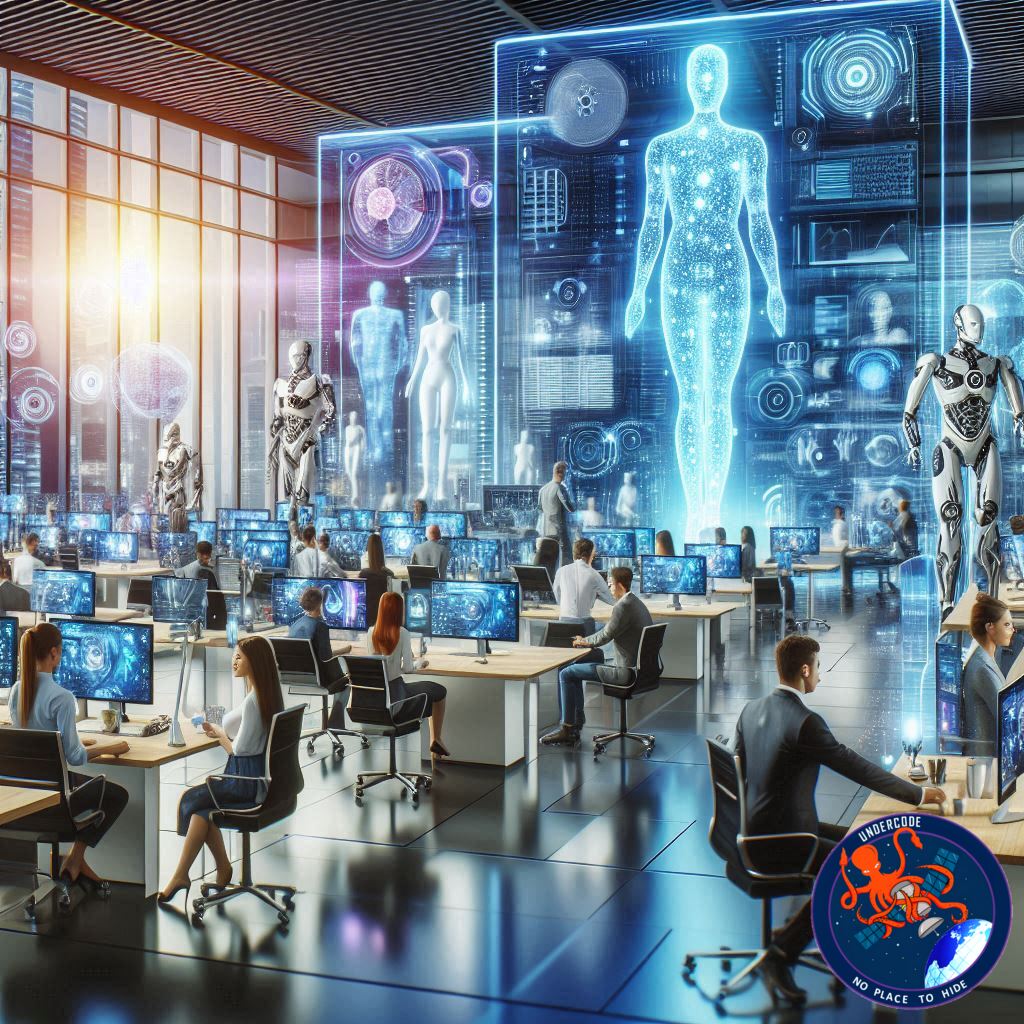
Artificial intelligence is no longer a futuristic concept—it’s poised to reshape the very fabric of how we work. While many companies have already begun leveraging AI for analytics or automation, the coming wave of AI agents promises a complete transformation. These agents will not only perform tasks for us but also redefine the tools, systems, and processes we rely on every day. According to Boomi CEO Steve Lucas, the workplace as we know it will become almost unrecognizable in the next few years, as AI agents integrate into every aspect of enterprise operations.
AI Agents Will Become Ubiquitous
Lucas envisions a future where billions, if not trillions, of AI agents operate across enterprises, automating tasks and ensuring consistency. Drawing a parallel to the evolution of self-driving cars, he explains that what starts as a basic, incremental technology will eventually become highly sophisticated. Just as autonomous vehicles now navigate traffic, recognize signals, and manage complex routes, AI agents will monitor data, manage processes, and execute tasks without human intervention. A simple example includes agents that clean and validate address data in seconds, a task that traditionally required specialized tools and manual oversight. These agents will be omnipresent, providing operational support across virtually all business functions.
AI Will Consume Traditional Software
According to Lucas, the software industry will face a dramatic shift. Traditional applications may no longer exist as standalone products but instead function as underlying constructs within AI systems. AI agents will take over functions currently handled by specialized software—from CRM management to expense approvals. The interface of work will no longer be the software itself, but the AI agent facilitating it. Professionals may soon find that they can simply converse with an AI agent, instructing it verbally to handle complex tasks that previously required multiple platforms and logins. This evolution marks a fundamental change in both enterprise IT and the role of human employees.
The Disappearance of System Logins
A major consequence of AI integration is the elimination of traditional system logins. Large enterprise platforms like Salesforce, Workday, and SAP will function quietly in the background, while AI agents serve as the “experience layer.” Employees will interact with the AI agent verbally, visually, or audibly, bypassing conventional interfaces entirely. This activation layer will bridge the gap between conversational AI and enterprise systems, ensuring proper integration, governance, and workflow management. The AI activation layer will be crucial for achieving tangible business outcomes and overcoming the current limitations of AI adoption, as highlighted by research showing that 95% of enterprises are not yet realizing measurable revenue or growth from AI initiatives.
The Speed of Change
Lucas emphasizes the pace of transformation. Just three years after the release of ChatGPT, AI is already altering workplaces. He predicts that within two to three years, AI agents will dominate enterprise operations, automating routine decisions, approvals, and data management. Employees may never log into another system, with agents automatically managing calendars, expense reports, and operational checks. What seems futuristic today will soon be standard practice, and businesses that fail to adapt may quickly fall behind.
What Undercode Say: The Deep Implications of AI Agents
The integration of AI agents into workplaces represents a structural shift, not merely an incremental improvement. Organizations will transition from software-centric processes to AI-centric workflows, fundamentally altering the value proposition of IT departments and traditional software vendors. Data quality, compliance, and operational accuracy will be increasingly maintained by intelligent agents, reducing human error and increasing efficiency.
Moreover, the AI “experience layer” will redefine user interactions. Rather than navigating dashboards, employees will issue commands or request updates conversationally, receiving real-time insights and automated execution. This implies a massive reduction in the cognitive load of employees, freeing them to focus on strategy, creativity, and decision-making rather than routine tasks.
The activation layer Lucas describes will become a critical architectural component, acting as the connective tissue between AI interfaces and enterprise systems of record. This layer will need to ensure secure data exchange, enforce governance policies, and integrate seamlessly with legacy systems. Its importance cannot be overstated; businesses that neglect it risk fragmented workflows, poor compliance, and inefficient AI utilization.
From a strategic perspective, companies will have to rethink talent allocation. Traditional IT roles, software management, and administrative functions may diminish, while AI management, agent oversight, and data strategy become central. Leaders must invest in AI literacy and agent-based operational design to remain competitive.
The proliferation of AI agents also raises ethical and operational questions. Automated decision-making introduces the need for transparency, auditability, and accountability. While AI agents can accelerate work, businesses will need robust governance frameworks to ensure ethical and legal compliance. Additionally, companies must prepare for a period of disruption as AI gradually replaces routine functions, necessitating careful change management.
This transformation also signals a broader shift in enterprise culture. Workplaces will become more flexible, with AI handling repetitive, low-value tasks. Human employees will increasingly occupy high-value, judgment-intensive roles. The psychological and social impact of this change—employee adaptation, skill retraining, and redefining human-AI collaboration—will become a central challenge for organizations.
Finally, businesses that embrace AI agent ecosystems early will likely gain a competitive edge. The combination of automated workflows, real-time intelligence, and reduced operational friction can significantly accelerate growth and innovation. In contrast, slow adopters risk lagging behind in efficiency, agility, and employee satisfaction.
Fact Checker Results
✅ AI agents are already being integrated into enterprise workflows and can automate tasks previously handled by humans.
✅ Predictions about AI replacing traditional software align with ongoing trends in AI-driven enterprise platforms.
❌ The timeline of “billions of agents in two years” is speculative, as adoption rates vary across industries.
Prediction
📊 Over the next five years, AI agents will dominate enterprise operations, turning software into invisible infrastructure.
📊 System logins and conventional software interfaces will largely vanish in favor of conversational AI agents.
📊 Organizations that build robust AI activation layers and governance frameworks will achieve the highest efficiency, operational accuracy, and competitive advantage.
🕵️📝✔️Let’s dive deep and fact‑check.
References:
Reported By: www.zdnet.com
Extra Source Hub (Possible Sources for article):
https://www.github.com
Wikipedia
OpenAi & Undercode AI
Image Source:
Unsplash
Undercode AI DI v2
Bing
🔐JOIN OUR CYBER WORLD [ CVE News • HackMonitor • UndercodeNews ]
📢 Follow UndercodeNews & Stay Tuned:
𝕏 formerly Twitter 🐦 | @ Threads | 🔗 Linkedin | 🦋BlueSky | 🐘Mastodon


