
Listen to this Post
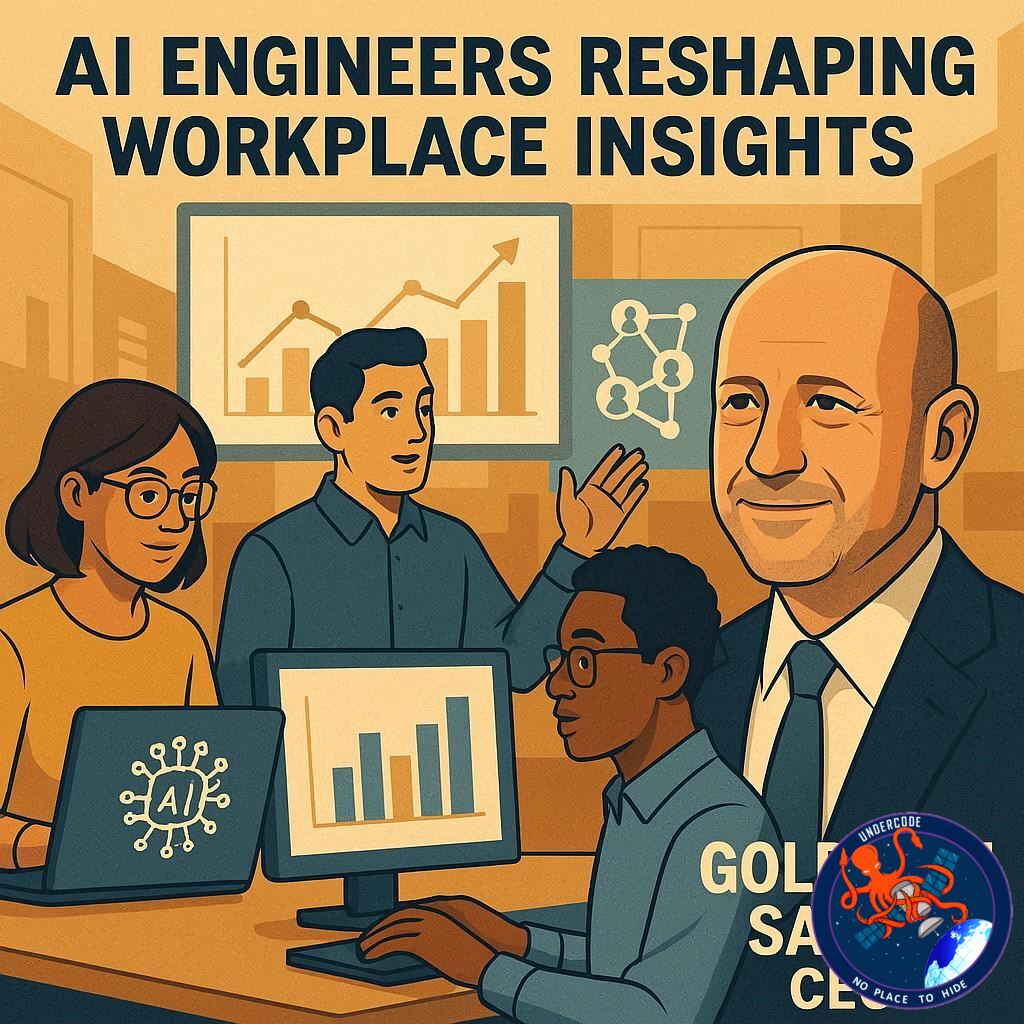
Artificial intelligence (AI) is no longer a futuristic concept—it is actively transforming how businesses operate, restructure, and envision the future of work. In a rapidly evolving technological landscape, companies face the dual challenge of integrating AI while managing the implications for their workforce. Goldman Sachs CEO David Solomon recently shared his perspective on this delicate balance, shedding light on the pace of change, workforce adaptation, and the potential opportunities AI brings to business innovation.
The Rapid Evolution of Technology in Business
David Solomon highlighted that AI-driven transformation is unfolding faster than any previous technological shift. Unlike earlier decades, where changes in workplace technology were gradual, today’s AI adoption is accelerating, creating both excitement and uncertainty. According to Solomon, this speed may introduce “volatility or an unsettled transition” in certain job functions, as companies adjust roles and responsibilities to align with new technological capabilities.
Reflecting on Goldman Sachs’ own journey, Solomon pointed out how technology has reshaped the bank’s workforce. Twenty-five years ago, the $225 billion firm had far fewer engineers, and today it employs around 13,000. This shift demonstrates that technology doesn’t simply eliminate jobs—it transforms them. Functions evolve, new skill sets emerge, and businesses gain the capacity to innovate more efficiently.
Solomon expressed confidence in the economy’s ability to adapt to these changes. He noted the flexibility and resilience of modern markets, emphasizing that while job functions may shift or even disappear temporarily, the broader economy can adjust, creating new opportunities. For Solomon, this transformation is a chance for businesses to reinvest, grow, and embrace innovation over a three-to-five-year horizon.
His observations align with a growing consensus among business leaders: AI is not a threat that surpasses prior technological revolutions. Rather, it represents another wave of advancement that can enhance productivity and create new avenues for career development. Solomon stressed that leaders across industries are actively exploring ways to “reimagine and automate processes” to improve operational efficiency. While concerns about white-collar job displacement persist, many executives see AI as a tool to complement human talent rather than replace it entirely.
What Undercode Say:
Solomon’s remarks provide a compelling lens into the complex interplay between AI, workforce dynamics, and corporate strategy. The fast pace of AI adoption indeed introduces temporary volatility, but it also signals a pivotal opportunity for organizations to rethink their approach to talent, productivity, and innovation. Historical parallels, such as the advent of personal computing and the internet, suggest that fears of mass unemployment are often overstated. Job displacement is real, but it is accompanied by the creation of entirely new roles requiring advanced analytical, engineering, and strategic skills.
From an analytical standpoint, the Goldman Sachs example highlights several broader trends: first, the growing centrality of engineers in finance and other traditionally non-technical industries reflects the increasing importance of digital infrastructure in competitive advantage. Second, AI adoption requires continuous workforce reskilling. Companies that proactively invest in employee education will navigate disruption more successfully than those that rely solely on automation. Third, Solomon’s confidence in the economy’s adaptability underscores an important macroeconomic insight: markets and labor pools are inherently dynamic. They evolve in response to technological pressures, often in ways that are difficult to predict but ultimately beneficial for innovation and efficiency.
Furthermore, the narrative around AI and employment is gradually shifting from fear to opportunity. Executives like Solomon are framing AI not as a zero-sum game where humans lose and machines win, but as a catalyst for operational improvement, decision-making precision, and business growth. This perspective encourages companies to embrace experimentation and strategic investment in AI, fostering environments where humans and machines collaborate rather than compete.
Importantly, this transition also invites a reassessment of educational priorities and workforce planning. As AI becomes embedded in more industries, skills in data analysis, algorithmic reasoning, and systems design will gain increasing prominence. Governments and corporations may need to work in tandem to create flexible pathways for reskilling workers displaced by technological change. In essence, the AI era could redefine career trajectories, making adaptability and continuous learning key components of professional success.
Finally, Solomon’s insights remind us that the narrative of AI is not deterministic. How society responds—through policy, education, and corporate strategy—will shape the real impact on employment and economic growth. For investors and business leaders, this is both a challenge and an opportunity: to anticipate disruptions, harness technology strategically, and create value in ways that were unimaginable a decade ago.
Fact Checker Results:
✅ AI adoption is accelerating faster than prior technological shifts.
✅ Goldman Sachs now employs 13,000 engineers, illustrating workforce evolution.
❌ AI will not necessarily result in unprecedented job loss; historical trends show adaptation.
Prediction:
📊 Over the next five years, AI integration will create hybrid roles blending engineering, analytics, and strategic decision-making.
📊 Businesses that prioritize workforce reskilling and operational efficiency will outperform peers in productivity gains.
📊 The conversation around AI will shift further from job threat to collaborative augmentation, driving broader economic growth.
🕵️📝✔️Let’s dive deep and fact‑check.
References:
Reported By: timesofindia.indiatimes.com
Extra Source Hub (Possible Sources for article):
https://www.quora.com/topic/Technology
Wikipedia
OpenAi & Undercode AI
Image Source:
Unsplash
Undercode AI DI v2
Bing
🔐JOIN OUR CYBER WORLD [ CVE News • HackMonitor • UndercodeNews ]
📢 Follow UndercodeNews & Stay Tuned:
𝕏 formerly Twitter 🐦 | @ Threads | 🔗 Linkedin | 🦋BlueSky | 🐘Mastodon


