
Listen to this Post
Introduction: A Smarter Era for Nigeria’s Retail Traders
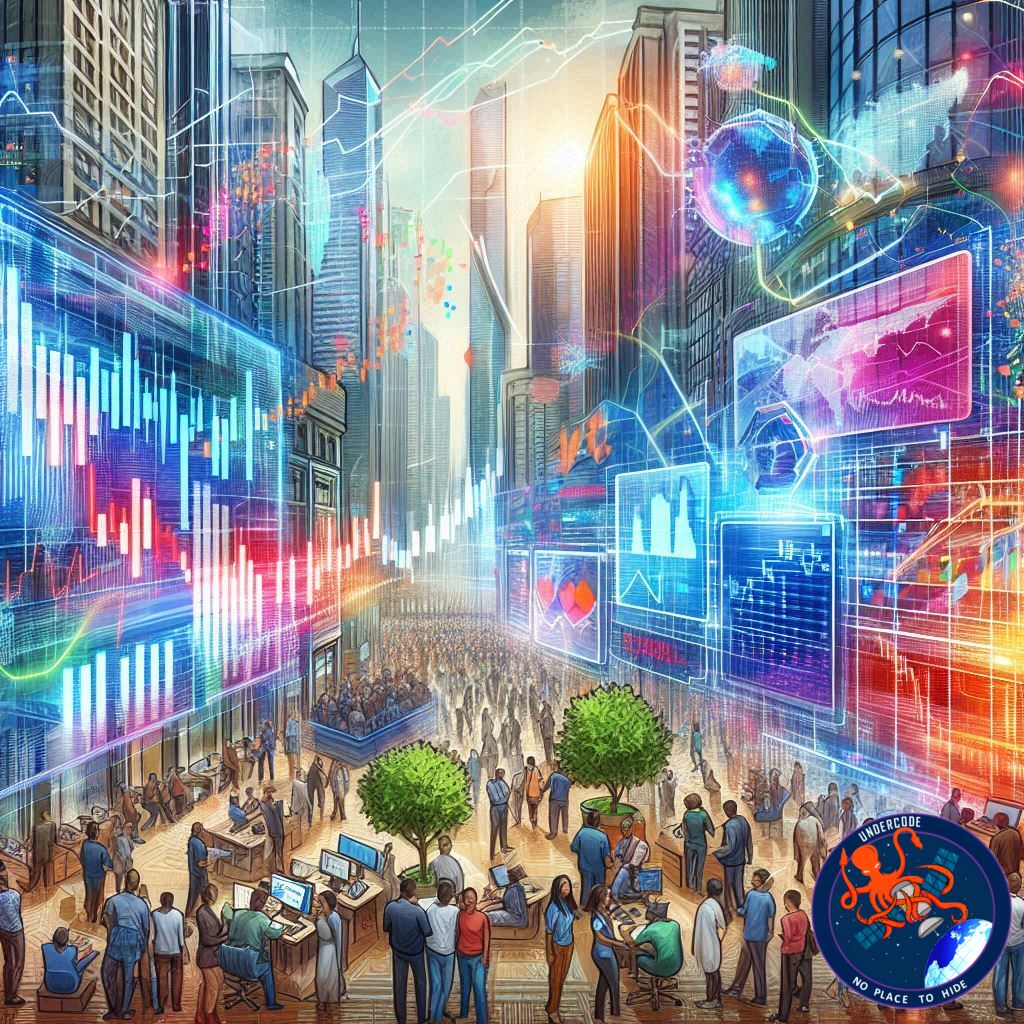
Nigeria’s retail trading scene is undergoing a quiet but powerful transformation. Across Lagos, Abuja, and Port Harcourt, individual traders are moving away from intuition-driven decisions and informal chat-based tips toward structured, data-backed strategies. At the center of this shift is artificial intelligence, which is redefining how social investing and copy trading function in a market shaped by currency volatility, liquidity constraints, and real-world infrastructure challenges.
For many Nigerian traders, AI is not about complexity or automation for its own sake. It is about efficiency, discipline, and survival in a fast-moving forex environment where the naira’s fluctuations, oil price headlines, and global dollar cycles can quickly erase poorly managed accounts. AI-powered copy trading lowers entry barriers while raising standards, offering a more resilient path for both beginners and experienced retail participants.
Summary of the Original Nigeria’s AI-Driven Trading Shift
Smarter Tools Replacing Manual Trading Habits
Nigeria’s retail traders are increasingly adopting intelligent tools that simplify decision-making and reduce emotional errors. AI has transformed social investing from informal discussions and manual copying into a structured workflow guided by data and risk metrics.
Faster Learning Across Major Cities
From Lagos to Port Harcourt, traders are learning faster as AI systems provide clearer insights into performance, risk exposure, and strategy behavior. This structured feedback helps traders understand not just profits, but also how and why outcomes occur.
Copy Trading as an Entry Point
Many newcomers start with copy trading, using it as a learning tool rather than a shortcut to profits. AI enhances this experience by ranking strategies, filtering noise, and adjusting allocations based on market conditions that directly affect naira stability and dollar liquidity.
Why AI Matters in the Nigerian Context
AI reduces guesswork and saves time, which is critical in Nigeria where power outages, mobile data limitations, and work schedules restrict screen time. Automated systems continue monitoring markets while traders are offline and send clear alerts when intervention is needed.
Intelligent Strategy Discovery
Instead of rewarding short-term luck, AI evaluates strategy consistency across different market regimes. It examines performance during oil price volatility, dollar strength cycles, and local liquidity squeezes, producing risk-adjusted rankings based on durability.
Reducing Bias and Trend Chasing
By focusing on long-term metrics, AI helps traders avoid trend-chasing systems that collapse when macro conditions shift. This is particularly important in USDNGN movements influenced by policy announcements and oil-related news.
Adaptive Allocation and Dynamic Risk Control
Traditional copy trading uses static allocation models. AI improves this by dynamically adjusting exposure when volatility changes, trimming risk during unstable periods and cautiously scaling when conditions stabilize.
Real-World Risk Protection
For Nigerian traders, adaptive allocation helps protect accounts during news-driven volatility and thin liquidity windows around local banking hours, where slippage can become severe.
Transparent Learning Loops
AI turns every copied trade into a learning opportunity. Trades are tagged by setup type, session timing, and exit quality, allowing traders to identify which providers perform best during specific market sessions.
Actionable Feedback for Busy Traders
Weekly summaries and confidence-based alerts help Nigerian students and professionals learn markets during limited free time, accelerating skill development without constant chart-watching.
Compliance and Ecosystem Health
AI detects risky behaviors such as disguised martingale strategies or correlated trading across multiple accounts. This improves platform integrity, protects small accounts, and builds trust within the trading community.
Responsible Use of AI Tools
The article emphasizes that AI augments human judgment rather than replacing it. Traders are encouraged to define risk limits, diversify strategies, enable adaptive controls, and scale slowly based on disciplined results.
Common Mistakes to Avoid
Pitfalls include chasing top-ranked providers, ignoring correlation risks, disabling safeguards during news events, and increasing exposure after losses instead of reviewing data.
Why This Trend Will Continue
High smartphone adoption, a young population, and growing interest in alternative income streams support ongoing growth. As infrastructure improves, AI-powered trading tools are expected to spread beyond major cities.
A Nigeria-Centric Starter Approach
The recommended approach focuses on education, risk-first AI features, major currency pairs, and treating the first ninety days as a learning phase rather than a profit race.
A Data-Guided Future
The conclusion highlights that AI-powered copy trading is not a shortcut, but a disciplined, data-driven framework that can help Nigerian traders navigate an increasingly complex forex market.
What Undercode Say: Why This Matters Beyond the Surface
AI as a Structural Advantage, Not a Trading Gimmick
AI-powered copy trading should not be viewed as a temporary trend. In Nigeria’s market structure, it addresses fundamental problems: inconsistent access to power, limited time for active trading, and heightened sensitivity to macroeconomic shocks. These are structural constraints, and AI directly mitigates them.
Risk Management Is the Real Product
While marketing often emphasizes profits, the true value of AI in Nigeria lies in risk containment. Dynamic loss caps, volatility-aware sizing, and correlation checks align well with a market where sudden policy shifts or oil price swings can cause abrupt dislocations.
From Imitation to Education
AI transforms copy trading from blind imitation into guided learning. By tagging trades and analyzing session-based performance, traders begin to understand market behavior instead of merely following outcomes. This educational layer is crucial for long-term market maturity.
Reducing the Cost of Mistakes
In emerging markets, mistakes are expensive because capital buffers are small. AI shortens the feedback loop, allowing traders to detect rule violations early, pause exposure, and correct behavior before drawdowns become irreversible.
Why Nigeria Is Uniquely Positioned
Nigeria’s young, mobile-first population is highly adaptable. Many traders are already comfortable with apps, analytics, and dashboards. AI-driven platforms fit naturally into this ecosystem, especially as fintech adoption accelerates.
Liquidity Awareness Is a Competitive Edge
AI systems that account for local liquidity windows give Nigerian traders an edge that manual strategies often ignore. Understanding when spreads widen or execution quality drops can mean the difference between survival and account erosion.
Community Trust as a Growth Catalyst
By surfacing resilient providers and demoting reckless ones, AI improves marketplace trust. This encourages capital retention, attracts cautious newcomers, and stabilizes participation during volatile periods.
Why Patience Beats Aggression
AI rewards consistency, not bravado. Traders who respect drawdown limits and allow systems to compound slowly are more likely to succeed than those who override safeguards chasing short-term wins.
The Shift From Hero Trading to Process Trading
Nigeria’s retail market is moving away from hero narratives toward process-driven execution. AI reinforces this cultural shift by making discipline visible and measurable.
Long-Term Skill Transfer
Even traders who eventually stop copying benefit from AI-driven analytics. The habits formed—risk control, performance review, session awareness—translate directly into independent trading competence.
A Quiet Professionalization of Retail Trading
What is happening is not just technological adoption, but professionalization. Nigerian retail traders are beginning to operate with frameworks once reserved for institutional desks, scaled appropriately for individual accounts.
Fact Checker Results
AI Adoption Is Rising ✅
Multiple indicators confirm increasing use of AI-driven trading tools among Nigerian retail traders.
Risk Controls Are the Primary Benefit ✅
The strongest documented advantage of AI copy trading is improved risk management rather than guaranteed returns.
AI Does Not Eliminate Losses ❌
Claims that AI removes trading risk entirely are false; it only helps manage and understand it.
Prediction
Broader Adoption Beyond Major Cities 📈
As connectivity improves, AI-powered copy trading will expand into secondary urban centers.
Stricter Risk Standards Across Platforms 🔒
Platforms serving Nigerian traders will increasingly compete on transparency and risk controls.
From Copying to Hybrid Trading Models 🔄
More traders will blend AI-assisted copying with their own discretionary strategies over time.
🕵️📝✔️Let’s dive deep and fact‑check.
References:
Reported By: www.channelstv.com
Extra Source Hub (Possible Sources for article):
https://stackoverflow.com
Wikipedia
OpenAi & Undercode AI
Image Source:
Unsplash
Undercode AI DI v2
Bing
🔐JOIN OUR CYBER WORLD [ CVE News • HackMonitor • UndercodeNews ]
📢 Follow UndercodeNews & Stay Tuned:
𝕏 formerly Twitter 🐦 | @ Threads | 🔗 Linkedin | 🦋BlueSky | 🐘Mastodon


