Listen to this Post
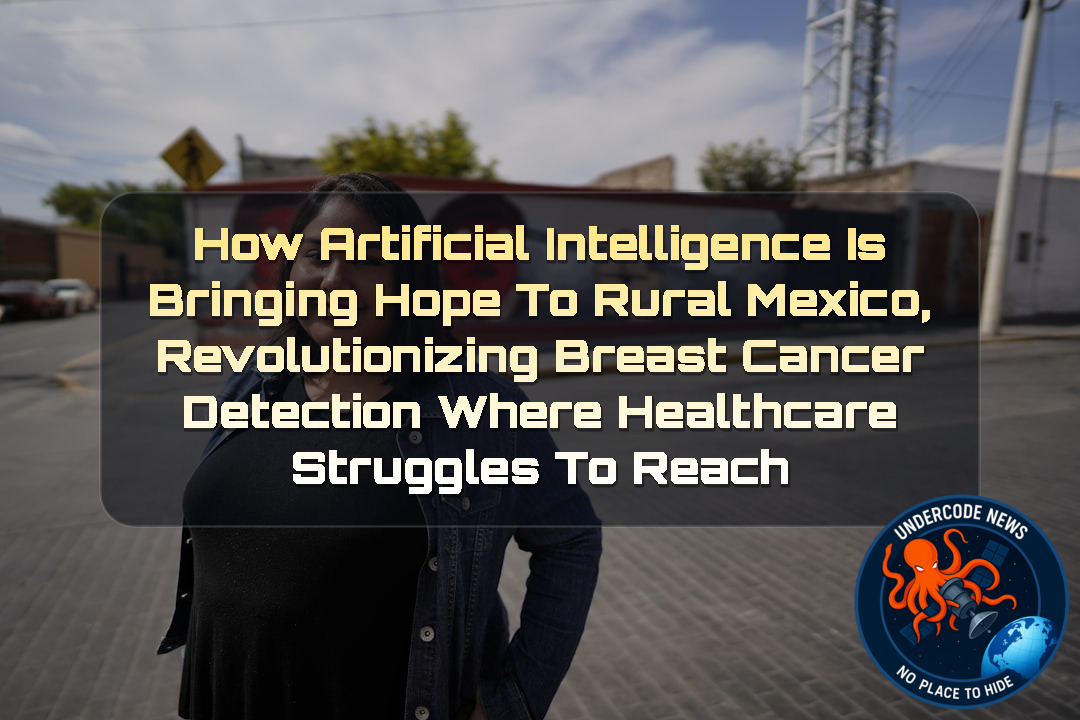 Introduction: A Silent Health Crisis Meets a New Technological Revolution
For millions of women around the world, breast cancer is more than a frightening diagnosis. It is a race against time. The earlier the disease is detected, the greater the chance of survival, yet countless women never receive timely screening simply because healthcare services are too far away, too expensive, or overwhelmed by demand.
This challenge is particularly severe across rural regions of Mexico, where geography, limited medical infrastructure, financial barriers, and shortages of specialized healthcare professionals leave many women without access to regular mammograms. In communities where reaching the nearest hospital can require hours of travel, preventive healthcare often becomes a luxury instead of a basic right.
A new generation of artificial intelligence is beginning to change that reality. Rather than replacing doctors, AI is becoming a powerful medical assistant that helps radiologists review mammograms faster, prioritize suspicious cases, and reduce long waiting times. The result is a healthcare system capable of reaching more patients, identifying cancer earlier, and ultimately saving lives that might otherwise be lost.
Breast Cancer Screening Faces Major Challenges in Rural Mexico
Breast cancer remains one of the leading causes of cancer-related deaths among women worldwide. Medical experts consistently emphasize that early diagnosis dramatically improves treatment success and survival rates.
Unfortunately, rural communities in Mexico continue to face enormous barriers to preventive care. Many women live hours away from hospitals equipped with mammography machines. Transportation expenses, lost workdays, childcare responsibilities, and limited medical appointments often discourage regular screening.
These challenges create dangerous delays. By the time symptoms become obvious, cancer may already have progressed to advanced stages where treatment becomes more difficult, more invasive, and significantly more expensive.
Healthcare inequality is not merely a logistical issue. It directly influences survival rates, quality of life, and long-term public health outcomes.
Artificial Intelligence Is Becoming a Powerful Partner for Doctors
Artificial intelligence has rapidly emerged as one of the most promising technologies in medical imaging.
Instead of making medical decisions independently, AI systems analyze mammograms using advanced pattern recognition algorithms trained on massive collections of medical images. These systems quickly identify subtle abnormalities that may deserve closer examination by experienced radiologists.
Doctors remain fully responsible for diagnosis, but AI dramatically reduces the amount of repetitive work involved in reviewing thousands of images every week.
This partnership allows healthcare professionals to dedicate more time to complex cases while maintaining high diagnostic accuracy.
Rather than replacing medical expertise, artificial intelligence amplifies it.
Reducing Waiting Times Can Save Lives
One of the largest hidden problems in cancer screening is the waiting period between imaging and diagnosis.
Hospitals experiencing heavy workloads often face backlogs lasting weeks or even months. During that time, patients experience anxiety while potentially aggressive cancers continue developing.
AI-assisted analysis allows suspicious mammograms to be flagged much earlier.
Radiologists can prioritize urgent cases immediately instead of processing every examination strictly in chronological order.
This smarter workflow means women who require immediate medical attention receive it sooner, significantly improving treatment opportunities.
Earlier intervention frequently translates into less aggressive treatments, reduced healthcare costs, and improved long-term survival.
Making Breast Cancer Screening More Affordable
Healthcare costs remain one of the greatest barriers for underserved communities.
Although artificial intelligence requires investment during deployment, the long-term economic benefits can be substantial.
Hospitals become capable of processing more examinations without proportionally increasing staffing costs. Medical resources are used more efficiently, reducing unnecessary delays and maximizing the value of existing diagnostic equipment.
For patients, improved efficiency often means fewer repeat appointments, reduced travel expenses, and faster access to specialists.
Lower operational costs may eventually help expand screening programs into regions that previously lacked sustainable healthcare services.
Technology Is Helping Close Healthcare Inequality
Healthcare inequality has long divided urban and rural populations.
Major cities typically attract experienced specialists, advanced hospitals, and cutting-edge medical equipment. Rural communities often receive only a fraction of these resources.
Artificial intelligence helps narrow this gap.
By assisting doctors with image interpretation, AI allows smaller healthcare facilities to deliver higher-quality screening services while maintaining clinical oversight from trained professionals.
Combined with telemedicine, cloud-based imaging, and digital healthcare networks, AI enables expert medical support to reach remote regions without requiring every patient to travel long distances.
This transformation has the potential to reshape healthcare accessibility across entire countries.
Doctors Remain at the Center of Every Diagnosis
Despite rapid advances in machine learning, artificial intelligence is not replacing physicians.
Medical diagnosis involves understanding patient history, physical examinations, laboratory results, genetics, symptoms, and numerous human factors beyond image recognition.
AI excels at identifying visual patterns.
Doctors provide medical judgment, communicate difficult diagnoses, discuss treatment options, answer questions, and deliver compassionate patient care.
The strongest healthcare systems are increasingly built around collaboration between skilled professionals and intelligent software.
This balanced approach reduces errors while preserving human responsibility in life-changing medical decisions.
The Future of AI in Cancer Detection
The success of AI-assisted mammography represents only the beginning.
Researchers continue developing artificial intelligence systems capable of supporting detection across multiple diseases, including lung cancer, colorectal cancer, prostate cancer, diabetic retinopathy, cardiovascular disease, and neurological disorders.
As these technologies mature, hospitals may eventually operate integrated diagnostic platforms capable of analyzing multiple imaging modalities simultaneously.
Future healthcare systems may become more predictive rather than reactive, identifying disease before symptoms become severe.
If deployed responsibly, artificial intelligence could become one of the most significant public health advancements of the twenty-first century.
What Undercode Say:
Artificial intelligence is frequently portrayed through two opposing narratives. One claims it will replace healthcare professionals, while the other dismisses it as an overhyped technology. The reality sits somewhere between those extremes.
The Mexican breast cancer initiative demonstrates one of AI’s strongest practical applications, augmenting clinical capacity rather than replacing expertise.
Radiology has become one of the earliest medical fields transformed by machine learning because medical imaging naturally produces enormous structured datasets suitable for algorithm training.
Yet technology alone cannot solve healthcare inequality.
If rural clinics lack electricity, internet connectivity, imaging devices, or trained technicians, AI contributes little value.
Infrastructure remains the foundation.
Governments must continue investing in healthcare facilities alongside digital transformation.
Public trust is equally important.
Patients deserve transparency regarding how AI participates in medical decisions.
Healthcare providers must clearly explain that physicians remain responsible for diagnosis.
Clinical validation should remain continuous.
Algorithms trained primarily on one population may perform differently across diverse ethnic or demographic groups.
Regular auditing helps prevent bias.
Privacy cannot become an afterthought.
Medical imaging contains highly sensitive personal information requiring strong cybersecurity protections.
International standards for secure medical data management will become increasingly important.
Cost-effectiveness also deserves attention.
Although AI lowers operational costs over time, initial implementation requires funding, training, software maintenance, cybersecurity investments, and technical support.
Governments and healthcare organizations should view AI as long-term infrastructure rather than a short-term expense.
The
Its true strength lies in expanding capacity.
A radiologist assisted by AI can often evaluate significantly more cases while maintaining quality.
That efficiency becomes invaluable where specialists are scarce.
Mexico serves as an important example for many developing nations.
Countries across Latin America, Africa, and Southeast Asia face similar healthcare accessibility challenges.
Lessons learned from successful AI deployment could influence healthcare policy far beyond national borders.
Future healthcare systems will likely combine AI, telemedicine, portable imaging devices, electronic health records, wearable sensors, and predictive analytics into unified care networks.
Responsible regulation will determine whether these innovations remain trustworthy.
Human oversight should never disappear.
Medical ethics must evolve alongside technological progress.
When implemented thoughtfully, artificial intelligence becomes less about automation and more about expanding human capability.
Its greatest achievement may not be replacing medical work, but making high-quality healthcare available to people who have historically been left behind.
Deep Analysis
The technological backbone behind AI-assisted mammography relies on modern machine learning infrastructure, secure networking, and medical imaging standards.
Healthcare organizations typically deploy AI models using Linux-based servers due to stability and scalability.
Useful administrative and infrastructure commands include:
Check server health
top
htop
free -h
Verify storage availability
df -h
Monitor system logs
journalctl -xe
Inspect running services
systemctl status
View network connectivity
ip addr
ping google.com
Monitor active connections
ss -tulnp
Check Docker containers
docker ps
docker logs <container>
Kubernetes deployments
kubectl get pods
kubectl describe pod <pod-name>
GPU availability for AI inference
nvidia-smi
Python environment
python3 --version
pip list
TensorFlow installation
python3 -c "import tensorflow as tf; print(tf.<strong>version</strong>)"
PyTorch installation
python3 -c "import torch; print(torch.<strong>version</strong>)"
Monitor GPU utilization
watch -n 1 nvidia-smi
Verify HTTPS certificates
openssl s_client -connect example.com:443
Secure file transfer
scp image.dcm server:/data/
Check firewall
ufw status
Analyze network traffic
tcpdump -i eth0
Verify database service
systemctl status postgresql
Backup medical database
pg_dump hospitaldb > backup.sql
Compress archives
tar -czvf archive.tar.gz data/
Verify file integrity
sha256sum mammogram.dcm
These tools help maintain reliable AI environments where diagnostic systems must operate continuously with minimal downtime. Reliability, security, and data integrity are as critical as the AI models themselves because interruptions can directly affect patient care.
✅ Fact: Early detection of breast cancer significantly improves survival rates. This is consistently supported by major medical organizations and decades of clinical research. Earlier diagnosis generally allows for less invasive treatment and better long-term outcomes.
✅ Fact: Artificial intelligence can assist radiologists in analyzing mammograms more efficiently. Clinical studies have shown that AI can help prioritize suspicious cases and improve workflow, though it is intended to support rather than replace physicians.
✅ Fact: Rural communities often face greater barriers to cancer screening due to travel distance, healthcare infrastructure, and financial limitations. These disparities have been documented in multiple public health studies, making improved access a major global healthcare priority.
Prediction
(+1) AI-assisted breast cancer screening will continue expanding across developing countries, allowing more women in underserved regions to receive earlier diagnoses while improving the efficiency of healthcare systems without replacing medical professionals.
(-1) If governments fail to invest in infrastructure, cybersecurity, physician training, and regulatory oversight, AI deployment could widen healthcare disparities, leaving remote communities without the connectivity and resources needed to benefit from these technological advances.
▶️ Related Video (72% Match):
🕵️📝Let’s dive deep and fact‑check.
🎓 Live Courses & Certifications:
Join Undercode Academy for Verified Certifications
🚀 Request a Custom Project:
Secure, high-velocity infrastructure and disruptive technological engineering. Contact our engineering team for high-tier development and proprietary systems:
[email protected]
💎 Smart Architecture | 🛡️ Secure by Design | ⭐ Trusted by Thousands
References:
Reported By: www.dw.com
Extra Source Hub (Possible Sources for article):
https://www.linkedin.com
Wikipedia
OpenAi & Undercode AI
Image Source:
Unsplash
Undercode AI DI v2
🔐JOIN OUR CYBER WORLD [ CVE News • HackMonitor • UndercodeNews ]
📢 Follow UndercodeNews & Stay Tuned:
𝕏 formerly Twitter 🐦 | @ Threads | 🔗 Linkedin | 🦋BlueSky | 🐘Mastodon | 📺Youtube