
Listen to this Post
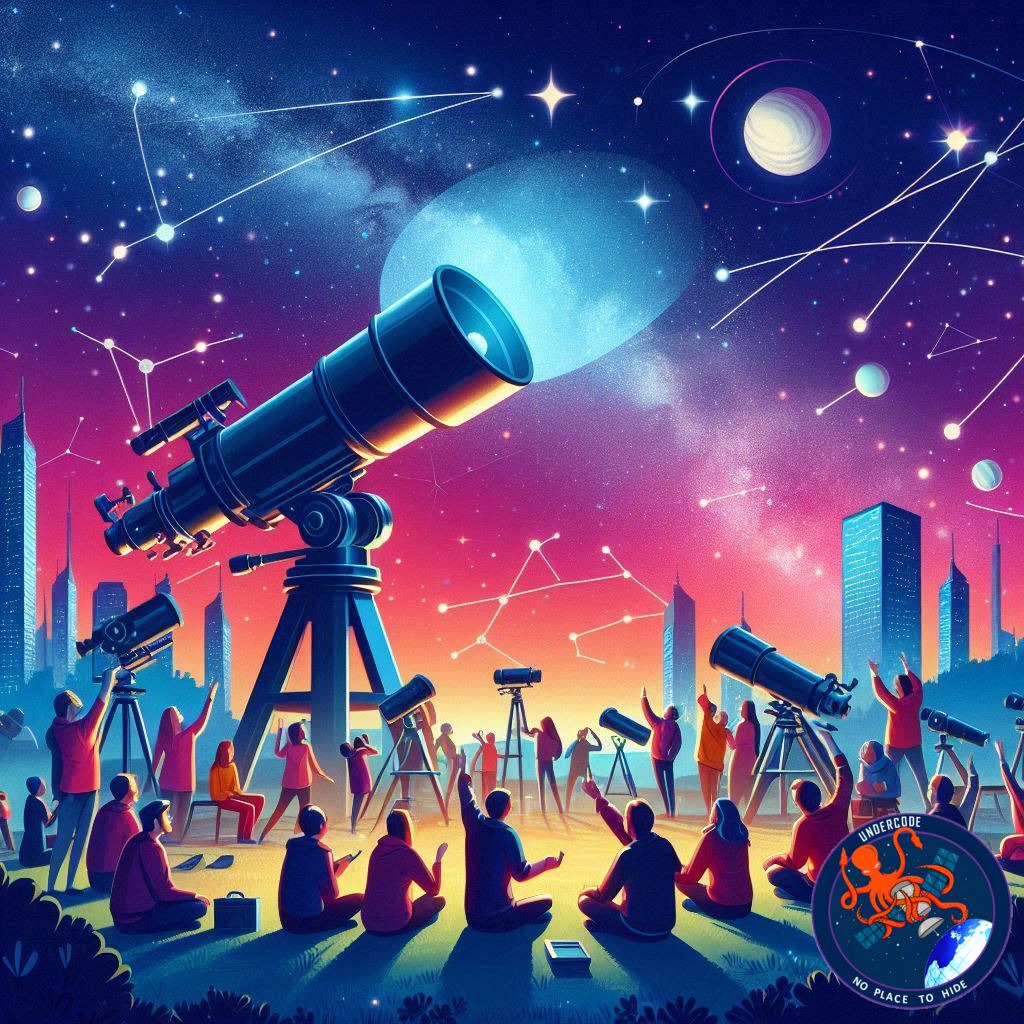
A New Era of Stargazing
Exoplanet research used to belong only to massive observatories perched on remote mountain peaks. Today, something extraordinary is happening. Ordinary people, armed with curiosity and a modest telescope or even just internet access, can now help astronomers refine the timings of alien worlds passing in front of their parent stars. This movement, shaped by NASA’s Exoplanet Watch program, blends science, community, and adventure into one of the most accessible gateways to modern astronomy. For newcomers, the challenge often lies not in enthusiasm but in knowing where to begin. What tools do you need? What exactly should you observe? And what if you don’t have a telescope at all? This guide breaks the barrier between expert and amateur by explaining how anyone can join the global search for new worlds.
The Path to Participation in Exoplanet Watch
Understanding the Tools Needed for Observation
Contributing to Exoplanet Watch begins with the right equipment. Observers who own a telescope typically use a 4 inch or larger instrument paired with a stable tripod, a tracking mount, a compatible camera, and control software connected to a laptop. This setup allows long-duration monitoring of stars where exoplanets may pass across their surface. With steady tracking and good imaging, participants capture the tiny changes in starlight that reveal transits. The Observer’s Manual supplied by the program gives detailed instructions for beginners and advanced observers, laying out everything from the basics of exoplanet photometry to the subtle pitfalls that new astronomers often encounter during data collection.
Learning the Craft of Exoplanet Recording
Beginners quickly discover that exoplanet observing is a learned skill rather than a plug and play experience. The Practical Guide to Exoplanet Observing by Dennis Conti walks readers through the best practices used by veteran observers. This includes choosing the right exposure times, ensuring stable guiding, and preparing the imaging system to record smooth light curves. Although exoplanet transits are invisible to the naked eye, careful imaging reveals the small dip in brightness that signals a planet’s passage. With enough practice, observers learn not just how to take pictures but how to interpret them, turning raw data into meaningful signals that professional astronomers can use.
Choosing the Right Exoplanet Targets
Finding targets is often the most exciting part of the process. Tools such as the Swarthmore Transit Finder help observers identify which exoplanets will be visible from their location. Exoplanet Watch also publishes daily priority lists highlighting planets with uncertain timing. By focusing on these, observers provide valuable data that helps refine orbital predictions for future space-based missions. Participants contribute by photographing the transit from an hour before it begins until an hour after it ends. This extended window helps astronomers measure the exact shape of the light curve and improve the accuracy of the planet’s orbital details.
Contributing Without a Telescope
A remarkable aspect of Exoplanet Watch is that participation does not depend on owning high end equipment. The program partners with MicroObservatory’s DIY Planet Search, which provides robotic telescope imagery for users living under cloudy or light polluted skies. Citizen scientists can request specific observations and then process the data themselves. Members also gain access to Las Cumbres Observatory telescopes, supported by the Global Sky Partners program, as well as the GORT telescope at Sonoma State University and additional AAVSOnet facilities. There are opportunities to work with archival data as well, helping others reduce old observations that still require processing.
Tapping Into Local Astronomical Communities
For those eager to contribute more, local universities, museums, planetariums, and astronomy clubs often have telescopes available for public use. Even libraries in some regions lend telescopes to patrons. Many people discover that friends or family already own forgotten instruments that can be restored for exoplanet monitoring. Exoplanet Watch also maintains Slack channels where users request data, seek technical guidance, or collaborate with others on upcoming observing campaigns.
Capturing a Transit With Precision
Each exoplanet transit typically lasts several hours. Observers take images at intervals of a few minutes, maintaining consistent exposure and pointing accuracy throughout the session. While the eye cannot detect the changes, the computer software notes subtle dips in brightness. These tiny variations, when plotted over time, become light curves that reveal the size, orbit, and timing of distant planets. Observers are encouraged to verify visibility using NASA’s Exoplanet Archive Transit and Ephemeris Service, ensuring the event will be observable from their exact location. With preparation, patience, and persistence, anyone can contribute measurements that sharpen our understanding of planets far beyond our solar system.
What Undercode Say:
Citizen Science as a Force in Modern Astronomy
The rise of Exoplanet Watch demonstrates a deeper shift happening across science. Astronomy is no longer confined to elite institutions. By opening its doors to volunteers with modest equipment, NASA taps into a global network of eyes, expanding observational capabilities at almost no cost. This model transforms everyday enthusiasts into contributors whose data may guide telescope time on multimillion dollar observatories. It is a profound realignment that redefines who gets to participate in discovery.
Why Small Telescopes Matter in a Big Universe
Professional telescopes face overwhelming demand. Every hour must be justified, reviewed, and optimized. Yet exoplanets can drift off schedule because their orbits are influenced by other bodies or because earlier measurements were incomplete. This is where citizen scientists shine. A distributed network of small telescopes can track transits that big observatories do not have time to monitor. By refining transit timing, volunteers help ensure that future missions like the James Webb Space Telescope or ARIEL observe planets at the precise moment a transit begins.
The Data Pipeline Powered by Amateurs
Light curves produced by citizen scientists undergo the same scientific scrutiny as professional data. With careful calibration, consistent imaging, and repeated observations, amateurs often produce remarkably accurate results. Their contributions fill gaps in ephemerides, enable follow up observations, and occasionally identify unusual features that trigger deeper investigations. The system is efficient because data reduction and review occur collaboratively, supported through Slack channels and documentation. This community based approach accelerates science far beyond what professional astronomers could do alone.
Removing Barriers to Entry Strengthens Science
One of the most innovative aspects of Exoplanet Watch is its focus on accessibility. Robotics based telescopes allow anyone, regardless of economic background or local sky conditions, to gather data. This democratization of astronomy parallels trends in open source software and distributed sensing networks. As more people join, the statistical power of the collective increases. Planetary timing models become sharper, predictions grow more precise, and systematic errors decrease. The result is a more resilient scientific ecosystem.
Why the Human Element Still Matters
Despite advances in automation, exoplanet observing still benefits from human intuition. Observers learn to recognize atmospheric distortions, equipment anomalies, or unexpected dips that algorithms might misinterpret. These contributions also foster public engagement with science, inspiring new generations of students and hobbyists who may later enter STEM careers. The emotional reward of contributing to real research strengthens long term involvement.
A Future Built on Collaboration
The next decade of exoplanet discovery will involve thousands more confirmed worlds. Large missions will depend on accurate transit timing data. Citizen scientists, armed with telescopes or online tools, will continue to provide a steady stream of observations that improve orbital models. When observing networks span continents and time zones, the coverage becomes nearly continuous. This forms a backbone for long term monitoring that no professional observatory alone could support.
🔍 Fact Checker Results
Most exoplanet transits require several hours of imaging. ✅
Exoplanet Watch accepts data from both personal telescopes and robotic observatories. ✅
Transit dips are visible to the naked eye during observation. ❌
📊 Prediction
Over the next few years, participation in Exoplanet Watch is likely to surge 📈 as robotic access expands and more people seek hands on roles in space science. Expect refined transit predictions, stronger global collaboration, and broader public involvement in exoplanet discovery 🌍.
🕵️📝✔️Let’s dive deep and fact‑check.
References:
Reported By: science.nasa.gov
Extra Source Hub (Possible Sources for article):
https://www.github.com
Wikipedia
OpenAi & Undercode AI
Image Source:
Unsplash
Undercode AI DI v2
Bing
🔐JOIN OUR CYBER WORLD [ CVE News • HackMonitor • UndercodeNews ]
📢 Follow UndercodeNews & Stay Tuned:
𝕏 formerly Twitter 🐦 | @ Threads | 🔗 Linkedin | 🦋BlueSky | 🐘Mastodon


