
Listen to this Post
Introduction: Navigating a New Era of Corporate Reinvention
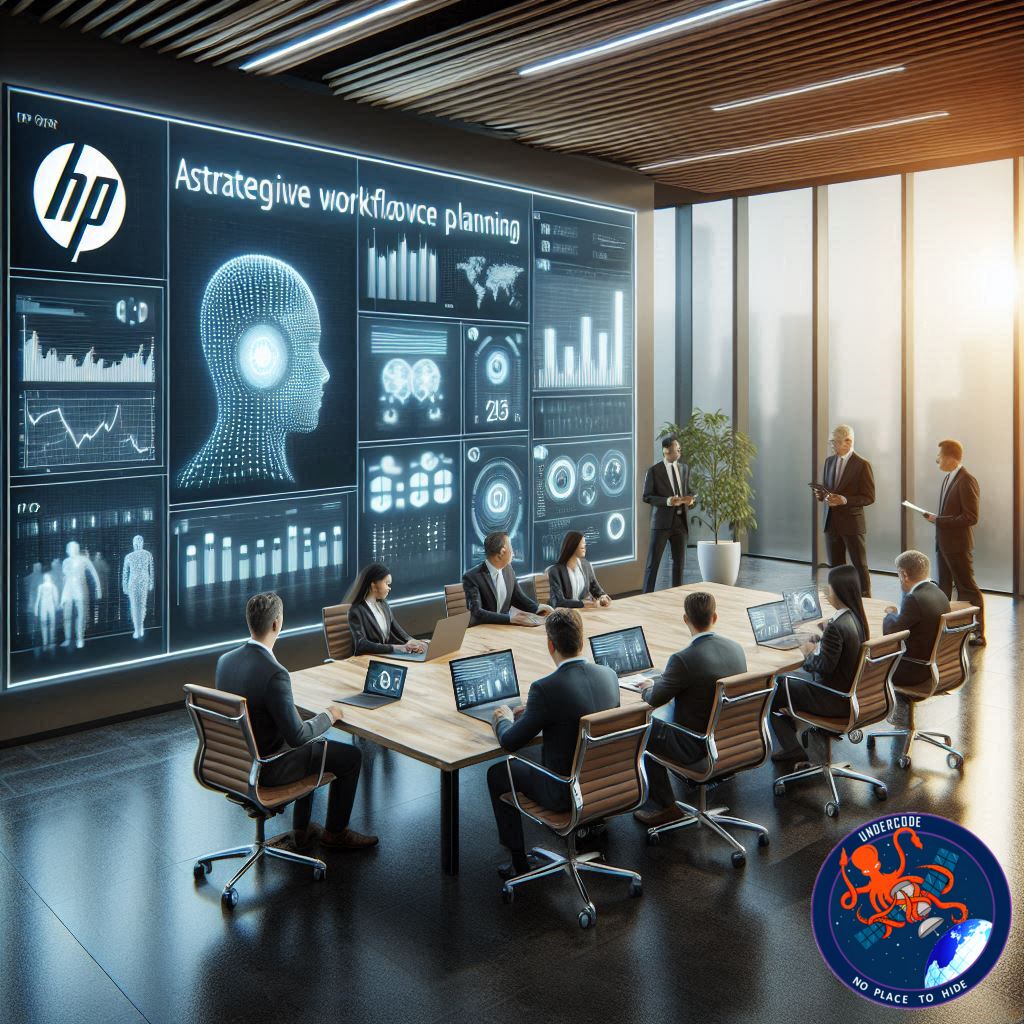
HP has stepped into one of the most dramatic transitions in its recent history. The company is preparing to reshape its global workforce, sharpen its operational core, and harness artificial intelligence as its next engine of momentum. Corporate restructuring is never just a financial maneuver. It reflects a deeper story about shifting markets, rising technological demands, and the uneasy trade-off between innovation and employment stability. HP’s latest announcement captures this tension with precision.
Global Transformation Summary
A Strategic Move Toward Leaner Operations
HP has confirmed that between four thousand and six thousand employees will be cut worldwide by 2028. This represents nearly ten percent of its workforce, a shift expected to save roughly one billion dollars annually. The company frames the decision as part of a long-term plan to strengthen productivity through advanced AI integration and more efficient product development pipelines.
A Record of Growth Pressured by Rising Costs
In the earnings report covering August to October 2025, HP posted revenue of 14.6 billion dollars, up four percent from the previous year. This marked the sixth consecutive quarter of revenue growth, largely driven by increased sales of AI-equipped devices. Still, net profit dropped ten percent to 840 million dollars, a decline attributed to elevated product costs and supply chain pressures.
Leadership Signals Tough, Necessary Adjustments
Chief Financial Officer Karen Parkhill highlighted the imbalance between growth and profitability. She stated that decisive measures were essential to counter mounting cost headwinds. For HP’s leadership, restructuring is not simply a financial strategy but part of a broader operational reset.
AI at the Center of HP’s Evolution
Artificial intelligence now plays a defining role in HP’s product innovation roadmap. From next-generation hardware to workflow optimization tools, AI is becoming a catalyst for customer satisfaction, manufacturing efficiency, and software expansion.
A Workforce in Transition
HP currently employs roughly fifty-eight thousand people worldwide. The restructuring will require up to 650 million dollars to execute, covering severance, reorganizational processes, and operational realignment. This is not HP’s first large downsizing. Back in 2022, the company announced a similar reduction of four thousand to six thousand employees.
A Move Rooted in Global Competition
The latest wave of layoffs aligns HP with other major corporations compressing headcount while accelerating investments in automation, digital workflows, and AI-enhanced product lines.
What Undercode Say:
Understanding Strategic Restructuring as a Competitive Imperative
HP’s decision is more than a cost-cutting exercise. It signals a recalibration of how the company plans to compete in an industry where hardware margins are thin, innovation cycles are rapid, and customer expectations evolve faster than manufacturing lines can adapt. The focus on AI is not superficial. It represents HP’s intent to shift from a hardware-centric identity toward an intelligence-driven ecosystem.
AI as the New Productivity Standard
In modern tech ecosystems, AI is not an add-on. It is a multiplier. When embedded deeply, it reshapes supply chains, forecasting models, engineering processes, and customer support frameworks. HP’s commitment to AI in both product development and internal operations indicates an acknowledgment that human-only workflows can no longer sustain competitive velocity.
Layoffs as a Symptom of Structural Pressure
The workforce reduction mirrors broader industry patterns. Companies with global manufacturing footprints face rising component costs, increasing wage pressure in key markets, and unpredictable supply conditions. When paired with shrinking margins, the financial pressure forces management to choose between maintaining headcount or investing in automation. HP appears to be choosing innovation over volume.
Six Quarters of Revenue Growth Still Not Enough
The paradox of modern tech economics is clear. Even revenue momentum cannot offset the escalating cost base of advanced hardware production. AI systems, high-performance chips, and specialized materials add complexity and expense. HP’s declining net profit despite higher revenue underscores the competitive squeeze.
Impact on Product Strategy and Market Position
By trimming its workforce while allocating more resources to AI integration, HP is attempting to reposition itself in a market dominated by companies merging software and hardware into seamless platforms. This shift may redefine HP’s identity, enabling it to move closer to hybrid models that combine devices, cloud intelligence, and predictive maintenance solutions.
Long-Term Outcomes Will Depend on Execution
If HP deploys AI effectively, it could unlock faster innovation cycles, lower support costs, and more resilient product lines. If mismanaged, the company risks internal disruption, employee morale decline, and slowed progress during transition. Execution will determine whether the strategy strengthens or strains the company.
The Broader Industry Message
HP’s move illustrates an industry-wide truth. As AI becomes the backbone of modern corporate infrastructure, companies will increasingly face a choice between expanding human labor and expanding digital capacity. Most will choose the latter. HP’s restructuring is a case study in this shift, reflecting both the promise and the cost of AI-driven transformation.
Fact Checker Results
Revenue increased by 4 percent year over year. ✅
Net profit rose during the same period. ❌ (It declined by 10 percent.)
HP confirmed plans to reduce 4,000 to 6,000 employees globally. ✅
Prediction
HP will likely deepen its investment in AI-optimized hardware, predictive analytics tools, and smart enterprise solutions. 📊
The restructuring may initiate a new product wave centered on automation-ready devices and software-driven service bundles.
Global competition in AI hardware will intensify, pushing HP toward faster innovation cycles and more aggressive cost discipline.
🕵️📝✔️Let’s dive deep and fact‑check.
References:
Reported By: xtechnikkeicom_8905fcb97683068f4b229b62
Extra Source Hub (Possible Sources for article):
https://www.digitaltrends.com
Wikipedia
OpenAi & Undercode AI
Image Source:
Unsplash
Undercode AI DI v2
Bing
🔐JOIN OUR CYBER WORLD [ CVE News • HackMonitor • UndercodeNews ]
📢 Follow UndercodeNews & Stay Tuned:
𝕏 formerly Twitter 🐦 | @ Threads | 🔗 Linkedin | 🦋BlueSky | 🐘Mastodon


