
Listen to this Post
Introduction
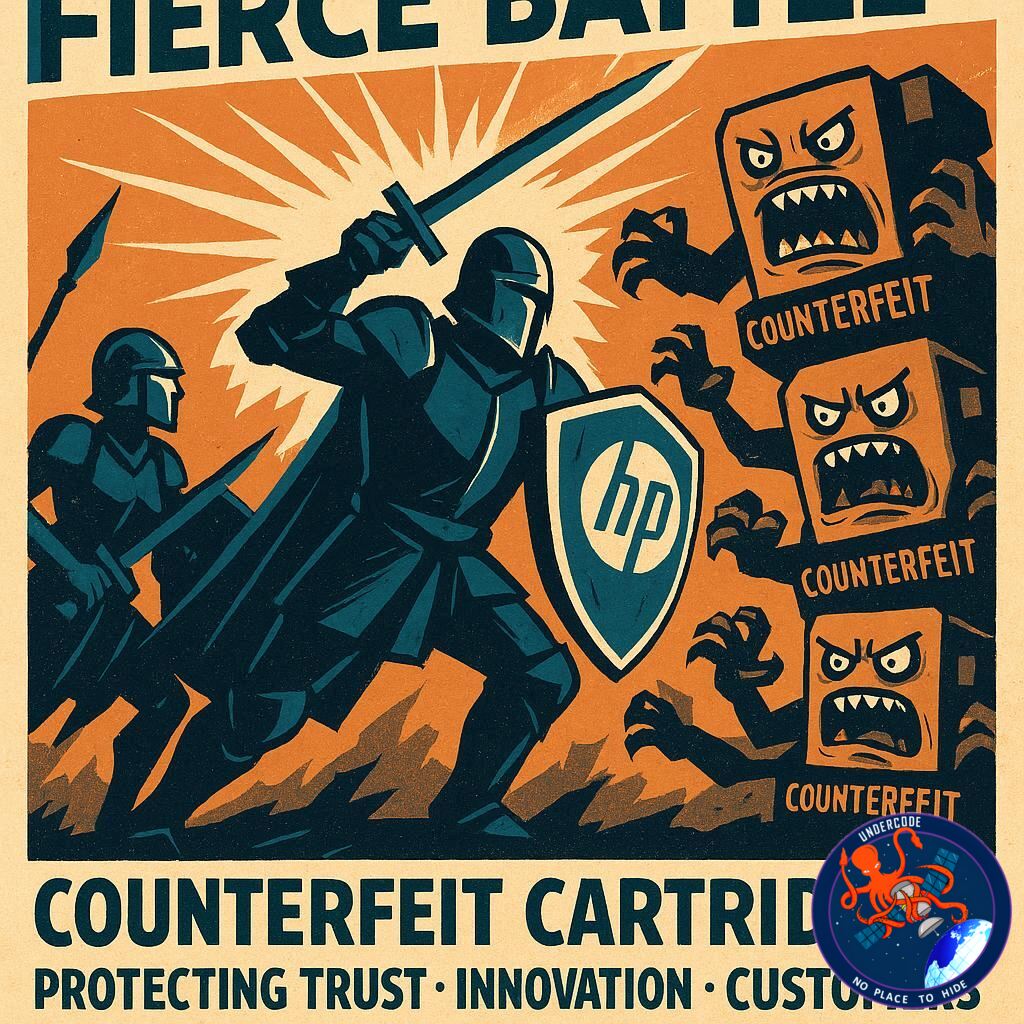
The global printing industry is not just about machines and ink—it’s about reliability, security, and trust. For decades, HP has been a household name in printing, promising quality and performance with every cartridge. But behind the scenes, the company is fighting an ongoing battle against counterfeiters who copy its technology and flood the market with substandard products. These fake cartridges not only compromise the user experience but also threaten HP’s hard-earned reputation for innovation and integrity.
In a recent statement, Joe Pacula, HP’s SVP and Division President of the Print Supplies Business, outlined how the company is taking aggressive steps to protect its intellectual property (IP). From legal actions across multiple countries to online crackdowns on counterfeit listings, HP is positioning itself as a global defender of quality printing and fair competition. This article breaks down HP’s strategies, the scope of the problem, and what it means for businesses and consumers alike.
The Original in Summary
HP stresses that its mission goes beyond producing technology—it’s about building trust through innovation, quality, and customer protection. Intellectual property (IP) is at the heart of this strategy. Protecting IP safeguards HP’s reputation, ensures fair competition, and allows the company to continue investing in research and development.
Counterfeit cartridges are seen as a direct threat, often failing to meet HP’s quality standards, putting customers at risk of poor performance, and misleading buyers into believing they’re purchasing genuine products. HP argues that strong IP enforcement not only protects customers but also ensures a level playing field for competitors who rely on innovation rather than imitation.
The company has taken several global enforcement actions. In Chile, Pacific Color settled with HP after selling imitation cartridges and agreed to withdraw products and pay compensation. In Germany, ZhuHai CaiLuo Technology lost lawsuits over patent infringements and was ordered to cease sales and compensate HP. In Italy, Promo Rigenera admitted to unknowingly selling infringing products and also reached a settlement. In France, Lama France was involved in the first UPC lawsuit over patent issues. In addition, Germany saw multiple other settlements and partial judgments involving “Toner Office” and Seine Holland B.V./G\&G GmbH.
Beyond courtrooms, HP is also tackling the issue in online marketplaces. Many counterfeit or lookalike products are sold under different brand names but originate from the same sources, giving the illusion of variety. HP collaborated with Amazon, eBay, and Facebook to remove around 120,000 listings in just the first half of 2025, including over 3,000 linked to 200 different cartridge brands.
HP’s Anti-Counterfeit (ACF) program adds another layer of protection. It educates customers and partners on spotting fakes, offers free product audits, and works with law enforcement to seize counterfeit goods. Over the last three years, HP has confiscated 8 million counterfeit items worldwide.
Ultimately, HP insists that protecting its IP is about protecting customers—ensuring they receive the performance, reliability, and security they expect from genuine HP supplies. The company pledges to continue enforcing its rights to maintain trust and foster innovation.
What Undercode Say:
HP’s stance is a reflection of a broader reality facing global technology brands: intellectual property theft is no longer a side issue—it’s a core business threat. Printers and cartridges may sound mundane, but the economics tell a powerful story. Counterfeit printing supplies cost the industry billions of dollars annually, cutting into R\&D budgets, undercutting genuine innovation, and damaging consumer trust.
From a consumer’s perspective, counterfeit cartridges are not just an annoyance—they can damage printers, void warranties, and produce low-quality output. Worse, some are manufactured in unregulated facilities, raising concerns about safety and environmental compliance. This highlights why HP invests so heavily in IP enforcement; it’s not just protecting its profits but also its customer base.
HP’s multi-front strategy is particularly notable. By combining legal battles, marketplace takedowns, education, and cooperation with law enforcement, HP demonstrates that the fight against counterfeits requires more than just litigation. Online marketplaces are a crucial battleground. The removal of 120,000 listings shows the scale of the problem and also the complexity—since many products appear under different brand names but come from the same source. This “illusion of choice” is a deceptive tactic that makes enforcement harder.
Another interesting point is the geographic spread of cases. HP’s enforcement actions span Chile, Italy, France, and Germany, illustrating how counterfeiting is a global problem. These countries also represent major markets, and HP’s victories set precedents that could influence future legal actions across Europe and Latin America.
However, there are also critics of HP’s aggressive IP protection. Some argue that HP’s pricing model for cartridges is too high, creating an incentive for third-party and counterfeit alternatives. Independent refillers and remanufacturers often claim that HP uses patents and lawsuits to stifle competition, blurring the line between legitimate aftermarket products and outright counterfeits. This tension raises ethical and regulatory questions: where should the line be drawn between protecting IP and ensuring consumer choice?
From a business strategy perspective, HP’s crackdown is also about future-proofing revenue. Printer companies often sell hardware at low margins—or even losses—expecting to recoup profits through cartridge sales. This “razor-and-blade” model means that counterfeit cartridges directly attack HP’s profitability. By securing cartridge sales, HP safeguards its long-term sustainability and innovation pipeline.
Looking ahead, the fight will intensify as AI-driven marketplaces make counterfeit detection both easier and harder. AI can help spot suspicious listings, but counterfeiters also use AI tools to mask their activities. HP’s ongoing collaboration with e-commerce giants will be vital to stay ahead in this cat-and-mouse game.
In the broader sense, HP’s battle is not just about ink—it’s about setting an industry standard. If HP succeeds in its war on counterfeits, it could pave the way for similar initiatives in other tech sectors, from semiconductors to software licensing. Intellectual property enforcement, once considered a legal formality, is now a front-line defense for brand integrity in the digital age.
🔍 Fact Checker Results
✅ HP confirmed it removed 120,000 counterfeit or lookalike listings in early 2025.
✅ Multiple lawsuits and settlements across Europe and Latin America were reported by HP.
❌ No independent data verifies the exact financial compensations disclosed in settlements.
📊 Prediction
Counterfeit cartridge activity will not disappear—it will adapt. As HP strengthens its partnerships with marketplaces and law enforcement, counterfeiters will shift to smaller platforms, encrypted channels, and direct-to-consumer networks. Expect HP to respond by deploying more AI-based monitoring tools, expanding its global enforcement footprint, and possibly introducing new authentication technologies like blockchain-based cartridge tracking. Within the next five years, the cartridge wars may evolve into a showcase of how tech companies balance IP protection, pricing fairness, and consumer choice in an increasingly digital economy.
🕵️📝✔️Let’s dive deep and fact‑check.
References:
Reported By: www.hp.com
Extra Source Hub:
https://www.facebook.com
Wikipedia
OpenAi & Undercode AI
Image Source:
Unsplash
Undercode AI DI v2
🔐JOIN OUR CYBER WORLD [ CVE News • HackMonitor • UndercodeNews ]
📢 Follow UndercodeNews & Stay Tuned:
𝕏 formerly Twitter 🐦 | @ Threads | 🔗 Linkedin | 🦋BlueSky | 🐘Mastodon


