
Listen to this Post
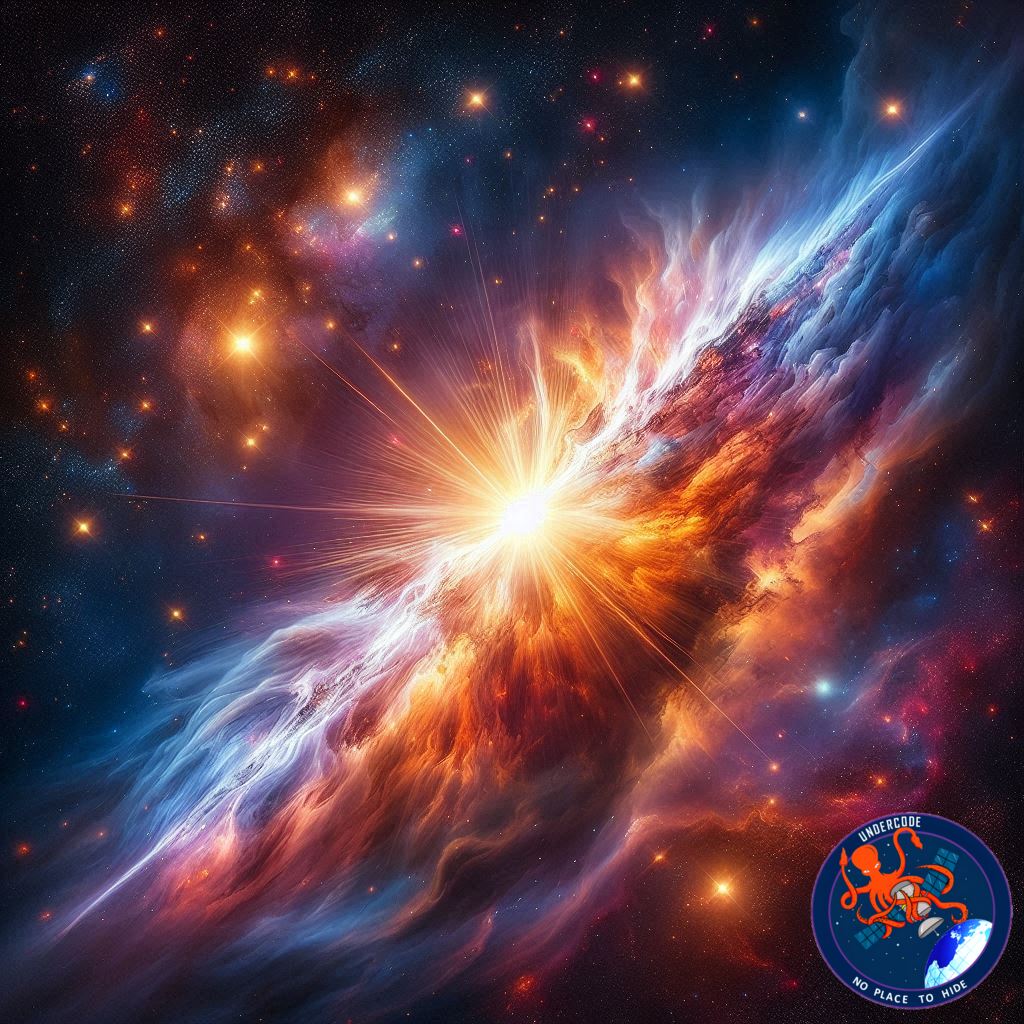
A New Look Into a Violent Stellar Birth
The NASA Hubble Space Telescope has once again revealed a scene that feels more like science fiction than astronomy. A newly released image shows a powerful jet of gas slicing through deep cosmic darkness, fired from a star that is still in the process of being born. Painted in vivid pinks and greens, the structure stretches diagonally across space, highlighting the raw and chaotic forces at work when stars come to life. This image is not just visually striking; it documents the most extreme protostellar outflow ever observed, offering astronomers a rare chance to study how massive stars shape their surroundings long before they begin to shine.
Summary of the Original
A Jet Cutting Across the Cosmos
The Hubble image focuses on HH 80/81, a pair of luminous structures known as Herbig-Haro objects. These features appear as bright streaks of glowing gas, with one section of HH 81 visible in the upper left and a segment of HH 80 stretching toward the bottom of the frame. Together, they form part of a massive jet blasting through interstellar space.
Understanding Herbig-Haro Objects
Herbig-Haro objects form when fast-moving jets of ionized gas collide with slower clouds of material previously expelled by a young star. The violent interaction creates shock waves that heat the gas, causing it to glow brightly across multiple wavelengths. These glowing regions act like signposts, revealing otherwise invisible stellar activity.
The Largest Protostellar Outflow Known
What makes HH 80/81 extraordinary is its sheer scale. The outflow extends across roughly 32 light-years, making it the largest protostellar jet ever discovered. This immense length suggests a long-lived and incredibly powerful engine driving the flow.
How Protostars Feed and Eject Matter
Protostars grow by pulling in surrounding gas and dust, much of which settles into a rotating accretion disk. Within these disks, ionized material interacts with strong magnetic fields generated by the young star. These magnetic fields funnel part of the material toward the star’s poles, launching it outward as narrow, high-speed jets.
Shock Waves That Light Up Space
As the jets race through space, they slam into older, slower-moving gas expelled earlier in the star’s formation. These collisions generate intense shock waves that heat the gas and excite its atoms. The energized atoms emit light, creating the glowing structures recognized as HH objects.
The Brightest HH Objects Ever Observed
HH 80/81 stand out not only for their size but also for their brightness. They are the most luminous Herbig-Haro objects known, indicating an unusually energetic source at their core.
A Massive and Unusual Power Source
The jet is driven by the protostar IRAS 18162-2048, which has a mass roughly 20 times that of the Sun. It is the most massive protostar in the L291 molecular cloud, a dense region of star formation. Unlike most HH jets, which are produced by low-mass young stars, this one is powered by a very massive protostar, making it a rare and scientifically valuable case.
Record-Breaking Speeds
Using Hubble data, astronomers measured parts of the HH 80/81 outflow traveling faster than 1,000 kilometers per second. These are the fastest jet speeds ever recorded from a young stellar object in both radio and visible light.
Why Hubble Was Essential
Hubble’s Wide Field Camera 3 provided the sensitivity and resolution needed to track fine structural details and subtle movements within the jet. Without this level of precision, measuring such extreme velocities and changes over time would not have been possible.
Location in the Milky Way
HH 80/81 are located about 5,500 light-years from Earth in the constellation Sagittarius. Despite this vast distance, Hubble’s clarity allows astronomers to study the jet as if it were happening in our cosmic neighborhood.
What Undercode Say:
Massive Star Formation in Action
This image represents more than a beautiful snapshot; it captures a missing chapter in the story of how massive stars form. While low-mass stars like the Sun have been studied extensively, massive protostars evolve quickly and violently, making them difficult to observe. HH 80/81 provides rare, direct evidence that even the most massive stars rely on collimated jets to regulate their growth.
Jets as Cosmic Pressure Valves
The extreme speed and length of the HH 80/81 jet suggest that these outflows act as pressure-release systems. By ejecting material, the protostar prevents itself from accumulating mass too rapidly, which could otherwise destabilize its formation. This supports the idea that jets are not a side effect, but a necessity in stellar birth.
Magnetic Fields at Unprecedented Scales
The ability of IRAS 18162-2048 to launch material at over 1,000 km/s implies extraordinarily strong and well-organized magnetic fields. Scaling known jet-launching models to a star 20 times the Sun’s mass challenges existing simulations and pushes current theories to their limits.
Rethinking Herbig-Haro Origins
Until now, Herbig-Haro objects were almost exclusively associated with low-mass stars. HH 80/81 forces astronomers to reconsider that assumption and accept that the same physical mechanisms can operate across a much wider range of stellar masses.
Long-Lived Stellar Violence
A 32-light-year jet cannot be produced overnight. It implies sustained activity over tens of thousands of years. This longevity suggests that massive protostars can remain dynamically active far longer than previously assumed.
Feedback That Shapes Galaxies
Jets like HH 80/81 do not just affect their parent star. By injecting energy and turbulence into the surrounding molecular cloud, they can suppress or trigger nearby star formation. On larger scales, similar processes influence how galaxies evolve.
Why Speed Matters
The record-breaking velocities observed here provide a natural laboratory for studying shock physics. At these speeds, even small variations in density can lead to dramatic changes in brightness and structure, allowing astronomers to test models of plasma behavior under extreme conditions.
Hubble’s Enduring Scientific Value
Despite being launched decades ago, Hubble continues to deliver discoveries that newer telescopes build upon. HH 80/81 demonstrates that long-term monitoring with stable, high-resolution instruments remains essential for understanding dynamic cosmic phenomena.
A Bridge to Future Observations
This discovery sets the stage for follow-up studies with next-generation observatories. Infrared and radio telescopes can now target this system with greater context, searching for clues hidden beyond Hubble’s wavelength range.
A Reminder of Stellar Chaos
Most images of stars focus on their calm, shining adulthood. HH 80/81 reminds us that stellar birth is anything but peaceful. It is violent, fast, and transformative, reshaping entire regions of space before the star even reaches maturity.
Fact Checker Results
Verification of Object Identity
✅ HH 80/81 are correctly identified as Herbig-Haro objects associated with a protostellar jet.
Accuracy of Physical Measurements
✅ Reported speeds exceeding 1,000 km/s and the 32 light-year extent align with Hubble-based studies.
Classification of the Driving Star
✅ IRAS 18162-2048 is accurately described as an unusually massive protostar for an HH jet source.
Prediction
Future Insights From Multi-Wavelength Studies 🔭
Upcoming observations will likely reveal even more extreme magnetic activity around IRAS 18162-2048.
A Shift in Massive Star Models ⭐
The HH 80/81 system may force revisions to existing theories of how massive stars regulate their growth.
A Template for Rare Cosmic Events 🚀
This jet could become the reference example for identifying similar massive protostellar outflows elsewhere in the galaxy.
🕵️📝✔️Let’s dive deep and fact‑check.
References:
Reported By: science.nasa.gov
Extra Source Hub (Possible Sources for article):
https://www.facebook.com
Wikipedia
OpenAi & Undercode AI
Image Source:
Unsplash
Undercode AI DI v2
Bing
🔐JOIN OUR CYBER WORLD [ CVE News • HackMonitor • UndercodeNews ]
📢 Follow UndercodeNews & Stay Tuned:
𝕏 formerly Twitter 🐦 | @ Threads | 🔗 Linkedin | 🦋BlueSky | 🐘Mastodon


