
Listen to this Post
Introduction: A Silent Exposure Inside a Public System
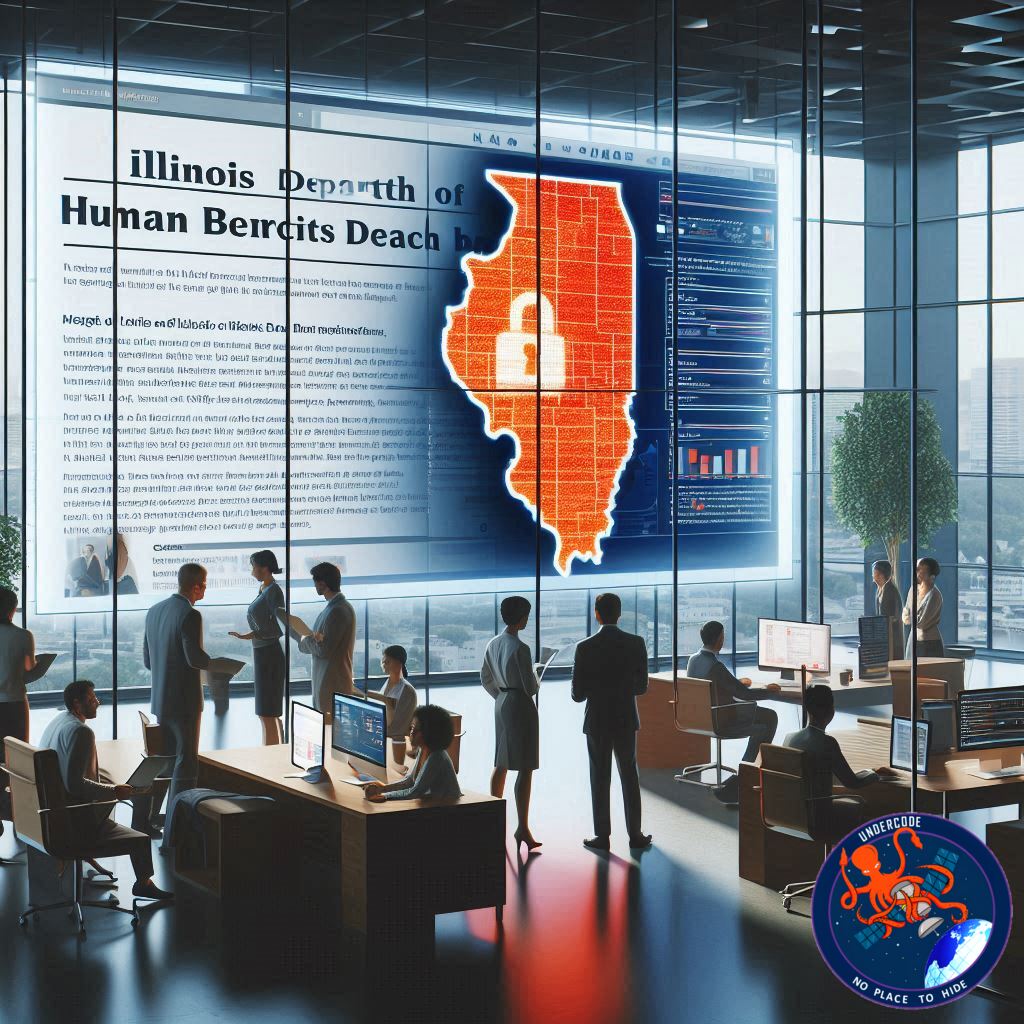
Data breaches are often associated with shadowy hackers and complex cyberattacks. This incident tells a different story, one rooted in misconfiguration rather than malware. The Illinois Department of Human Services, one of the largest public service agencies in the state, disclosed a major privacy failure that quietly exposed sensitive personal and health related data of hundreds of thousands of residents. The breach did not stem from a sophisticated intrusion but from internal planning tools that were mistakenly left open to the public for years, raising serious concerns about governance, oversight, and data handling practices within public institutions.
Internal Mapping Tools Accidentally Turned Public
The Illinois Department of Human Services confirmed that internal maps created by its Division of Family and Community Services were publicly accessible due to incorrect privacy settings. These maps were hosted on a third-party mapping website and were intended strictly for internal planning purposes. Their goal was to help officials make resource allocation decisions, such as identifying areas where new local offices or services were needed. Instead, a configuration error allowed unrestricted public viewing.
Discovery Timeline and Official Disclosure
According to the agency, the exposure was discovered on September 22, 2025. By that point, some of the data had been accessible for several years. The department stated that once the issue was identified, access to the maps was immediately restricted to authorized employees. A comprehensive internal review was launched to determine the scope of the exposed information and the number of individuals affected.
Scope of Exposed Rehabilitation Services Data
One of the most sensitive datasets involved customers of the Division of Rehabilitation Services. Approximately 32,401 individuals had personal details exposed between April 2021 and September 2025. The leaked information included full names, residential addresses, internal case numbers, referral sources, and recipient status. This combination of identifiers could potentially be leveraged for targeted fraud or social engineering.
Medicaid and Medicare Savings Program Records Affected
The breach also impacted a far larger population tied to Medicaid and the Medicare Savings Program. Around 672,616 recipients had information exposed from January 2022 through September 2025. While names were not included in this dataset, the exposed details still contained addresses, case numbers, demographic data, and plan names. Even without names, such datasets can be re-identified when combined with other publicly available information.
Immediate Response and Policy Changes
Following the discovery, IDHS limited map access based on employee roles and introduced a new Secure Map Policy. This policy explicitly prohibits uploading identifiable customer information to public mapping platforms. The department emphasized that these measures are designed to prevent similar incidents in the future and to enforce stricter internal controls over data visualization tools.
Notifications and Regulatory Actions
IDHS has begun notifying affected individuals as well as relevant regulatory authorities. Impacted residents will receive official notices that include toll-free contact numbers and guidance on how to place fraud alerts or security freezes with credit reporting agencies. Information from the Federal Trade Commission is also being provided to help individuals understand identity theft protection options.
A Troubling Pattern From Past Incidents
This disclosure comes in the shadow of a previous cybersecurity incident. In December 2024, threat actors successfully used phishing techniques to compromise employee accounts at IDHS. That attack resulted in the exposure of personal data belonging to more than 1.1 million people. Together, these incidents point to recurring weaknesses in security awareness and data protection practices.
What Undercode Say:
Systemic Risk Hidden Behind Configuration Errors
This incident highlights a critical but often underestimated risk in modern data environments. Misconfiguration is now one of the leading causes of large scale data exposure, especially in government and healthcare sectors. Unlike ransomware or zero-day exploits, misconfigurations are quiet, persistent, and frequently go unnoticed for years.
Mapping Platforms as an Overlooked Attack Surface
Data visualization tools are increasingly used by public agencies to guide policy decisions. Yet these platforms are rarely treated with the same security rigor as databases or core applications. When mapping tools ingest raw operational data, they effectively become secondary data stores. Without strict access controls, they can expose just as much sensitive information as a breached server.
The Illusion of Safety in Partial Anonymization
IDHS noted that some datasets did not include names, implying reduced risk. This assumption is dangerous. Modern re-identification techniques make it possible to link addresses, demographics, and program participation back to specific individuals. Partial anonymization does not equal privacy, especially at scale.
Governance Failures Over Technical Failures
The core issue here is not a lack of security technology but a failure of governance. Years-long exposure suggests missing audit processes, absent data lifecycle management, and insufficient accountability for third-party platforms. Secure policies introduced after the fact are corrective, not preventive.
Public Sector Constraints Do Not Excuse Exposure
Government agencies often operate under budget and staffing limitations, but these constraints do not reduce their responsibility to protect citizen data. In fact, public institutions hold some of the most sensitive information available, making them high-value targets for fraud even when no attacker is involved.
Repeated Incidents Erode Public Trust
The earlier phishing breach and this mapping exposure together create a narrative of institutional fragility. Each incident compounds public skepticism and increases the likelihood of regulatory scrutiny, legal action, and long-term reputational damage.
A Preventable Breach With Lasting Consequences
This exposure could have been prevented through basic controls such as default private settings, periodic access reviews, and data minimization. The cost of prevention would have been negligible compared to the administrative, legal, and human cost of notifying nearly 700,000 affected residents.
Fact Checker Results
✅ IDHS publicly confirmed the breach and its discovery date.
✅ The number of affected individuals aligns with official disclosures.
❌ No evidence suggests external hackers caused this specific exposure.
Prediction
📊 Increased audits of third-party data tools across U.S. government agencies.
📊 Stronger regulations around data visualization and mapping platforms.
📊 Growing public pressure for accountability after repeated state-level data exposures.
▶️ Related Video (80% Match):
🕵️📝✔️Let’s dive deep and fact‑check.
References:
Reported By: securityaffairs.com
Extra Source Hub (Possible Sources for article):
https://www.quora.com/topic/Technology
Wikipedia
OpenAi & Undercode AI
Image Source:
Unsplash
Undercode AI DI v2
Bing
🔐JOIN OUR CYBER WORLD [ CVE News • HackMonitor • UndercodeNews ]
📢 Follow UndercodeNews & Stay Tuned:
𝕏 formerly Twitter 🐦 | @ Threads | 🔗 Linkedin | 🦋BlueSky | 🐘Mastodon


