
Listen to this Post
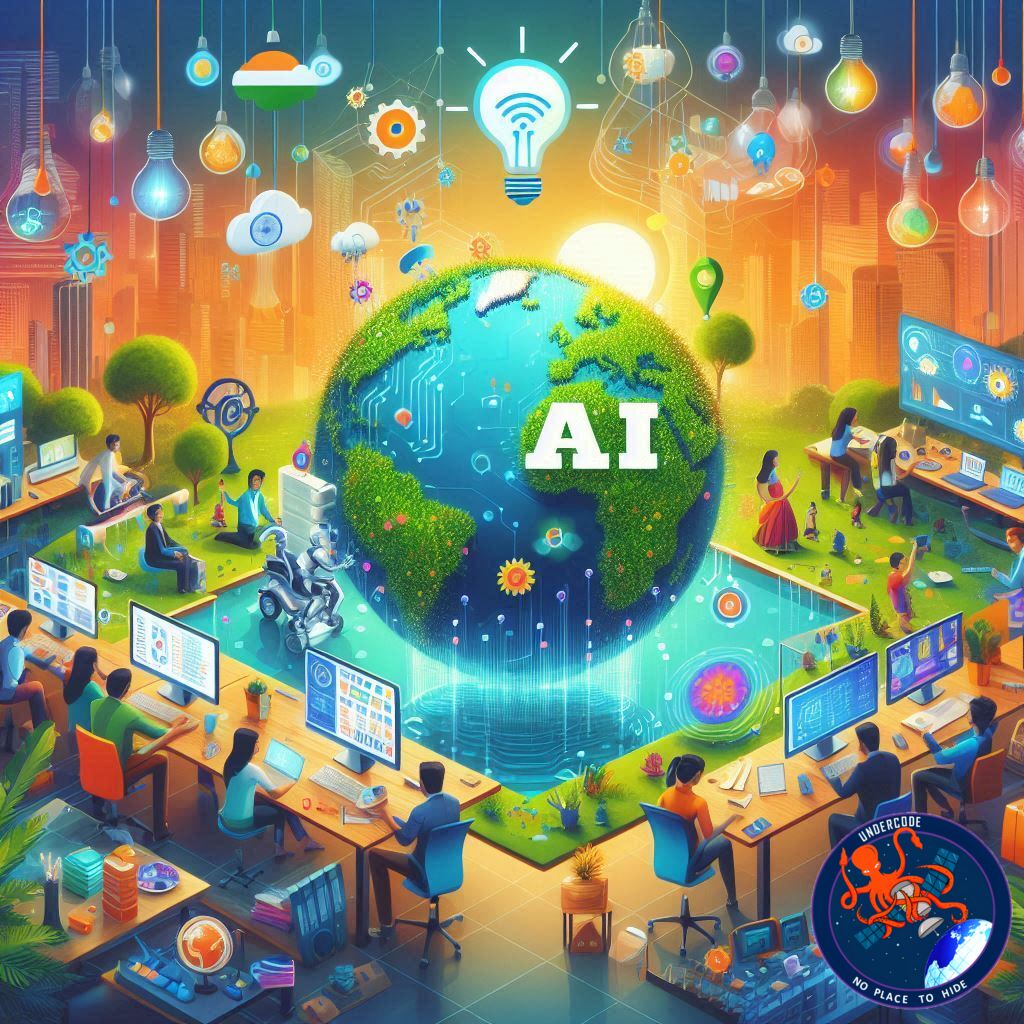
India has long been viewed as a vast consumer market, but over the past few years, it has evolved into a dynamic laboratory for global technological innovation. Tech giants like Google have used the country not only to test solutions but also to design products that later impact users worldwide. Initiatives such as Google Tez (now Google Pay) and the “Two-wheeler mode” in Google Maps were specifically created to address India’s unique challenges, from digital payment adoption to chaotic urban traffic, before being adapted globally. Today, the narrative is shifting from “Solve for India” to “Make in India for the World,” particularly in the realms of deep-tech and artificial intelligence (AI).
At the recent “Lab to Impact” dialogue in Delhi, supported by the India AI Impact Summit 2026, Google highlighted a series of collaborations signaling a new phase: India as a global engine of AI innovation. Projects range from detecting diabetic retinopathy in rural clinics to monitoring crop health across vast farmlands. The country’s diversity—linguistic, cultural, and economic—makes it a unique training ground for AI models, ensuring solutions are robust, scalable, and inclusive.
Dr. Manish Gupta, senior director at Google DeepMind, emphasized that AI built in India is designed to be inclusive, addressing multiple languages, cultures, and socio-economic contexts. By focusing on real-world problems in health, agriculture, and learning, these AI solutions are not only transforming India but also creating a blueprint for deployment in other parts of the world. For instance, AI models for diabetic retinopathy and dermatology, developed with local partners, have already expanded into Southeast Asia.
A major milestone in India’s AI-driven healthcare revolution is the digitization of patient records, often trapped in paper files or disparate hospital systems. Google is working with the National Health Authority (NHA) to convert these fragmented records into the machine-readable FHIR standard. Startups like Ajna Lens, in partnership with AIIMS, are building Health Foundation Models using MedGemma, trained on millions of multi-modal datasets, from images to text, to create more efficient and scalable healthcare AI solutions.
Agriculture represents another frontier for India-led AI innovation. Google.org’s $2 million funding to Wadhwani AI supports Garuda, an Indian language model designed to power AgriVaani, a multilingual assistant helping farmers manage crops and detect pests. By leveraging “agentic capabilities,” these AI systems can not only respond to queries but proactively solve problems by analyzing weather, soil data, and locally available remedies—all in regional languages.
To address India’s linguistic diversity, Google is investing in the Indic Language Technologies Research Hub at IIT Bombay. This initiative builds on projects like Project Vani, which collects speech data across 773 districts, covering over 110 Indian languages, many for the first time. Such diverse datasets enable AI to perform reliably across cultures, skin tones, and dialects, making India a prime environment for testing globally applicable solutions.
The “Lab to Impact” event also emphasized deep partnerships, with Google.org investing $8 million in four AI Centers of Excellence at premier institutions, focusing on healthcare, urban governance, education, and agriculture. While infrastructure challenges remain, Gupta highlighted the ongoing work to make AI models more effective, energy-efficient, unbiased, and culturally aware. Measures like red teaming and rigorous testing ensure models operate safely and responsibly, mitigating risks like hallucinations or misinformation.
AI’s socio-economic potential in India is enormous, augmenting human capabilities and tackling previously intractable problems. According to Gupta, AI could become the most powerful technological enabler in human history—surpassing electricity and fire—by solving challenges in health, education, agriculture, and beyond. The solutions emerging from India’s diverse ecosystem demonstrate that technology capable of thriving in complex Indian contexts can succeed anywhere, positioning the country as a true global AI leader.
What Undercode Say:
India’s role in global AI innovation is no longer ancillary—it is foundational. The country’s linguistic, cultural, and economic diversity offers an unparalleled environment for designing AI systems that must perform reliably under complexity. Projects in healthcare, agriculture, and multilingual AI highlight a deliberate strategy to build technology in India that is robust enough for global deployment.
Healthcare AI, for instance, faces challenges unique to India: fragmented records, varying skin tones, and rural access issues. By converting paper records into the FHIR standard and training models with diverse datasets, AI solutions become not only context-aware but globally scalable. Similarly, agriculture-focused AI demonstrates the evolution of “agentic capabilities,” where models actively solve real-world problems rather than passively respond to questions. This represents a critical shift from conventional AI to proactive, autonomous systems capable of decision-making in diverse scenarios.
Investments in language technologies further cement India’s status as a testbed for AI inclusivity. Capturing speech and text across hundreds of languages ensures that AI is culturally aware, a prerequisite for mass adoption in heterogeneous societies. This approach mitigates the risk of biased models, a frequent critique of AI deployed globally.
Moreover, India’s collaboration with global tech leaders emphasizes a strategic co-creation model rather than mere technology consumption. Initiatives like Health Foundation Models, Garuda for agriculture, and AI Centers of Excellence demonstrate a blueprint for localized yet globally relevant AI. Such a model accelerates knowledge transfer, innovation scaling, and deployment efficiencies, giving India a potential edge in shaping international AI standards.
Energy efficiency, ethical frameworks, and rigorous safety measures also indicate a maturing AI ecosystem in India. Responsible AI practices, including red teaming and cultural contextualization, are essential as these models expand beyond Indian borders. By addressing both technical robustness and ethical considerations, India’s AI initiatives provide a roadmap for other nations grappling with similar challenges.
From a global perspective, India’s AI journey illustrates a shift from reactive problem-solving to proactive solution design. The “solve locally, scale globally” model exemplifies how complex domestic challenges can catalyze technological breakthroughs with universal applicability. By leveraging its demographic complexity and forging strong public-private collaborations, India is positioning itself as a hub where AI research, ethical design, and practical deployment converge.
In essence, India is no longer a passive recipient of global AI innovation—it is actively defining the trajectory of the field. Through strategic investment, localized problem-solving, and multi-modal AI development, the country is setting benchmarks for what inclusive, scalable, and socially responsible AI looks like. The combination of innovation, diversity, and rigorous validation provides lessons that can shape AI policy and practice worldwide.
Fact Checker Results:
✅ Google Pay (Tez) and Two-wheeler mode were India-first innovations that influenced global strategy.
✅ India’s diverse linguistic and economic landscape provides a unique environment for AI testing and deployment.
❌ No evidence suggests AI models trained in India are fully bias-free; ongoing efforts are acknowledged.
Prediction:
📊 India is poised to become a global AI leader within the next decade, with innovations in healthcare and agriculture setting precedents for international deployment. Multilingual AI assistants and agentic capabilities could redefine problem-solving globally. Partnerships with institutions like AIIMS and IITs indicate a scalable model where AI solutions developed in India will increasingly be exported worldwide, driving inclusive technology adoption and socio-economic impact.
🕵️📝✔️Let’s dive deep and fact‑check.
References:
Reported By: timesofindia.indiatimes.com
Extra Source Hub (Possible Sources for article):
https://www.stackexchange.com
Wikipedia
OpenAi & Undercode AI
Image Source:
Unsplash
Undercode AI DI v2
Bing
🔐JOIN OUR CYBER WORLD [ CVE News • HackMonitor • UndercodeNews ]
📢 Follow UndercodeNews & Stay Tuned:
𝕏 formerly Twitter 🐦 | @ Threads | 🔗 Linkedin | 🦋BlueSky | 🐘Mastodon


