
Listen to this Post
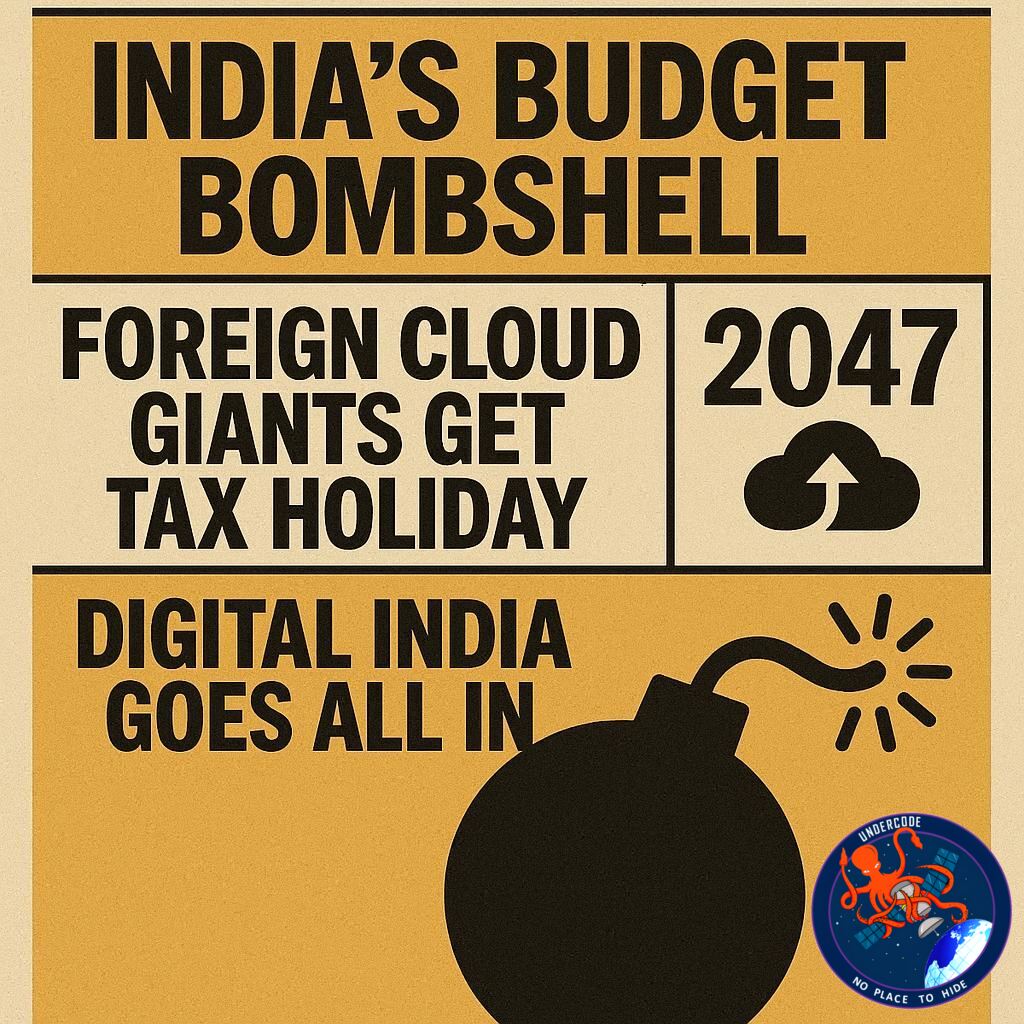
A New Digital Chapter for India’s Economy
India’s Union Budget 2026–27 sends a loud and deliberate signal to the global tech industry: the country wants to become a long-term powerhouse in cloud computing, artificial intelligence, and cyber resilience. With an aggressive push toward digital infrastructure, the government is framing technology not as a supporting sector, but as the backbone of future economic growth and national security.
the Original Report
The report highlights how India’s Union Budget 2026–27 places digital infrastructure at the center of national strategy, offering a historic tax holiday for foreign cloud service providers that runs until 2047. This move is designed to attract hyperscale cloud companies to invest heavily in Indian data centers, local AI ecosystems, and semiconductor manufacturing. The budget frames cloud computing and AI as essential pillars for economic expansion, public-sector digitization, and private-sector innovation. By lowering fiscal barriers, India aims to position itself as a preferred global destination for data processing, storage, and AI model development. The initiative also links cloud growth to stronger cyber resilience, recognizing that expanded digital infrastructure must be protected against rising cyber threats. Officials see this policy as a way to accelerate Digital India goals, reduce dependence on foreign digital jurisdictions, and build sovereign technological capabilities. The long-term nature of the tax holiday signals policy stability, a key demand from multinational tech firms. Overall, the article portrays the budget as a strategic bet on technology leadership rather than short-term revenue collection, aligning economic incentives with national digital ambition.
What Undercode Say:
A Strategic Play for Long-Term Tech Dominance
This budget is less about tax relief and more about geopolitical positioning in the digital age. By extending incentives all the way to 2047, India is telling cloud giants that policy uncertainty will not be the reason they hesitate. Few countries are willing to lock in such long-range commitments, and that alone gives India a competitive edge in attracting hyperscalers.
Cloud, AI, and Semiconductors as a Single Ecosystem
What stands out is how the budget treats cloud infrastructure, AI development, and semiconductor production as interconnected rather than isolated sectors. Cloud data centers need AI workloads to be profitable, AI needs affordable compute, and both depend on reliable chip supply. India is clearly attempting to build the entire stack domestically, or at least anchor it within its borders.
Cyber Resilience Moves From Buzzword to Budget Priority
Including cyber resilience in the same breath as cloud and AI is not accidental. As data localization increases and critical workloads move into Indian data centers, the attack surface expands. This budget implicitly acknowledges that without serious investment in cybersecurity talent, monitoring, and incident response, digital growth becomes a liability rather than a strength.
The Global Signal to Big Tech
For foreign cloud providers, this is an open invitation with unusually generous terms. A tax holiday until 2047 dramatically improves long-term ROI calculations for building and operating massive facilities. It also suggests India is willing to trade short-term tax revenue for infrastructure, jobs, and strategic leverage in the global data economy.
Risks Hidden Beneath the Optimism
However, incentives alone do not guarantee success. Power reliability, water usage for data centers, regulatory clarity on data protection, and skilled workforce availability will determine whether companies scale meaningfully or only symbolically. If these supporting factors lag, the tax holiday may not deliver its full promise.
Why This Budget Could Reshape Regional Tech Power
If executed well, India could become the default cloud and AI hub for South Asia, parts of the Middle East, and Africa. That would shift data gravity, talent flows, and even cybersecurity threat landscapes toward the subcontinent. In that scenario, India is not just hosting infrastructure—it is shaping digital norms.
🔍 Fact Checker Results
✅ The budget explicitly emphasizes digital infrastructure and cloud growth.
✅ A long-term tax incentive for foreign cloud providers is central to the policy narrative.
❌ No detailed public breakdown yet exists on how cyber resilience funding will be allocated.
📊 Prediction
India’s 2026–27 budget will trigger a new wave of cloud and data-center announcements within the next two years, but the real impact will be felt closer to 2030, when AI workloads and regional data demand explode. Countries that fail to match India’s policy stability may find themselves exporting data—and influence—to Indian soil.
🕵️📝✔️Let’s dive deep and fact‑check.
References:
Reported By: x.com
Extra Source Hub (Possible Sources for article):
https://www.quora.com
Wikipedia
OpenAi & Undercode AI
Image Source:
Unsplash
Undercode AI DI v2
Bing
🔐JOIN OUR CYBER WORLD [ CVE News • HackMonitor • UndercodeNews ]
📢 Follow UndercodeNews & Stay Tuned:
𝕏 formerly Twitter 🐦 | @ Threads | 🔗 Linkedin | 🦋BlueSky | 🐘Mastodon


