
Listen to this Post
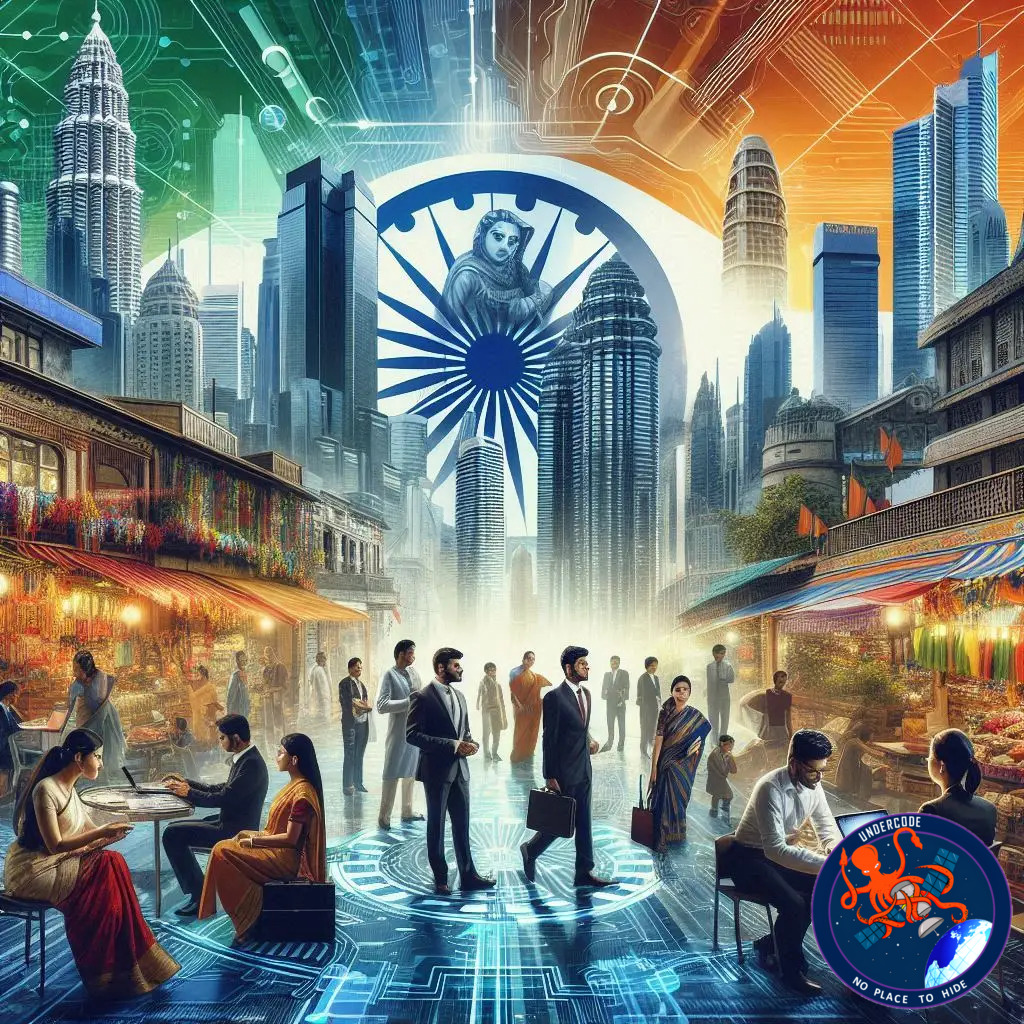
Introduction: When Markets and Governance Collide
India’s economic story is no longer driven by markets alone, nor shaped solely by public institutions. The two are now deeply intertwined. Technology-led disruption, data-driven decision-making, and large-scale governance reforms are collapsing traditional silos between finance, economics, and public policy. In this new reality, professionals are expected to interpret market signals while understanding regulatory intent, social outcomes, and long-term national priorities. The future belongs to those who can think across systems, not within narrow domains.
Summary: How IIM Mumbai and TalentSprint Respond to India’s Talent Shift
India’s position as the world’s fastest-growing major economy has intensified the need for professionals who understand both financial ecosystems and policy frameworks. With capital markets surpassing USD 5 trillion in 2024 and public programmes serving over a billion citizens, decision-making today demands a blend of quantitative skill, economic reasoning, and governance awareness.
Globally, this trend is already visible. The World Economic Forum’s Future of Jobs Report 2025 highlights a sharp rise in demand for analytical and digital skills across finance, public services, and governance. India mirrors this shift at a faster pace due to the scale and complexity of its growth.
To address this emerging skills gap, IIM Mumbai, in collaboration with TalentSprint, part of Accenture, has launched two specialised one-year postgraduate diploma programmes. The Post Graduate Diploma in Financial Economics and Management (PGDFEM) and the Post Graduate Diploma in Public Policy Management (PGDPPM) are designed to prepare professionals for roles at the intersection of markets, regulation, and public impact.
The PGDFEM focuses on financial economics, quantitative analysis, risk management, corporate finance, and investment strategy. Delivered online with live sessions, case studies, simulations, and industry projects, the programme is supported by the National Stock Exchange as a knowledge partner. Learners gain exposure to global financial frameworks, regulatory structures, and real-world market dynamics, culminating in a capstone project that addresses a market-relevant challenge.
The PGDPPM responds to India’s expanding governance systems and growing emphasis on capacity building. Offered under an MoU with the Department of Personnel and Training, Government of India, the programme equips professionals with tools for policy design, implementation, and evaluation. It combines live online learning with a 20-day campus immersion at IIM Mumbai and insights from former IAS officers and senior policy practitioners.
Both programmes offer 45 academic credits, IIM Mumbai alumni status, campus exposure, and strong peer networking opportunities. They are aimed at professionals seeking career advancement, domain transition, or deeper strategic influence in finance, governance, and public systems. Together, they reflect a broader shift toward interdisciplinary expertise as a core requirement for India’s next phase of growth.
What Undercode Say:
What makes these programmes notable is not just their pedigree, but their timing. India is entering a decade where financial volatility, regulatory evolution, and public accountability will intensify simultaneously. Traditional finance education often ignores policy realities, while public policy training frequently underplays market forces. This gap has real consequences, from mispriced risk to poorly designed interventions.
The PGDFEM stands out because it treats regulation and market behaviour as interconnected systems rather than separate subjects. The involvement of NSE as a knowledge partner signals a deliberate move toward applied, market-facing education rather than purely academic theory. In a world where algorithms influence capital flows and policy announcements can move markets in seconds, this integration is no longer optional.
Equally important is the PGDPPM’s emphasis on implementation science. Policy failure in India is rarely about intent, it is about execution at scale. By grounding learners in data-driven evaluation, governance frameworks, and operational realities, the programme addresses one of the most persistent weaknesses in public administration.
From a career perspective, these diplomas reflect a broader recalibration of professional value. Employers increasingly reward individuals who can translate data into decisions, align strategy with regulation, and anticipate second-order effects across society and markets. Pure specialists are giving way to adaptive generalists with analytical depth.
There is also a strategic signal here for mid-career professionals. As automation absorbs routine analytical work, human judgment, contextual intelligence, and ethical reasoning become differentiators. Programmes like PGDFEM and PGDPPM are not just credentials, they are recalibration tools for relevance in a converging economy.
Finally, the alumni network dimension should not be underestimated. In complex systems, access to informed networks often matters as much as technical skill. By embedding learners into IIM Mumbai’s ecosystem, these programmes extend their value far beyond the classroom.
Fact Checker Results
✅ India’s capital markets crossed USD 5 trillion in 2024, reinforcing the scale of financial complexity.
✅ The World Economic Forum confirms rising demand for analytical and digital skills across sectors.
❌ The programmes are not short-term certifications, they are full 45-credit postgraduate diplomas.
Prediction
📊 India’s next wave of leadership roles will favour professionals fluent in both markets and policy.
📊 Interdisciplinary diplomas will gain stronger employer recognition than narrow specialisations.
📊 Institutions blending finance, data, and governance education will shape talent pipelines for the next decade.
▶️ Related Video (86% Match):
🕵️📝✔️Let’s dive deep and fact‑check.
References:
Reported By: timesofindia.indiatimes.com
Extra Source Hub (Possible Sources for article):
https://www.discord.com
Wikipedia
OpenAi & Undercode AI
Image Source:
Unsplash
Undercode AI DI v2
Bing
🔐JOIN OUR CYBER WORLD [ CVE News • HackMonitor • UndercodeNews ]
📢 Follow UndercodeNews & Stay Tuned:
𝕏 formerly Twitter 🐦 | @ Threads | 🔗 Linkedin | 🦋BlueSky | 🐘Mastodon


