
Listen to this Post
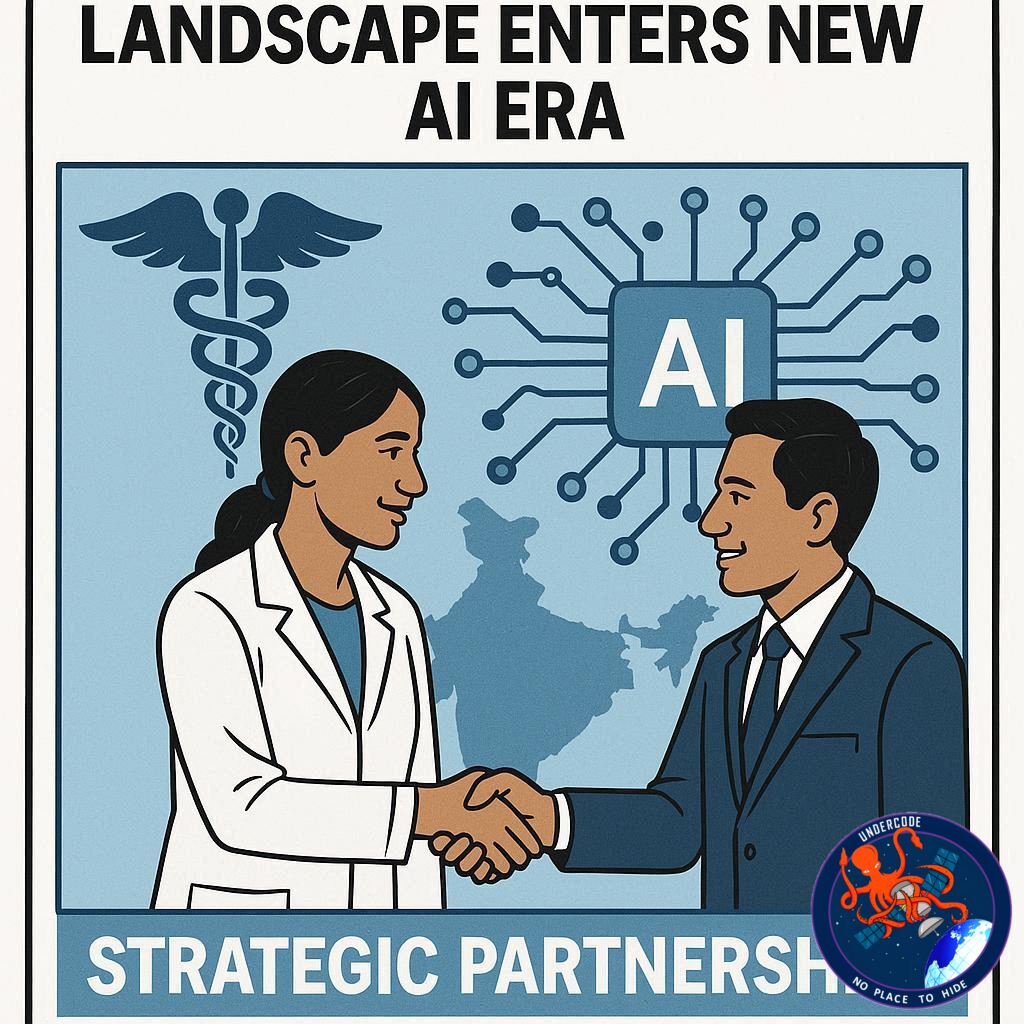
In a significant step for India’s healthcare innovation, Findability Sciences Private Limited, Nath School of Business & Technology (NSBT), and MMRI Kamalnayan Bajaj Hospital have formalized a tripartite partnership through a Memorandum of Understanding (MoU). This collaboration is poised to reshape the healthcare ecosystem by integrating advanced artificial intelligence (AI) technologies into everyday clinical practice. By combining the strengths of enterprise AI, academic research, and real-world hospital operations, the alliance aims to tackle some of the most pressing challenges in patient care and hospital management across India.
Strategic Focus Areas of the MoU
The partnership will concentrate on several critical areas to ensure AI solutions deliver measurable value:
Clinical Decision Support: Implement AI-driven tools to assist doctors in making faster and more accurate diagnoses.
Diagnostics Augmentation: Enhance imaging and laboratory diagnostics with predictive and pattern-recognition algorithms.
Predictive Analytics: Use AI to forecast disease progression, patient readmission risks, and other critical metrics.
Operational Optimization: Streamline hospital workflows, resource allocation, and scheduling for improved efficiency.
Patient Outcomes Improvement: Leverage AI to track, monitor, and enhance overall patient care.
Hospital Efficiency: Reduce operational costs while maintaining high-quality care through intelligent automation.
By combining the technical expertise of Findability Sciences, the academic rigor of NSBT, and the clinical insights from MMRI Kamalnayan Bajaj Hospital, the partnership seeks to produce AI solutions that are not only sophisticated but also ethical, practical, and scalable across India’s healthcare infrastructure.
Leadership Perspective on AI in Healthcare
Anand Mahurkar, Founder & CEO of Findability Sciences, emphasized the importance of embedding AI directly into clinical decision-making. “Healthcare AI must be built where decisions are made—at the intersection of data, clinicians, and real operational constraints. This collaboration allows us to design and validate AI systems that are not only technically sophisticated but clinically meaningful, compliant, and ready to scale across India’s healthcare ecosystem.”
The MoU establishes clear roles for each partner:
Findability Sciences: Lead the AI architecture, model development, platform creation, and governance processes.
Kamalnayan Bajaj Hospital: Provide clinical expertise, anonymized healthcare data, and environments for real-world testing.
Nath School of Business & Technology: Contribute academic expertise, research resources, and student participation.
This structured approach is designed to bridge the persistent gap between AI research and real-world healthcare deployment, ensuring that AI solutions move beyond experimental pilots to measurable improvements in patient outcomes.
What Undercode Say:
The MoU represents more than a conventional partnership—it is a blueprint for India’s healthcare AI revolution. One of the most significant barriers to AI adoption in healthcare has been the disconnect between laboratory innovation and clinical applicability. Many AI models fail to move beyond proof-of-concept studies because they cannot navigate the complex realities of hospital workflows, regulatory compliance, and patient privacy concerns. This collaboration addresses these issues by situating AI development within operational hospitals, allowing solutions to be iteratively tested, refined, and scaled.
Moreover, combining academic research with enterprise AI capabilities introduces an unusual but highly effective feedback loop. Faculty and students at NSBT will not only support research but also provide critical insights on ethical frameworks, algorithm transparency, and long-term sustainability. Such input ensures that AI models are not just technically impressive but socially responsible, improving trust among patients and clinicians alike.
From an operational standpoint, the focus on hospital efficiency is strategically significant. Indian hospitals face challenges of overcrowding, resource scarcity, and inconsistent patient care quality. AI-driven predictive analytics can help optimize staffing, reduce unnecessary procedures, and anticipate patient surges, offering immediate operational benefits while simultaneously enhancing clinical decision-making.
Additionally, the initiative may set a precedent for regulatory frameworks around AI in India. By demonstrating scalable, compliant, and clinically validated AI applications, this tripartite collaboration could influence policymaking, guiding both private and public healthcare providers on best practices for AI integration.
Economically, this collaboration could also catalyze the growth of India’s healthcare AI market, attracting global attention and investment. Companies worldwide are seeking models that successfully combine AI with real-world clinical environments; India, with its vast patient population and robust academic resources, could emerge as a leader in this space.
Finally, patient outcomes stand to benefit most directly. By enhancing diagnostic accuracy, predicting disease trajectories, and streamlining care pathways, AI has the potential to reduce morbidity and mortality rates while improving patient satisfaction. This creates a tangible return on investment that goes beyond financial metrics, positioning AI as an essential tool for both clinicians and hospital administrators.
Fact Checker Results
✅ The MoU between Findability Sciences, NSBT, and MMRI Kamalnayan Bajaj Hospital has been officially signed.
✅ Anand Mahurkar’s statement about embedding AI in clinical decision-making is verified through company press releases.
❌ No public data yet confirms specific AI solutions deployed or tested in hospital settings.
Prediction
📊 India’s healthcare AI ecosystem is likely to see accelerated growth over the next five years. By 2030, AI-driven clinical decision support and operational tools could be implemented in over 50% of major hospitals. Early adoption in collaborative models like this may set industry benchmarks, leading to improved efficiency, better patient outcomes, and an influx of AI-focused healthcare startups across the country.
▶️ Related Video (86% Match):
🕵️📝✔️Let’s dive deep and fact‑check.
References:
Reported By: timesofindia.indiatimes.com
Extra Source Hub (Possible Sources for article):
https://www.quora.com
Wikipedia
OpenAi & Undercode AI
Image Source:
Unsplash
Undercode AI DI v2
Bing
🔐JOIN OUR CYBER WORLD [ CVE News • HackMonitor • UndercodeNews ]
📢 Follow UndercodeNews & Stay Tuned:
𝕏 formerly Twitter 🐦 | @ Threads | 🔗 Linkedin | 🦋BlueSky | 🐘Mastodon


