
Listen to this Post
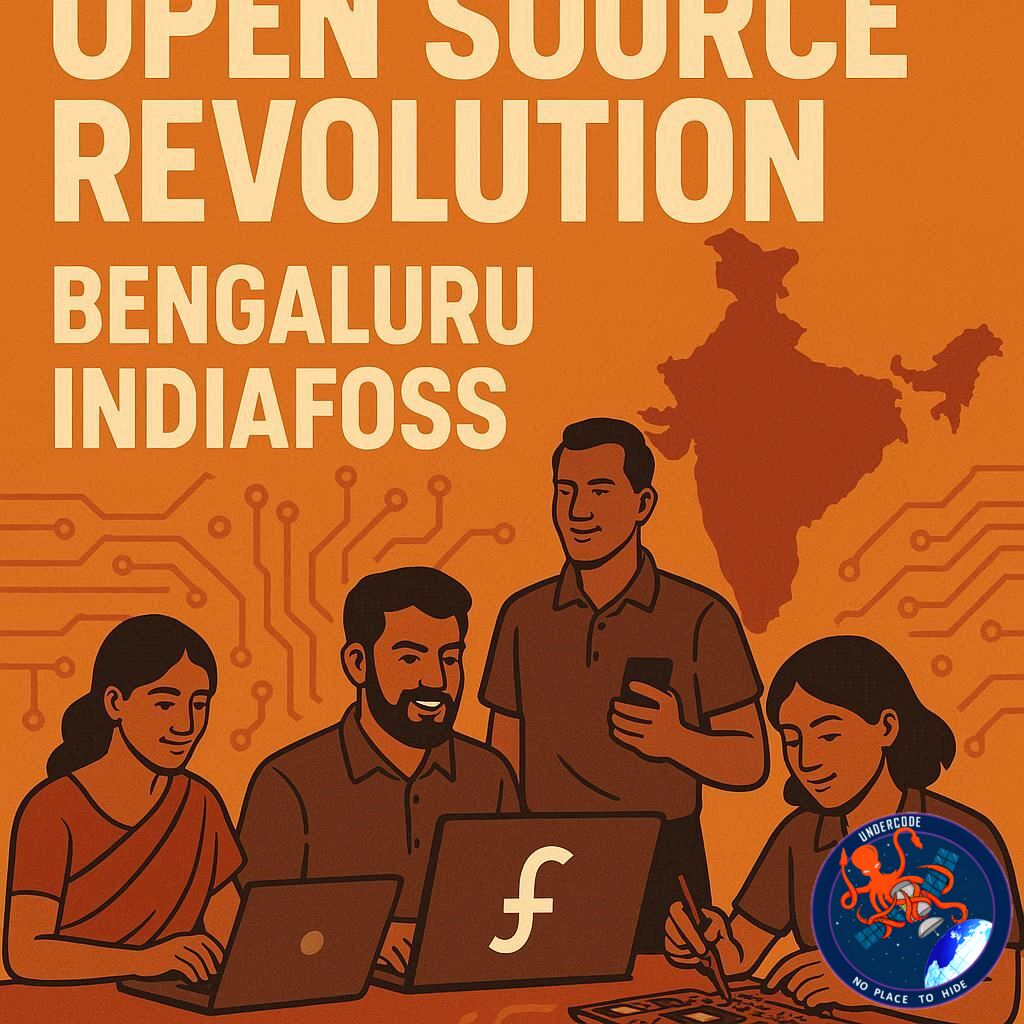
The Rise of IndiaFOSS and Its Vision
Bengaluru recently hosted the fifth edition of IndiaFOSS, a major event celebrating Free and Open Source Software. The conference highlighted how Indian engineers and entrepreneurs are pushing the boundaries of open-source innovation. What stood out was not just the scale of the projects, but also their ambition—showcasing everything from photo storage platforms and enterprise resource planning systems to handheld computers and creative writing software.
Ente’s Challenge to Big Tech
One of the most talked-about ventures was Ente, a privacy-first alternative to Google Photos. Founded by Vishnu Mohandas, who left a promising career at Google, Ente focuses on giving users complete ownership of their data. Unlike mainstream platforms that thrive on targeted advertising, Ente offers 10GB free storage, with paid options only for extra space. With over 300 million photos already stored and around 1 million new uploads daily, Ente has proven that user trust can be combined with profitability in the open-source world.
Frappe and ERPNext: Enterprise Solutions Without Lock-In
Another remarkable story comes from Frappe, an 18-year-old pioneer in India’s open-source scene. Its flagship product, ERPNext, rivals giants like SAP by offering businesses a complete suite: finance, HR, CRM, inventory, and helpdesk solutions. Built on the Frappe Framework, it gives companies the freedom to self-deploy, customize, and scale—without the burden of costly licenses or vendor lock-ins. This democratization of enterprise tools has made ERPNext one of India’s strongest open-source success stories.
Mecha Comet: Hardware Freedom in Your Hands
On the hardware side, Mecha Systems presented the Mecha Comet, a programmable Linux-based handheld computer. Unlike smartphones that limit what users can do, the Comet allows full access to hardware and software layers. With 30,000 people already on its waiting list, it is being hailed as a breakthrough for education, tinkering, and hardware learning in India. Founder Shoaib Merchant emphasizes that the device is about returning rights to the consumer, letting people modify and learn at every level of the machine.
Plane: A New Player in Project Management
The global shift in enterprise software opened another door for India’s open-source community. When Atlassian retired Jira’s self-hosted editions, Plane Software stepped in with its open-source project management tool. Its community edition is free and self-hostable, while an enterprise version serves regulated industries such as finance and defense. With adopters including Sony, Zerodha, Dolby, and Aramco, Plane is quickly becoming a trusted name in compliance-focused software.
Scrite: Writing Tools for Creatives
The creative sector has not been left out either. Scrite, a desktop screenwriting app, is already used by nearly 45,000 writers worldwide, with 30,000 in India alone. Developed by Prashant Udupa, it focuses on scene-centric structuring, supports multiple Indian languages, and helps filmmakers plan efficiently with reports and script exports. The project proves how a personal coding initiative can evolve into a global tool for storytellers.
Building a Culture of Open Source in India
Zerodha CTO and long-time open-source advocate Kailash Nadh summed up the broader importance of this movement. He stressed that IndiaFOSS projects are not just software tools, but societal investments. By creating rather than merely consuming global technology, India strengthens its long-term technical capacity and self-reliance.
What Undercode Say:
India’s open-source movement is no longer a niche hobby; it is transforming into a strategic force shaping the nation’s technology future. The projects highlighted at IndiaFOSS reveal several key trends worth examining in depth.
First, the privacy vs. convenience debate is central to ventures like Ente. In a world dominated by surveillance capitalism, where data often equals currency, Ente’s business model stands out by aligning user incentives with ethical technology use. This is not just a product choice—it’s a philosophical stance against the erosion of digital autonomy.
Second, enterprise disruption through ERPNext and Plane is significant. For decades, companies like SAP and Oracle have created ecosystems of dependency. Open-source ERP and project management solutions are not just cheaper—they are enablers of organizational freedom. They break the chains of licensing and introduce competition that benefits even those who remain with traditional vendors.
Third, hardware liberation through Mecha Comet signals a cultural shift. Most people today use black-box devices—sealed, polished, but ultimately restrictive. A generation of engineers growing up with access to modifiable hardware could transform India’s position in global electronics manufacturing. This is more than a gadget; it is a pedagogical revolution in how people learn computers.
Fourth, creative empowerment through Scrite demonstrates how software need not only serve corporations—it can serve art, language, and storytelling. Supporting multiple Indian languages ensures inclusivity and nurtures local cinema industries that might otherwise rely on Western tools not optimized for their needs.
Another important dimension is market timing. Jira’s self-hosted retirement created a compliance gap that Plane seized masterfully. Timing often determines whether a project thrives or disappears, and Indian developers are showing the instinct to capitalize on such global shifts.
We should also reflect on the cultural multiplier effect that open source generates. When one individual contributes code, that improvement benefits thousands or millions. This collaborative compounding accelerates innovation in ways proprietary systems cannot match. In essence, open source is not just about free software—it is about collective progress.
From an economic perspective, these projects point toward a future where India not only exports IT services but also creates original global products. The transition from being a “coding back office” to an innovation powerhouse hinges on such grassroots movements. IndiaFOSS is quietly sowing the seeds of that transformation.
Finally, one cannot overlook the societal impact. As Nadh said, when India produces high-quality tech, it strengthens national capacity. But beyond that, it also builds resilience against monopolistic practices, external dependencies, and digital colonization. Open source is not merely technical—it is geopolitical.
In short, IndiaFOSS is more than a conference. It is a cultural milestone marking India’s maturation in the tech world, and the projects it nurtures could redefine the global perception of Indian technology.
Fact Checker Results
✅ Ente is a bootstrapped, profitable open-source alternative to Google Photos.
✅ ERPNext from Frappe is widely adopted and fully open source.
✅ Mecha Comet already has tens of thousands waiting for its release.
Prediction
IndiaFOSS is laying the foundation for a global open-source wave led by India 🌍. Within the next decade, Indian projects like ERPNext, Plane, and Ente could challenge Silicon Valley dominance in specific niches 🚀. If this momentum continues, India will be recognized not just as a software service hub, but as a global open-source innovation leader 🔮.
🕵️📝✔️Let’s dive deep and fact‑check.
References:
Reported By: timesofindia.indiatimes.com
Extra Source Hub:
https://www.facebook.com
Wikipedia
OpenAi & Undercode AI
Image Source:
Unsplash
Undercode AI DI v2
🔐JOIN OUR CYBER WORLD [ CVE News • HackMonitor • UndercodeNews ]
📢 Follow UndercodeNews & Stay Tuned:
𝕏 formerly Twitter 🐦 | @ Threads | 🔗 Linkedin | 🦋BlueSky | 🐘Mastodon


