
Listen to this Post
Introduction
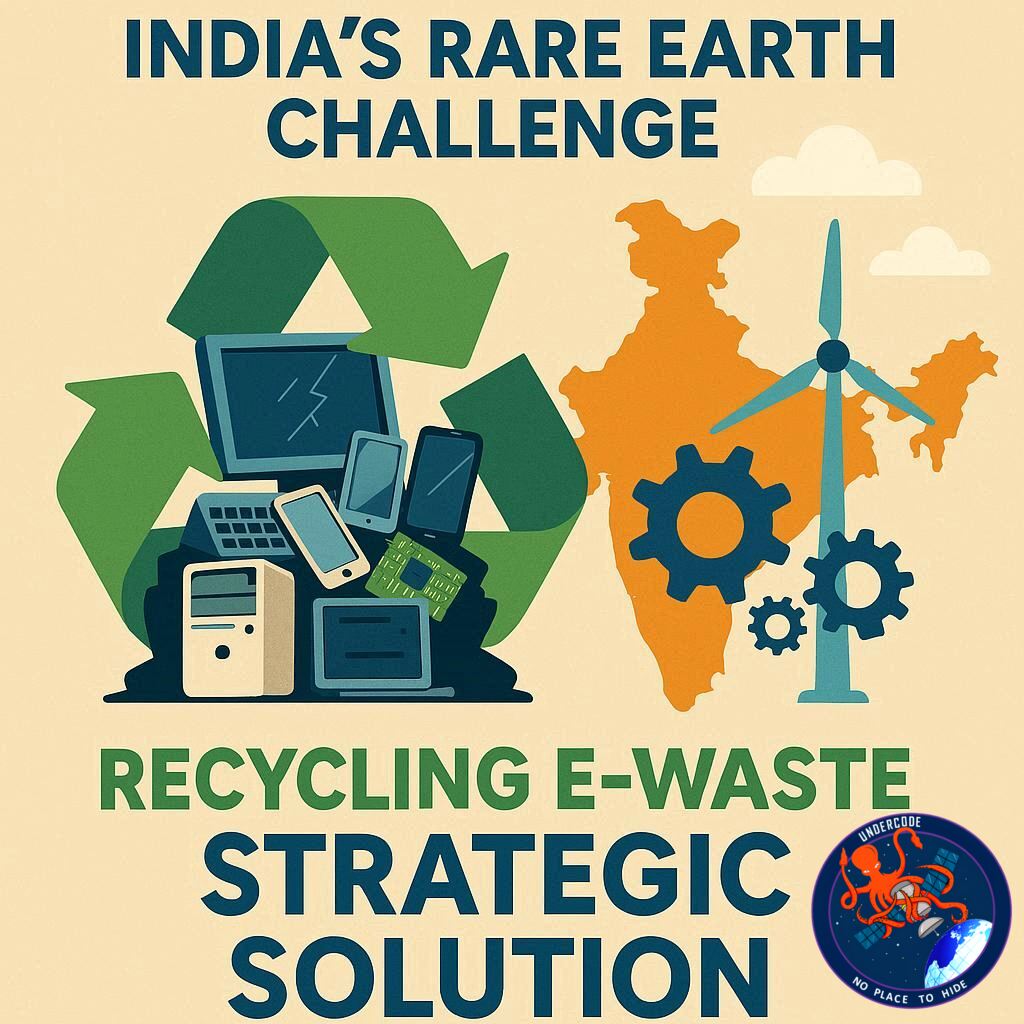
As India aims to strengthen its position in advanced technology sectors, the country faces a critical bottleneck: rare-earth minerals. Essential for electric vehicles, batteries, and high-tech electronics, these minerals have become a geopolitical tool, with China dominating global supply chains. HCL co-founder Ajai Chowdhry has proposed a bold and immediate solution: recycling e-waste to meet domestic demand. This approach could reduce dependence on foreign imports and fast-track India’s technological ambitions.
Meeting India’s Rare-Earth Needs Through E-Waste
Ajai Chowdhry, who also serves as Chairman of the National Quantum Mission, emphasized that India could fulfill 30-40% of its domestic rare-earth mineral requirements by processing electronic waste. Unlike traditional mining projects, which may take five to seven years to yield results, recycling e-waste offers a rapid alternative. According to Chowdhry, much of the electronic scrap discarded annually contains significant quantities of rare earths. By systematically recovering these materials, India can accelerate supply for critical technologies.
The push for this approach stems from strategic concerns. Rare-earth minerals are no longer just industrial commodities—they are weapons in global trade. Countries with control over these elements can influence technology supply chains, affecting sectors like EV manufacturing and advanced electronics. Chowdhry highlighted that China’s dominance—owning around 90% of global rare-earth production—creates significant vulnerability for nations reliant on these imports. This dependence can hinder the development of key products in India, the U.S., and Europe.
The Indian government, through the Centre and NITI Aayog, has developed a comprehensive plan to secure rare-earth resources. However, Chowdhry argues that recycling offers a faster, non-mined alternative. Extracting rare earths from e-waste not only provides a quicker domestic supply but also reduces environmental impact compared to conventional mining. Such a move could make India more resilient to global supply shocks while contributing to a circular economy.
Chowdhry also emphasized the strategic angle, noting that rare-earth minerals are now part of the “weaponization” of technology. From software to hardware to batteries, control over critical materials can determine a nation’s ability to compete in high-tech markets. He cited China’s strategy over the past decade and a half: sourcing rare-earth minerals globally, acquiring mines, and consolidating control. This concentration allows China to potentially disrupt production worldwide, underscoring the urgency for India to develop independent supply channels.
Recycling e-waste could also create new industrial ecosystems within India. Processing scrap to extract rare-earth minerals can stimulate research, manufacturing, and skill development. Companies working in e-waste recycling could emerge as key players in India’s technology supply chain, turning what was once a liability into strategic advantage. In addition, this approach aligns with global trends toward sustainability and circular economies, where waste becomes a valuable resource.
What Undercode Say:
Ajai Chowdhry’s proposal is not just practical but strategically necessary. By relying on recycled e-waste, India can achieve a dual goal: reducing import dependence and mitigating environmental costs. Rare-earth minerals are foundational to electric vehicles, renewable energy systems, semiconductors, and defense technologies. Currently, China’s dominance poses a structural risk, as it can influence production, pricing, and availability, effectively holding other nations hostage.
India’s existing mining projects will take years to yield results, during which technology gaps may widen. Recycling e-waste bypasses this delay, providing an immediate supply of critical materials. Moreover, e-waste is abundantly available, with millions of tons discarded annually. Systematic collection and processing could easily meet a substantial portion of demand.
Beyond supply security, this strategy enhances India’s geopolitical leverage. Reducing reliance on China for rare-earth minerals strengthens India’s negotiating position in global trade and technology alliances. Additionally, domestic recycling initiatives could catalyze innovation, encouraging research into more efficient extraction techniques and novel materials recovery methods.
The approach also has economic benefits. Establishing a robust e-waste recycling infrastructure can create jobs, develop new industrial clusters, and attract investment. From small-scale collection operations to high-tech extraction facilities, the industry has multiple entry points for entrepreneurs and corporations.
Chowdhry’s call to action underscores the intersection of technology, economy, and national security. It is a reminder that rare-earth minerals are not just inputs—they are strategic assets. Countries that ignore this reality risk being outpaced in the race for next-generation technologies. India’s policy frameworks must therefore prioritize fast-tracked recycling programs alongside long-term mining strategies.
Sustainability is another compelling dimension. Recycling e-waste reduces environmental degradation associated with mining, lowers carbon footprints, and prevents toxic materials from contaminating soil and water. This approach could position India as a global leader in green technology and circular economy practices.
Finally, the timing is critical. With the EV market, renewable energy, and advanced electronics expanding rapidly, any delay in securing rare-earth supplies can translate into lost economic opportunities. Recycling e-waste is a practical, fast, and strategically sound solution to a pressing problem, bridging the gap between long-term plans and immediate needs.
Fact Checker Results:
✅ India currently imports a significant portion of rare-earth minerals.
✅ China dominates approximately 90% of global rare-earth production.
❌ Recycling e-waste alone cannot completely replace mining but can meet a substantial fraction of domestic demand.
Prediction
📊 If India invests in large-scale e-waste recycling programs, it could meet 30-40% of its rare-earth mineral needs within five years. This would reduce dependency on China, accelerate EV and battery production, and position India as a global leader in circular economy initiatives. Furthermore, the growth of domestic recycling industries may create thousands of jobs and stimulate innovation in sustainable material recovery technologies.
🕵️📝✔️Let’s dive deep and fact‑check.
References:
Reported By: timesofindia.indiatimes.com
Extra Source Hub (Possible Sources for article):
https://www.reddit.com
Wikipedia
OpenAi & Undercode AI
Image Source:
Unsplash
Undercode AI DI v2
Bing
🔐JOIN OUR CYBER WORLD [ CVE News • HackMonitor • UndercodeNews ]
📢 Follow UndercodeNews & Stay Tuned:
𝕏 formerly Twitter 🐦 | @ Threads | 🔗 Linkedin | 🦋BlueSky | 🐘Mastodon


