
Listen to this Post
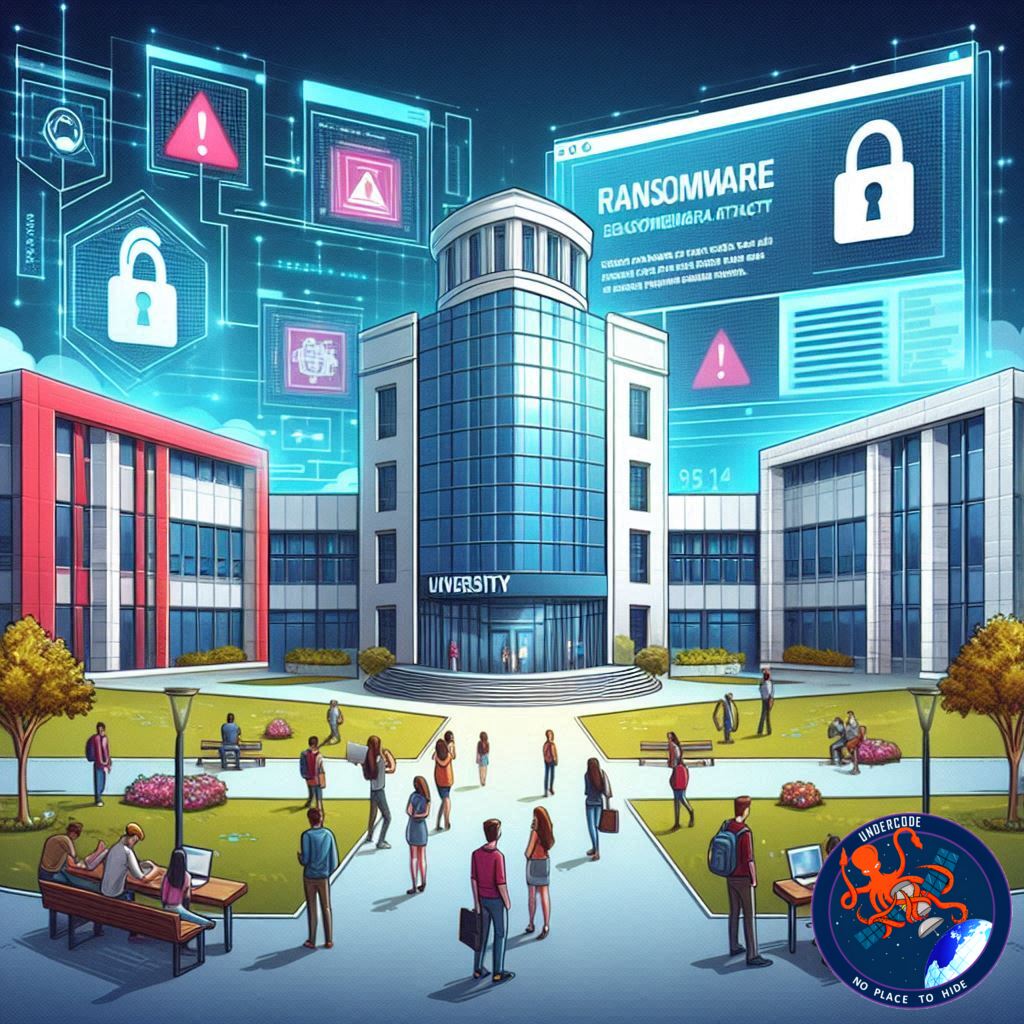
Introduction: A Quiet Campus, A Loud Digital Shock
Universities often represent openness, research freedom, and trust. When that trust fractures, the consequences ripple far beyond lecture halls. A recent claim circulating through cybersecurity monitoring channels suggests that INHA University in South Korea has become the latest victim of a ransomware operation attributed to a group known as Gunra. The alleged incident has drawn attention not only because of the institution’s academic stature, but also because it exposes how higher education remains a prime target in a rapidly evolving cyber threat landscape. What appears at first glance as another ransomware headline may actually reflect deeper structural weaknesses, shifting attacker strategies, and a growing crisis of digital resilience across global education systems.
Main Summary: What the Reported Incident Reveals
The claim originated from a cybersecurity-focused social media account known for tracking data leaks and ransomware activity. According to the report, the ransomware group Gunra allegedly compromised systems belonging to INHA University, accessing sensitive academic and administrative data. While the full scope of the breach remains unclear, the implication is significant. Academic records, internal communications, staff data, and potentially research-related material could be affected if the claims hold true.
The source of the report traces back to a cybersecurity monitoring ecosystem that aggregates information from dark web leak sites, ransomware group announcements, and threat intelligence feeds. Such platforms often act as early warning systems, highlighting potential incidents before official confirmation emerges. In this case, the information points to a data compromise rather than a simple service disruption, suggesting that data exfiltration may have occurred prior to or alongside encryption activities.
INHA University, a respected institution in South Korea, plays a major role in engineering, science, and technological research. Any compromise involving such an organization naturally raises concerns beyond student records. Research collaborations, intellectual property, and administrative systems form an interconnected digital environment. Once attackers gain a foothold, lateral movement can allow access to high-value data that may be monetized, leaked, or leveraged for extortion.
Ransomware groups increasingly favor educational institutions because of their complex networks and limited cybersecurity budgets. Universities often prioritize accessibility and collaboration, creating environments where security controls may lag behind enterprise-level defenses. Attackers exploit this openness, knowing that downtime disrupts teaching, research schedules, and institutional reputation. This pressure often increases the likelihood of ransom negotiations, even if such actions are rarely acknowledged publicly.
The mention of Gunra as the alleged threat actor adds another layer of complexity. While not as globally recognized as some ransomware syndicates, emerging groups often operate with aggressive tactics to establish credibility. Publicizing victims, even through indirect channels, helps them gain attention within cybercriminal ecosystems. This visibility can accelerate their influence and attract affiliates, further escalating future attacks.
The timing of the report also matters. Academic institutions frequently experience heightened digital activity near the end of the year due to examinations, administrative closures, and system maintenance. Attackers are aware of these patterns. Reduced staffing and delayed response windows can increase the success rate of intrusions and prolong detection times.
What stands out in this case is the emphasis on both academic and administrative data. Academic data often includes personal identifiers, academic performance records, and research materials. Administrative data may contain financial information, contracts, and internal operational details. The combination creates a high-impact breach scenario that affects students, faculty, partners, and potentially external collaborators.
While no official confirmation or denial was immediately attached to the claim, the circulation of such reports alone can have consequences. Trust is a fragile asset in education. Even unverified allegations can influence public perception, raise compliance questions, and trigger internal audits. Institutions are often forced into reactive communication strategies, balancing transparency with legal and investigative constraints.
Cybersecurity incidents in higher education also reveal a broader pattern. Universities operate as microcosms of society, hosting diverse users, legacy systems, and experimental technologies. This diversity, while academically beneficial, complicates security governance. Attackers thrive in these environments because uniform policy enforcement becomes challenging.
The alleged INHA University incident fits into a growing global narrative. Over the past few years, educational institutions across multiple continents have faced ransomware campaigns that disrupted operations, delayed semesters, and exposed sensitive information. Each incident contributes to a cumulative erosion of trust in digital infrastructure within academia.
Beyond immediate operational risks, there is also a long-term reputational impact. Prospective students, international partners, and funding bodies increasingly consider cybersecurity posture when evaluating institutions. A single breach, even if contained, can influence perceptions for years.
The role of public reporting channels, such as cybersecurity-focused social media accounts, adds another dimension. These platforms act as informal watchdogs, but they also accelerate the spread of unverified information. This dual role creates tension between transparency and accuracy, especially when institutions have not yet completed internal investigations.
Despite these challenges, incidents like this also serve as critical learning moments. They highlight where defenses fail, where policies lag, and where awareness must improve. For universities, each reported attack is a reminder that cybersecurity is no longer an IT issue alone but a core component of institutional resilience.
The alleged targeting of INHA University underscores how ransomware has evolved from opportunistic crime into a strategic threat against knowledge institutions. The focus is no longer solely on financial gain but also on influence, disruption, and long-term leverage.
As digital transformation accelerates across education, the line between academic openness and security risk grows thinner. Without sustained investment in cybersecurity training, infrastructure, and governance, similar incidents are likely to repeat across the global education sector.
What Undercode Say:
The reported targeting of INHA University reflects a deeper structural problem that many institutions still underestimate. Cybercriminal groups are no longer experimenting. They are refining their playbooks, choosing victims with precision, and exploiting organizational fatigue. Universities sit at the intersection of high-value data and decentralized control, making them ideal testing grounds for emerging ransomware strategies.
What stands out is the apparent confidence behind the claim. Groups that publicly associate themselves with attacks often do so to build a reputation that fuels future operations. This suggests a calculated move rather than an impulsive breach. Even if the scale of compromise remains uncertain, the signaling effect is powerful.
There is also a cultural gap at play. Academic environments prioritize openness, collaboration, and intellectual freedom. Cybersecurity, by contrast, thrives on restriction, monitoring, and enforcement. When these philosophies collide, security frameworks often lose. Attackers understand this tension and exploit it with precision.
Another overlooked factor is data lifecycle management. Universities accumulate decades of data, much of which remains accessible long after its operational value has expired. This creates expansive attack surfaces. Without rigorous data minimization practices, institutions unknowingly increase the impact radius of any breach.
The alleged incident also highlights how ransomware has become a reputational weapon. Even without confirmed data leaks, the mere suggestion of compromise can erode stakeholder confidence. This psychological dimension is now central to cyber extortion strategies.
From a strategic standpoint, institutions must move beyond reactive patching. Cyber resilience requires continuous threat modeling, user education, and executive-level ownership. Security teams alone cannot shoulder this responsibility. Leadership must treat cybersecurity as institutional risk, not technical overhead.
There is also a growing need for transparency frameworks. When incidents occur, clear communication grounded in verified facts can prevent misinformation from dominating the narrative. Silence often creates more damage than disclosure.
The education sector stands at a crossroads. Either cybersecurity becomes embedded into its operational DNA, or incidents like this will continue to surface with increasing frequency and impact. The alleged targeting of INHA University should be viewed not as an isolated event, but as part of a broader warning signal.
Fact Checker Results
✅ The claim references a known cybersecurity monitoring source.
❌ No official confirmation from INHA University has been publicly cited.
✅ The pattern aligns with documented ransomware targeting of academic institutions.
Prediction
🔮 Universities will increasingly become strategic ransomware targets due to data richness and operational pressure.
🔮 Institutions that fail to modernize cybersecurity governance will face repeated exposure and reputational erosion.
🔮 Transparent incident response will become a competitive trust factor in global higher education.
🕵️📝✔️Let’s dive deep and fact‑check.
References:
Reported By: x.com
Extra Source Hub (Possible Sources for article):
https://www.twitter.com
Wikipedia
OpenAi & Undercode AI
Image Source:
Unsplash
Undercode AI DI v2
Bing
🔐JOIN OUR CYBER WORLD [ CVE News • HackMonitor • UndercodeNews ]
📢 Follow UndercodeNews & Stay Tuned:
𝕏 formerly Twitter 🐦 | @ Threads | 🔗 Linkedin | 🦋BlueSky | 🐘Mastodon


