
Listen to this Post
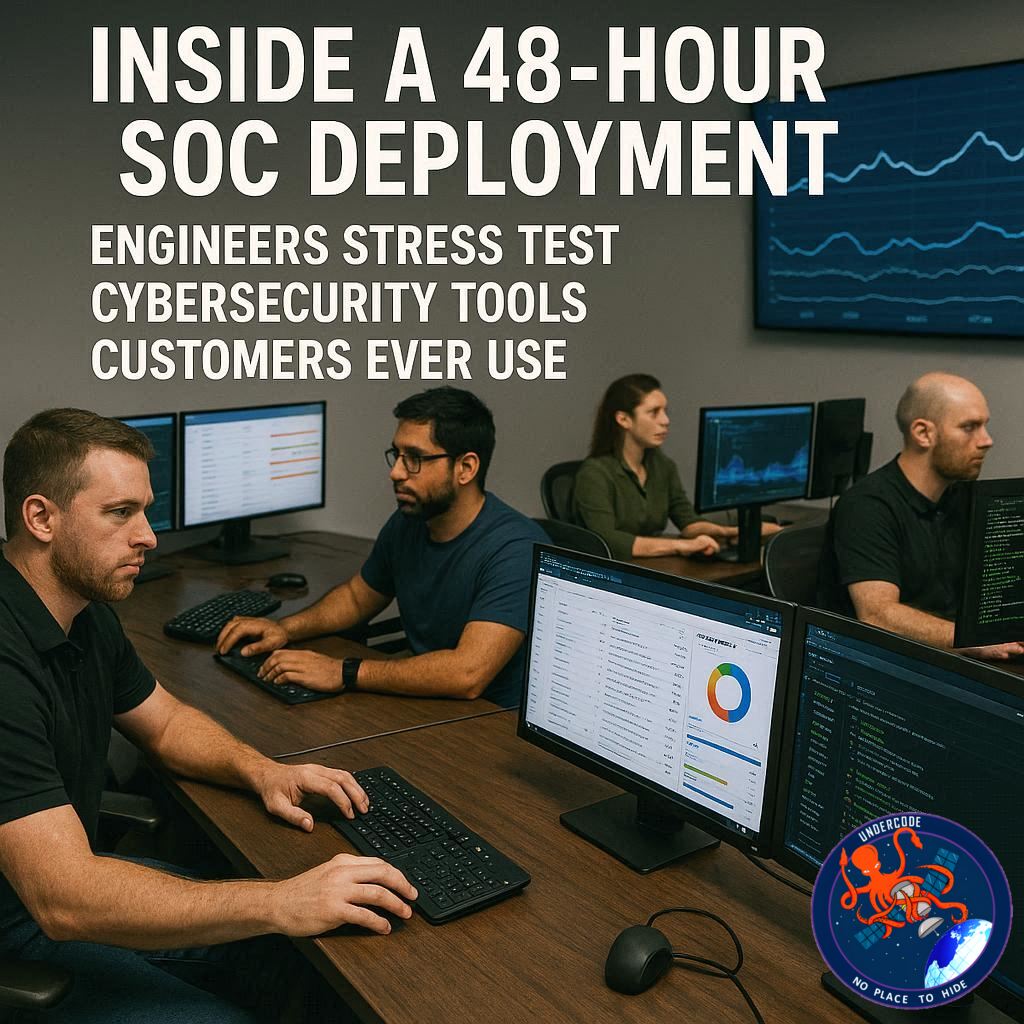
Introduction: When Cybersecurity Feels Like Drinking From a Firehose
In modern cybersecurity operations, professionals often describe their daily workload as “drinking from the firehose.” The phrase captures the reality of handling endless streams of telemetry, alerts, attack indicators, and suspicious behavior pouring in from across networks. Even the most experienced analysts can feel overwhelmed when faced with that kind of data velocity.
At Cisco, there is another philosophy that balances this pressure: “drinking our own champagne.” The concept is simple but powerful. Instead of merely building cybersecurity tools for customers, engineers and analysts actively use those same tools in demanding environments. They stress-test them, push their limits, and expose weaknesses before the technology ever reaches a customer’s dashboard.
For engineers working on modern detection platforms, this practice is not theoretical. It is real operational work carried out in live environments. Over the past 2.5 years, a systems engineer working in the incubation team behind Cisco’s Extended Detection and Response platform has experienced firsthand how innovation, experimentation, and operational pressure collide inside real-world security operations.
From deploying temporary SOC infrastructures in just two days to investigating suspicious traffic during major technology conferences, the journey highlights how modern security ecosystems are built, tested, and improved under real pressure.
Building a SOC in Just 48 Hours
One of the most intense experiences for cybersecurity engineers is the “SOC-in-a-Box” deployment.
Imagine entering an empty room and having exactly 48 hours to build a fully operational Security Operations Center capable of monitoring and protecting a network the size of a small city. That is precisely what engineers must accomplish during large industry events such as Cisco Live.
This rapid deployment process involves installing and configuring a complete stack of monitoring, detection, and analysis tools. Hardware must be installed, telemetry pipelines configured, integrations tested, and alerting systems activated. Everything must function immediately because the moment attendees connect to the network, the SOC must be ready.
Unlike controlled simulations, this environment includes thousands of real devices and users. Network traffic begins flowing instantly, and analysts must start hunting for anomalies from the very first connection. In these moments, cybersecurity teams truly experience the “firehose” of incoming data.
The SOC must operate flawlessly because it is not just protecting infrastructure. It is protecting thousands of participants, devices, and sensitive communications in real time.
Learning From Dutch Flood Defenses
During a deployment in Amsterdam, engineers noticed an interesting parallel between cybersecurity architecture and the Netherlands’ famous flood defense systems.
For centuries, the Dutch have fought an ongoing battle against the sea. After the catastrophic North Sea Flood of 1953, the country developed the massive Delta Works project, a series of sophisticated barriers designed to prevent future flooding.
The brilliance of this system lies in its layered defense strategy. Instead of relying on a single wall to stop water, multiple protective layers work together to detect rising threats and respond accordingly.
Modern cybersecurity architecture follows the same principle.
The First Layer: Network Foundations
In the digital world, the foundational defense layer is network visibility.
Technologies like NetFlow and Cisco Secure Network Analytics monitor traffic patterns across the network. They provide the baseline understanding of who is communicating with whom, how often, and for how long.
This foundational layer functions like the earliest flood barriers in the Dutch system. It does not necessarily block attacks directly, but it ensures that analysts always understand what is happening within the network environment.
Without this visibility, identifying abnormal behavior becomes almost impossible.
The Second Layer: Intelligent Traffic Control
The next layer involves active defense systems capable of blocking malicious activity.
Cisco’s firewall technology, such as Firepower Threat Defense, plays a role similar to the dynamic storm barriers used in Dutch coastal defenses. Normally, traffic flows freely to allow legitimate business operations. However, when the system detects suspicious activity or known attack signatures, it immediately intervenes to stop the threat.
This balance is crucial. Security systems must protect the environment without disrupting legitimate traffic or business operations.
The Third Layer: Advanced Detection and Response
At the highest level sits the advanced orchestration layer.
Here, tools like Cisco XDR and Splunk Enterprise Security analyze events across multiple systems simultaneously. They correlate alerts, identify attack chains, and automate responses when complex multi-stage threats appear.
These platforms function like the largest automated flood barriers in the Dutch system. They activate only during extreme conditions, but when they do, they can stop large-scale incidents before damage spreads.
Integrating New Technologies Into the SOC
One of the most challenging aspects of SOC engineering is integrating new security technologies while maintaining operational stability.
In recent years, Cisco has significantly expanded its ecosystem through the acquisition of Splunk. This integration has transformed how security teams analyze data and investigate threats.
By linking XDR alerts directly with Splunk’s advanced search capabilities, analysts can pivot from a high-level alert into deep log analysis within seconds. Complex queries can reveal hidden patterns across massive datasets, enabling faster investigations and deeper insights.
For engineers learning these tools in real time, the process can feel like mastering a new language while actively responding to incidents.
Packet Capture as the Ultimate Source of Truth
While high-level analytics platforms are powerful, investigators sometimes need raw network data.
That is where technologies like Endace come into play. Endace systems provide continuous packet capture, storing full network traffic so analysts can review exactly what occurred during suspicious activity.
In cybersecurity investigations, a common phrase applies: “PCAP or it didn’t happen.”
Packet captures provide undeniable evidence. Instead of relying on summaries or alerts, analysts can examine every byte transmitted between systems. This level of detail is often critical when investigating advanced threats or validating suspicious behavior.
The Importance of Networking Fundamentals
Even with advanced detection platforms and massive analytics engines, experienced analysts often return to basic networking fundamentals.
Tools like Secure Network Analytics Flowtables provide a straightforward view of communication patterns. They show which systems connected, when those connections occurred, and how long they lasted.
During complex investigations, these simple datasets often provide clarity faster than more sophisticated systems.
For seasoned analysts, analyzing network flows becomes second nature. It is a skill built through years of experience and remains valuable regardless of how advanced security tools become.
Investigating a Suspicious FTP Alert
During one SOC shift, analysts received an unusual alert indicating anomalous FTP commands from an external IP address.
The alert raised immediate questions. In 2026, cleartext FTP is rarely used in secure environments. Seeing it appear in outbound traffic toward a public internet destination was suspicious.
Initial investigation using Cisco XDR revealed that the traffic originated from an attendee’s device connected to the event network. The destination server belonged to a European financial organization, making the situation even more unusual.
Since the SOC did not have endpoint agents installed on attendee devices, analysts had limited visibility into the system itself. They had to rely entirely on network telemetry.
Using AI to Accelerate Investigations
To continue the investigation, the engineer turned to Cisco’s AI assistant called CircuIT.
By asking the AI tool to generate a specific Splunk query, the analyst quickly produced the search needed to investigate traffic patterns related to the suspicious IP address.
This approach significantly reduced investigation time. Instead of manually constructing complex queries, analysts could focus on interpreting the results.
AI assistance is becoming an increasingly important part of modern SOC workflows.
Verifying Traffic Through Packet Analysis
Once the suspicious communication was confirmed, analysts turned to Endace packet capture systems.
The PCAP data clearly showed that files were being transferred via unencrypted FTP. Investigators extracted a ZIP file from the captured packets and analyzed its contents.
To determine whether the file contained malicious code, analysts compared its hash values with threat intelligence feeds from Cisco Talos and other security databases.
The result was surprising.
The files were completely benign.
An Unexpected Security Irony
Further investigation revealed that the FTP communication was related to a software update service used by a security product.
Ironically, the security tool itself was retrieving updates using an unencrypted protocol.
Although the files were harmless, the situation highlighted an important concern. In an era where supply chain attacks are increasingly common, even trusted security tools must be carefully examined.
The discovery became a learning opportunity for the SOC team, demonstrating how thorough investigation techniques can reveal unexpected risks.
What Undercode Say:
Real-World SOC Testing Is the Ultimate Product Validation
Many cybersecurity products are developed in controlled lab environments. However, real operational networks behave very differently. Traffic patterns are unpredictable, user behavior is chaotic, and unexpected anomalies appear constantly.
By deploying security tools during high-pressure events like Cisco Live, engineers effectively turn the environment into a real-world laboratory. These situations expose limitations that traditional testing environments often miss.
This approach significantly improves product reliability.
Layered Security Remains the Most Effective Strategy
The comparison with Dutch flood defenses highlights an important cybersecurity principle: no single tool can stop every threat.
Successful defense strategies rely on multiple layers working together. Network monitoring identifies anomalies, firewalls block malicious activity, analytics platforms detect complex attacks, and packet capture systems confirm the evidence.
Each layer strengthens the others.
Attackers often bypass individual defenses, but penetrating several coordinated layers becomes much more difficult.
Networking Fundamentals Still Matter
Despite the rise of AI, automation, and advanced analytics, the investigation described in this story ultimately relied on classic network flow analysis.
This reinforces a lesson many experienced analysts already know: foundational skills never become obsolete.
Understanding protocols, traffic patterns, and network behavior remains essential for identifying threats.
Technology evolves, but the fundamentals remain constant.
AI Assistants Are Transforming SOC Workflows
The use of an AI assistant to generate Splunk queries illustrates a growing shift in security operations.
SOC analysts often spend large amounts of time writing search queries, navigating dashboards, and correlating data manually. AI tools can accelerate these processes dramatically.
Instead of replacing analysts, AI acts as a productivity multiplier. It reduces repetitive work and allows investigators to focus on decision-making and threat interpretation.
This trend will likely accelerate across SOC environments worldwide.
Supply Chain Risks Extend Even to Security Tools
Perhaps the most important lesson from the investigation involves the unexpected FTP update service.
Security products themselves are not immune to risky implementation choices. When updates are delivered through insecure channels, attackers could theoretically intercept or manipulate them.
This scenario highlights why SOC teams must apply the same scrutiny to trusted tools as they do to unknown software.
Trust must always be verified.
Fact Checker Results
✅ Cisco operates large SOC deployments and develops platforms like Cisco XDR used for threat detection and response.
✅ Packet capture technologies such as those provided by Endace are widely used in incident response investigations.
❌ Not all security software still uses unencrypted FTP for updates; this appears to be an isolated or legacy implementation scenario.
Prediction
🔮 AI-assisted SOC investigations will become standard across enterprise security teams within the next few years.
🔮 Real-time packet capture combined with AI analytics will significantly shorten incident investigation times.
🔮 Future cybersecurity platforms will merge XDR, SIEM, and packet capture into unified security operations ecosystems.
🕵️📝✔️Let’s dive deep and fact‑check.
References:
Reported By: blogs.cisco.com
Extra Source Hub (Possible Sources for article):
https://stackoverflow.com
Wikipedia
OpenAi & Undercode AI
Image Source:
Unsplash
Undercode AI DI v2
Bing
🔐JOIN OUR CYBER WORLD [ CVE News • HackMonitor • UndercodeNews ]
📢 Follow UndercodeNews & Stay Tuned:
𝕏 formerly Twitter 🐦 | @ Threads | 🔗 Linkedin | 🦋BlueSky | 🐘Mastodon


