
Listen to this Post
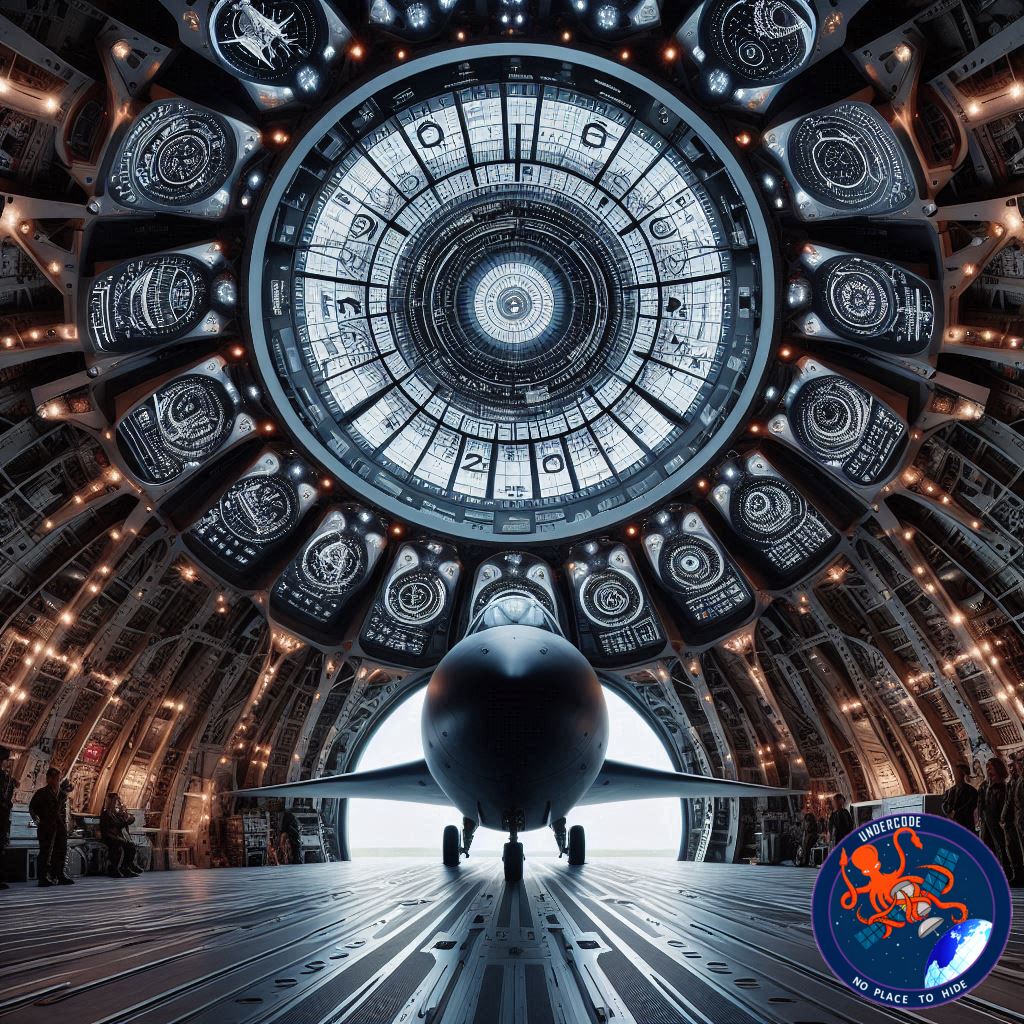
Pioneering a New Era in Defense Technology
In an era where geopolitical tensions and technological innovation are intersecting rapidly, two powerhouse companies—Archer Aviation and Anduril Industries—are joining forces to quietly reshape the future of military aviation. Their current collaboration, shrouded in mystery and yet loaded with potential, centers on a hybrid-powered, vertical takeoff and landing (VTOL) aircraft designed for defense applications. Archer’s CEO, Adam Goldstein, recently confirmed to Axios that the companies are “deep in the work, building stuff,” but details remain elusive. Despite the secrecy, what is emerging is a clear trend: the U.S. military is doubling down on autonomous and expendable aerial assets capable of rapid deployment in uncertain theaters of conflict.
Building the Future of Combat Mobility
At the heart of this venture is the notion of creating VTOL aircraft capable of replacing or supplementing helicopters in missions ranging from reconnaissance to battlefield logistics. Goldstein emphasized the near-term need for these kinds of assets, suggesting a growing demand among the U.S. and allied nations for “autonomous and attritable” flying machines—meaning aircraft that can operate without pilots and be affordably mass-produced and, if necessary, sacrificed in combat. The project first became public when Archer and Anduril announced an exclusive partnership in December, aimed at developing cutting-edge defense solutions.
Archer, already a notable name in the electric aviation scene, made headlines when it secured \$850 million in funding just before showcasing its flagship aircraft, Midnight, at the Paris Air Show. The Midnight, a fully electric VTOL, has already been delivered to the U.S. Air Force under the Agility Prime program for evaluation. Although the current collaboration with Anduril involves a hybrid-powered model rather than a fully electric one, it underscores Archer’s growing footprint in defense innovation.
This secretive project also reflects broader industry trends. For instance, Tesla recently unveiled a limited robotaxi service in Austin, Texas—a parallel move highlighting how automation is infiltrating both civilian and military transportation sectors. Meanwhile, on the political and economic fronts, significant disruptions are occurring: energy companies canceled \$15.5 billion in projects this year alone, suggesting mounting uncertainty in infrastructure and investment climates. These contexts further elevate the importance of agile, scalable technologies like VTOL aircraft for future readiness.
What Undercode Say:
Disruption in Aerospace is No Longer Optional
The partnership between Archer and Anduril marks a critical pivot in how military assets are developed and deployed. Traditional aircraft—helicopters, fighter jets, and large drones—are expensive, slow to produce, and often vulnerable in modern warfare environments. The demand for autonomous and attritable aerial systems is driven by a new warfare paradigm that emphasizes speed, scalability, and survivability over brute strength.
This pivot is not just about building the next cool aircraft. It’s a complete reimagining of the defense supply chain and operational doctrine. With China and Russia ramping up military capabilities, the U.S. and its allies need systems that can be built quickly, deployed flexibly, and—when necessary—sacrificed with minimal financial or human cost. A hybrid-powered VTOL fits neatly into this strategy, offering operational versatility with relatively lower maintenance and runway requirements.
Anduril, a company that has always pushed the edge of defense tech with AI-driven battlefield tools, brings software intelligence and rapid prototyping to the table. Archer, on the other hand, offers proven airframe and propulsion innovations. Together, they form a formidable team capable of building aircraft that blur the lines between drone, helicopter, and short-range fighter.
Moreover, the fact that Archer already has a relationship with the U.S. Air Force under the Agility Prime program suggests that the groundwork for military adoption is already being laid. Government funding, streamlined testing procedures, and Pentagon backing could rapidly accelerate the deployment of this new aircraft class.
Interestingly, the mention of this project alongside other developments, such as Tesla’s robotaxi launch, reflects a convergence of commercial and defense-grade autonomy. If self-driving cars are becoming a staple in cities, why not self-flying aircraft in combat zones?
The lack of transparency around the specifics could be strategic. Maintaining operational security while the technology is still in development allows both companies to outpace competitors and build interest among defense buyers without tipping their hand.
Another subtle but important angle here is investor sentiment. With Archer recently raising nearly a billion dollars and Anduril flush with defense contracts, the financial runway appears strong. This ensures the project isn’t just a concept—it’s likely to hit production readiness faster than many expect.
The implications go beyond aircraft. This is about transforming military logistics, enabling rapid insertion of troops, real-time battlefield surveillance, and dynamic resupply operations, all without the cost and complexity of traditional aircraft fleets.
🔍 Fact Checker Results:
✅ Archer did deliver its Midnight aircraft to the U.S. Air Force under Agility Prime.
✅ The hybrid aircraft with Anduril targets autonomous and attritable military applications.
✅ The exclusive partnership between Archer and Anduril was confirmed in December.
📊 Prediction:
Expect a prototype reveal of the hybrid VTOL aircraft within the next 12 months, potentially showcased at a major defense expo or military conference. This aircraft is likely to become a cornerstone in future U.S. defense mobility strategy, paving the way for mass-produced autonomous air fleets that can redefine how wars are fought from the sky. ✈️🔥
References:
Reported By: axioscom_1753266401
Extra Source Hub:
https://www.pinterest.com
Wikipedia
OpenAi & Undercode AI
Image Source:
Unsplash
Undercode AI DI v2


