
Listen to this Post
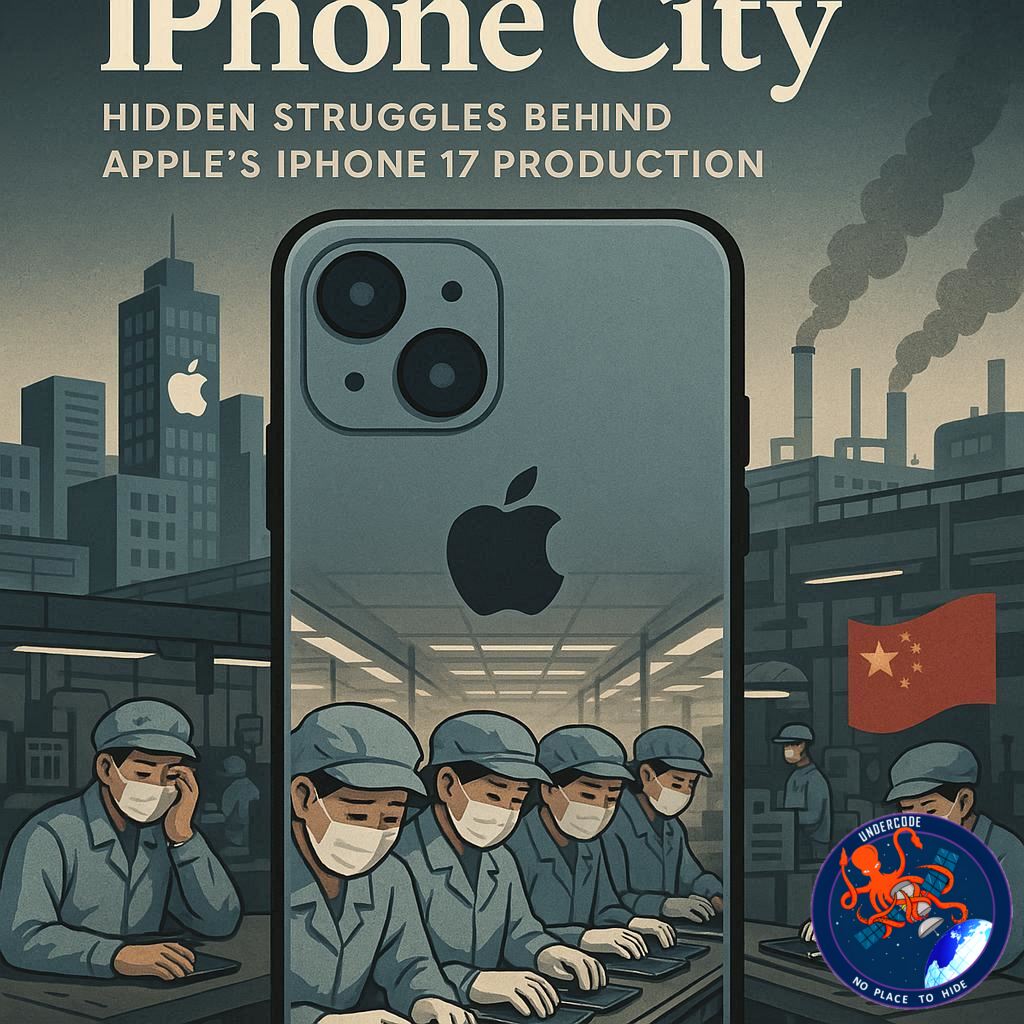
The Harsh Reality Behind Apple’s Iconic Devices
In the bustling industrial hub of Zhengzhou, often dubbed “iPhone City,” thousands of Chinese workers at Foxconn’s massive plant allegedly endured extreme working conditions to meet Apple’s iPhone 17 production deadlines. A recent investigation by the nonprofit China Labor Watch, reported by Bloomberg on September 25, uncovered serious allegations: withheld wages, punishing overtime, forced night shifts, and heavy reliance on temporary labor.
Between March and September, while Apple and its suppliers were gearing up for the latest iPhone lineup, the report claims that workers faced immense pressure due to “unstable orders” and shifting production targets. These fluctuations allegedly led to intimidation tactics, delayed pay, and uncertainty for temporary “dispatch” workers. Some even lost weeks of overtime compensation because Foxconn’s wage system withheld part of their earnings until the following month.
Despite employing up to 200,000 workers during peak production, Foxconn reportedly leaned on short-term staff in numbers exceeding legal limits set by Chinese labor laws. China Labor Watch noted that most employees worked between 60 and 75 hours per week, surpassing both China’s legal maximum and Apple’s own 60-hour internal cap. The report also mentioned troubling accounts of harassment, discrimination in hiring, and exposure to industrial chemicals without proper safety measures.
Perhaps most alarming was the claim that student interns—young trainees from local schools—were pushed into night shifts for minimal pay, echoing past controversies. Although investigators found no evidence of underage workers this time, China Labor Watch asserted that the overall labor situation had worsened since 2019, suggesting deep-rooted systemic issues.
In response, Apple issued a statement emphasizing its commitment to ethical practices:
“We remain firmly committed to the highest standards of labor, human rights, environmental and ethical conduct,” Apple said, adding that it conducts regular third-party audits and responds immediately to any concerns. The company confirmed that its teams were on-site conducting an investigation.
Meanwhile, Foxconn, also known as Hon Hai Precision Industry Co., reaffirmed that worker safety remains a top priority and expressed openness to “constructive dialogue” to improve conditions. Yet, questions remain: how much of this accountability translates into tangible change for the people on the assembly lines?
What Undercode Say:
The Silent Machinery Behind a Global Empire
The situation at Foxconn’s Zhengzhou plant reveals a deeper paradox within modern tech manufacturing: the pursuit of innovation often depends on invisible labor sacrifices. Behind every sleek iPhone lies a complex chain of human effort, often operating at the edge of physical and emotional endurance. The allegations—whether fully verified or not—paint a stark picture of global supply chain inequalities.
Apple’s polished corporate image is built on cutting-edge design and sustainability claims. Yet, its dependence on factories like Foxconn exposes a tension between ethics and efficiency. Each new iPhone cycle brings soaring consumer demand, strict deadlines, and a relentless push for perfection. In this environment, the factory becomes less of a workplace and more of a pressure chamber, where time itself is monetized.
The use of dispatch workers—temporary staff hired through agencies—is a telling sign. These workers lack the security of permanent employment and are often excluded from benefits. China Labor Watch’s findings that Foxconn exceeded the legal limit of dispatch hires highlight how flexible labor structures can easily slip into exploitation when unchecked.
Moreover, the wage withholding system serves as an invisible leash. By delaying part of workers’ pay, factories maintain control through financial dependency. This tactic not only reduces turnover but also ensures workers remain compliant during critical production phases. For many, the promise of a full paycheck at the end of the month outweighs the exhaustion of endless overtime.
From a broader industrial perspective, Apple’s diversification strategy, including its expansion of iPhone production in India, shows that the company is aware of the risks of over-reliance on China. Yet, such shifts may not be entirely altruistic—they also serve to reduce labor costs and geopolitical exposure. India’s growing manufacturing ecosystem could become Apple’s next “iPhone City,” replicating the same structural issues under a different flag.
The student labor issue adds another layer of ethical complexity. Even without underage workers, pressuring students into factory roles for low pay undermines the spirit of fair labor practices. These “internships” are often mandatory for graduation, turning education into a pipeline for cheap labor. This reflects how systemic compliance sometimes masks exploitation with bureaucratic justification.
Apple’s official response, while polished, offers little new. Commitments to ethical standards are standard PR protocol, and investigations rarely result in radical transparency. The company’s audit system, though widely publicized, has repeatedly been criticized for its limited scope. Audits can be pre-announced or influenced, creating a sanitized version of reality that fits corporate narratives.
Foxconn’s “constructive dialogue” stance may sound conciliatory, but the pattern of recurring reports—dating back over a decade—suggests that these issues are cyclical, not isolated. The root causes lie in systemic production demands that prioritize output over welfare. Unless Apple and Foxconn jointly address the structural pressures of just-in-time manufacturing, such reports will continue to resurface with every iPhone release cycle.
Ultimately, this situation embodies the ethical paradox of modern consumerism. Every technological marvel we celebrate—every sleek screen, every innovation—comes with unseen fingerprints of fatigue, monotony, and human compromise. Consumers demand constant upgrades, and corporations respond by pushing production systems to their limits. Somewhere in that chain, the human element is always the first to bend.
For Apple to truly uphold its ethical image, it must shift from reactive damage control to proactive accountability. Transparency in labor conditions should be as important as product design. Until then, the glow of the Apple logo will continue to be dimmed by the shadows of “iPhone City.”
Fact Checker Results
✅ Verified: China Labor Watch did release a report on September 25 citing labor abuses at Foxconn’s Zhengzhou plant.
✅ Verified: Apple confirmed an ongoing investigation following the report.
⚠️ Partially Verified: Some claims (like wage withholding and forced night shifts) are under investigation and not independently confirmed.
Prediction 📱
As global scrutiny of labor practices intensifies, Apple may accelerate its production shift toward India and Vietnam to reduce reputational risks. However, unless systemic labor reforms accompany this move, similar issues could simply migrate elsewhere. The next iPhone cycle will likely face renewed audits, PR statements, and yet another round of ethical questions—because the true cost of innovation still lies hidden in the factory floors of “iPhone City.”
🕵️📝✔️Let’s dive deep and fact‑check.
References:
Reported By: timesofindia.indiatimes.com
Extra Source Hub:
https://www.reddit.com/r/AskReddit
Wikipedia
OpenAi & Undercode AI
Image Source:
Unsplash
Undercode AI DI v2
🔐JOIN OUR CYBER WORLD [ CVE News • HackMonitor • UndercodeNews ]
📢 Follow UndercodeNews & Stay Tuned:
𝕏 formerly Twitter 🐦 | @ Threads | 🔗 Linkedin | 🦋BlueSky | 🐘Mastodon


