
Listen to this Post
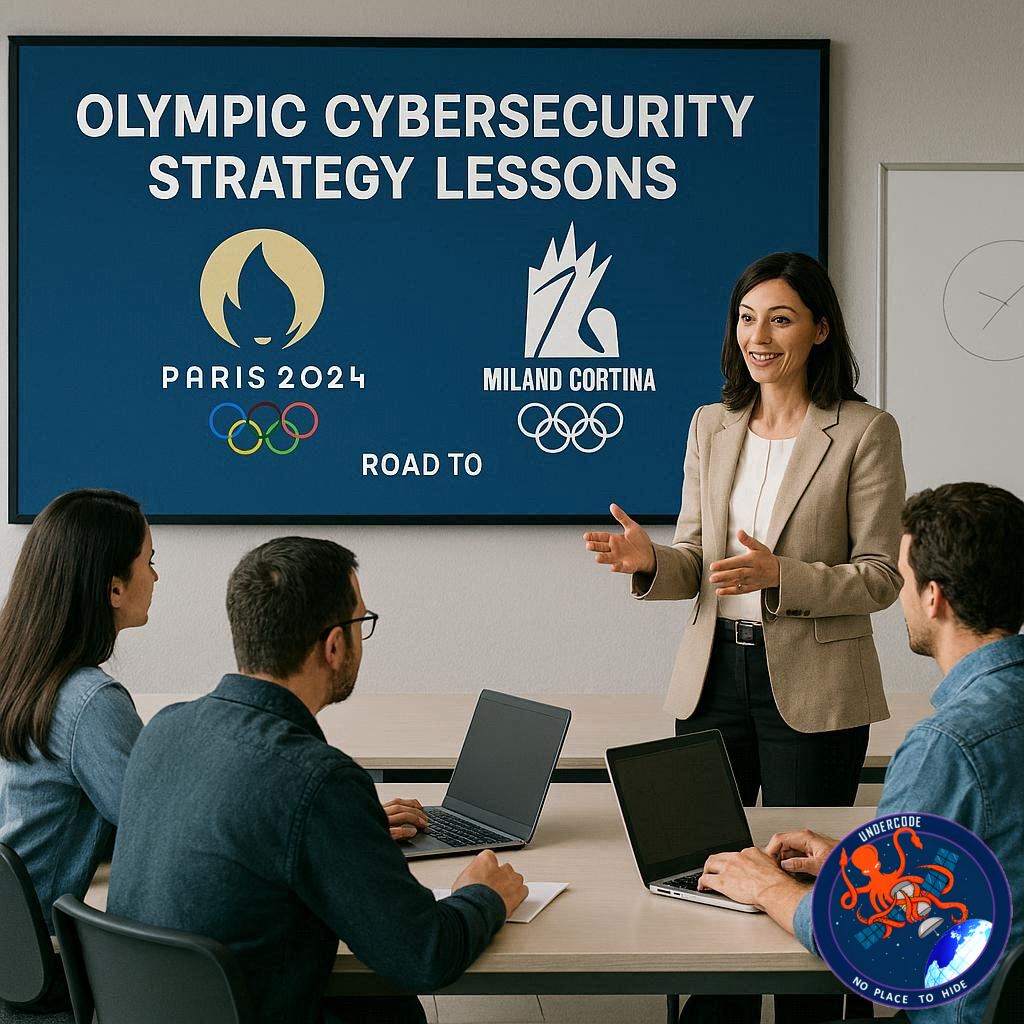
Introduction: The Invisible Battlefield Behind the Olympic Games
The Olympic Games are often remembered for dramatic finishes, emotional victories, and historic athletic achievements. Billions of viewers around the world tune in to watch athletes compete at the highest level, creating one of the most globally celebrated spectacles in modern history. Yet behind the dazzling ceremonies and the roar of stadium crowds lies an entirely different competition, one that most viewers never see.
In the digital age, the Olympics are also a massive technological ecosystem. From ticketing platforms and broadcast systems to athlete databases and real-time scoring networks, the Games rely on thousands of interconnected digital systems. This immense infrastructure creates a massive attack surface for cybercriminals, nation-state actors, and hacktivists who may seek to disrupt, embarrass, or exploit the event.
Franz Regul, the former Chief Information Security Officer (CISO) for the Paris 2024 Olympic and Paralympic Games, experienced this hidden battle firsthand. During his five-year tenure preparing for one of the world’s largest sporting events, Regul and his cybersecurity team faced an extraordinary challenge: protecting a temporary yet globally critical digital ecosystem from evolving cyber threats.
His experience offers rare insight into how cybersecurity professionals prepare for events where even a small technical disruption could impact global broadcasts, athlete safety, transportation systems, or national reputation. The lessons learned from Paris 2024 now serve as valuable guidance for future Olympic hosts, including the upcoming Milan Cortina 2026 Winter Olympics.
Global Sporting Triumphs Masking a Massive Digital Operation
The Olympics continue to deliver unforgettable moments in sports history. During recent Winter Olympic and Paralympic competitions, viewers witnessed remarkable achievements from athletes across the globe. Figure skater Alysa Liu returned triumphantly to her sport and captured gold after stepping away from competition. The United States men’s and women’s ice hockey teams both secured gold medals, with the men ending a 46-year Olympic drought. Meanwhile, Lucas Pinheiro Braathen achieved a historic milestone by winning Brazil’s first Winter Olympic medal in alpine skiing.
Host nations also celebrated historic success. Italy, during the Paralympic Winter Games, surpassed its previous medal record by collecting 14 medals, demonstrating the power of home-nation momentum.
Yet these sporting accomplishments represent only the visible side of the Olympics. Beneath the surface lies a massive digital infrastructure required to orchestrate everything from athlete accreditation and event scheduling to ticketing, transportation logistics, and broadcast distribution.
The Cybersecurity Challenge of Managing a Temporary Global Infrastructure
Cybersecurity at the Olympic Games is unlike security for traditional corporations or government organizations. The Olympic organizing committee begins as a small organization but rapidly expands into a large-scale operational structure as the event approaches. Thousands of staff members, contractors, and partners join the operation in just a few years.
For the Paris 2024 Olympics, this meant securing over 200 applications, more than 10,000 workstations, and countless connected systems. Every system—from scoring networks to communication platforms—needed to operate flawlessly during the Games.
What makes this environment even more complex is that much of the infrastructure is temporary. Stadium technology, media networks, and digital platforms must be built quickly and securely, often from scratch, before being dismantled once the Games conclude. This rapid development cycle leaves little room for security errors.
Opening Ceremony: The Ultimate Target for Cyber Disruption
Among all Olympic events, the opening ceremony stands as the most critical moment from a cybersecurity perspective. It is the most watched event of the Games and one of the most viewed live broadcasts worldwide.
Regul described this moment as “ground zero” for cyber threats. Any disruption during the ceremony could cause global embarrassment, broadcast failures, or operational chaos.
Because attackers understand the global significance of the opening ceremony, cybersecurity teams must operate at peak readiness during this moment. Defensive systems are fully monitored, incident response teams remain on high alert, and contingency plans are prepared in case attackers attempt to disrupt the broadcast, venue infrastructure, or digital services.
Cyber Solidarity: Coordinating Security Across an Entire Nation
Protecting the Olympics requires far more than securing a single organization. The event relies on collaboration among government agencies, private companies, infrastructure operators, sponsors, and international organizations.
Regul emphasized the concept of “cyber solidarity,” a cooperative security strategy where multiple organizations share intelligence, coordinate defenses, and collectively respond to threats.
For Paris 2024, approximately 25 different organizations participated in a threat intelligence network. If one organization detected a phishing campaign or malicious activity, the information could be quickly shared with the others. This allowed security teams across different sectors to update their detection systems and prevent similar attacks.
Such collaboration was essential because the Olympics depend heavily on national infrastructure. Transportation networks, telecommunications providers, power grids, and digital ticketing systems all play critical roles in the event’s success.
Protecting More Than Just IT Systems
Olympic cybersecurity extends beyond protecting servers and networks. Regul highlighted the importance of safeguarding physical environments where digital systems control critical operations.
For example, stadium display systems, sound equipment, and broadcast control systems are all connected technologies. If attackers gained control of these systems, they could disrupt events, manipulate public messaging, or even create safety risks within crowded venues.
Security teams must therefore consider a wide range of potential attack scenarios, including threats that could affect physical safety. This means protecting not only internal IT infrastructure but also public-facing systems and third-party technologies.
Monitoring the Internet for Brand Exploitation and Ticket Fraud
Another major cybersecurity challenge involves protecting the reputation and financial integrity of the Olympic Games. Fraudulent ticket websites frequently appear during Olympic seasons, attempting to scam fans by selling fake tickets.
Because Olympic tickets can cost hundreds or thousands of dollars, cybercriminals see them as lucrative targets. Security teams must continuously monitor the internet for fraudulent websites, phishing campaigns, and brand impersonation attempts that could damage the reputation of the Games or financially harm fans.
Learning From Past Cyber Attacks on the Olympics
Previous Olympic events have faced serious cyber threats. The 2018 Winter Olympics in PyeongChang experienced the infamous “Olympic Destroyer” malware attack, which temporarily disrupted IT systems during the opening ceremony.
This incident became an important case study for the Paris 2024 cybersecurity team. Regul’s team analyzed past attacks to identify vulnerabilities and ensure their defensive strategies would prevent similar disruptions.
Threat modeling and risk analysis played critical roles in preparation, helping teams anticipate attack scenarios and implement safeguards before the Games began.
What Undercode Say:
The Olympics have evolved into one of the most technologically dependent events on Earth. While viewers focus on the athletic competitions, the real complexity lies in the massive digital ecosystem required to run the event smoothly. From cloud infrastructure and real-time analytics to digital identity management and broadcast distribution, the Games operate like a temporary smart city that appears almost overnight.
This makes Olympic cybersecurity fundamentally different from traditional enterprise security. Most organizations spend decades building and stabilizing their infrastructure. Olympic organizers must design, deploy, and secure an entire technology stack within a few years and then dismantle it shortly after the event ends.
This short lifecycle dramatically increases the risk profile. Rapid deployment often means accelerated development timelines, temporary integrations, and large numbers of external vendors. Each of these factors introduces potential vulnerabilities that attackers could exploit.
Another unique challenge is geopolitical interest. The Olympics are not just sporting events. They represent national prestige, international cooperation, and massive economic investments. Because of this, they naturally attract attention from nation-state hackers who may seek intelligence or disruption opportunities.
Regul’s concept of “cyber solidarity” may become one of the most important lessons for future global events. Modern cybersecurity cannot rely on isolated defense models. Instead, it must function as a collaborative ecosystem where intelligence sharing and collective response become standard practice.
The idea of connecting dozens of organizations into a shared threat intelligence network represents a powerful defensive strategy. When threats are detected early by one organization, others can update defenses instantly. This transforms cybersecurity from a reactive discipline into a proactive defense network.
Another crucial insight from the Olympic experience is the importance of the human factor. Many cybersecurity discussions focus heavily on tools, automation, and artificial intelligence. Yet the Olympic cybersecurity operation demonstrated that trust, teamwork, and coordination among people remain the most critical components of effective defense.
In high-pressure environments like the Olympics, technology alone cannot guarantee security. Teams must make rapid decisions, coordinate responses across organizations, and adapt to evolving threats in real time. These tasks require skilled professionals who understand both technical systems and organizational dynamics.
There is also a broader lesson about the growing convergence between physical and digital security. Modern stadiums, transportation networks, and broadcast systems all rely on interconnected technologies. A cyber attack could potentially disrupt physical operations, making cybersecurity a critical component of public safety planning.
Looking ahead to Milan Cortina 2026 and future Olympic events, cybersecurity strategies will likely become even more sophisticated. Artificial intelligence, real-time analytics, and predictive threat detection will play larger roles in identifying potential attacks before they occur.
However, the fundamental lesson remains unchanged: cybersecurity success depends not only on advanced technology but also on strong collaboration between organizations, governments, and individuals. The Olympic Games serve as a powerful reminder that in today’s connected world, defending large-scale global events requires a collective defense approach that extends far beyond any single organization.
Fact Checker Results
✅ The Olympics require large-scale digital infrastructure including thousands of systems and applications.
✅ Previous Olympic events, including the 2018 PyeongChang Games, experienced significant cyber attacks.
❌ Cybersecurity responsibility does not belong solely to the Olympic organizing committee; it involves national infrastructure partners and external organizations.
Prediction
🔮 Future Olympic Games will deploy AI-driven threat detection systems capable of identifying cyber attacks before they reach critical infrastructure.
🔮 International cyber intelligence alliances will become standard practice for protecting large global events such as the Olympics, World Cups, and international expos.
🔮 Cybersecurity budgets for global sporting events will increase significantly as digital systems become even more integrated into stadium operations and broadcasting networks.
▶️ Related Video (78% Match):
🕵️📝✔️Let’s dive deep and fact‑check.
References:
Reported By: www.darkreading.com
Extra Source Hub (Possible Sources for article):
https://www.reddit.com
Wikipedia
OpenAi & Undercode AI
Image Source:
Unsplash
Undercode AI DI v2
Bing
🔐JOIN OUR CYBER WORLD [ CVE News • HackMonitor • UndercodeNews ]
📢 Follow UndercodeNews & Stay Tuned:
𝕏 formerly Twitter 🐦 | @ Threads | 🔗 Linkedin | 🦋BlueSky | 🐘Mastodon


