
Listen to this Post
The Silent War for Compute Power
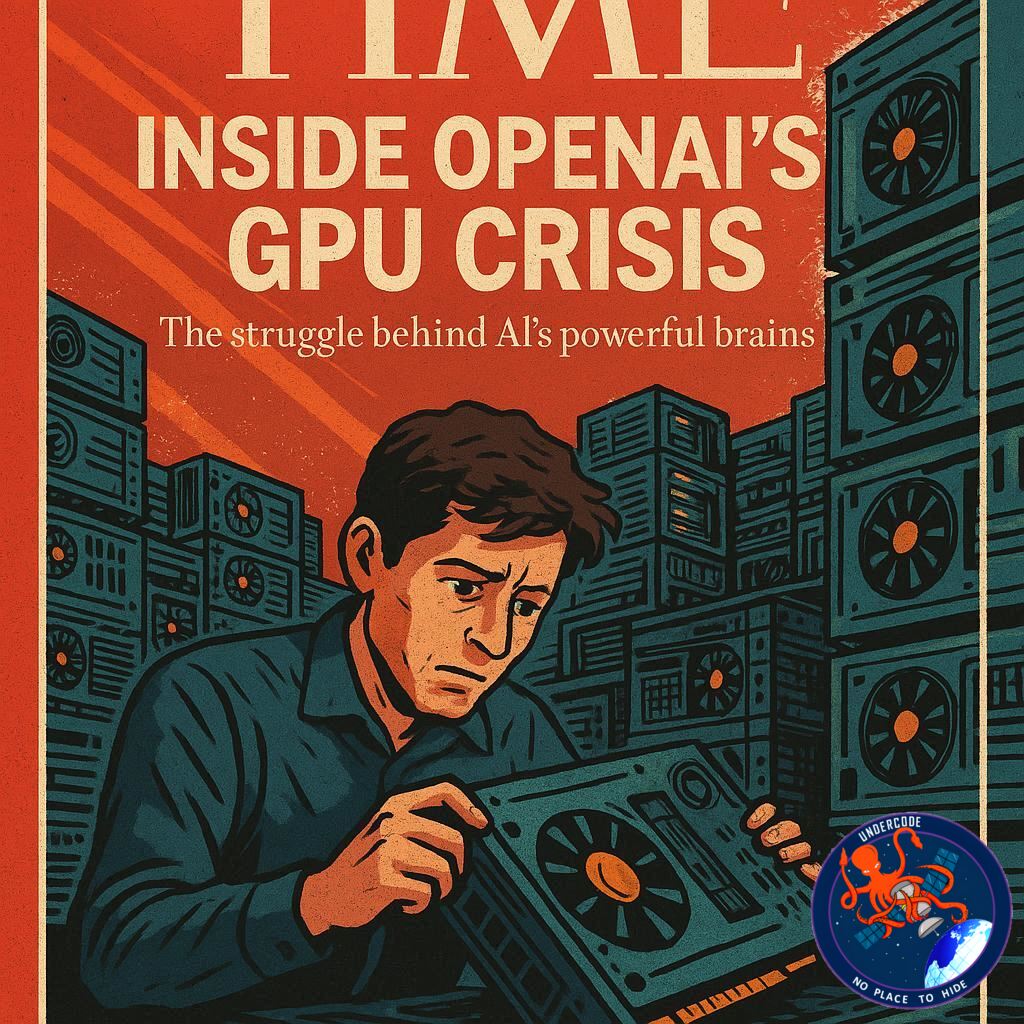
In the heart of Silicon Valley, the race for artificial intelligence supremacy is being fought not only with code and creativity but also with silicon and circuits. OpenAI, the powerhouse behind ChatGPT, is facing one of its most intense internal battles yet — a war over GPUs. These coveted graphics processing units fuel the intelligence behind every chatbot, image generator, and research model the company builds. But as President Greg Brockman revealed, allocating these GPUs among teams has become “an exercise in pain and suffering.”
Speaking on the Matthew Berman Podcast, Brockman admitted that deciding which projects receive computational resources is both emotional and exhausting. “You see all these amazing things,” he said, “and then someone pitches another amazing thing — it’s so hard.” His words reflect a growing internal strain within one of the most influential tech companies in the world.
How OpenAI Divides Its Computational Power
OpenAI’s GPU distribution operates like a finely tuned ecosystem. The company’s leadership, including CEO Sam Altman and applications CEO Fidji Simo, determine the overall split between research and applied product teams. The research side focuses on exploring the future — new models, neural architectures, and AI breakthroughs — while the applied teams work on refining tools like ChatGPT, DALL·E, and Codex.
Decisions within the research division rest with the chief scientist and research head, while a small operational group manages the real-time flow of GPUs. One key figure in this process is Kevin Park, the engineer tasked with reallocating GPUs as projects wind down. Brockman described how teams approach Park with urgent requests for more compute, often having to wait for other projects to finish before receiving hardware access.
This internal balancing act reflects a deeper reality: GPU scarcity. Even a company as powerful as OpenAI can’t escape the global shortage of high-performance chips. As Brockman emphasized, compute power determines productivity — and morale. “People really care,” he said. “The emotion around, ‘Do I get my compute or not?’ cannot be understated.”
The Growing Demand for GPUs
OpenAI’s Chief Product Officer, Kevin Weil, echoed this sentiment on the Moonshot Podcast in August, saying, “Every time we get more GPUs, they immediately get used.” The more computing power the company acquires, the faster it innovates — expanding into areas like AI video generation, voice synthesis, and dynamic reasoning models.
Sam Altman recently confirmed that OpenAI is preparing “new compute-intensive offerings” — a nod to upcoming features and products that will likely push the limits of AI infrastructure. However, due to their cost, some of these capabilities will initially be restricted to Pro subscribers or carry extra fees. This mirrors a trend across the tech industry, where GPU scarcity and soaring energy costs are reshaping how companies deliver AI experiences.
A Global GPU Arms Race
The pressure isn’t unique to OpenAI. Meta’s CEO, Mark Zuckerberg, recently declared that “compute per researcher” is now a key competitive advantage. Meta is aggressively investing in GPUs and building custom AI infrastructure to surpass rivals. Similar efforts are underway at Google, Anthropic, and Amazon, all vying for a technological edge in what’s quickly becoming an arms race of machine learning horsepower.
The irony is that the very AI revolution driving innovation is also throttled by the limits of hardware production. As demand skyrockets, the global supply of GPUs — primarily manufactured by NVIDIA — struggles to keep pace. Every chip counts, and every allocation decision could make or break the next big AI leap.
What Undercode Say:
The Hidden Economics of Compute
What’s happening inside OpenAI is not just an operational dilemma — it’s a microcosm of modern tech economics. Compute has become the currency of progress, and those who control it shape the future of artificial intelligence. GPUs are no longer just hardware; they are gatekeepers of innovation.
At a strategic level, OpenAI’s GPU dilemma mirrors a deeper tension between ambition and limitation. The company’s research team thrives on experimentation, pushing the boundaries of what’s possible. But the applied side — responsible for revenue-generating products — must ensure stability and performance for millions of users. This duality forces OpenAI into constant compromise: chase innovation or sustain production.
Emotional Capital and Innovation Fatigue
Brockman’s description of “pain and suffering” isn’t hyperbole. Inside cutting-edge labs, innovation fatigue is real. Engineers and researchers invest emotionally in their projects, often working for months only to discover they won’t receive the compute they need. That emotional toll translates into slower innovation cycles and potential burnout among teams who feel sidelined.
GPU Scarcity as the New Bottleneck
The GPU shortage is more than a logistical problem — it’s a strategic vulnerability. The AI ecosystem depends heavily on NVIDIA’s dominance in chip manufacturing, creating a fragile dependency. Any disruption, from supply chain delays to geopolitical tensions, could stall progress for entire industries.
This scarcity also tilts the playing field toward tech giants with deep pockets. Companies like Meta and Google can outspend smaller rivals, effectively hoarding compute capacity. As a result, innovation may become centralized among a handful of corporations, limiting diversity and competition in AI research.
The Monetization Dilemma
Altman’s move to restrict some features to Pro users signals an inevitable shift: AI is becoming pay-to-play. While this monetization helps offset massive operational costs, it risks alienating developers and smaller creators who rely on accessible tools. The philosophical challenge for OpenAI is maintaining its founding mission — democratizing AI — while facing the financial reality of running billion-dollar infrastructures.
Compute Ethics and the Future of Fair Access
Beyond economics lies an ethical question: who deserves compute access? Should the most creative ideas win resources, or should projects with the highest profit potential take priority? The answer shapes the moral fabric of AI development. OpenAI’s internal “GPU parliament” may soon become a model for how future AI institutions govern computational equity.
A Coming Shift Toward Specialized Hardware
The solution might lie in hardware diversification. OpenAI and others are exploring custom chips and alternative compute architectures designed specifically for AI workloads. These could reduce reliance on general-purpose GPUs and introduce a new era of efficient, purpose-built AI systems.
The Strategic Future
As AI models become larger and more sophisticated, compute efficiency will become the defining metric of progress. Companies that can extract more value per GPU will dominate. OpenAI’s internal allocation struggles today may seem chaotic, but they are forcing the organization to evolve faster — into a leaner, more strategic entity prepared for the next wave of AI evolution.
Fact Checker Results
✅ Verified quotes from Greg Brockman and Kevin Weil on GPU allocation and scarcity.
✅ Confirmed details on OpenAI’s internal GPU division between research and applied teams.
❌ No official statement yet on how Pro pricing will directly affect compute access.
Prediction
🔮 Within the next 18 months, OpenAI and its rivals will accelerate investment in custom AI chips, reducing dependence on NVIDIA. GPU scarcity will ease slightly, but the competition for compute per researcher will intensify, defining the next era of AI dominance.
🕵️📝✔️Let’s dive deep and fact‑check.
References:
Reported By: timesofindia.indiatimes.com
Extra Source Hub:
https://www.linkedin.com
Wikipedia
OpenAi & Undercode AI
Image Source:
Unsplash
Undercode AI DI v2
🔐JOIN OUR CYBER WORLD [ CVE News • HackMonitor • UndercodeNews ]
📢 Follow UndercodeNews & Stay Tuned:
𝕏 formerly Twitter 🐦 | @ Threads | 🔗 Linkedin | 🦋BlueSky | 🐘Mastodon


