
Listen to this Post
Introduction
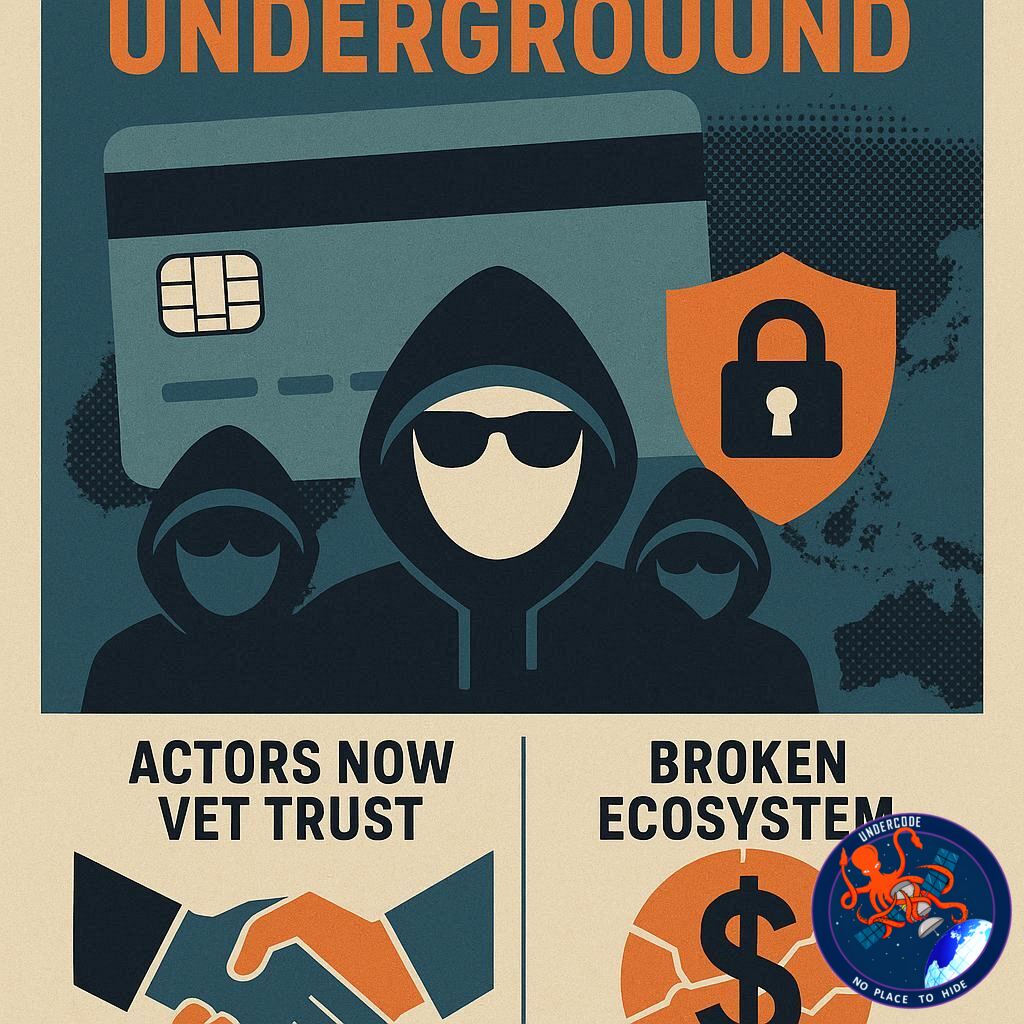
The underground economy for stolen credit card data has transformed into a complex and unstable digital marketplace. What was once a loosely organized space driven by opportunism has now evolved into a structured environment shaped by distrust, rapid marketplace turnover, and increasing pressure from global law enforcement operations. As platforms disappear overnight and scams become more sophisticated, even experienced cybercriminals are forced to adopt disciplined methods for evaluating who they can trust. A recently analyzed underground guide reveals how these actors attempt to navigate this fragile ecosystem, offering rare insight into the internal logic of modern carding communities and the systems they use to survive inside them.
Extended Summary of the Underground Guide and Market Evolution (Approximate Full Overview)
The underground market for stolen credit card data has long functioned as a volatile and deceptive ecosystem
where fraud actors constantly risk being scammed by other criminals
or losing access to compromised marketplaces without warning
Over time, this environment has become even more unstable
due to aggressive law enforcement interventions targeting cybercrime infrastructure
combined with the rapid shutdown and rebranding of illegal marketplaces
and a growing level of distrust between participants themselves
As a result, modern fraud actors are no longer operating purely on impulse or opportunism
Instead, they are increasingly adopting structured evaluation methods to reduce risk exposure
A guide discovered on an underground forum and analyzed by security researchers sheds light on this shift
The document focuses on how to identify reliable credit card data suppliers
and how to avoid scams in a highly deceptive ecosystem
Rather than explaining how to use stolen data, it emphasizes supplier verification
operational safety, and marketplace reliability
It reframes carding as a disciplined process rather than random fraud activity
highlighting the importance of long-term survivability over short-term profit
In this context, legitimacy is not defined by appearance or branding
but by consistent uptime, reliable infrastructure, and stable delivery of valid data
The guide also emphasizes the importance of “fresh BINs” and low decline rates
as indicators of quality stolen data sources
suggesting that successful operations rely on real-world data breaches such as phishing or malware infections
Shops that fail to maintain consistency are quickly abandoned by users
while those with reliable supply chains gain reputation over time
Transparency also plays a major role in perceived legitimacy
with underground buyers favoring platforms that offer clear pricing, structured interfaces, and responsive support systems
even though these features mimic legitimate e-commerce environments
Trust is further reinforced through external validation rather than on-platform reviews
with users preferring closed forums and long-standing communities over public testimonials
The ecosystem increasingly relies on historical behavior tracking rather than isolated feedback
At the same time, operators are aware of surveillance risks and competitive sabotage
leading to the adoption of hardened infrastructures such as mirror domains and anti-DDoS protections
Technical evaluation methods such as checking domain age, SSL setup, and WHOIS privacy are also commonly used
even though they are relatively basic indicators
More advanced users analyze operational continuity across multiple domains and backup access points
Social intelligence gathering plays a critical role in decision-making
with actors tracking vendor reputations across time rather than relying on short-term reviews
The guide also highlights operational security practices
including the use of proxies, compartmentalized systems, and privacy-focused cryptocurrency strategies
particularly emphasizing the risks of traceable financial transactions
Different categories of carding platforms are identified
ranging from automated high-volume marketplaces to exclusive invite-only vendor groups
This segmentation reflects a maturing underground economy
where participants choose between scale and quality depending on their objectives
Despite its structured insights, the guide itself may contain promotional bias
as it appears to endorse specific services
a common tactic within underground communities
Overall, the document reflects a shift toward professionalization within cybercrime ecosystems
where risk management, verification, and operational resilience have become central priorities
rather than purely opportunistic behavior
What Undercode Say:
The underground credit card economy is no longer the chaotic space it once was
It is gradually transforming into a structured, semi-organized marketplace
where behavior resembles legitimate digital commerce in surprising ways
This evolution is driven primarily by one factor: trust collapse
Cybercriminals no longer trust marketplaces, vendors, or even peers
because scams, exit frauds, and infiltration operations are now common
As a result, the “buyer mindset” has changed significantly
Instead of asking what can be stolen or exploited
actors now ask whether a vendor will even deliver what was paid for
This shift creates a paradoxical situation
a criminal ecosystem now depends heavily on trust signals
even though it is fundamentally built on deception
The emphasis on “fresh BINs” and low decline rates shows how technical validation has replaced social trust
Data quality is now measured in performance outcomes rather than promises
If a card works repeatedly, the vendor gains reputation
If it fails, the vendor is quickly abandoned or exposed
Marketplaces have also adopted features that mirror legitimate businesses
ticket systems, support channels, structured pricing, and inventory tracking
These features are not designed for convenience alone
they exist to reduce uncertainty in a high-fraud environment
The reliance on external forums instead of platform reviews is another key development
On-site testimonials are considered unreliable because they are easily manipulated
This pushes actors into smaller, controlled communities
where reputation is slower to build but harder to fake
Another major shift is operational resilience
underground platforms now assume they will be attacked, copied, or taken down
so they build redundancy through mirrors, backup domains, and distributed infrastructure
Security practices are becoming standardized across even mid-level actors
proxy usage, environment isolation, and cryptocurrency layering are no longer advanced techniques
they are becoming baseline expectations
The growing preference for privacy-focused cryptocurrencies highlights increased awareness of traceability risks
actors understand that blockchain analysis tools are improving
and they adapt by adding more indirect transaction layers
Interestingly, the ecosystem now behaves like a fragmented version of legitimate e-commerce
with competing priorities between scale-driven automated platforms and exclusive curated groups
One focuses on volume and speed
the other on exclusivity and quality control
This dual structure reflects a maturing underground economy
where specialization replaces randomness
However, this maturity also introduces instability
because every layer of “trust building” can also be exploited for deception
fake reviews, staged reputations, and controlled narratives remain widespread
The guide itself illustrates this contradiction clearly
even educational materials may contain embedded promotions or bias
showing that information is never neutral in this ecosystem
From a defensive perspective, this evolution is important
because it shows that disruption is no longer about shutting down single platforms
but about understanding behavioral patterns across interconnected systems
Security teams now need to analyze reputation flows
data quality signals
and infrastructure redundancy patterns
rather than focusing only on isolated threat actors
The underground market is not becoming safer or more stable
it is becoming more adaptive and harder to distinguish from legitimate digital services
This makes detection more complex
but also creates predictable behavioral signatures
especially around trust-building mechanisms
Ultimately, the system is evolving toward professionalized fraud networks
where efficiency, reputation engineering, and operational discipline matter more than brute opportunism
And in that evolution lies both its strength and its weakness
Fact Checker Results:
✅ The underground carding ecosystem is widely recognized as volatile and scam-prone
⚠️ Claims about specific behaviors reflect general cybersecurity research patterns but may vary across forums
❌ No evidence suggests full standardization or reliability comparable to legitimate marketplaces
Prediction:
The underground credit card economy will likely continue consolidating into smaller, more resilient clusters
Automation and AI-driven fraud tools may increase efficiency but also increase traceability risks 🔍
Law enforcement pressure will push further fragmentation, making trust networks even more closed and exclusive
🕵️📝✔️Let’s dive deep and fact‑check.
References:
Reported By: www.bleepingcomputer.com
Extra Source Hub (Possible Sources for article):
https://www.pinterest.com
Wikipedia
OpenAi & Undercode AI
Image Source:
Unsplash
Undercode AI DI v2
Bing
🔐JOIN OUR CYBER WORLD [ CVE News • HackMonitor • UndercodeNews ]
📢 Follow UndercodeNews & Stay Tuned:
𝕏 formerly Twitter 🐦 | @ Threads | 🔗 Linkedin | 🦋BlueSky | 🐘Mastodon


