
Listen to this Post
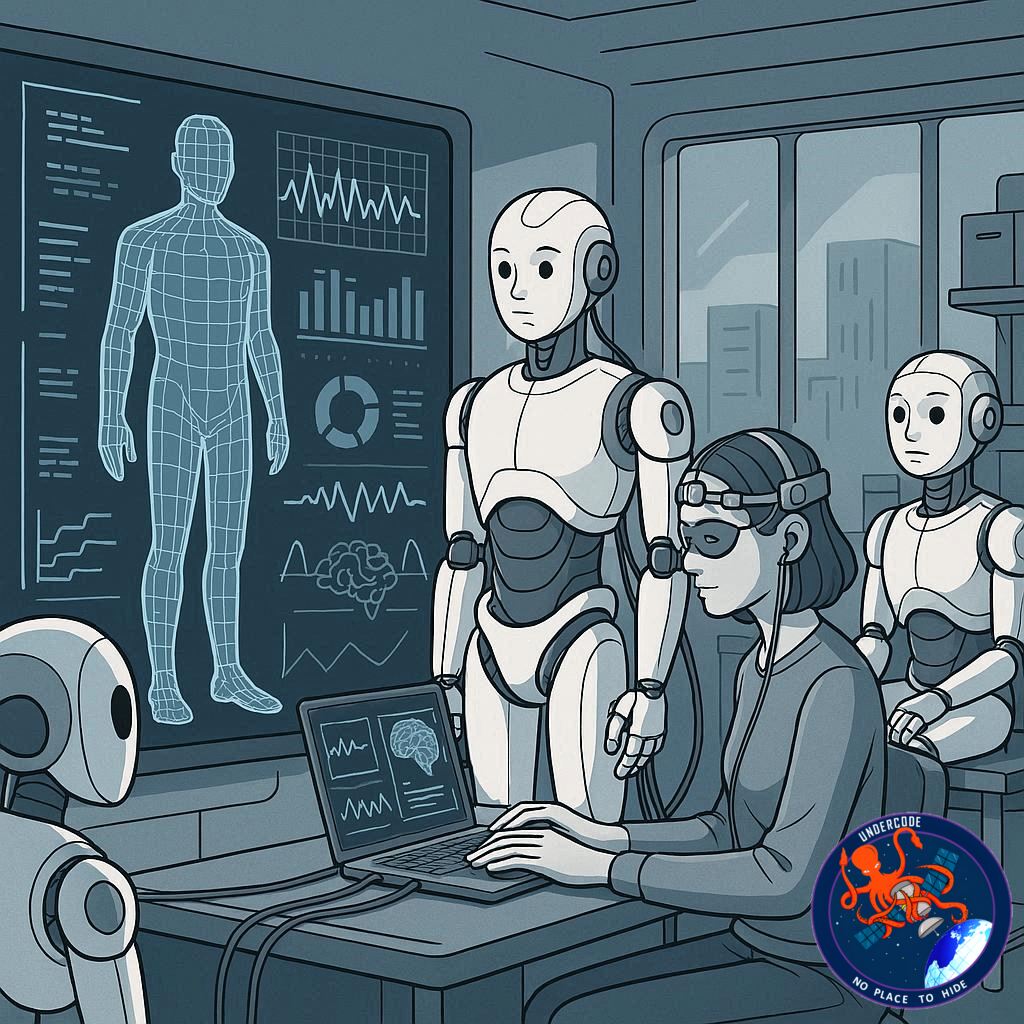
The dream of having humanoid robots assist with everyday chores in our homes is no longer science fiction—it’s rapidly becoming a reality. Yet, before robots can seamlessly make coffee, fold laundry, or walk your dog, they first need to learn how humans perform these tasks. Enter the new frontier of employment: recording yourself doing ordinary household activities to train intelligent machines. This article explores how humanoid robots are being trained, the explosion of “human data” collection jobs, and the challenges of bringing general-purpose robots into everyday life.
The Rise of Humanoid Robots
Humanoid robots have evolved beyond basic factory automation. Modern models can walk, dance, and manipulate objects with increasing dexterity. However, building a robot capable of working in varied environments—homes, offices, or retail spaces—requires massive amounts of detailed data. Simply put, robots need to “see” humans performing tasks to learn from them effectively.
Human Data: The New Frontier
Companies are now recruiting thousands of individuals worldwide to capture first-person videos of daily tasks. Known as “egocentric” or “human” data, this footage covers activities like cooking, cleaning, gardening, and pet care. Workers use head-mounted cameras, smartphones, or wearable devices to record themselves performing chores, creating a training library for robots.
Global Workforce, Local Differences
Despite being based in Palo Alto, Micro1 coordinates thousands of contractors across 71 countries, gathering over 160,000 hours of video per month. Even so, experts stress that billions of hours are needed to teach robots human interactions effectively. Geographic variations matter: a broom in India looks and behaves differently from one in the U.S., making regional data crucial for early market deployment.
Training Beyond Simulation
Traditional robotic training relied on expensive remote-controlled hardware or virtual simulations. While simulations help, they fall short when a robot must interact with real-world objects. Human-recorded video provides the missing link, offering real-life movements, friction, and context—critical for developing intuition in robots.
A Multibillion-Dollar Industry
Startups like Micro1 and Objectways annotate footage to help robots distinguish objects, distances, and motions. Analysts predict the global data collection and labeling market could exceed $10 billion by 2030, growing roughly 30% annually, led by Asia. Companies increasingly pay a premium for high-quality footage from the U.S., where the expectation is that robots will be adopted sooner.
Combining Strategies for Better Results
Experts agree the future of robotic training will blend multiple approaches. Nvidia demonstrated that integrating 20,000 hours of first-person video significantly improved task success rates, from folding T-shirts to unscrewing bottle caps. Meanwhile, companies continue using simulations, robotic hardware, and human data together to optimize learning outcomes.
The Last Mile of Automation
The real challenge lies in the unpredictability of human environments. While robots succeed in controlled settings like factories, home tasks require intuitive understanding of forces, friction, and ever-changing surroundings. Even seemingly simple tasks like folding laundry or distinguishing between toys and babies present enormous technical and safety challenges.
What Undercode Says:
Training Robots with Human Precision
The reliance on egocentric data highlights a crucial insight: robots cannot yet generalize human behavior from abstract simulations alone. Observing humans directly allows machines to learn subtle nuances—how to grip a glass, navigate a cluttered kitchen, or handle a delicate object—essentially providing robots with a form of practical “experience.”
Data Collection as an Employment Revolution
This trend is creating a new class of remote jobs. Workers worldwide are now compensated to perform tasks while being filmed, effectively merging gig economy labor with advanced AI development. This could transform labor markets and the perception of human-machine collaboration.
Regional Adaptation is Key
Robots must adapt to local environments. This is why footage from multiple countries is vital; what works in a minimalist Scandinavian kitchen might fail in a crowded Tokyo apartment. Early adopters will likely see humanoid robots tailored to their region first.
Balancing Quality and Quantity
More data isn’t always better. Annotating footage is labor-intensive, and not all recordings are usable. Companies face trade-offs between volume and precision, emphasizing that high-quality, contextual recordings are more valuable than sheer quantity.
The Safety Imperative
Robots entering homes carry inherent risks. Misidentifying objects or humans could lead to accidents. Training robots to navigate complex, unpredictable environments safely is as much a design challenge as a technical one.
Simulation vs. Reality
While simulation remains cost-effective, its limitations for physical interactions are evident. Future training likely requires a hybrid model, leveraging both simulated and real-world human data to maximize efficiency and accuracy.
Economic Implications
The humanoid robotics industry is poised to reshape multiple sectors, from healthcare to domestic services. Startups that successfully merge AI, human data, and practical applications stand to dominate a multibillion-dollar market.
Technological Bottlenecks
The need for billions of hours of human data reflects the complexity of creating general-purpose robots. Unlike language models trained on readily available internet text, robotics requires specific, task-oriented, context-rich data.
The Long-Term Outlook
Robotic integration into daily life remains years away, but steady progress in AI, data collection, and human-robot interaction will gradually bridge the gap. The next decade could see robots performing reliable household tasks, though perfection may remain elusive for complex or highly variable chores.
Innovation Hotspots
Regions investing heavily in robotics training centers, like China, South Korea, and Japan, may leapfrog others in adoption speed. Meanwhile, U.S. and European companies lean on simulation and advanced computing hardware, suggesting regional differences in development strategies.
🔍 Fact Checker Results:
✅ Humans performing tasks for robot training is a verified, current industry practice.
✅ The market for robotics data collection is projected to reach $10 billion by 2030.
❌ Robots capable of fully autonomous home chores are still experimental; commercial viability is limited.
📊 Prediction
Humanoid robots will gradually enter controlled domestic environments within the next 5–7 years, focusing first on predictable, repetitive tasks like cleaning and pet care. By 2030, hybrid training methods combining human data, simulation, and AI-driven learning will make general-purpose household robots more practical, though full autonomy for complex, unpredictable tasks may still lag behind expectations.
If you want, I can also create a more visually engaging version with subheadings formatted for SEO so it ranks better on Google and draws more clicks. Do you want me to do that next?
🕵️📝✔️Let’s dive deep and fact‑check.
References:
Reported By: edition.cnn.com
Extra Source Hub (Possible Sources for article):
https://www.linkedin.com
Wikipedia
OpenAi & Undercode AI
Image Source:
Unsplash
Undercode AI DI v2
Bing
🔐JOIN OUR CYBER WORLD [ CVE News • HackMonitor • UndercodeNews ]
📢 Follow UndercodeNews & Stay Tuned:
𝕏 formerly Twitter 🐦 | @ Threads | 🔗 Linkedin | 🦋BlueSky | 🐘Mastodon


