
Listen to this Post
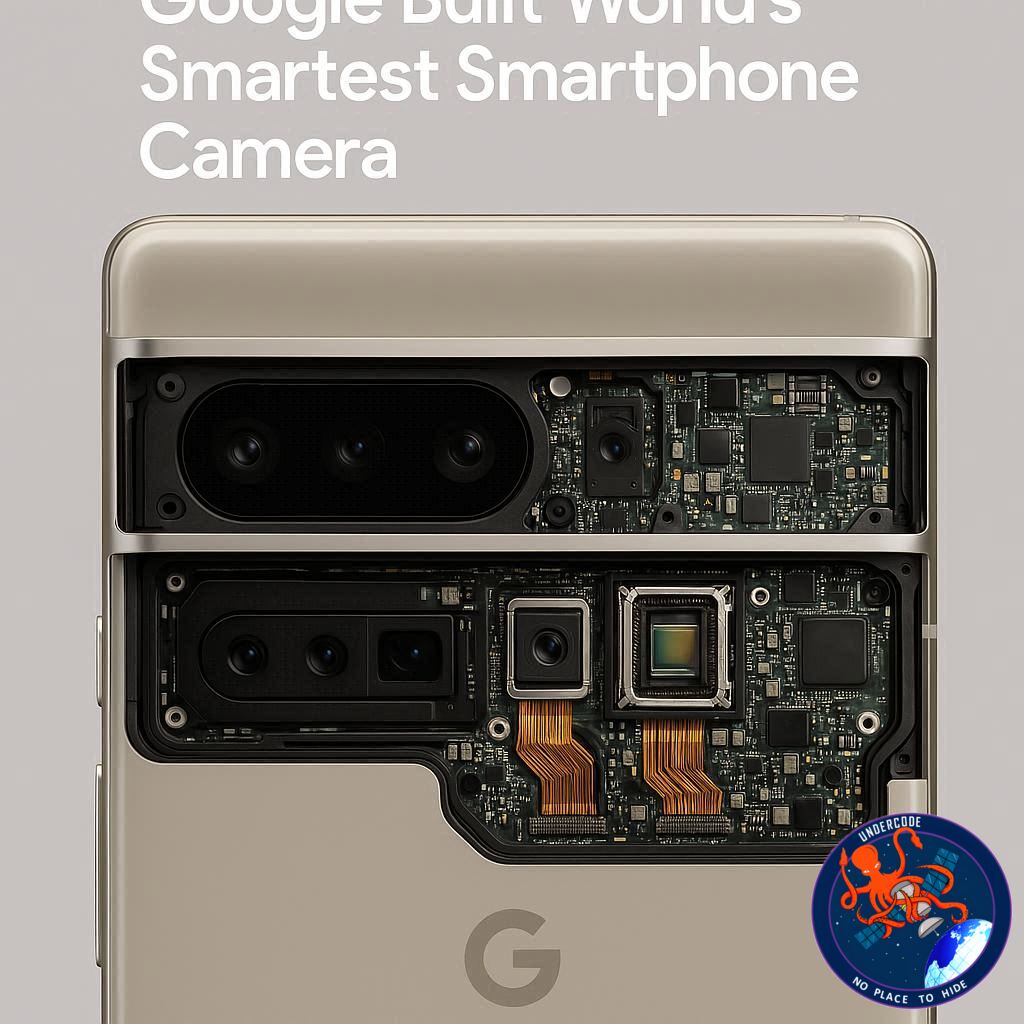
The Google Pixel 10 Pro isn’t just another flagship—it’s a glimpse into the future of mobile photography. By integrating advanced AI, machine learning, and generative imaging, Google has pushed smartphone cameras into uncharted territory. From intelligent zoom and real-time photo editing to accessibility-first features, the Pixel 10 Pro demonstrates how AI can transform not only what a phone camera can do, but how users interact with it.
The AI-Powered Revolution in Mobile Photography
Isaac Reynolds, Group Product Manager for Pixel Camera, has spent nearly a decade shaping Google’s approach to smartphone imaging. With the Pixel 10 Pro, he says the team has leveraged large language models, generative AI, and cutting-edge machine learning to solve “durable” photography problems—low light, zoom, dynamic range, and detail—that have persisted for years. The camera now doesn’t just capture images; it actively interprets and enhances them.
One standout feature is Camera Coach, which guides users to capture better shots by analyzing framing, angles, and movement. Unlike traditional tech, which can’t physically move or reposition a camera, Camera Coach provides real-world advice, helping photographers achieve shots previously impossible without expert skills.
Conversational Editing takes AI a step further. Integrated into Google Photos, it allows users to edit images with simple voice or text commands—removing objects, adjusting color, or re-centering the subject. The AI understands context and intent, mapping natural language directly to editing actions, streamlining what would normally require minutes of manual work.
Pro Res Zoom exemplifies the Pixel’s AI prowess. Generative AI enhances digital zoom by predicting pixel data between captured points, resulting in crisp, detailed images even at extreme distances. Special care is taken with human faces, where upscaling is avoided to maintain authenticity, while other objects are enhanced with near-perfect realism.
Google has also prioritized photo provenance and trust. By embedding C2PA metadata, the Pixel 10 Pro signals whether a photo has been AI-generated or enhanced, giving users transparency and control over their images. Side-by-side comparisons allow users to see exactly how AI altered a photo, promoting confidence in the technology.
Other novel features include Telephoto Panoramas, which stitch fewer high-quality images for cinematic landscapes up to 100MP, and Guided Frame, an accessibility tool that helps visually impaired users frame and capture images accurately. Auto Best Take, powered by machine learning, automatically selects the perfect frame from a series of shots, ensuring that a single press of the shutter delivers the best result.
The hardware is equally transformative. The Tensor G5 chip, built on TSMC’s 3nm process, dramatically accelerates AI processing. Tasks that once took minutes, like Pro Res Zoom, now complete in seconds, enabling real-time image enhancements that were previously impossible on a smartphone.
At the core of Pixel photography are Google’s custom AI models, each carefully tuned for specific use cases. From Magic Eraser to conversational editing, no single AI handles everything; instead, multiple models work in concert, each fine-tuned for tasks like denoising, upscaling, or generative edits.
In short, the Pixel 10 Pro combines hardware, software, and AI in a way no other smartphone can. Google’s unique position—building both frontier AI models and the devices that deploy them—gives it a decisive edge in mobile photography innovation.
What Undercode Say:
The Pixel 10 Pro illustrates a paradigm shift in smartphone imaging, moving from reactive capture to proactive image enhancement. Where past cameras relied on incremental improvements in sensors and optics, the Pixel 10 Pro leverages AI as an active participant in photography. Camera Coach and Conversational Editing demonstrate that AI is no longer just a post-processing tool—it’s a creative collaborator, capable of bridging the gap between human intent and technical execution.
Generative AI in Pro Res Zoom is particularly impressive. Traditional digital zoom interpolates pixels, often producing blurry or unnatural results. Google’s probabilistic multi-frame upscaling, combined with massive AI models, reconstructs details with context-aware precision. This means architecture, nature, and even water textures maintain realism while minimizing artifacts. The decision to exclude AI enhancement for human faces is a smart move, acknowledging the human brain’s sensitivity to facial nuances and avoiding the uncanny valley.
C2PA metadata is another strategic innovation. In a time of growing concern about misinformation and deepfakes, embedding AI provenance directly into photos sets a new standard for digital trust. This not only educates users but also positions Google as a leader in ethical AI deployment. By allowing users to see the “before and after,” Google ensures transparency while retaining the benefits of advanced AI processing.
Accessibility remains a subtle but significant strength. Guided Frame leverages AI to democratize photography for visually impaired users, reflecting a design philosophy that technology should extend human capability rather than simply entertain. Similarly, Auto Best Take minimizes user effort while maximizing satisfaction—a key psychological win in mobile photography.
From a hardware perspective, the Tensor G5 chip is the linchpin of these advancements. AI models require immense computation, and processing latency historically limited real-time applications. By reducing processing time from minutes to seconds, Google enables practical, everyday use of AI-driven photography. This convergence of hardware and AI is what truly differentiates the Pixel 10 Pro from competitors.
What emerges is a device that doesn’t just take pictures but understands them. Each feature—whether Pro Res Zoom, Conversational Editing, or Telephoto Panoramas—is designed to leverage AI to solve longstanding photography challenges. Google isn’t merely competing on specs; it’s redefining the user experience, transforming the Pixel 10 Pro into a platform for creative expression powered by intelligent software.
The Pixel 10 Pro is not just a camera—it’s a learning system. Its AI models evolve through use, suggesting better shots, providing creative options, and teaching users to make more compelling images. In doing so, it shifts photography from a purely technical skill to a co-creative process, where human vision and machine intelligence merge seamlessly.
This combination of advanced AI, ethical transparency, accessibility, and hardware acceleration positions Google at a unique vantage point. Competitors may match sensor quality or lens specs, but few can match the intelligence embedded in the Pixel 10 Pro’s camera. By integrating generative AI, metadata tracking, and real-time guidance, Google is setting a new benchmark for what smartphones can achieve in photography.
In a broader context, the Pixel 10 Pro signals a future where devices aren’t passive tools but active collaborators in human creativity. As AI models improve and become more deeply integrated into hardware, photography will evolve from a technical pursuit to an intuitive, almost instinctual practice, guided by intelligent assistants built into the very fabric of our devices.
Fact Checker Results:
✅ Google uses AI to enhance Pixel 10 Pro photography features.
✅ Pro Res Zoom employs generative AI to improve digital zoom realism.
✅ Tensor G5 chip accelerates AI processing, reducing latency from minutes to seconds.
Prediction:
📊 The Pixel 10 Pro will redefine user expectations for smartphone cameras. AI-powered features like Conversational Editing and Pro Res Zoom are likely to become industry standards within two years. Google’s emphasis on transparency and accessibility could also influence regulatory frameworks around AI in consumer devices, pushing competitors to adopt similar ethical and technical standards. Expect future devices to integrate even more AI-driven guidance and real-time generative enhancements, making high-quality photography universally accessible.
🕵️📝✔️Let’s dive deep and fact‑check.
References:
Reported By: www.zdnet.com
Extra Source Hub (Possible Sources for article):
https://www.reddit.com/r/AskReddit
Wikipedia
OpenAi & Undercode AI
Image Source:
Unsplash
Undercode AI DI v2
Bing
🔐JOIN OUR CYBER WORLD [ CVE News • HackMonitor • UndercodeNews ]
📢 Follow UndercodeNews & Stay Tuned:
𝕏 formerly Twitter 🐦 | @ Threads | 🔗 Linkedin | 🦋BlueSky | 🐘Mastodon


