
Listen to this Post
🎯 Introduction
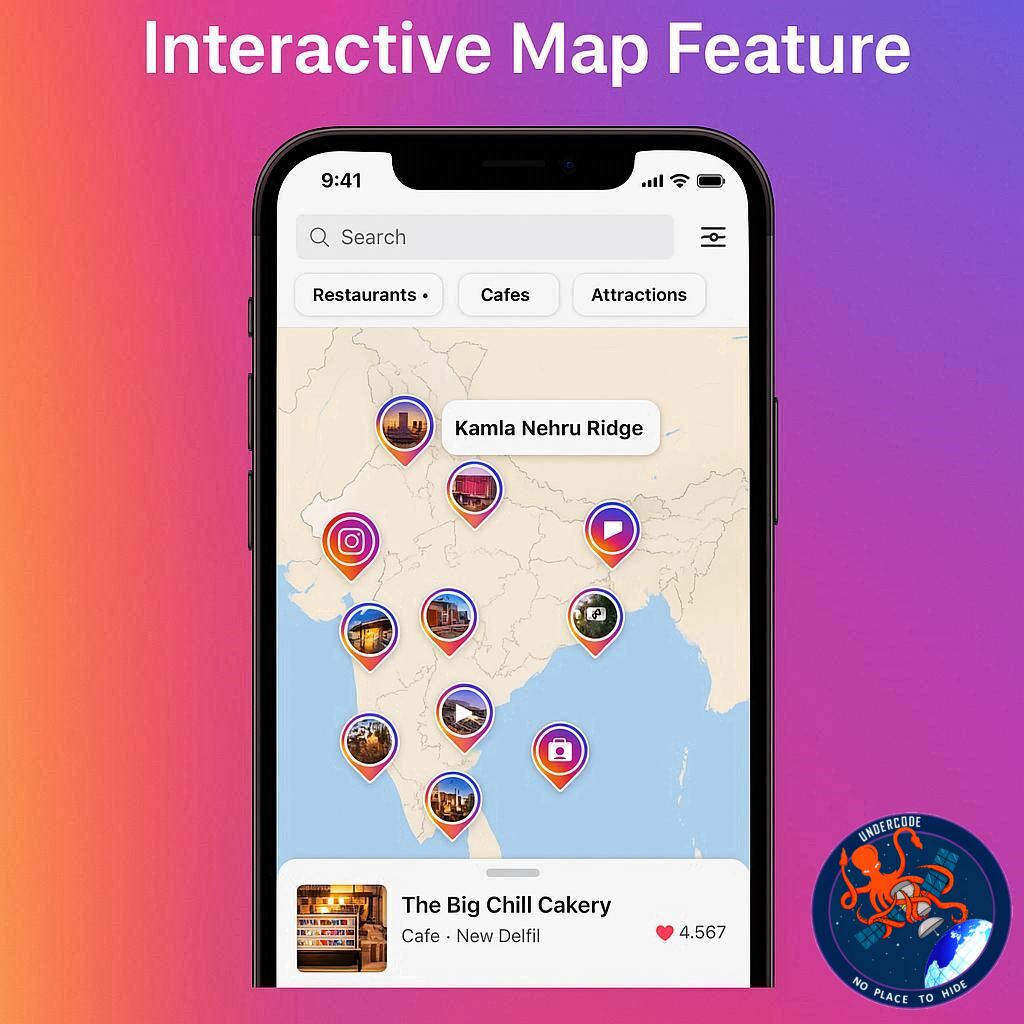
Instagram has officially introduced its long-awaited Map feature in India, marking a major step toward transforming how users explore their surroundings. This new update blends social discovery with real-world navigation, allowing users to find trending restaurants, cafes, events, and landmarks through user-generated posts. It’s not just another update, it’s Instagram’s way of turning everyday social moments into a dynamic, location-powered experience.
📍 Instagram’s Map Revolution: Connecting People and Places
Instagram’s Map feature gives users a visual, interactive way to explore what’s trending nearby. It highlights local hotspots, from cozy coffee shops to must-visit landmarks, all powered by the energy of user content. When users tap on a tagged location in a post or story, it opens directly on the map, revealing other posts from the same area. This lets users see real experiences, not just advertisements.
Users can also filter their searches by category, making it easier to find exactly what they want — whether it’s a restaurant, a tourist attraction, or an event. The feature even allows saving favorite places, making future visits seamless. It’s a step toward merging social validation with real-world exploration, where each post becomes a micro-review written by the crowd.
🧭 Supporting Local Businesses and Creators
The rollout is more than a tool for exploration; it’s a new avenue for local businesses and influencers. By surfacing popular, community-driven content, Instagram aims to help small businesses gain visibility without needing heavy ad budgets. Local cafes, pop-up events, and independent stores can now appear right on users’ maps — if they’re tagged in posts.
This approach could dramatically increase organic discovery and help micro-influencers build localized followings. For India’s growing creator economy, it’s a potential game-changer.
🔒 Enhanced Privacy for Indian Users
Accompanying the Map launch are new privacy tools designed specifically for India’s user base. These tools let users decide who can see their location-tagged content, whether it appears on the map, and when it can be removed. Only public posts will be visible on the map, and users will receive notifications before their content appears.
This dual emphasis — discovery with control — reflects Meta’s ongoing effort to balance visibility and user protection. The feature empowers individuals to decide how much of their physical world merges with their digital one.
🇮🇳 Why India Comes First
India has become one of Instagram’s biggest markets, boasting more than 300 million users. It’s no surprise that Meta chose India for this early rollout. The country’s digital ecosystem thrives on social sharing and local discovery, making it the perfect testing ground. With millions of users engaging in food blogging, travel vlogs, and local business promotion, the Map feature arrives at the right moment.
For creators and entrepreneurs, this means more visibility, engagement, and discovery. For users, it’s a bridge between scrolling and exploring. Instagram’s focus on India underscores its recognition of the market’s potential — not just as a user base, but as a hub of content creation and innovation.
🧩 What Undercode Say:
Instagram’s Map update in India isn’t merely a product launch; it’s a calculated strategy to embed real-world discovery into digital behavior. This move aligns with a broader trend: social media platforms transforming into localized search engines. Instead of googling “best cafes near me,” users can now visually explore what’s trending around them through posts from real people.
This feature also strengthens Instagram’s competition against Google Maps, TikTok, and Snapchat — all of which have been experimenting with social mapping. Meta’s advantage lies in its massive, image-driven community and influencer ecosystem. When users see their favorite creator at a restaurant, the likelihood of visiting that place increases dramatically.
From a data standpoint, the Map tool gives Meta valuable insights into local trends and user mobility, further refining ad targeting and recommendation algorithms. Yet the privacy features are equally vital. By emphasizing control and transparency, Instagram ensures users feel comfortable sharing location-linked content — a smart balance between personalization and privacy.
The introduction of region-specific privacy settings also signals Meta’s localization strategy. Rather than applying uniform global updates, the company is adapting its approach to local laws, digital behavior, and cultural nuances. India’s inclusion at the front of this rollout indicates Meta’s desire to test engagement at scale before expanding globally.
On the business side, this is a massive opportunity for SMEs (Small and Medium Enterprises). Local stores often struggle to compete in ad-driven environments. But with map discovery powered by organic user posts, even a small café can gain exposure if it becomes Instagrammable enough. The Map feature turns every user into a potential promoter.
Creators, too, stand to benefit. By tagging locations in their content, influencers can make their posts part of a discovery network, increasing visibility for both themselves and the venues they feature. This mutual amplification could redefine influencer marketing, merging lifestyle storytelling with geographic discovery.
Still, the long-term success of this feature depends on accuracy, moderation, and trust. If spam or misleading tags flood the map, users may lose interest. Meta will need to ensure the feature remains authentic and useful.
In essence, Instagram’s Map isn’t just about finding places — it’s about connecting digital expression with real experiences. It reflects a world where social networks no longer live behind screens but bleed into the streets, cafés, and events we explore every day.
🔍 Fact Checker Results
✅ Instagram’s Map feature has officially launched in India, verified by Meta’s regional announcements.
✅ Only public, location-tagged posts appear on the map, with opt-out options available.
✅ India is among the first countries to receive this feature, confirming its priority market status.
📊 Prediction
🌐 In the next 12 months, Instagram’s Map feature will likely evolve into a hybrid social search tool, rivaling Google Maps in engagement metrics.
📱 Expect creators and local businesses to form micro-ecosystems around trending locations.
💡 If Meta integrates AI-powered recommendations, this could redefine how Indians discover, visit, and share real-world places.
🕵️📝✔️Let’s dive deep and fact‑check.
References:
Reported By: timesofindia.indiatimes.com
Extra Source Hub (Possible Sources for article):
https://www.digitaltrends.com
Wikipedia
OpenAi & Undercode AI
Image Source:
Unsplash
Undercode AI DI v2
Bing
🔐JOIN OUR CYBER WORLD [ CVE News • HackMonitor • UndercodeNews ]
📢 Follow UndercodeNews & Stay Tuned:
𝕏 formerly Twitter 🐦 | @ Threads | 🔗 Linkedin | 🦋BlueSky | 🐘Mastodon


