
Listen to this Post
Introduction: A Massive Education Data Breach Sends Shockwaves Across Digital Learning
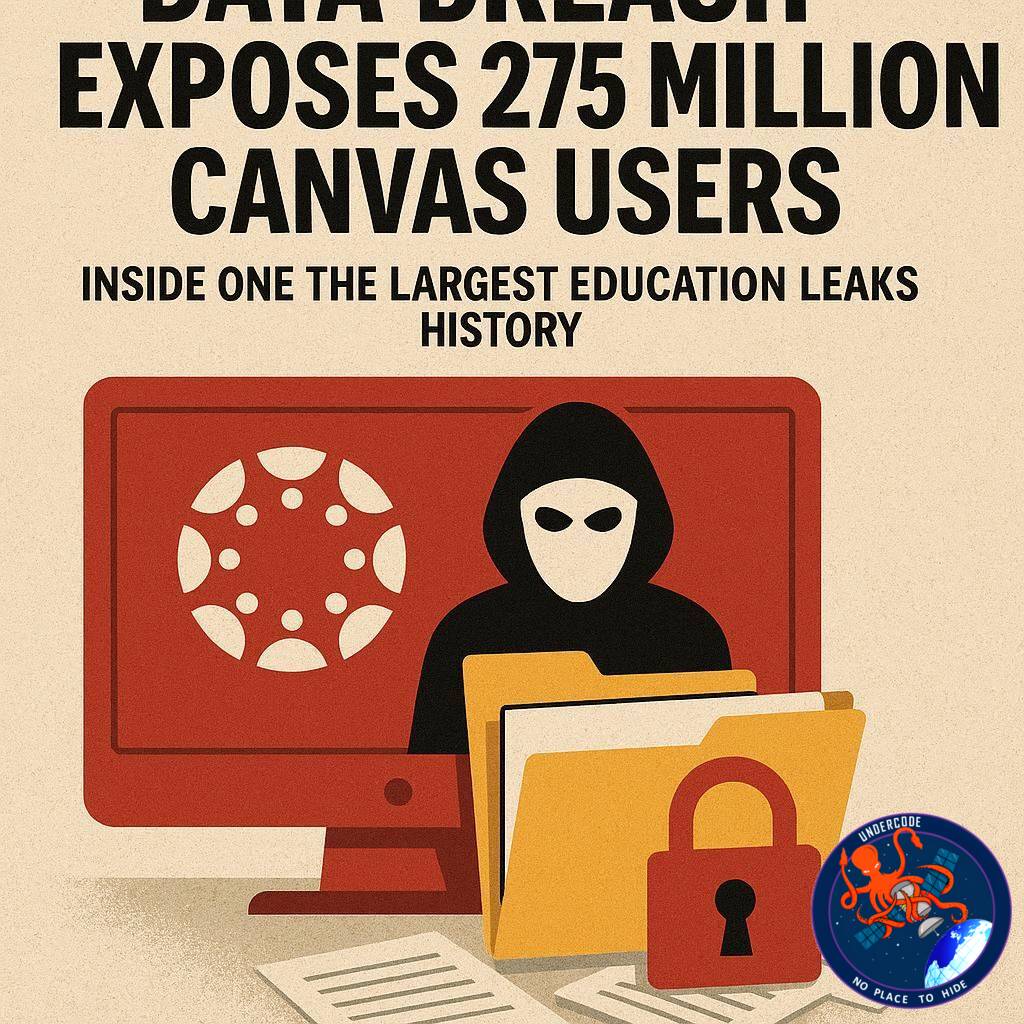
A major cybersecurity incident has shaken the global education technology sector after Instructure, the company behind the widely used Canvas learning platform, confirmed a data breach affecting approximately 275 million users. The breach reportedly exposed sensitive personal information, including names, email addresses, user IDs, and private messages. The threat actor group known as ShinyHunters has claimed responsibility for the attack and allegedly attempted to extort the company by threatening to release the stolen data unless a ransom was paid. According to reports, the breach was contained by May 2, but concerns remain over the scale of exposure and potential misuse of the data. The incident highlights growing vulnerabilities in education platforms that store vast amounts of personal and institutional data.
the Incident: What Happened in the Canvas Breach
The cybersecurity breach targeting Instructure’s Canvas platform represents one of the most significant data exposures in the education sector in recent years. The platform, widely used by universities, schools, and training institutions, reportedly had data from around 275 million users compromised. This includes personal identifiers such as names, email addresses, user IDs, and internal messaging content shared within the system.
The attack has been attributed to the hacking group ShinyHunters, known for targeting large databases and attempting extortion through leaked data threats. Following the breach, the group allegedly demanded payment in exchange for not releasing the stolen information publicly.
The breach was reportedly discovered and contained by May 2, limiting further unauthorized access. However, containment does not necessarily mean full mitigation, as data already extracted could still circulate or be sold on illicit platforms.
The incident underscores the scale of data stored within educational platforms, where millions of students and educators rely on centralized systems for communication and coursework. It also raises concerns about how securely such sensitive ecosystems are protected against modern cyber threats.
Beyond the immediate breach, cybersecurity analysts have pointed out that education technology companies are increasingly becoming high-value targets due to the massive aggregation of personal data, often with weaker security budgets compared to financial institutions.
The exposure of 275 million records places this breach among the largest education-related cyber incidents recorded, emphasizing the urgency for stronger encryption, better access controls, and continuous threat monitoring.
What Undercode Say: Strategic Cybersecurity Breakdown of the Canvas Breach
Massive Data Centralization Created a High-Value Target
The Canvas platform’s scale is its strength and its weakness. By centralizing academic data for hundreds of millions of users, it becomes an extremely attractive target for cybercriminal groups. The breach shows how education systems are now competing with financial services in terms of data value, yet often without equivalent defensive infrastructure.
ShinyHunters’ Involvement Signals a Familiar Extortion Pattern
The group behind the attack, ShinyHunters, is known for data theft followed by ransom demands. This follows a predictable cybercrime model: infiltrate large databases, extract sensitive information, and pressure organizations into paying to avoid public leaks. Even if payment is not made, the stolen data often still finds its way into underground markets.
Education Technology Is Becoming a Soft Target
Unlike banks or government systems, education platforms often prioritize accessibility and usability over hardened security layers. This makes them vulnerable to credential leaks, phishing, and API exploitation. The Canvas breach reinforces the idea that edtech is now a prime attack surface.
The Scale of Exposure Increases Long-Term Risk
Even though the breach was contained quickly, the exposure of 275 million user records creates long-term consequences. Emails and IDs can be reused for phishing campaigns, identity fraud, and credential stuffing attacks across other platforms.
Internal Messaging Exposure Raises Severity
The inclusion of message data significantly escalates the risk. Unlike static identifiers, message content can contain sensitive academic discussions, personal communication, or institutional data that may be exploited for social engineering.
Containment Does Not Equal Neutralization
While the breach was contained by May 2, cybersecurity experts often emphasize that containment only stops further intrusion. It does not recover or secure data already extracted. This means the threat continues even after the incident is officially “resolved.”
Ransom-Based Cybercrime Continues to Dominate
This case reflects the ongoing dominance of ransomware and extortion-based cybercrime models. Instead of encrypting systems, attackers increasingly steal data first and threaten exposure, reducing the need for direct system disruption.
Institutional Blind Spots in Cyber Defense
Educational institutions relying on third-party platforms often assume security is handled by vendors. However, shared responsibility models frequently leave gaps in monitoring, incident response, and rapid threat detection.
🔍 Fact Checker Results
Exposure Scale Confirmation
✔ Reports confirm that Canvas user data exposure is being described on a massive scale involving hundreds of millions of records, though exact figures may vary by source.
Threat Actor Attribution
✔ ShinyHunters has a documented history of similar breaches and extortion attempts, making attribution plausible based on known patterns.
Containment Timeline
✔ The breach containment date of May 2 aligns with reported incident response timelines, though full forensic verification remains ongoing.
📊 Prediction: Future Impact of the Canvas Breach on Global EdTech Security
The Canvas breach is likely to trigger a major shift in how education technology platforms approach cybersecurity. In the short term, institutions may conduct urgent security audits and force password resets across systems connected to Canvas. In the medium term, stricter compliance standards for educational data protection are expected to emerge, especially in large university networks.
Cybercriminal activity targeting education platforms is also expected to increase, as attackers recognize the high value and relatively lower defense maturity of this sector. Data stolen from this breach may be reused in phishing campaigns, leading to secondary waves of attacks across unrelated systems.
In the long term, this incident could push edtech companies toward adopting zero-trust architectures, stronger encryption for internal communications, and real-time behavioral monitoring systems. However, unless security investment increases significantly, similar breaches are likely to repeat, potentially at even larger scales.
🕵️📝Let’s dive deep and fact‑check.
References:
Reported By: x.com
Extra Source Hub (Possible Sources for article):
https://www.reddit.com
Wikipedia
OpenAi & Undercode AI
Image Source:
Unsplash
Undercode AI DI v2
Bing
🔐JOIN OUR CYBER WORLD [ CVE News • HackMonitor • UndercodeNews ]
📢 Follow UndercodeNews & Stay Tuned:
𝕏 formerly Twitter 🐦 | @ Threads | 🔗 Linkedin | 🦋BlueSky | 🐘Mastodon


