
Listen to this Post
Introduction
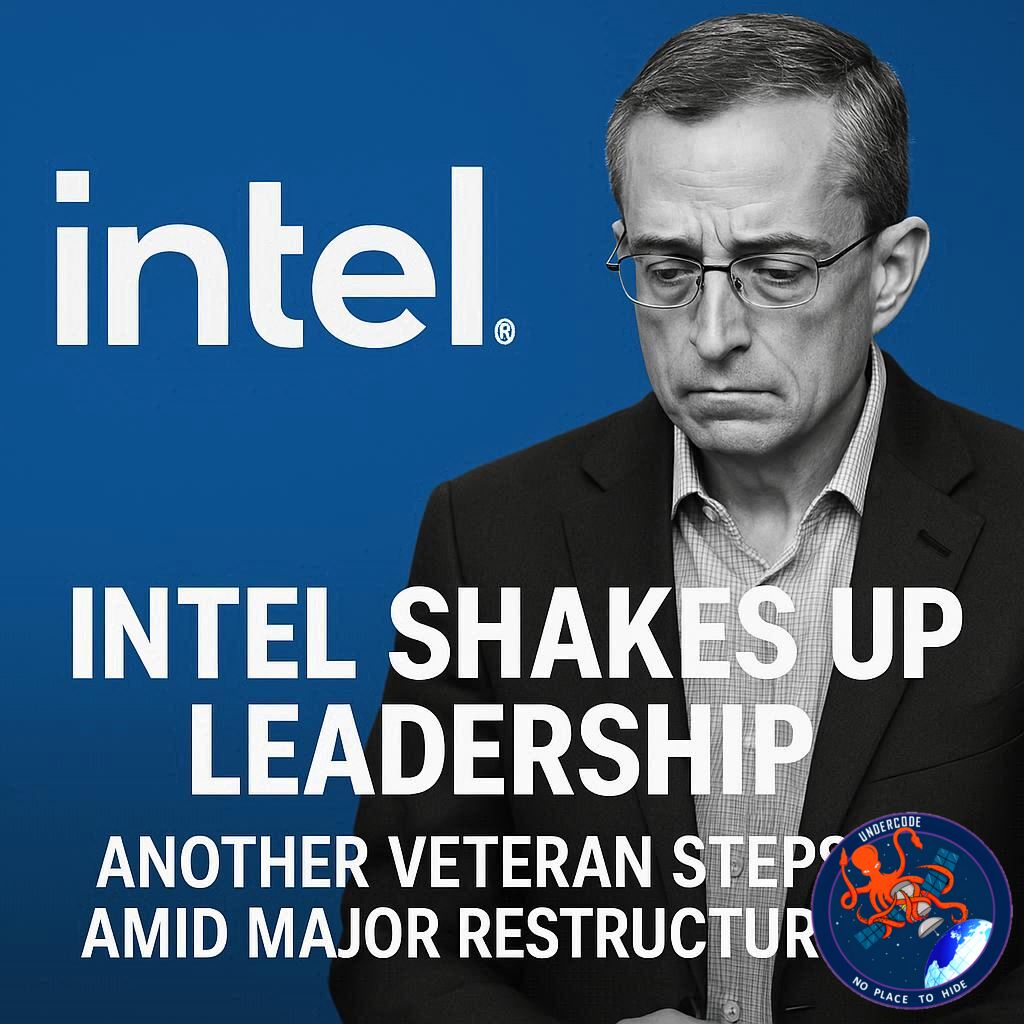
Intel, once the unshakable king of the semiconductor world, is going through one of its most turbulent transitions in decades. The company is facing relentless competition, political pressure, and an urgent need to reinvent itself in a fast-changing market dominated by rivals like NVIDIA, AMD, and TSMC. In the latest shake-up, a long-serving executive has stepped down, signaling that the restructuring under CEO Tan is far from over. The leadership changes are not just about new faces—they’re about redefining Intel’s role in the future of global chipmaking.
Intel Veteran Bows Out After 30 Years
On September 8, Intel announced the departure of Michelle Johnston Holthaus, a respected veteran with over three decades at the company. Holthaus had most recently served as CEO of Intel Products and previously took the role of interim co-CEO following the exit of Pat Gelsinger. While stepping down from her executive post, she will continue to serve Intel as a strategic adviser.
Her exit is part of a broader organizational transformation orchestrated by Tan, who assumed the CEO role in March. Intel is not simply swapping leaders—it is rebuilding its internal structure to sharpen focus on engineering, client relationships, and the competitive foundry business.
A New Central Engineering Group
As part of this overhaul, Intel has created a Central Engineering Group, dedicated to developing custom silicon solutions for external clients. This signals Intel’s intent to compete more aggressively with companies like TSMC and Samsung, which dominate the contract chip manufacturing market. The group will be led by Srinivasan “Srini” Iusdgar, a recent Intel hire from Cadence Design Systems.
Key Leadership Appointments
The reshuffling goes beyond one departure. Intel has confirmed several major appointments:
Kevork Kechichian, formerly at ARM, will take charge of Intel’s data center group.
Jim Johnson has been promoted to senior vice president and general manager of Intel’s client computing group.
Naga Chandrasekaran, Intel’s chief technology and operations officer, will expand his responsibilities within the custom chip business for external customers.
CEO Tan expressed strong confidence in these moves, stating:
“We are laser-focused on delivering world-class products and empowering our engineering teams to move faster and execute with excellence. Kevork, Jim, and Srini are exceptional leaders whose deep technical acumen and industry relationships will be instrumental as we continue building a new Intel.”
External Pressures Mount
Intel’s transformation comes at a politically sensitive time. The US government recently announced plans to convert certain grants into a 10% stake in Intel, a rare step that underscores Washington’s desire to secure America’s semiconductor future. The deal also included penalties if Intel’s ownership of its foundry unit drops below 50%.
At the same time, former President Donald Trump has called for Tan’s resignation, citing alleged conflicts of interest—adding more public scrutiny to the already pressured leadership.
The shake-up is the latest in a string of restructuring moves since Tan took over. In July, Intel also hired Greg Ernst as Chief Revenue Officer, signaling a stronger focus on sales alongside engineering transformation.
What Undercode Say:
Intel’s leadership changes reflect a company that is simultaneously fighting for survival and trying to reassert dominance. For decades, Intel controlled the chip industry, but in the past 10 years, its competitors have overtaken it in both innovation and execution.
Holthaus’ exit is symbolic—it shows that even long-serving leaders are being phased out as Intel pivots to a new strategy. Keeping her on as a strategic adviser softens the blow but also reflects the company’s need to balance institutional memory with fresh leadership.
The creation of the Central Engineering Group is perhaps the most important step. Intel has historically been slow in adapting to new models, while its rivals quickly expanded into foundry services and AI-focused architectures. This new unit positions Intel to capture revenue from external clients who may otherwise turn to TSMC or Samsung for custom chips.
The appointment of Kevork Kechichian is particularly interesting—his background at ARM could hint at Intel’s renewed interest in designing chips optimized for mobile and power efficiency, areas where ARM dominates. Meanwhile, Jim Johnson’s role in client computing will be critical, as Intel continues to face stiff competition from Apple’s in-house M-series chips and AMD’s Ryzen processors.
What makes this reshuffle more complex is the political backdrop. The US government’s partial ownership means Intel is no longer just a private corporation—it is a national strategic asset. That brings opportunities in funding and stability, but also risks, as Intel may be forced to prioritize political goals over market-driven innovation.
The pressure from Trump adds fuel to the fire. While his criticism may not lead to immediate leadership changes, it underscores how Intel has become a focal point in America’s technology and economic rivalry with China. Every decision Tan makes will now be viewed through both a business lens and a geopolitical lens.
In the near term, these leadership changes could boost investor confidence by showing decisive action. However, Intel’s biggest challenge remains execution. Can the new team deliver cutting-edge chips fast enough to compete with NVIDIA’s GPUs, AMD’s CPUs, and TSMC’s foundry dominance?
If Intel succeeds, this could mark the beginning of a comeback. If not, these reshuffles will be remembered as signs of desperation rather than renewal.
🔍 Fact Checker Results
✅ Michelle Johnston Holthaus has stepped down after 30+ years at Intel.
✅ A new Central Engineering Group has been created under Srinivasan Iusdgar.
❌ Trump is not the sitting US president—he is a former president.
📊 Prediction
Intel’s next 18 months will be make-or-break. If the new Central Engineering Group secures major clients outside Intel’s ecosystem, it could spark a real turnaround. However, if execution falters, Intel risks becoming a secondary player in a market it once dominated. Expect heightened political influence, tighter scrutiny, and bold product launches aimed at proving that Intel is not just surviving—but still fighting for leadership.
🕵️📝✔️Let’s dive deep and fact‑check.
References:
Reported By: timesofindia.indiatimes.com
Extra Source Hub:
https://www.stackexchange.com
Wikipedia
OpenAi & Undercode AI
Image Source:
Unsplash
Undercode AI DI v2
🔐JOIN OUR CYBER WORLD [ CVE News • HackMonitor • UndercodeNews ]
📢 Follow UndercodeNews & Stay Tuned:
𝕏 formerly Twitter 🐦 | @ Threads | 🔗 Linkedin | 🦋BlueSky | 🐘Mastodon


