
Listen to this Post
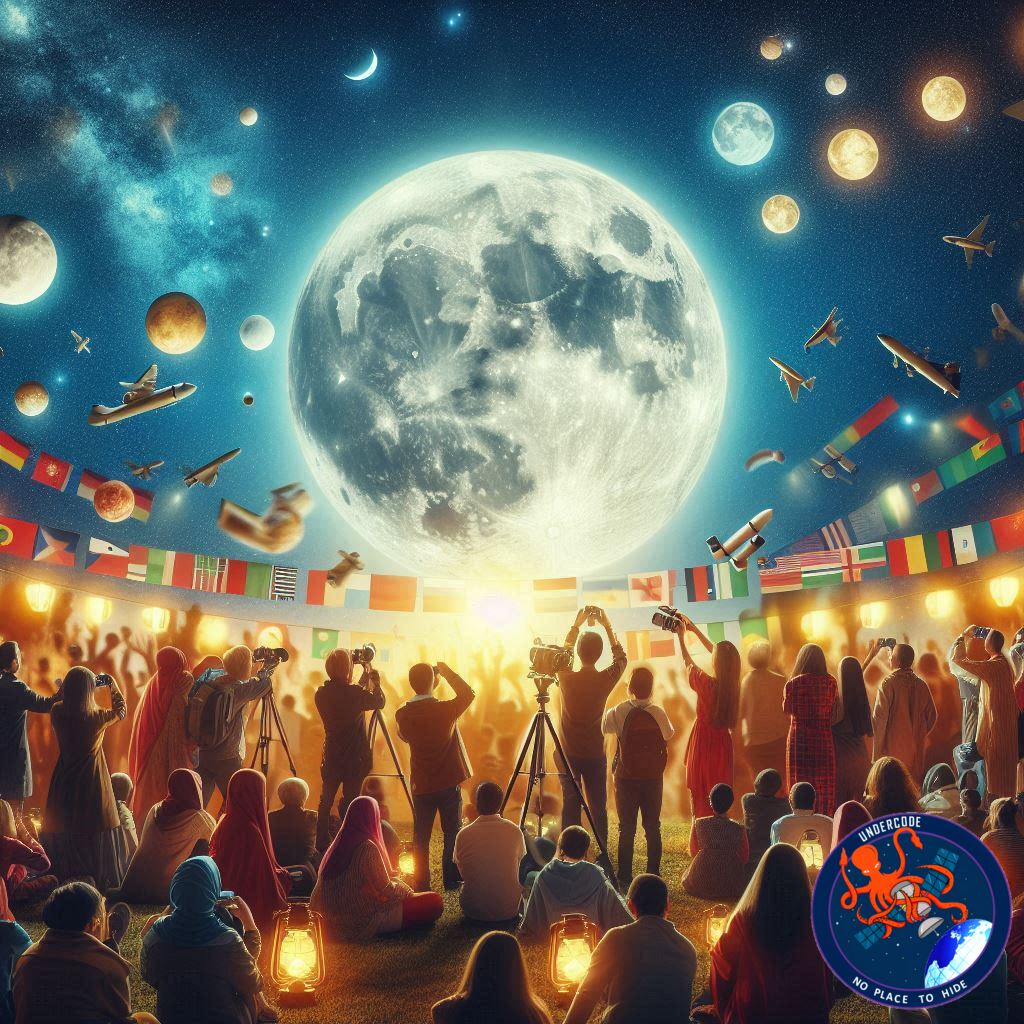
Every year, International Observe the Moon Night (InOMN) transforms ordinary nights into extraordinary celebrations, as communities across the globe come together to marvel at our nearest celestial neighbor. From interactive story corners to high-tech lunar exhibits, local organizers create experiences that inspire curiosity, learning, and a sense of wonder about the Moon. This event bridges generations, cultures, and disciplines, turning moon-gazing into a shared adventure.
Across continents, local institutions and enthusiasts share how they make InOMN unforgettable. At the Cape Fear Museum, families gather around the Stellar Story Corner, where a local librarian brings lunar tales to life. Children dance and act out stories, while the astronaut photo station provides playful, lasting memories. Returning families watch their kids grow older each year, enjoying these familiar activities with renewed excitement.
The University of Houston Clear Lake (UHCL) Astronomy Club shows the power of student-led engagement. With over 100 members from diverse backgrounds, the club uses social media to coordinate events, spreading their love for space and connecting students with the wider community. Their energy and dedication make space exploration accessible and exciting for participants of all ages.
Meanwhile, international organizations like Japan Aerospace Exploration Agency (JAXA) / Institute of Space and Astronautical Science (ISAS) take the event online. Their exhibit included a model of the SLIM (Smart Lander for Investigating the Moon) spacecraft, allowing global audiences to explore lunar science virtually, demonstrating how technology can broaden reach and participation.
Across Spain, the Federation of Spanish Astronomical Associations (FAAE) reflects on the diversity and uniqueness of each InOMN. With thousands of participants reporting their observations, FAAE celebrates the collective effort of local groups in fostering public engagement and lunar education. Each event, whether online or in-person, contributes to a global tapestry of curiosity and discovery.
What Undercode Say:
International Observe the Moon Night highlights a key trend in modern science engagement: the blending of local, community-driven experiences with global scientific initiatives. Museums, universities, and international agencies collaborate to make lunar observation both entertaining and educational.
Community storytelling, such as Cape Fear Museum’s Stellar Story Corner, emphasizes the emotional and social impact of science events. Children’s active participation fosters early interest in STEM, creating lifelong connections to astronomy. At the same time, student-led clubs like UHCL Astronomy Club show the critical role of youth organizations in sustaining public engagement. Social media amplifies reach, allowing local efforts to gain international attention.
The integration of technology, exemplified by JAXA’s online exhibits, reflects a growing shift in how science communication is conducted. Interactive models and virtual tours provide accessibility for global audiences who may not attend in person, democratizing participation in space exploration. This hybrid model—combining physical events with virtual tools—ensures inclusivity and continuous engagement.
FAAE’s reports underline the importance of coordination and feedback in international science events. By collecting data from participating groups, they quantify impact and create a feedback loop for continuous improvement. This approach strengthens community bonds while promoting measurable outcomes in public scientific literacy.
InOMN also underscores the cultural significance of the Moon. From storytelling to hands-on exhibits, events blend scientific knowledge with local traditions, creating a unique intersection of science and culture. Observers not only learn about lunar geology and missions but also share human stories and experiences tied to the Moon.
Overall, International Observe the Moon Night exemplifies the future of public science engagement: collaborative, inclusive, technology-enhanced, and deeply personal. It’s a blueprint for how local enthusiasm can scale into global impact, inspiring curiosity, learning, and wonder for generations to come.
Fact Checker Results:
✅ Cape Fear Museum indeed hosts interactive lunar storytelling and astronaut photo stations annually.
✅ UHCL Astronomy Club has over 100 student members actively engaged in space education events.
✅ JAXA/ISAS regularly participates in InOMN with online and exhibit-based events showcasing spacecraft models.
Prediction:
🌕 International Observe the Moon Night will continue to grow as hybrid events become the norm, combining in-person community gatherings with interactive online experiences.
🌕 Student-led clubs and youth initiatives will increasingly drive public engagement in space science.
🌕 Technological exhibits, virtual reality, and social media integration will expand global participation, creating a more connected and inclusive lunar observation community.
🕵️📝✔️Let’s dive deep and fact‑check.
References:
Reported By: science.nasa.gov
Extra Source Hub (Possible Sources for article):
https://www.instagram.com
Wikipedia
OpenAi & Undercode AI
Image Source:
Unsplash
Undercode AI DI v2
Bing
🔐JOIN OUR CYBER WORLD [ CVE News • HackMonitor • UndercodeNews ]
📢 Follow UndercodeNews & Stay Tuned:
𝕏 formerly Twitter 🐦 | @ Threads | 🔗 Linkedin | 🦋BlueSky | 🐘Mastodon


