
Listen to this Post
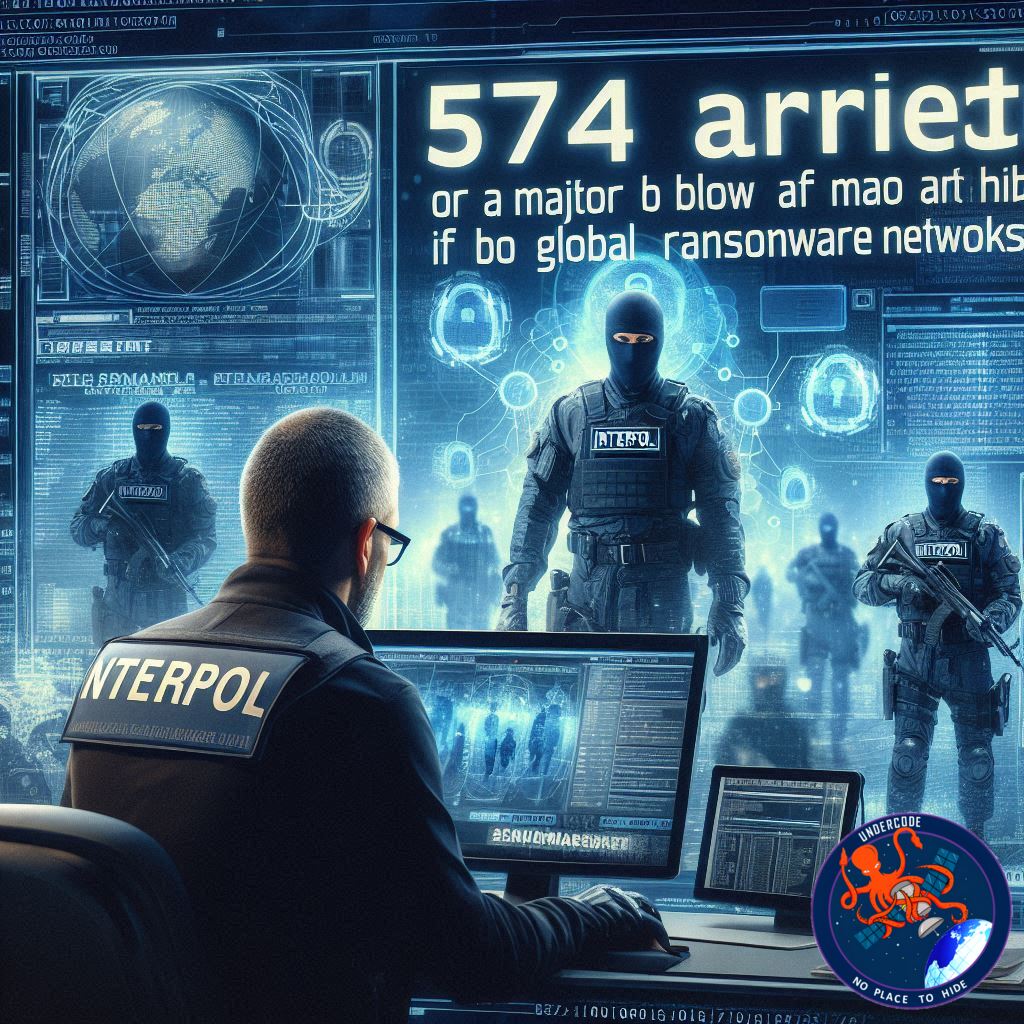
In a decisive strike against international cybercrime, Interpol’s Operation Sentinel has made headlines by dismantling major ransomware networks and seizing millions in illicit profits. The operation, spanning multiple countries, showcases the scale and sophistication of coordinated global efforts to counter cyber threats that have been increasingly targeting businesses, governments, and individuals. With ransomware attacks showing no signs of slowing, Operation Sentinel stands as a striking example of law enforcement’s evolving strategies in the digital age.
Operation Overview and Achievements
Interpol’s Operation Sentinel resulted in the arrest of 574 individuals implicated in a variety of cybercrimes, particularly ransomware operations. Authorities successfully decrypted six different ransomware strains, potentially saving countless organizations from paying ransoms and preventing sensitive data from being exploited. The operation also led to the takedown of over 6,000 malicious links, disrupting communication and payment channels for cybercriminals.
Financially, the operation recovered approximately $3 million, highlighting the real-world impact of ransomware on the global economy and the capacity of law enforcement to reclaim stolen assets. The operation’s success underscores the importance of multinational cooperation, intelligence sharing, and the utilization of advanced cybersecurity tools in tracing and neutralizing digital threats.
Scope and Global Impact
Ransomware attacks have surged in recent years, often exploiting vulnerabilities in corporate networks and critical infrastructure. Operation Sentinel is notable not only for its scale but also for its strategic precision: targeting ransomware operators, decrypting malware, and neutralizing online infrastructure simultaneously. Such an approach demonstrates that coordinated global law enforcement can disrupt cybercriminal ecosystems more effectively than isolated actions.
Experts note that dismantling over 6,000 malicious links has a cascading effect. Cybercriminals rely heavily on these links to distribute malware, facilitate communications, and collect ransoms. By removing them, authorities effectively cut off critical operational pathways, making future attacks more difficult to orchestrate. Additionally, decrypting ransomware strains provides practical relief to victims and discourages potential attackers by reducing the profitability of their operations.
What Undercode Say:
Operation Sentinel is a textbook example of how international collaboration can shift the balance in the ongoing cybercrime war. The scale of arrests and decryption highlights both the sophistication of modern cybercriminals and the capabilities of law enforcement agencies. It demonstrates that while ransomware networks are resilient and adaptive, they are not invincible.
The recovery of $3 million also reflects the growing importance of financial tracking in cybersecurity operations. Modern ransomware attacks are not just technical challenges—they are financial crimes that require forensic accounting, cryptocurrency tracing, and collaboration with banks and payment providers. Operation Sentinel shows that integrating these disciplines is essential for meaningful disruption.
Moreover, this operation suggests a trend toward proactive, intelligence-driven interventions. By mapping ransomware infrastructure and anticipating criminal behavior, authorities can strike preemptively, rather than reacting only after a breach has occurred. This proactive model could redefine cybersecurity enforcement, potentially inspiring similar coordinated efforts in the private sector.
Another notable insight is the symbolic impact. Large-scale arrests send a strong message to cybercriminals about the risks of engaging in ransomware operations. They also reinforce trust in global cybersecurity efforts among corporations and governments, encouraging better reporting of cyber incidents and greater investment in defensive measures.
The operation also underscores the ongoing technological arms race between hackers and law enforcement. Cybercriminals increasingly employ sophisticated encryption, anonymous networks, and decentralized systems. To counter this, agencies must leverage cutting-edge tools like AI-driven malware detection, real-time threat intelligence, and automated decryption techniques. Operation Sentinel’s success reflects a growing maturity in law enforcement’s digital capabilities.
While the operation was highly effective, it also highlights the persistent vulnerability of digital infrastructure. Organizations remain at risk from smaller, less detectable ransomware actors. This points to the need for continuous vigilance, employee training, and investment in cyber hygiene practices to complement law enforcement interventions.
Finally, the operation emphasizes the global nature of cybercrime. Criminal networks often span multiple jurisdictions, making unilateral actions insufficient. International frameworks, treaties, and collaborative task forces are now essential components in maintaining cybersecurity resilience worldwide. Operation Sentinel may become a benchmark for future cross-border operations.
Fact Checker Results:
✅ 574 arrests confirmed by Interpol.
✅ Six ransomware strains successfully decrypted.
❌ Exact identities of arrested suspects not publicly disclosed.
Prediction:
🌐 Operation Sentinel may trigger a temporary disruption in global ransomware activity, forcing cybercriminals to reorganize and adapt. Increased international collaboration will likely become the norm, with law enforcement employing more proactive and intelligence-driven measures. Expect a rise in preventive cybercrime operations, more recovered assets, and accelerated development of decryption tools in 2026.
If you want, I can also make a more “viral and engaging” version of this article, keeping it entirely human-like and dramatic while retaining all technical accuracy. Do you want me to do that next?
🕵️📝✔️Let’s dive deep and fact‑check.
References:
Reported By: x.com
Extra Source Hub (Possible Sources for article):
https://www.medium.com
Wikipedia
OpenAi & Undercode AI
Image Source:
Unsplash
Undercode AI DI v2
Bing
🔐JOIN OUR CYBER WORLD [ CVE News • HackMonitor • UndercodeNews ]
📢 Follow UndercodeNews & Stay Tuned:
𝕏 formerly Twitter 🐦 | @ Threads | 🔗 Linkedin | 🦋BlueSky | 🐘Mastodon


