
Listen to this Post
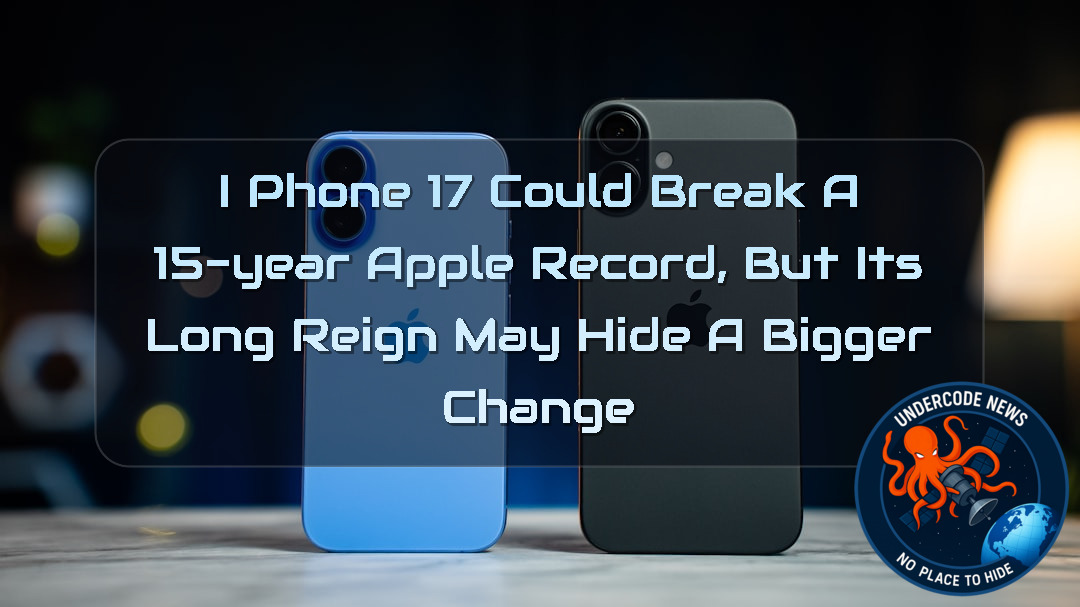 Introduction: A Record Apple Never Intended to Break
Apple’s iPhone history is filled with annual upgrades, dramatic redesigns, faster processors, better cameras, and increasingly ambitious hardware. For years, customers have become accustomed to a predictable rhythm: a new generation arrives, the previous flagship steps aside, and the cycle begins again.
But the iPhone 17 could disrupt that pattern.
According to current expectations surrounding Apple’s future iPhone lineup, the iPhone 17 may remain Apple’s primary standard flagship for roughly 18 months before the iPhone 18 arrives. If that schedule holds, the iPhone 17 would move beyond a record established by the iPhone 4 more than 15 years ago.
The interesting part is that this would not necessarily mean Apple is slowing down. Quite the opposite. The longer standard-model cycle could reflect a major transformation in how Apple structures its iPhone family, particularly as Pro models and potentially an entirely new foldable iPhone become increasingly important.
The iPhone 4 Still Holds a Remarkable Record
The record belongs to the iPhone 4, which launched in June 2010 and remained Apple’s newest standard flagship until the arrival of the iPhone 4S in October 2011.
That works out to approximately 477 days, or about 15.7 months, at the top of Apple’s mainstream iPhone lineup.
At the time, however, the extended lifespan was not necessarily part of some carefully designed long-term strategy. Apple had shifted its product cycle, creating an unusually long period in which the iPhone 4 remained the company’s newest flagship.
Today, that period is remembered as one of the longest gaps between major standard iPhone replacements.
The Wait for iPhone 5 Era
For customers in 2010 and 2011, the situation was particularly frustrating.
Many people expected the next iPhone to be called the iPhone 5 and assumed it would bring a significant visual redesign. Instead, Apple introduced the iPhone 4S.
From the outside, the new device looked remarkably similar to its predecessor. The biggest changes were inside the phone.
The iPhone 4S introduced Siri, improved the camera system, delivered stronger performance, and brought several technical improvements that made it more capable despite its familiar appearance.
That strategy created an important lesson in
The iPhone 4 Had Multiple Launch Milestones
The iPhone
AT&T launched the device first in the United States, reflecting Apple’s carrier strategy at the time.
Verizon later became the second major U.S. carrier to offer the iPhone, arriving roughly six months after the original launch.
Then came another unusual chapter. The white iPhone 4 experienced repeated delays and eventually arrived roughly ten months after the original model.
In other words, even the definition of the iPhone 4’s “release” depends partly on which version and market is being considered.
Other iPhones Came Close
Since the iPhone 4, Apple has generally maintained a much tighter annual flagship cycle.
The iPhone 11 Pro was one of the closest examples.
The COVID-19 pandemic disrupted
That was a significant extension compared with Apple’s normal rhythm, but it still fell short of the iPhone 4’s roughly 15.7-month run.
The original iPhone also had a relatively long period before the iPhone 3G arrived, but it still did not surpass the iPhone 4’s record.
The iPhone 17 Could Change Everything
The projected iPhone 17 timeline creates a very different situation.
The iPhone 17 generation launched in September 2025, while the next standard flagship generation is expected to arrive later, potentially in spring 2027.
If that schedule becomes reality, the iPhone 17 would remain the newest standard model for approximately 550 days.
That translates to around 18 months.
The difference is substantial. Instead of barely passing the iPhone 4 record, the iPhone 17 could potentially exceed it by several months.
A New Apple Record in the Making
The numbers tell the story clearly.
The iPhone 4 held the standard flagship position for roughly 477 days.
The iPhone 11 Pro lasted around 399 days.
The original iPhone remained current for approximately 378 days.
The projected iPhone 17 cycle could reach roughly 550 days.
That would make it the longest standard iPhone flagship cycle in Apple’s history, assuming the expected release schedule remains unchanged.
But There Is a Major Difference This Time
There is one enormous distinction between 2010 and today.
The iPhone 4 era did not have
When customers waited for the iPhone 5, they were essentially waiting for Apple’s next major iPhone generation.
Today’s customers have considerably more choices.
Apple can keep the standard iPhone 17 at the top of the mainstream lineup while continuing to introduce new Pro hardware, cameras, processors, displays, and other premium technologies on a separate annual schedule.
That changes what a “long iPhone cycle” actually means.
The Pro Line Changes the Meaning of Waiting
In the iPhone 4 era, waiting for the next generation meant waiting for the next major iPhone.
Today, that is no longer necessarily true.
A customer who wants the latest Apple technology can potentially move to a Pro model without waiting for the next standard-generation number.
This means an 18-month standard iPhone cycle could exist without creating the same kind of upgrade drought experienced by customers waiting for the iPhone 5.
The standard iPhone may remain stable while the premium models continue pushing Apple’s technology forward.
The Foldable iPhone Could Become the Real Headline
Perhaps the most important part of this story is not the record itself.
It is what Apple may introduce around the same period.
Apple is widely expected to be exploring a foldable iPhone, and if such a product reaches the market, it could represent one of the biggest changes in iPhone hardware ever.
A foldable device would introduce a completely different form factor rather than simply adding another camera, improving battery life, or increasing processor performance.
That could fundamentally reshape
Apple Could Be Redefining the iPhone Family
If a foldable iPhone arrives alongside the next generation, Apple would effectively have another way to differentiate its lineup.
The standard iPhone could become the stable mainstream product.
The Pro could remain the high-performance traditional flagship.
The foldable could occupy an entirely different category for customers willing to pay a premium for a new form factor.
Under that structure, the iPhone 17 having an unusually long standard cycle would make considerably more sense.
The Longest Cycle Does Not Mean the Slowest Innovation
This distinction is important.
A longer period between standard flagship numbers does not automatically indicate that Apple is producing fewer innovations.
Apple’s strategy could instead involve spreading those innovations across different parts of the product family.
The Pro models can receive annual upgrades.
Software can continue evolving every year.
Camera processing can improve through computational photography.
Apple’s silicon can become more powerful.
Artificial intelligence features can expand.
Battery efficiency can improve through software and hardware optimization.
Meanwhile, the standard iPhone can remain on sale as a highly capable product for longer.
The Shortest Upgrade Cycles Tell Another Story
Apple’s history also contains surprisingly short periods between generations.
The iPhone 12 and iPhone 13 cycle was relatively compressed after Apple’s pandemic-related schedule disruption.
Another unusual example is the iPhone X.
Although the iPhone X was announced in September 2017, it did not become available until November. Apple then introduced the iPhone XS generation in September 2018.
That meant the iPhone X had only around ten months of actual retail availability before being replaced.
The contrast is striking.
Apple’s historical iPhone cycles have ranged from unusually short to exceptionally long, depending on product strategy, manufacturing schedules, market conditions, and major technological transitions.
The iPhone X Shows Why Calendar Dates Can Mislead
Simply comparing announcement dates does not always provide the full picture.
The iPhone X demonstrates why availability matters.
A product can be announced months before customers can actually purchase it, meaning the real-world lifespan of a device can be substantially shorter than its official generation-to-generation timeline suggests.
The same principle should be applied when evaluating the projected iPhone 17 record.
The exact number of days depends on how Apple defines the transition and which models are included in the comparison.
The Record Depends on What Flagship Means
One criticism of the record argument is completely reasonable.
What exactly counts as
If “flagship” means the newest standard iPhone, the iPhone 17 could indeed establish an extraordinary run.
If it means the most technologically advanced iPhone available from Apple, the calculation becomes much more complicated.
The Pro models would continue changing the definition of Apple’s highest-end hardware.
And if Apple introduces a foldable iPhone, the traditional idea of one single flagship could become even harder to apply.
The iPhone 17 Could Become
The longer cycle could ultimately benefit the iPhone 17.
Instead of becoming obsolete after one year, it could remain an important part of Apple’s portfolio for considerably longer.
That would give Apple more time to optimize production, reduce manufacturing costs, refine software support, and position the device as a strong entry point into the modern iPhone ecosystem.
For consumers, it could also mean that buying an iPhone 17 does not immediately feel like buying last year’s technology.
Longer Lifespans Could Matter More Than Annual Numbers
The smartphone industry has gradually moved away from the idea that every generation must completely reinvent the device.
Modern smartphones are already extremely powerful.
For many users, the difference between two consecutive generations may be difficult to notice during everyday use.
That makes software support, battery health, camera processing, durability, connectivity, and long-term reliability increasingly important.
An 18-month flagship cycle may therefore be less significant to consumers than it sounds on paper.
The Upgrade Question Is Changing
The real question for customers is no longer simply, “What number is the newest iPhone?”
Instead, consumers increasingly ask whether the new device offers enough practical improvement to justify replacing the phone they already own.
If Apple continues improving software and hardware incrementally, users may feel comfortable keeping their iPhones for several years.
That could make a longer flagship cycle strategically useful rather than problematic.
Apple Could Benefit From a Slower Mainstream Cycle
There is also a business argument behind the strategy.
A longer standard cycle can help Apple simplify parts of its product planning.
It can extend the useful commercial life of a design.
It can allow Apple to maintain manufacturing efficiency.
It can also give premium products more room to create excitement.
Instead of every iPhone generation competing against the previous one, Apple could increasingly position different models for different types of customers.
The Pro Models Become the Innovation Engine
The Pro lineup may become the place where Apple showcases its most aggressive annual advancements.
That could include camera improvements, display technology, processor upgrades, connectivity changes, artificial intelligence features, and new materials.
If that continues, the standard iPhone 17 would not necessarily represent Apple’s technological ceiling.
It would represent the foundation of
That is a very different role from the one played by the iPhone 4 in 2010.
The Foldable Could Break
A foldable iPhone would make the situation even more complicated.
If Apple launches a folding device, customers may begin thinking about the iPhone family in the same way they already think about different Mac categories.
There may no longer be one obvious definition of the “best” iPhone.
One model could offer the best conventional camera experience.
Another could deliver the fastest performance.
Another could offer the largest display in a compact form factor.
The iPhone 17 record would then become a historical footnote in a much larger transformation.
Why the iPhone 4 Record Still Matters
Even if the number itself is largely symbolic, Apple’s product cycles reveal something important about the company.
Apple has historically been extremely disciplined about its hardware schedule.
When that schedule changes, there is usually a reason.
The iPhone 4’s long reign was connected to Apple’s changing launch calendar.
The iPhone 11
The projected iPhone 17 cycle could instead be connected to a deliberate restructuring of Apple’s iPhone portfolio.
That makes this potential record more interesting than simply counting days.
What Undercode Say:
The Record Is Really About
The iPhone 17 potentially breaking the iPhone 4 record is not merely a trivia point.
It could reveal how Apple is changing the architecture of its product strategy.
The smartphone market has matured considerably since 2010.
Customers no longer expect every annual release to deliver a revolutionary physical redesign.
Apple therefore has more freedom to extend successful designs.
At the same time, Apple still needs premium products that create excitement.
The Pro lineup provides that opportunity.
The rumored foldable category could provide an even bigger one.
This creates a three-layer iPhone strategy.
The standard model can prioritize accessibility and longevity.
The Pro models can prioritize advanced traditional smartphone technology.
A foldable model can target customers looking for an entirely new form factor.
That structure makes a longer standard cycle commercially logical.
It also reduces pressure on Apple to completely reinvent the mainstream iPhone every September.
There is another important factor: software.
Apple can introduce major improvements through iOS even when the physical design remains familiar.
New artificial intelligence capabilities, privacy features, camera processing, health functions, productivity tools, and ecosystem integrations can make an existing iPhone feel substantially different over time.
That means
The iPhone 17 could therefore remain commercially relevant for much longer than older flagship models.
The record may also indicate that Apple is becoming more comfortable with product segmentation.
Consumers can choose based on needs rather than simply buying the newest number.
That is a significant change from the early iPhone era.
The iPhone 4S was a relatively conservative upgrade because Apple had fewer product tiers to absorb demand.
Today, Apple has far more flexibility.
The Pro line can capture enthusiasts.
Older iPhones can remain in the affordable segment.
The latest standard iPhone can occupy the mainstream premium market.
And a future foldable could sit above everything else.
This also creates a psychological advantage.
If the standard iPhone remains current for 18 months, customers may perceive it as a safer long-term purchase.
That could encourage users who normally upgrade annually to keep their devices longer.
Apple benefits from the sale today while continuing to generate revenue from services and accessories throughout the device’s lifespan.
There is also an important environmental dimension.
Longer device lifespans can reduce the pressure for constant hardware replacement.
If consumers keep phones longer, the number of devices discarded or traded in each year could eventually decrease.
However,
Longer ownership becomes much more attractive when software updates remain available and battery replacement remains practical.
The biggest threat to this strategy is perception.
If consumers interpret the longer cycle as Apple slowing down rather than strategically restructuring its lineup, the record could become a negative story.
Apple therefore needs the Pro and software ecosystems to demonstrate continuous innovation.
The foldable iPhone, if it arrives, could become especially important in that narrative.
It would give Apple a dramatic new product to generate excitement while the standard iPhone follows a longer cycle.
From an industry perspective, this could influence competitors as well.
If Apple demonstrates that premium smartphones can remain commercially successful without annual mainstream redesigns, other manufacturers may follow.
The smartphone market could gradually move toward longer hardware generations and more frequent software-driven improvements.
Ultimately, the iPhone
It is about what those 550 days could represent.
Apple may be moving from an annual hardware-centered upgrade strategy toward a portfolio-centered ecosystem strategy.
And that could be one of the most important changes to the iPhone business since the introduction of the Pro line itself.
✅ The iPhone 4 Record Is Real
The iPhone 4 remained Apple’s newest standard flagship for roughly 477 days before the iPhone 4S replaced it, making it one of Apple’s longest flagship cycles.
✅ The iPhone 11 Pro Had an Extended Cycle
The iPhone 11 Pro generation remained current for roughly 13 months, helped by the pandemic-related disruption to Apple’s normal iPhone launch schedule.
⚠️ The iPhone 17 Record Is Projected
The roughly 18-month iPhone 17 cycle depends on the expected timing of the next standard iPhone generation. The record should therefore be treated as a projection until Apple’s future release schedule is officially confirmed.
Prediction
(+1) The iPhone 17 Will Likely Become a Record-Holder
If Apple follows the projected timeline for the next standard generation, the iPhone 17 is highly likely to surpass the iPhone 4’s approximately 15.7-month reign.
(+1) Pro Models Will Continue Driving Annual Innovation
Apple is likely to keep using its Pro models as the primary platform for advanced cameras, processors, displays, and other premium technologies.
(+1) A Foldable iPhone Could Redefine the Lineup
If Apple introduces a foldable iPhone around the next major transition, the traditional definition of an iPhone flagship could change permanently.
(-1) The Longer Cycle Could Disappoint Some Upgraders
Customers who expect a major redesign every year may become frustrated if the standard iPhone family moves toward longer hardware cycles.
(-1) The Record Could Become Less Meaningful
If Apple continues expanding its iPhone lineup, comparing one standard model’s lifespan against historical flagship cycles may become increasingly difficult.
Deep Analysis
Check the iPhone Release Timeline
For researchers analyzing
printf "%s
" \n"iPhone 4: 2010-06-24" \n"iPhone 4S: 2011-10-14" \n"iPhone 11 Pro: 2019-09-20" \n"iPhone 12 Pro: 2020-10-23" \n"iPhone 17: 2025-09-19"
Calculate the Number of Days
Linux systems can calculate the approximate interval between two dates using the date command.
date -d 2011-10-14 +%s
date -d 2010-06-24 +%s
The difference between those Unix timestamps can then be divided by 86,400 to estimate the number of days between releases.
Build a Simple Historical Dataset
A CSV file can make
cat > iphone_cycles.csv <<'EOF'
model,launch,replaced_by
iPhone 4,2010-06-24,iPhone 4S
iPhone 11 Pro,2019-09-20,iPhone 12 Pro
iPhone 17,2025-09-19,iPhone 18
EOF
Analyze the Dataset With Python
Once the dates are available, Python can calculate the length of each product cycle.
python3 - <<'PY'
from datetime import date
cycles = [
("iPhone 4", date(2010, 6, 24), date(2011, 10, 14)),
("iPhone 11 Pro", date(2019, 9, 20), date(2020, 10, 23)),
]
for model, start, end in cycles:
days = (end - start).days
print(f"{model}: {days} days")
PY
Watch the Difference Between Announcement and Availability
The most important analytical mistake is treating announcement dates and retail availability dates as identical.
echo "Compare announcement dates separately from retail availability dates."
The iPhone X is a useful example because its commercial availability began later than its announcement.
Measure the Projected Record
For a projected iPhone 17 cycle, analysts can compare the expected replacement date against the original launch date.
python3 - <<'PY'
from datetime import date
start = date(2025, 9, 19)
expected = date(2027, 3, 1)
print(Projected days:, (expected – start).days)
PY
Why the Data Needs Context
Raw numbers alone cannot explain
A 550-day cycle could look like a slowdown.
But when Pro models continue receiving annual updates and a new form factor potentially enters the lineup, the same number can represent a deliberate redistribution of innovation.
The Bigger Question
The real analytical question is not whether the iPhone 17 breaks the iPhone 4 record.
It is whether Apple is permanently moving toward longer mainstream hardware cycles.
If that happens, the iPhone 17 may eventually be remembered not simply as a record-setting iPhone, but as the generation that marked a change in Apple’s upgrade philosophy.
Final Takeaway
The iPhone 4’s nearly 16-month reign was once an unusual consequence of Apple’s changing release schedule. The iPhone 17 could surpass it under very different circumstances.
Instead of a delayed successor leaving customers waiting for the next major iPhone, Apple may intentionally allow the standard model to remain current while its Pro lineup and future form factors carry the company’s most aggressive innovations.
If the expected timeline holds, the iPhone 17 could remain Apple’s standard flagship for roughly 18 months and establish a new record.
But the more important story is what happens during those 18 months.
Apple may be quietly changing what an iPhone generation means, moving away from a simple annual race toward a broader ecosystem in which different models evolve at different speeds.
And if a foldable iPhone eventually enters that ecosystem, the record set by the iPhone 17 may be remembered as the moment Apple began writing a very different chapter in the history of its most important product.
▶️ Related Video (74% Match):
🕵️📝Let’s dive deep and fact‑check.
🎓 Live Courses & Certifications:
Join Undercode Academy for Verified Certifications
🚀 Request a Custom Project:
Secure, high-velocity infrastructure and disruptive technological engineering. Contact our engineering team for high-tier development and proprietary systems:
[email protected]
💎 Smart Architecture | 🛡️ Secure by Design | ⭐ Trusted by Thousands
References:
Reported By: 9to5mac.com
Extra Source Hub (Possible Sources for article):
https://www.digitaltrends.com
Wikipedia
OpenAi & Undercode AI
Image Source:
Unsplash
Undercode AI DI v2
🔐JOIN OUR CYBER WORLD [ CVE News • HackMonitor • UndercodeNews ]
📢 Follow UndercodeNews & Stay Tuned:
𝕏 formerly Twitter 🐦 | @ Threads | 🔗 Linkedin | 🦋BlueSky | 🐘Mastodon | 📺Youtube


