
Listen to this Post
Introduction
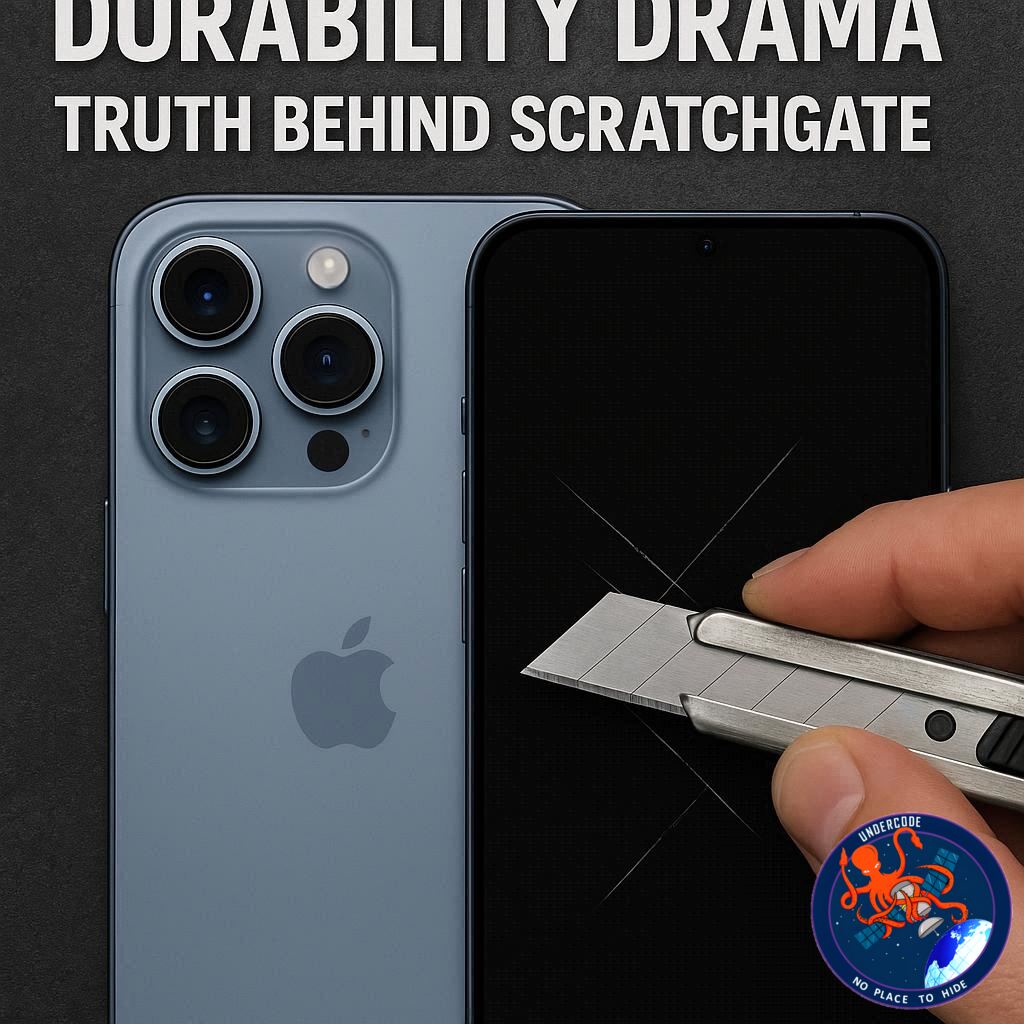
Every iPhone launch comes with its fair share of controversies, and the iPhone 17 Pro is no exception. While the ultra-thin iPhone Air has impressed reviewers with its bend and scratch resistance, the iPhone 17 Pro has been caught in the spotlight for alleged durability issues. From “scratchgate” rumors circulating online to durability tests raising eyebrows, many users are asking: is the iPhone 17 Pro’s aluminum body really fragile, or is this just another case of viral exaggeration? Let’s break it down.
The Story Behind the Controversy
The buzz around iPhone 17 Pro’s durability started when Bloomberg published a launch-day article highlighting scratches and scuff marks on demo units displayed in Apple Stores. Most of these marks were concentrated around the MagSafe cutout on the back.
Apple later clarified that these weren’t scratches at all but material transfer caused by worn-out MagSafe stands in stores. According to Apple, the marks could be easily wiped away with cleaning, and steps were being taken to replace the faulty stands. The company also noted that older iPhone models displayed in the same stores showed similar cosmetic marks.
Adding fuel to the fire, popular YouTube channel JerryRigEverything conducted tests that revealed the raised camera plateau edges on the iPhone 17 Pro were more prone to scratches. This was attributed to the absence of chamfering or rounding at the edges, leaving them exposed. Apple responded by pointing out that these edges share the same properties as its other aluminum products, such as MacBooks, which also develop small abrasions over time but remain structurally durable.
Despite these concerns, broader testing painted a positive picture. The iPhone Air stood out with its impressive strength, resisting bending despite being ultra-thin. The Ceramic Shield 2 front glass across the iPhone 17 lineup also proved more scratch-resistant than previous generations. Even JerryRigEverything admitted that apart from the camera edges, the iPhone 17 Pro body showed no unusual vulnerability.
Apple emphasized that the iPhone 17 Pro uses aerospace-grade 7000-series aluminum with an anodization layer tougher than industry standards. The company also reminded users that demo units in stores endure thousands of touches daily and aren’t the best measure of durability.
Interestingly, the aluminum design brings major benefits beyond looks. Improved thermal efficiency helps boost performance and battery life, while the unibody build offers a sleek, premium feel. After weeks of heavy daily use, many reviewers, including those who used the devices without cases, report that the phones still look flawless.
What Undercode Say: 🔍
When analyzing the “scratchgate” controversy, it’s important to separate hype from fact. Apple’s history of dealing with “gates” (like bendgate and antennagate) shows that minor user reports often spiral into viral sensations, amplified by social media.
From a materials science perspective, aluminum anodization does improve scratch resistance but is not completely impervious to micro-abrasions. Flat, sharp edges like those around the iPhone 17 Pro’s camera plateau naturally take more wear because they don’t have rounded reinforcement. This makes them visually susceptible, even if structural integrity remains uncompromised.
MagSafe stands in Apple Stores likely accelerated the issue. Since the demo units are constantly attached and detached, friction causes visible marks. However, these are mostly cosmetic and removable, not permanent scratches. This aligns with Apple’s statement and explains why some units appeared more “damaged” than others.
Looking deeper into the thermal improvements, the aluminum build is not just about aesthetics. Heat dissipation directly impacts battery health and performance longevity, two critical aspects for power users. By switching to aerospace-grade aluminum, Apple created a balance between weight, strength, and efficiency, which could extend the device’s usable life cycle.
From a consumer psychology angle, users are more likely to scrutinize new iPhones under a microscope, searching for flaws. Viral videos showing scratches often get more attention than positive durability tests. This plays into confirmation bias, where people expect issues and thus highlight any imperfections they find.
Apple’s rigorous internal testing is another point worth noting. While independent tests like JerryRigEverything’s add valuable insights, Apple simulates years of wear under controlled environments. This means the device is designed to withstand real-life scenarios, not extreme edge cases created for online drama.
Ultimately, the iPhone 17 Pro stands as a highly durable smartphone when used under normal conditions. Minor scuffs on exposed edges or demo units don’t diminish its overall strength, functionality, or longevity. The “scratchgate” label, while catchy, seems more like a viral exaggeration than a genuine design flaw.
Fact Checker Results ✅❌
✅ Apple confirmed marks on demo units are material transfer, not scratches.
✅ Independent tests show durability is strong overall, except for exposed camera edges.
❌ Viral images exaggerating scratches often come from intentional damage or store demo units.
Prediction 🔮
Future iPhones will likely address cosmetic concerns by redesigning exposed edges or using hybrid materials combining aluminum and titanium. Expect Apple to continue balancing strength, weight, and heat performance, while quietly improving scratch resistance to silence the next viral “gate.”
🕵️📝✔️Let’s dive deep and fact‑check.
References:
Reported By: 9to5mac.com
Extra Source Hub:
https://www.instagram.com
Wikipedia
OpenAi & Undercode AI
Image Source:
Unsplash
Undercode AI DI v2
🔐JOIN OUR CYBER WORLD [ CVE News • HackMonitor • UndercodeNews ]
📢 Follow UndercodeNews & Stay Tuned:
𝕏 formerly Twitter 🐦 | @ Threads | 🔗 Linkedin | 🦋BlueSky | 🐘Mastodon


