
Listen to this Post
Introduction: The Long-Awaited Upgrade
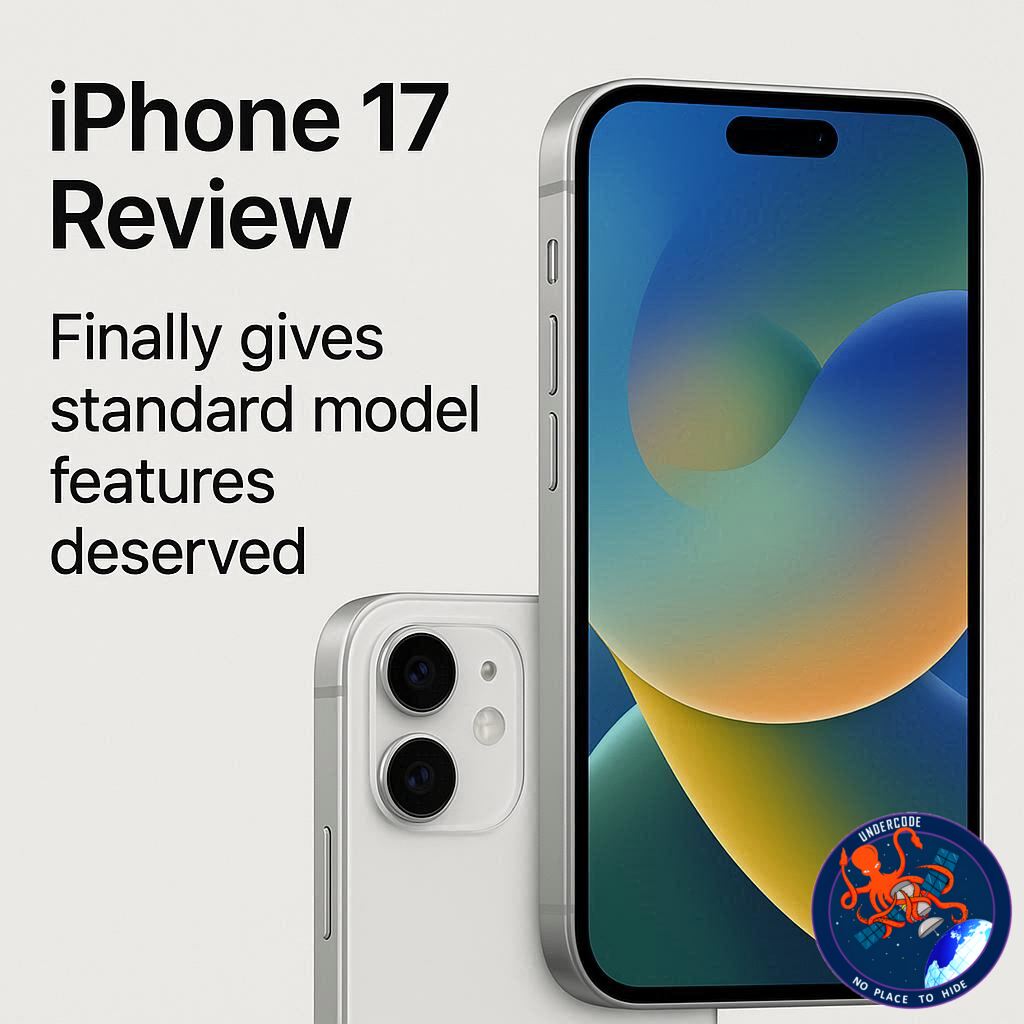
Apple’s iPhone 17 doesn’t look like a radical redesign at first glance. The vertical camera bump, familiar body proportions, and minimal external changes might make it seem like just another incremental release. But beneath that familiar shell lies a phone that finally feels like the complete package. For years, standard iPhone buyers have been missing out on Pro-level features, but with the iPhone 17, Apple finally corrects that imbalance. From ProMotion displays to camera upgrades, brighter screens, and significant battery improvements, this phone may look the same—but it doesn’t feel the same.
Familiar Design, Subtle But Important Shifts
The iPhone 17 doesn’t reinvent Apple’s design philosophy, and that’s intentional. Instead, it refines the formula with a slightly larger 6.3-inch display compared to the iPhone 16’s 6.1 inches. The real magic lies in the long-awaited addition of ProMotion with 120Hz refresh rate. The smoother scrolling and fluid animations transform the experience, especially for those who have never used a Pro model before. Once you try 120Hz, going back to 60Hz feels dated. The display also takes brightness to the next level, now peaking at 3,000 nits compared to last year’s 2,000, making outdoor use far more practical.
Stronger Display Protection and Safe Colors
Apple introduces Ceramic Shield 2 on the iPhone 17, claiming triple the scratch resistance and reduced glare. For users who hate screen protectors, this is a promising leap. On the color front, the lineup includes lavender, sage, mist blue, black, and white—safe choices that won’t offend but also don’t stand out. Those wanting something bold will need to look at the Pro’s orange option. Unfortunately, Apple hasn’t extended Ceramic Shield 2 to the rear panel, meaning cases are still a necessity. To add to the slight frustration, the more premium TechWoven cases are missing for the standard iPhone 17, leaving users with only silicone covers.
Camera Improvements That Actually Matter
The real evolution comes in photography. Apple upgrades both rear cameras to 48 megapixels, giving the ultra wide a much-needed jump from 12MP. The main sensor still doubles as a 2x and 4x telephoto, while the ultra wide pulls double duty as a macro lens. Apple also introduces a new “Bright” Photographic Style, aimed at more vivid results. In practice, photos are sharper and more detailed, particularly from the ultra wide lens. For those who previously ignored ultra wide shots, this new sensor might change minds.
The front camera, however, is the true star. At 18 megapixels with Center Stage support, it reframes shots dynamically as people move in and out of view. Its square sensor design allows landscape photos even when holding the phone in portrait orientation—an odd but surprisingly useful trick that impressed many early adopters.
Battery Life and Charging Gains
Apple claims the iPhone 17 lasts eight hours longer than the iPhone 16. In practice, it does feel noticeably improved, even if not quite hitting that full figure. A bigger win comes from faster charging: MagSafe now supports 25W, while Apple’s new Dynamic Charger (not yet available everywhere) can push up to 40W. While you still need to buy the right charger separately, the charging speed jump is a welcome change.
A19 Chip and iOS 26 Integration
The iPhone 17 debuts with the A19 chip. Apple isn’t making bold performance claims, but the focus is clearly on efficiency. Paired with a larger battery, the A19 helps deliver smoother iOS 26 performance while preserving longevity. Everyday use feels fluid, thanks in part to ProMotion and Apple’s “Liquid Glass” technology, which enhances responsiveness.
Pricing and Value Proposition
Priced at Rs 82,990, the iPhone 17 is Rs 3,000 more expensive than last year’s model. However, Apple doubles the base storage to 256GB—a significant value since this storage tier would have cost Rs 89,990 on the iPhone 16 lineup. This move reframes the pricing as a genuine upgrade rather than a price hike, something Apple rarely does.
Conclusion: A Standard iPhone That Finally Feels Complete
The iPhone 17 doesn’t break new ground visually, but it fixes long-standing complaints. With ProMotion, upgraded cameras, improved battery, and smarter pricing, it’s no longer a “budget” alternative to the Pro line but a well-rounded flagship in its own right.
What Undercode Say:
The iPhone 17 represents Apple’s strategy shift for its standard models. For years, regular iPhone users were left craving Pro features, but Apple’s new approach signals that they can no longer afford to alienate the mainstream market. The move to include ProMotion is not just a technical upgrade—it’s a psychological one. Apple has conditioned its users to associate fluidity with premium. By breaking that barrier, the company essentially elevates the baseline iPhone to true flagship status.
From an economic perspective, Apple’s decision to double storage while slightly raising the price is genius. It reframes consumer perception of value. Customers believe they are paying less for more, even though Apple is still maximizing margins by refining supply chains and shifting to more efficient chips. It’s a textbook example of Apple using perceived value as a marketing weapon.
The display bump is equally important. 3,000 nits peak brightness puts the iPhone 17 among the brightest smartphones on the market. In emerging markets with strong sunlight, this is a subtle but powerful differentiator. It’s not flashy on paper, but in real-world conditions, it is one of the most noticeable quality-of-life upgrades.
Ceramic Shield 2 is another quiet but strategic move. Apple understands that durability is not just about drops—it’s about scratches that accumulate over months. By emphasizing “three times more scratch resistance,” they plant the idea that this phone ages better. Whether the claim is fully accurate or not, the perception of longevity adds another layer of justification for the purchase.
The camera upgrades reflect Apple’s philosophy of incremental refinement rather than dramatic change. The ultra wide lens finally gets attention, showing that Apple listens to long-standing criticisms. More interesting, though, is the square front-facing sensor. This isn’t just a quirky engineering decision—it’s Apple’s attempt to redefine how people take photos in a vertical world. By allowing landscape photos without rotating the phone, Apple is essentially aligning with social media culture where convenience trumps tradition.
Battery and charging improvements, though not revolutionary, address two major consumer complaints. Apple’s slow charging has long been criticized, and while 25W still lags behind Android rivals, it’s a meaningful leap for the ecosystem. The Dynamic Charger, if rolled out globally, could change the narrative even further.
The A19 chip’s efficiency-first approach also reveals Apple’s direction. Instead of chasing raw performance gains, the company is optimizing for sustainability and longevity. This makes sense as mobile hardware reaches a plateau—most consumers don’t need more speed, but they demand longer life and smoother multitasking.
Ultimately, the iPhone 17 feels like Apple’s “make good” phone. It fixes what was missing, improves value perception, and enhances usability. For most users, it will be the sweet spot between affordability and premium. The Pro models still hold unique appeal with exclusive features, but for the first time in years, the standard iPhone doesn’t feel like a compromise.
Fact Checker Results
✅ ProMotion confirmed on iPhone 17 standard models.
✅ Both rear cameras now upgraded to 48MP.
❌ Ceramic Shield 2 only applies to the front, not the back glass.
Prediction
Looking ahead, the iPhone 17 sets the stage for a new baseline. Apple is likely to keep raising the standard model’s value proposition to prevent cannibalization by older Pro models. Expect the iPhone 18 to push even closer to Pro territory, perhaps with higher charging speeds or new AI-driven photography features. This gradual merging of standard and Pro features could eventually redefine what “premium” means in Apple’s ecosystem.
🕵️📝✔️Let’s dive deep and fact‑check.
References:
Reported By: timesofindia.indiatimes.com
Extra Source Hub:
https://stackoverflow.com
Wikipedia
OpenAi & Undercode AI
Image Source:
Unsplash
Undercode AI DI v2
🔐JOIN OUR CYBER WORLD [ CVE News • HackMonitor • UndercodeNews ]
📢 Follow UndercodeNews & Stay Tuned:
𝕏 formerly Twitter 🐦 | @ Threads | 🔗 Linkedin | 🦋BlueSky | 🐘Mastodon


