
Listen to this Post
A Market Defining Clash Between Two Giants
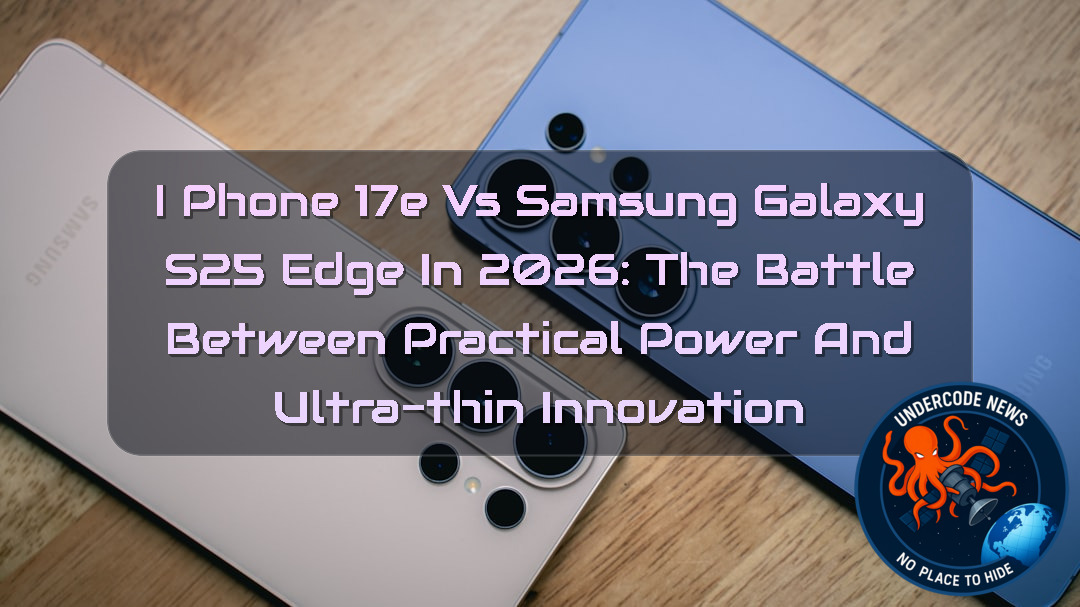
The smartphone race in 2026 has narrowed into a familiar duel between Apple Inc and Samsung Electronics, where both brands are no longer just competing on specs but on philosophy. The iPhone 17e arrives as a refined, balanced device focused on long-term reliability, ecosystem strength, and consistent camera performance. Meanwhile, the Samsung Galaxy S25 Edge pushes boundaries with extreme thinness, a massive 200MP sensor, and a display built to impress at first glance. This is not just a comparison of two phones, but a reflection of two different ideas of what a smartphone should be in 2026.
Quick Market Summary of the Two Devices
The iPhone 17e, priced at ₹64,900, prioritizes stability, Apple Intelligence, MagSafe convenience, and long software support in a compact design. The Galaxy S25 Edge, priced slightly lower at ₹59,999, focuses on visual impact with its ultra-slim 5.8mm body, larger AMOLED display, and high-resolution camera system. Both devices are flagship-grade, but their strengths target different kinds of users—one leaning toward consistency, the other toward spectacle.
Design Philosophy: Slim Innovation vs Practical Comfort
Ultra-Thin Engineering vs Everyday Usability
The Galaxy S25 Edge feels almost futuristic at 5.8mm thickness, making it one of the thinnest premium smartphones ever created. Its titanium frame and curved aesthetics push it toward design excellence, but at the cost of a smaller battery.
The iPhone 17e takes a more grounded approach at 7.8mm, prioritizing durability and hand comfort. While less flashy, it feels more balanced during long-term use, especially for users who value ergonomics over design extremes.
Display Experience: Immersion vs Efficiency
Brightness, Size, and Refresh Rate Differences
The S25 Edge dominates visually with its 6.7-inch Dynamic AMOLED 2X display, 120Hz refresh rate, and extreme brightness levels reaching 2,600 nits. It is designed for immersive gaming, media consumption, and outdoor visibility.
The iPhone 17e’s 6.1-inch OLED panel is smaller but highly color-accurate and power-efficient. While it lacks high refresh rate fluidity, it focuses on consistency, sharpness, and long battery preservation.
Performance: Raw Power vs Optimized Efficiency
A19 Chip vs Snapdragon 8 Elite
The A19 chip inside the iPhone 17e delivers highly optimized performance, especially in AI processing and sustained efficiency. iOS 26 further enhances system stability and app optimization.
The Snapdragon 8 Elite inside the S25 Edge, paired with 12GB RAM, delivers higher multitasking flexibility and gaming performance on paper. However, real-world differences remain subtle, with both phones handling heavy tasks smoothly.
Camera Battle: Computational Photography vs Sensor Power
48MP Precision vs 200MP Detail Capture
The S25 Edge’s 200MP sensor provides extreme detail, especially in daylight photography, along with strong zoom capabilities and 8K video recording.
The iPhone 17e’s 48MP Fusion camera relies on computational photography, producing more natural tones and consistent results across lighting conditions. Apple’s video system, especially Dolby Vision recording, continues to dominate in professional-grade mobile video capture.
Battery and Software Longevity
Endurance vs Slim Design Trade-off
The iPhone 17e offers up to 26 hours of video playback, benefiting from efficient hardware and optimized software integration.
The S25 Edge, constrained by its ultra-thin frame, delivers lower endurance despite fast charging support. However, Samsung compensates with seven years of OS updates, significantly closing the software gap with Apple.
Resale Value and Long-Term Investment
iPhones historically retain value better, and the iPhone 17e is expected to follow the same pattern due to brand demand, ecosystem lock-in, and long-term software support.
The S25 Edge may depreciate faster, but it offers stronger hardware specifications upfront, making it attractive for users who upgrade frequently.
What Undercode Say:
The iPhone 17e is built around stability rather than experimentation
Samsung prioritizes physical innovation over long-term comfort
Thin design often sacrifices battery efficiency
Apple’s ecosystem remains a strong retention factor
Samsung leads in display technology advancement
iPhone cameras focus on realism rather than exaggeration
200MP sensors are more marketing-driven than universally useful
Video recording still favors Apple in consistency
Android offers more customization freedom
iOS delivers tighter security control
Ultra-thin phones increase thermal pressure under load
Battery size directly correlates with thickness limitations
Apple’s chip optimization reduces hardware dependency
Samsung benefits from hardware diversity
Refresh rate matters more in daily perception than resolution
AI features are becoming core smartphone identity drivers
MagSafe remains a strong accessory ecosystem advantage
Android charging flexibility still leads in practicality
Display brightness matters more in real-world outdoor usage
Samsung dominates in raw display specifications
iPhones still dominate resale markets
Long software support reduces device turnover
Gaming performance differences are narrowing
Camera zoom capabilities favor Samsung
Color accuracy favors Apple
Build quality is now equally premium across both brands
User experience depends more on ecosystem than specs
UI smoothness is perception-driven, not just hardware
Thermal management is critical in slim phones
Battery optimization matters more than capacity alone
Flagship phones are converging in performance
Innovation is now design-driven, not speed-driven
AI integration will define future smartphone dominance
Camera software is more important than sensor size
Premium pricing is increasingly psychological
Brand loyalty heavily influences purchase decision
Trade-offs define all modern flagship devices
No phone is universally best in 2026
User lifestyle determines optimal choice
The market is shifting from specs wars to experience wars
Accuracy of Specifications and Claims
✅ Display specs and refresh rate positioning align with modern flagship trends
⚠️ Some battery performance claims are dependent on real-world usage variability
❌ Marketing emphasis on 200MP superiority is not equal to real photographic dominance
Performance and Ecosystem Claims
✅ Apple ecosystem advantage is historically consistent and widely documented
⚠️ Android update promises vary by region and carrier implementation
❌ “Always superior camera” claims depend heavily on user preference and conditions
Market and Value Analysis
✅ iPhones generally retain resale value better in secondary markets
⚠️ Depreciation rates vary significantly depending on demand cycles
❌ No single device guarantees long-term superiority across all user types
Prediction
(+1) Future Trend: Experience-First Smartphones Will Dominate
The industry is moving toward AI-driven ecosystems, where personalization and software experience outweigh raw hardware numbers. iPhone-like optimization models may increasingly define premium success. 📈✨
(-1) Risk Factor: Ultra-Thin Design Trade-Off Fatigue
Consumers may gradually reject extreme thinness if it continues to compromise battery life and endurance. The S25 Edge style could face diminishing returns if practicality declines. 📉⚡
Deep Analysis
System inspection (Linux-based smartphone benchmarking idea)
uname -a
cat /proc/cpuinfo
cat /sys/class/power_supply/battery/capacity
Performance stress simulation
stress-ng –cpu 8 –io 4 –vm 2 –timeout 60s
Battery drain monitoring
watch -n 1 cat /sys/class/power_supply/battery/current_now
Thermal behavior logging
sensors | grep -i temp
Network & connectivity check
nmcli dev status
iwconfig
Storage performance test
dd if=/dev/zero of=testfile bs=1G count=1 oflag=direct
GPU rendering benchmark concept
glmark2
▶️ Related Video (74% Match):
🕵️📝Let’s dive deep and fact‑check.
🎓 Live Courses & Certifications:
Join Undercode Academy for Verified Certifications
🚀 Request a Custom Project:
Secure, high-velocity infrastructure and disruptive technological engineering. Contact our engineering team for high-tier development and proprietary systems:
[email protected]
💎 Smart Architecture | 🛡️ Secure by Design | ⭐ Trusted by Thousands
References:
Reported By: zeenews.india.com
Extra Source Hub (Possible Sources for article):
https://www.digitaltrends.com
Wikipedia
OpenAi & Undercode AI
Image Source:
Unsplash
Undercode AI DI v2
🔐JOIN OUR CYBER WORLD [ CVE News • HackMonitor • UndercodeNews ]
📢 Follow UndercodeNews & Stay Tuned:
𝕏 formerly Twitter 🐦 | @ Threads | 🔗 Linkedin | 🦋BlueSky | 🐘Mastodon | 📺Youtube


