
Listen to this Post
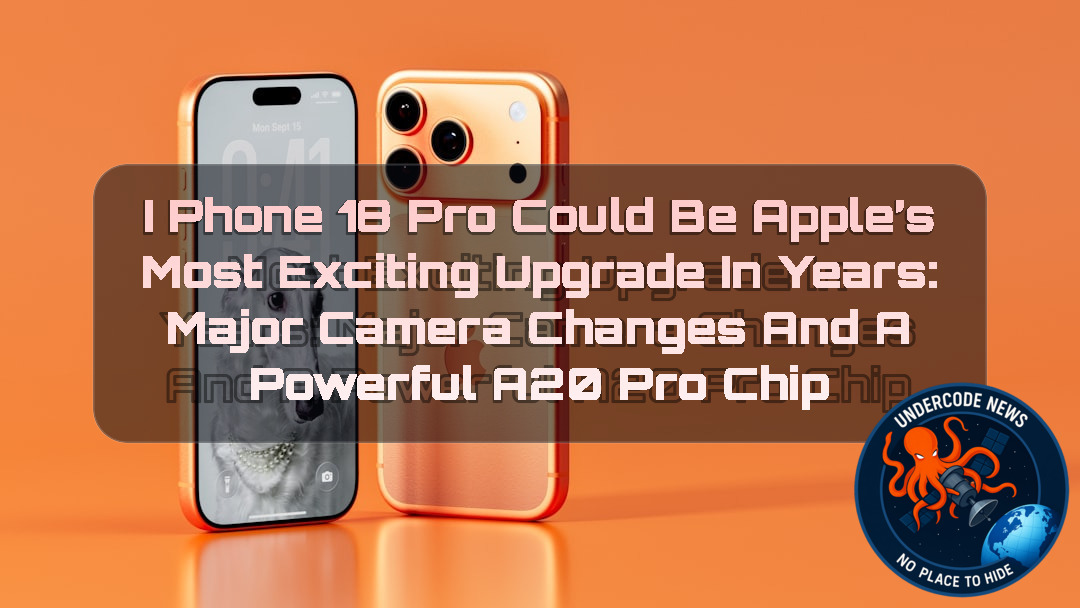
A New iPhone Era Is Taking Shape
Apple’s next-generation flagship is already generating intense interest months before its expected unveiling. The iPhone 18 Pro is rumored to arrive on September 9, and although Apple has yet to officially confirm the device or its specifications, a growing collection of leaks and reports is beginning to paint a compelling picture of what the company may have planned.
For many iPhone owners, yearly upgrades have become increasingly difficult to justify. Modern iPhones are already fast, cameras are already excellent, and battery life has reached a point where incremental improvements do not always feel revolutionary. That makes the rumored changes surrounding the iPhone 18 Pro particularly interesting.
Two upgrades stand out above the rest: a substantially redesigned camera system and Apple’s next-generation A20 Pro processor. If the current reports prove accurate, these could become the defining reasons for photographers, content creators, AI enthusiasts, and demanding iPhone users to consider upgrading.
The camera changes could represent one of Apple’s most significant hardware advances in several generations, while the A20 Pro could provide the computational foundation required for an increasingly AI-focused version of iOS.
But as exciting as these rumors sound, it is important to separate confirmed information from leaks, predictions, and expectations. Apple has not yet officially revealed the iPhone 18 Pro, meaning some of the specifications discussed today could still change before launch.
The iPhone 18 Pro’s Two Biggest Potential Advantages
The rumored iPhone 18 Pro is shaping up around two major themes: better photography and dramatically improved processing efficiency.
Apple has traditionally introduced a new A-series chip with each generation of flagship iPhone, but the A20 Pro could be particularly important because future iOS features are expected to place even greater demands on on-device processing.
At the same time, Apple appears to be looking at ways to push the iPhone’s camera hardware beyond the increasingly mature smartphone-camera formula.
That combination matters.
A faster processor alone is unlikely to convince many iPhone 17 Pro owners to upgrade. Likewise, a slightly improved camera may not be enough. But a major camera redesign combined with a new chip architecture could make the iPhone 18 Pro feel meaningfully different in everyday use.
Major Camera Improvements Could Become the Star Feature
The most exciting rumor concerns the camera system.
According to reports attributed to Bloomberg’s Mark Gurman, the iPhone 18 Pro could deliver what he describes as one of Apple’s biggest camera-hardware improvements in some time. That is a significant statement considering Apple has steadily refined its cameras across virtually every recent iPhone generation.
Apple’s approach to smartphone photography has increasingly focused on computational photography, larger sensors, improved stabilization, better image processing, and increasingly capable telephoto systems.
The iPhone 18 Pro may continue that trend, but reports suggest Apple could also make meaningful changes to the physical camera hardware itself.
A More Sophisticated Main Camera
The main camera is reportedly receiving substantial changes, with leaks pointing toward larger or bulkier internal components.
That could have an obvious physical consequence: a thicker camera plateau on the rear of the phone.
For users who prefer slimmer camera designs, that may sound like bad news. But there is a reason smartphone manufacturers continue to make camera modules larger. Better photography generally requires more physical space for sensors, lenses, stabilization mechanisms, and other optical components.
The camera bump is therefore more than a design issue. It reflects the increasingly sophisticated hardware being packed into modern smartphones.
If Apple is genuinely willing to make the camera assembly larger, that could indicate that the company is prioritizing optical performance over maintaining an ultra-thin appearance.
Variable Aperture Could Change iPhone Photography
One of the most intriguing rumors involves a variable-aperture system.
Variable aperture has been discussed in connection with future iPhones for years, but its arrival would represent a meaningful change to the way the camera handles different lighting and photographic situations.
A variable aperture could allow the main camera to adjust how much light enters the lens depending on the scene.
In bright conditions, a narrower aperture could potentially help manage incoming light and provide greater control over exposure. In darker environments, opening the aperture could allow more light to reach the sensor.
The technology could also provide photographers with greater creative control over depth of field, although the exact benefits would depend heavily on Apple’s implementation.
For casual users, much of this would happen automatically. The important point is that the iPhone could gain another hardware-based mechanism for adapting to different shooting conditions.
The Telephoto Camera Could Get Another Major Upgrade
Apple’s telephoto camera is also reportedly on the upgrade list.
The previous generation already expanded the flexibility of the telephoto system with different zoom options, making the iPhone more useful for portraits, distant subjects, travel photography, sports, and everyday shots where moving closer simply is not practical.
The rumored iPhone 18 Pro could push that capability further by introducing a wider aperture on the telephoto camera.
That change could be particularly valuable in low-light situations.
Telephoto lenses typically face greater challenges in dim environments because zooming in can reduce the amount of usable light reaching the sensor. A wider aperture could help compensate for that limitation, potentially producing brighter images while giving Apple’s image-processing system better raw material to work with.
Low-Light Photography Could Be a Major Battleground
Low-light photography is one of the areas where smartphone manufacturers continue to compete aggressively.
Modern computational photography has already transformed nighttime smartphone images. Phones can combine multiple frames, reduce noise, improve dynamic range, and reconstruct details that would have been difficult to capture with older smartphone cameras.
But software cannot completely eliminate the limitations of small sensors and compact lenses.
This is why the rumored telephoto aperture upgrade is important. If Apple can combine better optical hardware with increasingly powerful computational photography, the improvement could be more noticeable than a simple megapixel increase.
For people who frequently photograph concerts, restaurants, city streets, children, pets, sporting events, or travel scenes at night, better telephoto performance could make a genuine difference.
The iPhone Air Problem
The camera discussion also highlights an interesting trade-off within Apple’s current iPhone lineup.
The source article notes that after switching to an iPhone Air, the overall experience remained highly satisfying, but the lack of Apple’s most advanced camera system became noticeable.
That distinction is important because smartphone buyers increasingly have to choose between portability, thinness, price, and photographic capability.
A slimmer iPhone can be attractive for everyday use, but enthusiasts often discover that the compromises become more obvious when they want the best zoom, best low-light performance, advanced stabilization, or maximum camera flexibility.
The iPhone 18 Pro could therefore become especially appealing to people who previously chose a thinner or lighter iPhone but eventually realized they missed the flagship camera system.
The A20 Pro Could Be Just as Important
The second major upgrade is hidden beneath the surface.
The iPhone 18 Pro is expected to feature an A20 Pro chip, continuing Apple’s long-running strategy of developing increasingly powerful custom silicon for its smartphones.
On paper, a new processor might sound predictable. Every flagship iPhone gets one.
But the reported manufacturing technology makes the A20 Pro particularly interesting.
The chip is rumored to use a 2-nanometer manufacturing process, representing a major step forward in semiconductor technology.
Why 2nm Matters
Moving to a smaller manufacturing process can provide chip designers with opportunities to improve performance, efficiency, or both.
Apple has increasingly emphasized the importance of efficiency because smartphone performance is no longer simply about making a processor faster.
A chip must also consume less power while handling increasingly demanding workloads.
That is especially important for modern iPhones because Apple is pushing more computation directly onto the device.
AI workloads, computational photography, speech processing, image generation, translation, personalization, and other intelligent features can all place substantial demands on a mobile processor.
A more efficient chip could therefore have benefits far beyond benchmark scores.
A20 Pro and the AI-Powered iPhone
The timing of the A20 Pro is particularly interesting because Apple’s software strategy is becoming increasingly centered around artificial intelligence.
Future versions of iOS are expected to integrate more AI-powered capabilities directly into the operating system.
Features involving an intelligent Siri, on-device processing, contextual understanding, image analysis, and other AI functions could require significantly more computational power than traditional smartphone features.
That makes the processor increasingly important to the overall iPhone experience.
The A20 Pro may not simply make applications launch faster. Its greater importance could be its ability to handle sophisticated AI workloads efficiently without destroying battery life.
Neural Engine Performance Could Be Crucial
Apple’s Neural Engine has become a key component of its silicon strategy.
Recent Apple chips have used dedicated neural-processing hardware to accelerate machine-learning workloads, and the company has continued increasing its capabilities.
The M6 chip reportedly introduces a dual 16-core Neural Engine configuration, which could dramatically increase AI processing capacity.
It remains unclear whether the A20 Pro will receive an identical architecture.
That uncertainty is important.
It would be tempting to assume that the A20 Pro will simply copy the M6 design, but Apple does not necessarily build its Mac and iPhone chips identically. Different products have different thermal, power, size, and performance requirements.
Nevertheless, if Apple brings a major Neural Engine upgrade to the A20 Pro, the consequences could be significant for future iOS AI features.
Battery Life Could Improve Without a Bigger Battery
One of the most underrated advantages of a more efficient processor is battery life.
Smartphone batteries have physical limitations. Manufacturers can increase battery capacity, but larger batteries also require more internal space and can contribute to increased weight.
Improving efficiency provides another path.
If the A20 Pro can deliver more performance while consuming less power, Apple could potentially use that efficiency to extend battery life without dramatically increasing battery capacity.
Alternatively, Apple could spend the efficiency gains on more demanding features while maintaining similar battery life.
The second possibility is easy to overlook.
Better efficiency does not always mean that users will see longer battery endurance. Manufacturers often use additional computational headroom to introduce more sophisticated features.
In other words, the A20 Pro could make the iPhone smarter and more capable without necessarily producing a dramatic increase in the number of hours displayed in Apple’s battery statistics.
Performance Matters, but AI May Matter More
Traditional performance comparisons often focus on CPU and GPU benchmarks.
Those numbers remain important, but they may become less representative of the iPhone experience as AI becomes more deeply integrated into the operating system.
For the iPhone 18 Pro, the Neural Engine and other dedicated accelerators could be just as important as conventional CPU performance.
A faster processor could make games smoother and applications quicker, but specialized AI hardware could determine how quickly Siri understands requests, how effectively the phone processes images, and how much AI work can happen locally.
That could make the A20 Pro one of the most consequential iPhone chips Apple has produced.
Apple’s Real Challenge Is Making the Upgrade Feel Necessary
There is another side to the iPhone 18 Pro story.
Apple does not simply need to create a faster iPhone. It needs to convince existing iPhone owners that the difference is meaningful enough to justify upgrading.
That is becoming increasingly difficult.
Recent iPhones are already remarkably powerful. For many users, an older iPhone still handles social media, messaging, photography, streaming, gaming, and productivity without major problems.
This means Apple needs improvements that people can actually feel.
A dramatically better camera is one way to accomplish that.
A noticeably smarter AI experience is another.
Combining both could create a much stronger upgrade argument.
Why the Camera and Chip Work Together
The camera and processor upgrades should not be viewed as completely separate features.
They reinforce each other.
Better camera hardware generates more detailed and complex image data. More powerful processing hardware can then analyze and transform that data more effectively.
Computational photography depends heavily on the processor.
Features such as HDR processing, portrait effects, noise reduction, subject recognition, stabilization, night photography, and image reconstruction all require substantial computational resources.
A better sensor and lens can therefore become even more valuable when paired with a more capable processor.
The iPhone 18 Pro could benefit from exactly this combination.
A Bigger Camera Plateau Could Be a Good Trade-Off
There is often criticism whenever a smartphone manufacturer increases the size of its camera bump.
But there is a practical argument for accepting a larger module.
Camera hardware is constrained by physics.
Smartphones have become extraordinarily thin, yet users expect them to produce photographs approaching the quality of dedicated cameras.
Those expectations cannot always be met through software alone.
Larger sensors, more complex lenses, optical stabilization systems, and variable-aperture mechanisms require physical space.
If Apple sacrifices some visual elegance for substantially better photography, many Pro users may consider that a worthwhile trade.
The iPhone 18 Pro Could Become a Photographer’s iPhone
If the rumored camera upgrades arrive together, the iPhone 18 Pro could become particularly attractive to photography enthusiasts.
A stronger main camera, variable aperture, improved telephoto hardware, a wider telephoto aperture, and better computational processing would address several areas where smartphone cameras traditionally struggle.
The biggest potential improvement may not be any individual specification.
It could be the combined effect.
A camera system that can capture more light, control exposure more intelligently, zoom more effectively, and process images faster could produce a more consistent photographic experience across a wider range of situations.
Content Creators Could Have Even More Reasons to Upgrade
The camera improvements could also matter heavily to creators.
For people who use an iPhone as a primary video or photography device, small improvements can have an outsized impact.
Better low-light performance, improved stabilization, stronger telephoto capabilities, and more powerful image processing can reduce the need for additional equipment.
The iPhone has already become a serious content-production tool.
The iPhone 18 Pro could push that philosophy further by making its camera system more flexible rather than simply increasing headline specifications.
The AI Upgrade Could Be More Important Over Time
The camera is likely to be immediately visible.
The A20 Pro may become more valuable over several years.
As Apple adds more AI functionality to iOS, the processing requirements are likely to increase. A phone with more capable silicon could therefore age better as software becomes more sophisticated.
This is one reason processor upgrades can matter even when users do not notice a huge speed increase on day one.
The real advantage could appear months or years later as developers take advantage of additional hardware capabilities.
Apple Silicon Is Becoming the Foundation of the Entire Experience
Apple’s custom silicon strategy has increasingly transformed its products.
The processor is no longer merely the component responsible for application performance.
It influences photography, video processing, gaming, battery management, machine learning, security, graphics, voice processing, and many other aspects of the user experience.
The A20 Pro therefore has the potential to affect almost everything the iPhone 18 Pro does.
That makes its architecture more important than a simple clock-speed comparison.
Not Every Rumor Should Be Treated as Fact
Despite the excitement, the iPhone 18 Pro remains surrounded by unconfirmed information.
Reports about the September 9 launch date, variable aperture, camera-module changes, telephoto improvements, 2nm manufacturing, and Neural Engine capabilities should not all be treated as official specifications.
Apple typically keeps product details confidential until its launch events.
Leaks can be accurate, partially accurate, outdated, or based on prototypes that never reach production.
Some reported features may also change between the current development stage and the final retail product.
That means expectations should remain flexible.
The Upgrade Decision Will Be Personal
For existing iPhone owners, the biggest question will not be whether the iPhone 18 Pro is better.
Of course it will be.
The question will be whether it is better enough.
Someone who primarily uses an iPhone for messaging, browsing, streaming, and casual photography may not notice enough difference to justify upgrading.
A photographer, creator, gamer, AI enthusiast, or heavy mobile user could have a very different calculation.
For those users, camera improvements and processing power could directly affect everyday experiences.
Deep Analysis: What the Rumors Really Mean
Command 01 — Identify the Real Upgrade Drivers
The most important takeaway is that the iPhone 18 Pro rumors are not centered exclusively on cosmetic changes. The strongest reported upgrades concern hardware that directly affects performance and photography.
Command 02 — Separate Camera Hardware From Software
Apple’s computational photography is already exceptionally advanced, but better software cannot completely overcome physical limitations. A more capable optical system could give Apple’s algorithms significantly more information to work with.
Command 03 — Watch the Variable Aperture
Variable aperture could be one of the most meaningful camera additions if it arrives. It would represent a hardware change that could influence exposure, light gathering, and potentially creative control.
Command 04 — Monitor the Telephoto Upgrade
The telephoto camera deserves particular attention because wider aperture hardware could address one of the weakest areas of smartphone zoom photography: low-light performance.
Command 05 — Evaluate the Camera Plateau
A larger camera plateau may look unattractive, but it could be evidence that Apple is putting more physical hardware into the camera system rather than relying exclusively on computational improvements.
Command 06 — Examine the 2nm Transition
The rumored 2nm process is important because it could give Apple additional flexibility to increase performance while improving efficiency.
Command 07 — Do Not Judge A20 Pro Only by Benchmarks
Raw benchmark numbers will not tell the entire story. The more important question will be how the A20 Pro handles AI, image processing, gaming, multitasking, and sustained workloads.
Command 08 — Watch the Neural Engine
If Apple significantly upgrades the Neural Engine in the A20 Pro, that could become one of the most important aspects of the phone for the future of iOS.
Command 09 — Connect the Chip to iOS
The processor’s value will depend heavily on Apple’s software strategy. If iOS introduces more demanding AI functions, the A20 Pro could provide the hardware foundation required to run them efficiently.
Command 10 — Analyze Battery Efficiency
A more efficient chip could improve battery endurance, but Apple could also use that efficiency to enable more powerful features. Longer battery life is therefore possible, but not guaranteed.
Command 11 — Consider Long-Term Performance
A powerful processor can extend the useful life of a smartphone by giving it additional headroom for future software updates.
Command 12 — Think Beyond Launch Day
The most interesting A20 Pro benefits may not be immediately visible. Some could emerge only after Apple and third-party developers begin taking advantage of its additional processing capabilities.
Command 13 — Compare the Pro With the Air
Users who prioritize thinness and portability may prefer an Air-class iPhone, while users who prioritize photography will likely continue to gravitate toward the Pro line.
Command 14 — Understand the Trade-Off
The iPhone 18 Pro could be a device where physical size is increasingly dictated by capability. Better cameras and cooling systems require space, even as consumers continue demanding thinner phones.
Command 15 — Watch Computational Photography
Apple’s biggest photographic gains may come from the combination of optical hardware and computational processing rather than from any single sensor specification.
Command 16 — Expect Better Low-Light Results
If the wider-aperture telephoto rumor proves accurate, low-light zoom photography could become one of the phone’s most noticeable practical improvements.
Command 17 — Consider Creators
Content creators stand to benefit disproportionately from camera improvements because their phones often function as cameras, editing systems, communication devices, and publishing platforms simultaneously.
Command 18 — Consider AI Users
People who frequently use AI features may also benefit more from the A20 Pro than casual users.
Command 19 — Look at the Whole System
The strongest upgrade case comes from combining the camera and chip. Better optics create better data, while better silicon enables more sophisticated processing.
Command 20 — Avoid the Megapixel Trap
A camera does not automatically become better because its megapixel number increases. Lens quality, sensor characteristics, aperture, stabilization, processing, and software all contribute to image quality.
Command 21 — Watch Dynamic Range
Improved hardware and processing could help Apple preserve highlights and shadows more effectively in challenging lighting.
Command 22 — Watch Portrait Photography
A better camera system could improve subject separation and consistency, especially when combined with Apple’s computational photography.
Command 23 — Examine Video Improvements
Camera hardware upgrades can also benefit video recording by providing better exposure control, stabilization, detail, and low-light performance.
Command 24 — Evaluate Thermal Efficiency
Higher performance is only useful if the phone can sustain it. More efficient silicon could allow Apple to deliver stronger performance without proportionally increasing heat generation.
Command 25 — Watch AI On-Device Processing
The direction of
Command 26 — Consider Privacy
On-device AI can potentially offer privacy advantages because some processing can occur directly on the phone instead of being sent to remote servers.
Command 27 — Look at Developer Adoption
Hardware becomes more valuable when developers build applications that take advantage of it. The A20 Pro’s long-term impact will depend partly on software adoption.
Command 28 — Compare Against Older iPhones
The upgrade will likely feel much larger for someone using an older iPhone than for someone upgrading from the immediately previous generation.
Command 29 — Expect Incremental Improvements Elsewhere
Apple will likely introduce additional improvements beyond cameras and silicon, but not every feature will necessarily have the same impact on daily use.
Command 30 — Identify the Real Audience
The iPhone 18 Pro appears most compelling for users who care deeply about photography, AI, gaming, performance, and long-term device longevity.
Command 31 — Watch
Rumors describe development hardware, not necessarily the exact retail product. Apple’s final configuration remains the definitive source.
Command 32 — Treat September as the Verification Point
The launch event, if it occurs as rumored, should resolve many of the current uncertainties surrounding the device.
Command 33 — Analyze Pricing Carefully
Even an impressive technical upgrade becomes harder to justify if Apple substantially increases the price. Value will depend on the relationship between new capabilities and retail cost.
Command 34 — Think About Upgrade Cycles
Consumers upgrading every three or four years could see a much larger benefit than people who replace their iPhones annually.
Command 35 — Expect AI to Influence Purchasing
As AI becomes more integrated into iOS, processor capabilities may become a stronger selling point than they were in previous iPhone generations.
Command 36 — Watch
The rumored variable-aperture system would suggest that Apple is willing to invest in traditional camera technology alongside computational photography.
Command 37 — Expect Hardware and Software to Converge
Apple’s advantage may increasingly come from designing the camera, chip, operating system, and AI features as one integrated platform.
Command 38 — Do Not Ignore Efficiency
Efficiency could be one of the least visible but most valuable improvements in the A20 Pro.
Command 39 — The Camera Could Drive the Upgrade
For many existing users, however, the camera may remain the most immediately compelling reason to move to the iPhone 18 Pro.
Command 40 — The A20 Pro Could Define the Future
The camera may sell the iPhone 18 Pro today, but the A20 Pro could determine how capable the device remains throughout its lifespan.
What Undercode Say:
The Two-Feature Upgrade Strategy
The iPhone 18 Pro rumors suggest Apple may be pursuing a very logical upgrade strategy: improve the feature users can see immediately while simultaneously strengthening the technology users will depend on in the future.
Cameras Are Becoming the New Battleground
Smartphone performance has reached a point where most flagship phones are already extremely fast. Cameras remain one of the few areas where hardware changes can create obvious differences in everyday use.
Variable Aperture Would Be Significant
If Apple introduces variable aperture, it could signal that the company is willing to make more aggressive changes to its camera hardware after years of relying heavily on computational photography.
Telephoto Could Be the Hidden Winner
The telephoto upgrade may ultimately prove more useful than the main-camera changes for certain users. Better zoom performance in difficult lighting can dramatically expand what a smartphone camera can accomplish.
The A20 Pro Is More Than a Speed Upgrade
The A20
AI Changes the Processor Equation
As AI becomes a larger part of iOS, the processor is becoming increasingly important to the user experience. The difference between generations may therefore become more visible through AI features than traditional application performance.
Efficiency Is the Quiet Upgrade
Users may not immediately notice a 2nm manufacturing process, but they could notice its consequences through smoother performance, reduced power consumption, and potentially stronger battery endurance.
The Neural Engine Deserves Attention
If Apple gives the A20 Pro a major neural-processing upgrade, that could be a bigger story than CPU performance alone.
Apple Has a Difficult Balance
Apple must simultaneously make the phone thinner, more powerful, cooler, more efficient, and better at photography. Those goals often conflict with one another.
Camera Size Reflects Physical Reality
A larger camera plateau is not necessarily a design failure. It may simply reflect the amount of technology required to improve smartphone photography.
The Pro Identity Is Becoming Clearer
The Pro models increasingly exist for users who want the best camera system and maximum performance rather than simply the latest iPhone.
The Air and Pro Lines Serve Different Buyers
The existence of thinner models makes the
AI Could Become the Next Upgrade Cycle
If
Photography and AI Are Converging
Modern smartphone photography already depends heavily on machine learning. Better AI silicon and better camera hardware are therefore naturally complementary technologies.
Hardware Still Matters
The smartphone industry has demonstrated that software can accomplish extraordinary things, but physics still matters. Better sensors, lenses, apertures, and stabilization systems remain important.
The Biggest Risk Is Overhype
The biggest danger surrounding the iPhone 18 Pro is not that it will be disappointing. It is that expectations may become so extreme that even meaningful improvements appear ordinary.
Leaks Need Context
A leaked specification is not equivalent to an Apple announcement. Until the company officially introduces the product, every rumor should be treated as provisional.
The Upgrade Case Will Depend on the Starting Point
An iPhone 13 or iPhone 14 owner could experience a substantially larger jump than an owner of a recent Pro model.
Annual Upgrades Are Harder to Justify
Modern smartphones have become durable enough that many users can comfortably skip generations.
Apple Needs Meaningful Reasons to Upgrade
The rumored camera redesign and A20 Pro are exactly the kinds of improvements that could give Apple a stronger upgrade narrative.
The Camera May Be the Headline
Among all the rumored changes, the camera system appears to have the greatest potential to create a visible difference.
The Chip May Be the Long-Term Story
The A20 Pro could become increasingly important as Apple’s software becomes more dependent on AI and on-device computation.
Battery Life Remains a Wild Card
Efficiency improvements are promising, but real-world battery life will depend on how Apple chooses to balance performance, screen behavior, AI workloads, and battery capacity.
Content Creators Could Benefit Most
For creators, camera improvements are not simply conveniences. They can directly affect the quality and flexibility of professional work.
Low-Light Zoom Could Be a Breakthrough
If the telephoto aperture becomes significantly wider,
The Real Innovation May Be Integration
Apple’s strongest advantage could be the integration of camera hardware, custom silicon, operating-system software, and AI into one system.
The iPhone Is Becoming an AI Camera
The modern iPhone is no longer simply a phone with cameras. It is increasingly a computational imaging platform powered by dedicated silicon.
More Power Could Extend Device Lifespan
A stronger processor can provide additional headroom for future software updates, potentially making the iPhone 18 Pro more relevant several years after launch.
Bigger Hardware Does Not Always Mean Worse Design
A larger camera module may be a reasonable trade for meaningful improvements in photography.
The September Launch Matters
If
Expectations Should Remain Realistic
The iPhone 18 Pro is likely to be better than its predecessors, but whether it represents a revolutionary leap will depend on the final combination of hardware, software, pricing, and real-world performance.
The Upgrade Question Is Simple
For buyers who prioritize photography and AI performance, the rumored iPhone 18 Pro could become one of the most compelling upgrades in Apple’s recent lineup.
The Most Important Test Is Everyday Use
Ultimately, specifications will matter less than whether users can actually see, feel, and benefit from the improvements in daily life.
Undercode’s Bottom Line
The rumored iPhone 18 Pro is shaping up to be an intriguing combination of optical ambition and computational power. A significantly upgraded camera system could make the biggest immediate difference, while the A20 Pro could provide the foundation for Apple’s next generation of AI-powered iOS features.
If even a substantial portion of these reports proves accurate, Apple’s next Pro iPhone could be less about adding another collection of small features and more about strengthening the two technologies that increasingly define a modern smartphone: the camera and the chip.
✅ The iPhone 18 Pro camera upgrades described in the article are based on reported leaks and rumors, including claims involving variable aperture and telephoto improvements, but Apple has not officially confirmed these specifications.
✅ Apple’s move toward more advanced semiconductor manufacturing is consistent with its broader custom-silicon strategy, while the specific claim that the A20 Pro will use a 2nm process remains dependent on unconfirmed reporting.
❌ The reported September 9 launch date, exact A20 Pro Neural Engine configuration, final camera design, and detailed specifications should not be presented as confirmed facts until Apple officially announces the iPhone 18 Pro.
Prediction
(+1) The iPhone 18 Pro is likely to deliver meaningful improvements in camera performance and processing power if the current reports are broadly accurate.
(+1) The combination of improved camera hardware and a more efficient processor could make the Pro model particularly attractive to photographers, creators, gamers, and users interested in Apple’s expanding AI ecosystem.
(+1) A wider telephoto aperture could become one of the most practically useful upgrades, especially for low-light zoom photography.
(+1) If Apple successfully combines 2nm silicon with stronger AI acceleration, the A20 Pro could give the iPhone 18 Pro a longer performance lifespan than previous generations.
(-1) However, users with a recent Pro iPhone may not see enough day-to-day difference to justify upgrading immediately, particularly if their current camera and performance already meet their needs.
(-1) Rumors surrounding variable aperture, the Neural Engine, launch timing, and other specifications could still change before Apple’s official announcement.
Final Outlook
The iPhone 18 Pro could represent an important moment for Apple’s smartphone strategy. The company is moving toward a future in which cameras are becoming increasingly sophisticated while AI is becoming increasingly central to the operating system.
That makes the rumored camera overhaul and A20 Pro chip more than isolated upgrades. Together, they could define the direction of the iPhone for the next several years.
For users who have been waiting for a reason to move from an older iPhone, the iPhone 18 Pro could be one of the more significant upgrades to watch. For recent iPhone Pro owners, however, the decision may depend on just how dramatic Apple’s final camera improvements and AI capabilities turn out to be.
▶️ Related Video (68% Match):
🕵️📝Let’s dive deep and fact‑check.
🎓 Live Courses & Certifications:
Join Undercode Academy for Verified Certifications
🚀 Request a Custom Project:
Secure, high-velocity infrastructure and disruptive technological engineering. Contact our engineering team for high-tier development and proprietary systems:
[email protected]
💎 Smart Architecture | 🛡️ Secure by Design | ⭐ Trusted by Thousands
References:
Reported By: 9to5mac.com
Extra Source Hub (Possible Sources for article):
https://www.digitaltrends.com
Wikipedia
OpenAi & Undercode AI
Image Source:
Unsplash
Undercode AI DI v2
🔐JOIN OUR CYBER WORLD [ CVE News • HackMonitor • UndercodeNews ]
📢 Follow UndercodeNews & Stay Tuned:
𝕏 formerly Twitter 🐦 | @ Threads | 🔗 Linkedin | 🦋BlueSky | 🐘Mastodon | 📺Youtube


