
Listen to this Post
Introduction
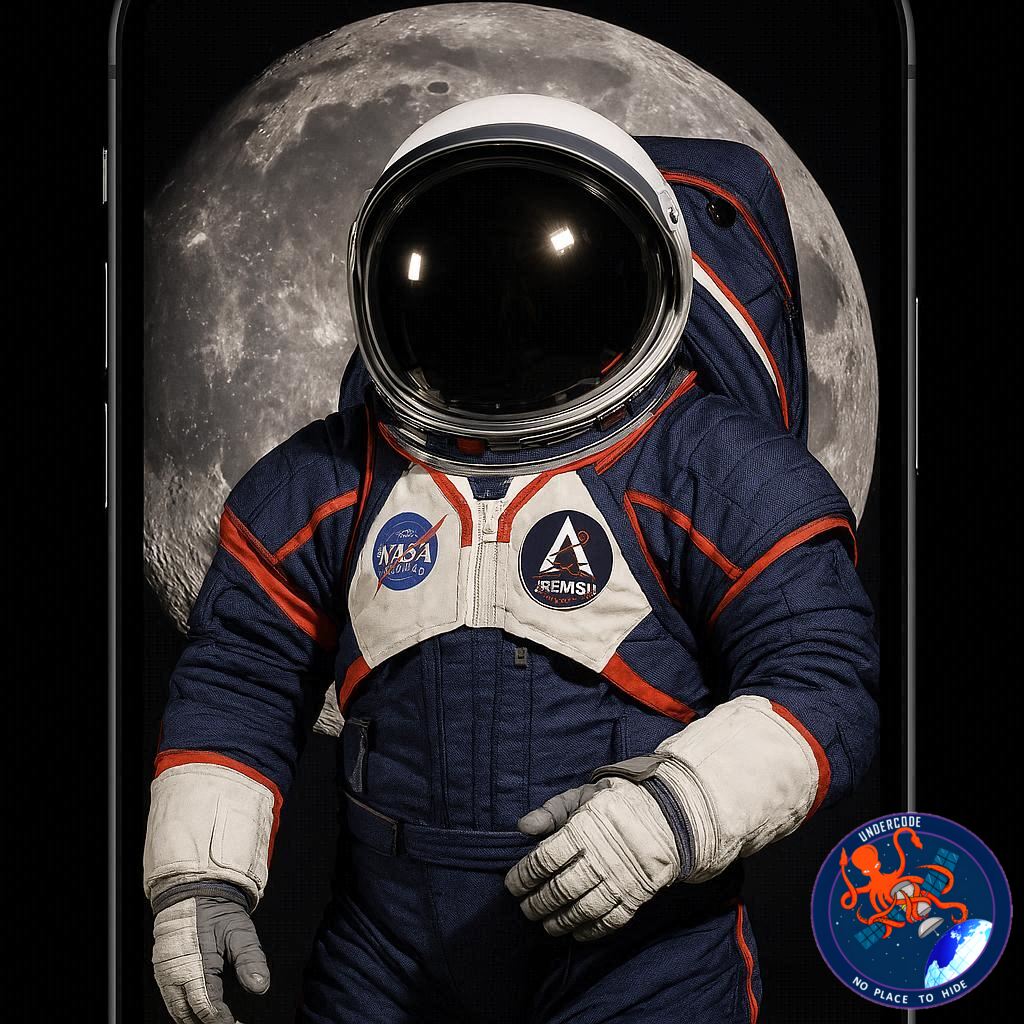
The upcoming Artemis II mission, led by NASA, is not only a major step toward returning humans to the Moon but also a landmark moment for everyday technology in space. For the first time in history, smartphones have been officially approved for extended use aboard a crewed space mission. This development marks a shift in how astronauts interact with technology, blending familiar consumer devices with highly specialized aerospace equipment.
Each astronaut participating in the mission will carry an iPhone 17 Pro Max inside their spacesuit. While space missions have always relied on advanced imaging systems, the inclusion of smartphones introduces a new layer of accessibility, versatility, and human connection. Beyond their practical use as auxiliary cameras, these devices symbolize a broader evolution in how space agencies approach communication, documentation, and public engagement.
Summary Overview of the Artemis II iPhone Integration
The Artemis II mission introduces a groundbreaking addition to astronaut equipment: the inclusion of smartphones inside spacesuits. Each crew member will carry an iPhone 17 Pro Max stored securely in a dedicated pocket. Before approval, these devices underwent extensive safety evaluations to ensure they would not pose risks in microgravity conditions, such as becoming loose objects or malfunctioning during critical operations.
This is the first time smartphones have been officially cleared for extended use in a crewed space environment, marking a shift from purely specialized hardware to consumer-grade technology adapted for spaceflight. Engineers carefully assessed potential hazards, including battery safety, screen durability, and the consequences of accidental damage.
Historically, spacecraft have relied on professional imaging equipment, ranging from medium-format cameras in early missions to modern DSLR systems like the Nikon D5. These tools remain essential for high-resolution documentation, and smartphones are not intended to replace them. Instead, they serve as supplementary devices that expand the range of possible perspectives.
One of the key advantages of smartphones is their compact size, which allows astronauts to capture informal and spontaneous images, including selfies. These images provide a more personal and relatable view of life in space, complementing the highly technical photographs taken by professional cameras.
Visual content captured using smartphones also plays a significant role in public engagement. The familiarity of a device like the iPhone makes space missions feel more accessible to the general public, bridging the psychological gap between Earth and space.
Photographs taken during Artemis II include behind-the-scenes moments, such as astronauts using traditional DSLR cameras while simultaneously documenting the scene with an iPhone. This dual-layer documentation highlights the evolving role of mixed media in space exploration.
Public engagement is a crucial factor for the long-term sustainability of space programs. As political debates continue around funding for missions, increased public interest can influence decision-makers to maintain or expand budgets for future exploration efforts.
In this context, the use of smartphones is not just a technical experiment but also a strategic communication tool. Images captured on devices like the iPhone may contribute indirectly to the success of future missions by strengthening public support.
What Undercode Say:
A Shift Toward Hybrid Technology Ecosystems
The integration of consumer devices such as the iPhone 17 Pro Max into missions led by NASA signals a broader transition toward hybrid technological ecosystems in space exploration. Rather than relying exclusively on custom-built instruments, agencies are increasingly validating high-performance commercial hardware for specialized use cases. This approach reduces costs, accelerates innovation cycles, and leverages advancements driven by the consumer electronics industry.
Redefining Astronaut Interaction With Tools
Traditionally, astronaut equipment has been highly specialized, requiring extensive training and adaptation. The inclusion of smartphones introduces a familiar interface that astronauts already understand intuitively. This reduces cognitive load and allows crew members to focus more on mission-critical tasks rather than operating complex systems. It also opens the door to more flexible workflows, where devices can serve multiple roles depending on mission requirements.
Safety Engineering and Risk Mitigation Challenges
One of the most significant aspects of this development is the rigorous safety validation process. In microgravity environments, even a small object can become a hazard if not properly secured. The approval of smartphones required careful analysis of battery stability, structural integrity, and containment mechanisms to prevent accidental release. This demonstrates how modern engineering must adapt consumer technology to meet aerospace-grade safety standards.
Enhancing Mission Documentation Through Multiple Perspectives
The combination of professional cameras and smartphones creates a layered documentation system. While DSLR cameras like those used in Artemis missions provide high-resolution, scientifically valuable imagery, smartphones enable spontaneous and human-centered perspectives. This dual approach enriches the overall narrative of the mission, offering both technical precision and relatable storytelling.
Public Engagement as a Strategic Asset
Public perception plays a critical role in the continuation of space programs. By incorporating familiar devices such as smartphones, agencies like NASA can make missions feel more accessible and engaging to global audiences. Images captured on an iPhone resonate more strongly with the public because they mirror everyday experiences, effectively narrowing the emotional distance between Earth and space.
Implications for Future Space Missions
If the integration of smartphones proves successful during Artemis II, it could influence future mission designs. Smartphones may evolve into multifunctional tools for communication, navigation assistance, and data collection. This could lead to standardized use of commercial devices in space, provided they meet stringent safety and reliability criteria.
Economic and Budgetary Considerations
The potential for increased public engagement driven by relatable content could have indirect economic implications. Stronger public support may translate into sustained or increased funding for space programs. In this sense, the value of smartphone integration extends beyond technical utility and into the realm of policy and budget justification.
Fact Checker Results
Verification of Smartphone Usage in Space ✅
The claim that smartphones are being used on Artemis II is consistent with reported advancements in integrating commercial technology into space missions.
Historical Use of Professional Cameras in Missions ✅
Space agencies like NASA have long used specialized cameras such as DSLRs and earlier medium-format systems for mission documentation.
Safety Testing Requirements for Equipment in Space ✅
All equipment sent to space undergoes rigorous safety certification, supporting the article’s claim about extensive testing for devices like the iPhone 17 Pro Max.
Prediction
Expansion of Consumer Technology in Space Hardware
Future missions led by organizations like NASA are likely to incorporate more consumer-grade devices, especially as performance, durability, and energy efficiency continue to improve. Smartphones and similar devices may become standard auxiliary tools aboard spacecraft.
Increased Role of Smartphones in Mission Operations
Devices such as the iPhone 17 Pro Max may evolve beyond photography into broader roles, including data visualization, crew communication support, and real-time monitoring interfaces, effectively becoming multipurpose mission instruments.
Stronger Public Engagement Driving Policy Support
As relatable technology becomes part of space missions, public interest is expected to grow. This increased engagement may positively influence government funding decisions, helping sustain long-term exploration initiatives and future lunar or Mars missions.
🕵️📝✔️Let’s dive deep and fact‑check.
References:
Reported By: 9to5mac.com
Extra Source Hub (Possible Sources for article):
https://www.github.com
Wikipedia
OpenAi & Undercode AI
Image Source:
Unsplash
Undercode AI DI v2
Bing
🔐JOIN OUR CYBER WORLD [ CVE News • HackMonitor • UndercodeNews ]
📢 Follow UndercodeNews & Stay Tuned:
𝕏 formerly Twitter 🐦 | @ Threads | 🔗 Linkedin | 🦋BlueSky | 🐘Mastodon


