Listen to this Post
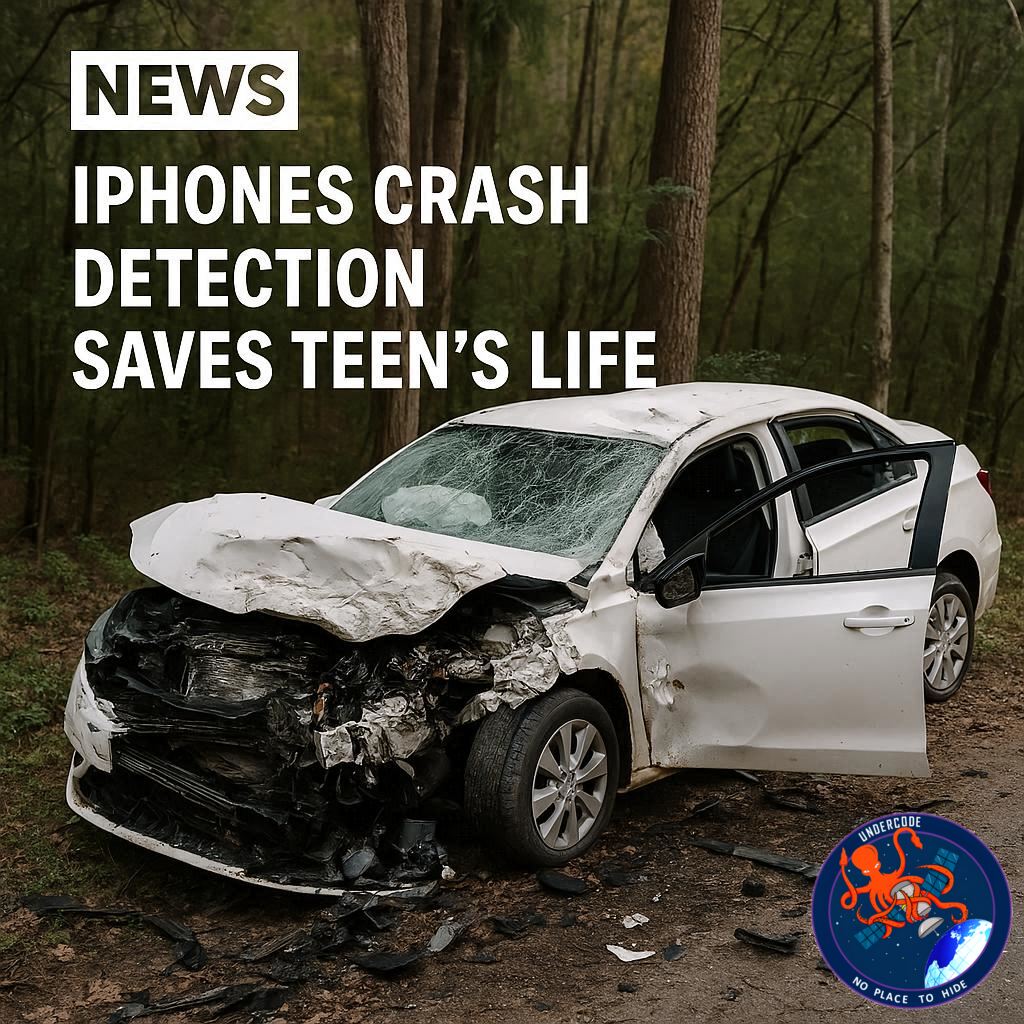
A Life-Saving Story That Shows the Power of Technology
Modern smartphones are no longer just communication tools — they have become life-saving devices. One recent incident proves just how crucial Apple’s Crash Detection feature can be. A teenage girl, driving late at night, survived a devastating car crash thanks to her iPhone’s ability to automatically contact emergency services. This story highlights not only the importance of technology in emergencies but also why every user should understand and enable this feature.
The Terrifying Accident That Changed Everything
Earlier this month, 16-year-old Lindsay Leskovac fell asleep behind the wheel while driving home late at night. Her truck veered off course, crashing violently. She suffered multiple fractures, including both legs and her cervical spine, before losing consciousness.
In most cases, such a situation could have turned fatal. But this time, technology stepped in. Her iPhone 14 detected the severe impact and instantly dialed 911 without needing any manual input. Rescue teams arrived quickly, saving Lindsay’s life.
A Mother’s Emotional Discovery
Lindsay’s mother was unaware that her daughter’s phone could do such a thing. Shocked yet grateful, she learned that the Crash Detection feature, available on iPhone 14 and newer models, had been automatically triggered.
“The person from Fire and Rescue told me that 911 said the phone had initiated the call,” her mother explained. “I discovered that iPhones, if you have a 14 or newer, have an automatic Crash Detection feature, as long as the setting is turned on.”
Her message to others is clear: make sure this feature is enabled. To activate it, users should go to:
Settings > Emergency SOS > Call After Severe Car Crash (toggle ON)
Which Devices Support Crash Detection?
iPhone 14 or later (all models) with iOS 16 or later
Apple Watch Series 8 or later
Apple Watch SE (2nd generation)
Apple Watch Ultra or later with watchOS 9 or later
Everyday Tech That Saves Lives
What makes this story remarkable is how ordinary consumer technology can make the difference between life and death. Apple has heavily invested in health and safety features, such as Fall Detection, Emergency SOS, and now Crash Detection. These tools are not just “extra perks” but essential safety nets.
A Quick Reminder for Users
This incident is a strong reminder for iPhone and Apple Watch owners to double-check their emergency settings. It takes only a few seconds, yet it could be the decision that saves a life.
What Undercode Say:
Technology as an Emergency Responder
This story reflects a larger truth — we are entering an age where smartphones and wearables can act as first responders before humans arrive. Emergency calls, precise GPS tracking, and instant alerts reduce response time dramatically. In Lindsay’s case, every second mattered.
Apple’s Competitive Edge in Safety
Apple’s decision to integrate Crash Detection gives them a competitive advantage in the smartphone market. While many companies focus on speed, camera quality, or entertainment, Apple has tapped into a life-saving ecosystem. This appeals strongly to families, parents, and young drivers.
The Hidden Psychology of Trust
Consumers trust Apple devices not only for performance but also for reliability in emergencies. Parents, especially, may now feel more comfortable letting teenagers drive, knowing that such a system exists. It adds a psychological safety net that competitors may struggle to match.
Potential Concerns and Limitations
However, no technology is flawless. Crash Detection has at times been accidentally triggered on roller coasters or during sudden stops, raising questions about false alarms. Emergency services have reported unnecessary dispatches. While these are minor inconveniences compared to real rescues, Apple still needs to refine accuracy.
The Larger Implication for Public Safety
If more smartphones adopt similar features, the impact on road safety statistics could be massive. Faster emergency response reduces fatalities and long-term disabilities. In the future, AI-driven health monitoring could become a standard expectation on every device.
Emergency Tech Beyond Cars
Beyond car crashes, technology like this could extend to medical emergencies, falls among the elderly, or even natural disasters. Imagine a phone that instantly calls for help when detecting a heart irregularity or sudden collapse. Apple has already started moving in this direction with the Apple Watch’s heart monitoring.
A New Standard for Responsible Tech
This story underlines a shift — technology companies are now judged not only by innovation but by how their products protect lives. In a world where accidents happen daily, this shift could redefine brand loyalty and consumer trust.
Final Thoughts on the Human Side
While this was a triumph of engineering, it is ultimately a story of survival. A teenage girl’s life was saved, a family spared tragedy, and millions of users reminded of the life-saving power hidden inside their phones. Technology may not prevent accidents, but it can certainly prevent them from becoming tragedies.
✅ Fact Checker Results
The story is verified and comes from local news outlet WFMJ. Apple’s Crash Detection feature works exactly as described, available on iPhone 14 and Apple Watch models. ✅ No misinformation detected.
🔮 Prediction
In the coming years, smartphones will become personal guardians. Features like Crash Detection will expand into health monitoring, AI-driven predictions, and faster automated emergency systems. We may soon see phones and wearables that can prevent crises before they happen — making technology not just smart, but truly life-saving.
🕵️📝✔️Let’s dive deep and fact‑check.
References:
Reported By: 9to5mac.com
Extra Source Hub:
https://www.digitaltrends.com
Wikipedia
OpenAi & Undercode AI
Image Source:
Unsplash
Undercode AI DI v2
🔐JOIN OUR CYBER WORLD [ CVE News • HackMonitor • UndercodeNews ]
📢 Follow UndercodeNews & Stay Tuned:
𝕏 formerly Twitter 🐦 | @ Threads | 🔗 Linkedin | 🦋BlueSky | 🐘Mastodon