
Listen to this Post
Introduction: When Personal Accounts Become National Headlines
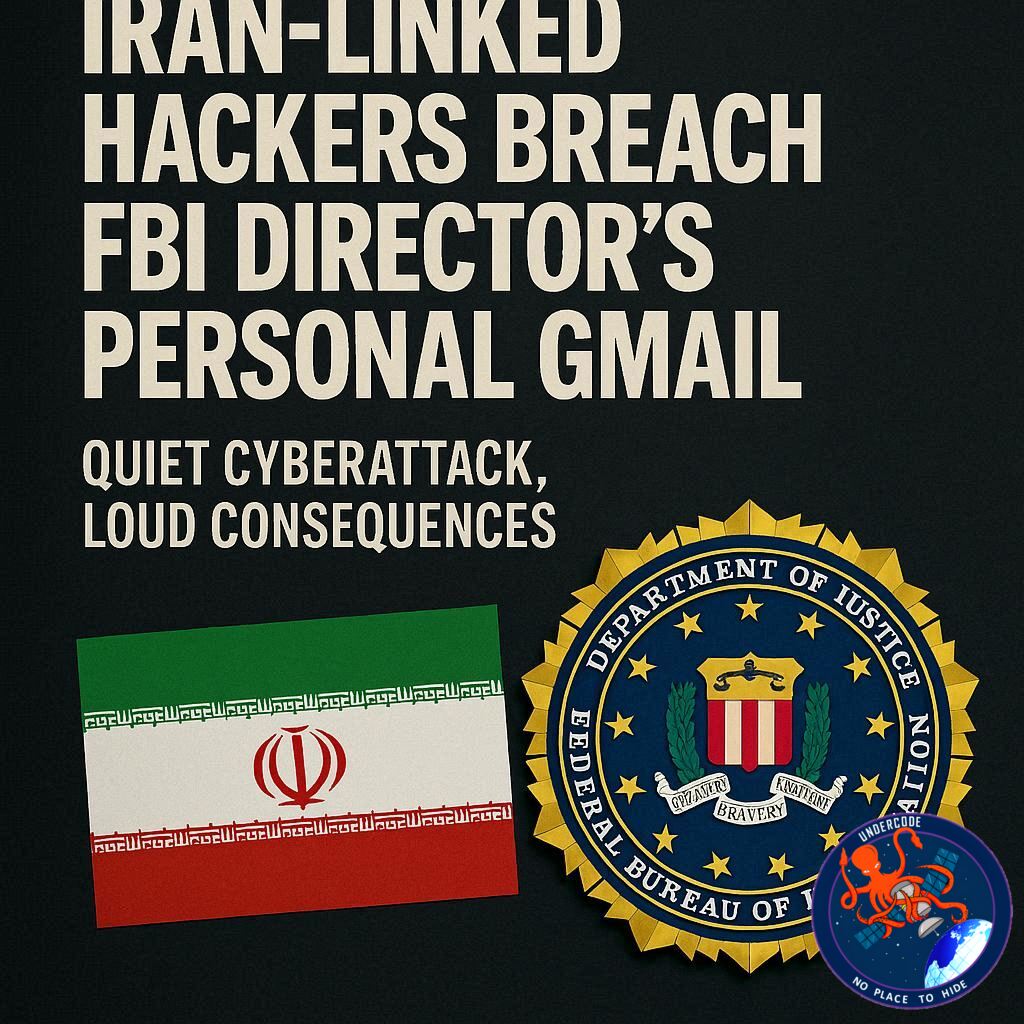
Cybersecurity incidents rarely stay confined to technical circles—especially when they involve high-ranking officials. A recent breach attributed to an Iran-linked hacking group known as “Handala” has pulled the spotlight onto the personal Gmail account of FBI Director Kash Patel. While the compromised data reportedly includes older, non-government material, the implications stretch far beyond a simple privacy violation. This event highlights the growing overlap between personal digital security and national-level cyber conflict, where even seemingly minor vulnerabilities can escalate into geopolitical signals.
the Original Incident
Reports circulating on social media indicate that the Iran-linked Handala hacking group successfully infiltrated the personal Gmail account of FBI Director Kash Patel. The breach allegedly exposed a collection of sensitive but non-classified materials, including photographs and resumes spanning nearly a decade—from 2010 to 2019. Although the compromised data did not include official government intelligence, the symbolic impact of targeting a figure of Patel’s stature has drawn considerable attention.
The FBI has acknowledged the incident, clarifying that the breach was limited to personal communications and historical files. According to statements, no classified or operational data was accessed or leaked. However, the attackers reportedly released portions of the stolen information publicly, amplifying the visibility of the breach and raising questions about digital hygiene among top officials.
The timing of the attack appears far from coincidental. Analysts suggest the breach was carried out as retaliation for recent U.S. actions against cybercrime networks tied to Iran. These actions include the seizure of several domains believed to be used for malicious activities, along with a $10 million reward announced by U.S. authorities for information leading to the identification or capture of individuals involved in cyber operations against American interests.
The Handala group, which has previously been linked to politically motivated cyber campaigns, has not officially released a detailed statement. However, the pattern of the attack aligns with past incidents where cyber groups have used personal data leaks as a form of psychological and reputational warfare. By targeting a high-profile figure, the attackers likely intended to send a broader message about their reach and capabilities.
Despite assurances that national security was not directly compromised, the breach has reignited debates about cybersecurity practices among government officials. Experts warn that personal accounts, often less protected than official systems, can become entry points for adversaries seeking leverage or influence. Even older data, when aggregated and analyzed, can reveal patterns, contacts, and insights valuable for future operations.
The U.S. government’s response has included renewed efforts to dismantle infrastructure linked to hostile cyber actors. Domain seizures and financial incentives for intelligence gathering are part of a broader strategy aimed at deterring future attacks. Still, incidents like this demonstrate that cyber conflict remains an ongoing and evolving challenge, where retaliation and countermeasures continue in a cycle of escalation.
Ultimately, the breach underscores a critical reality: in the digital age, the boundary between personal and professional security is increasingly blurred. What may appear as a minor compromise can carry significant symbolic weight, influencing both public perception and international cyber dynamics.
What Undercode Say:
The Psychological Warfare Behind the Breach
This incident is less about the data itself and more about the message it sends. By targeting a personal Gmail account rather than official systems, the attackers demonstrate that even top-level security figures are not immune to basic vulnerabilities. It’s a calculated move designed to erode confidence and create a perception of exposure at the highest levels of law enforcement.
Personal Accounts as the Weakest Link
Government systems are typically fortified with advanced security protocols, but personal accounts often rely on standard protections like passwords and two-factor authentication. If those measures are not rigorously maintained, they become easy entry points. This breach reinforces a long-standing cybersecurity truth: attackers will always look for the path of least resistance.
Old Data, New Risks
Even though the leaked materials are reportedly from 2010–2019, outdated data can still hold strategic value. Resumes, photos, and personal communications can be used to map relationships, identify behavioral patterns, and even craft targeted phishing campaigns. In cyber intelligence, no data is truly obsolete.
Retaliation as a Cyber Strategy
The timing of the attack suggests a direct response to U.S. actions against Iranian-linked cyber infrastructure. This reflects a broader trend where cyberattacks are used as tools of retaliation rather than isolated criminal acts. It’s a digital extension of geopolitical conflict, where each move triggers a counter-move.
The Role of Public Leaks
By releasing the data publicly, the attackers maximize the impact of the breach. Even if the information is not highly sensitive, the act of exposure creates reputational damage and media attention. This tactic is increasingly common in cyber warfare, where perception can be as powerful as actual damage.
Symbolism Over Substance
From a technical standpoint, the breach may not be groundbreaking. However, the symbolic value of compromising the FBI Director’s personal account is immense. It sends a signal to both domestic and international audiences that no target is off-limits.
Escalation Risks in Cyber Conflict
Incidents like this contribute to a cycle of escalation between nations. Domain seizures and financial rewards may deter some actors, but they can also provoke further retaliation. The challenge lies in balancing enforcement with the risk of triggering more aggressive cyber responses.
Lessons for Cybersecurity Policy
This breach could influence future policies regarding personal device and account usage among government officials. Stricter guidelines, mandatory security audits, and enhanced monitoring may become standard to prevent similar incidents.
The Human Factor in Cybersecurity
Technology alone cannot prevent breaches. Human behavior—such as password management, email usage, and awareness of phishing threats—plays a crucial role. This incident serves as a reminder that cybersecurity is as much about people as it is about systems.
Media Amplification and Public Perception
The rapid spread of this news on social platforms highlights how quickly cybersecurity incidents can become public narratives. The more attention an attack receives, the more successful it becomes from the attacker’s perspective.
Fact Checker Results
The breach has been acknowledged by official sources, confirming that only non-government, historical data was compromised, making the core claim credible.
There is no verified evidence that classified or sensitive national security information was accessed or leaked in this incident.
The attribution to an Iran-linked group aligns with current intelligence assessments, but direct public proof remains limited.
Prediction
This incident will likely accelerate stricter cybersecurity protocols for personal accounts used by government officials, including mandatory multi-layer authentication and monitoring.
Cyber retaliation between nation-states is expected to intensify, with more symbolic attacks targeting high-profile individuals rather than critical infrastructure.
Public exposure tactics will continue to evolve, making reputational damage a primary objective in future cyber conflicts rather than purely data theft.
🕵️📝✔️Let’s dive deep and fact‑check.
References:
Reported By: x.com
Extra Source Hub (Possible Sources for article):
https://www.stackexchange.com
Wikipedia
OpenAi & Undercode AI
Image Source:
Unsplash
Undercode AI DI v2
Bing
🔐JOIN OUR CYBER WORLD [ CVE News • HackMonitor • UndercodeNews ]
📢 Follow UndercodeNews & Stay Tuned:
𝕏 formerly Twitter 🐦 | @ Threads | 🔗 Linkedin | 🦋BlueSky | 🐘Mastodon


