
Listen to this Post
Introduction: A Silent Battlefield Expands Into Critical Systems
Tensions between nations are no longer confined to physical borders. In today’s interconnected world, cyber warfare has become a powerful extension of geopolitical conflict. A recent warning from US authorities reveals a disturbing escalation, where Iranian-linked threat actors are exploiting weaknesses in industrial systems to disrupt essential services. These attacks are not theoretical. They are already causing real operational damage, financial loss, and raising urgent concerns about the security of critical infrastructure.
Summary: Coordinated Cyber Attacks Exploit Industrial Weak Points
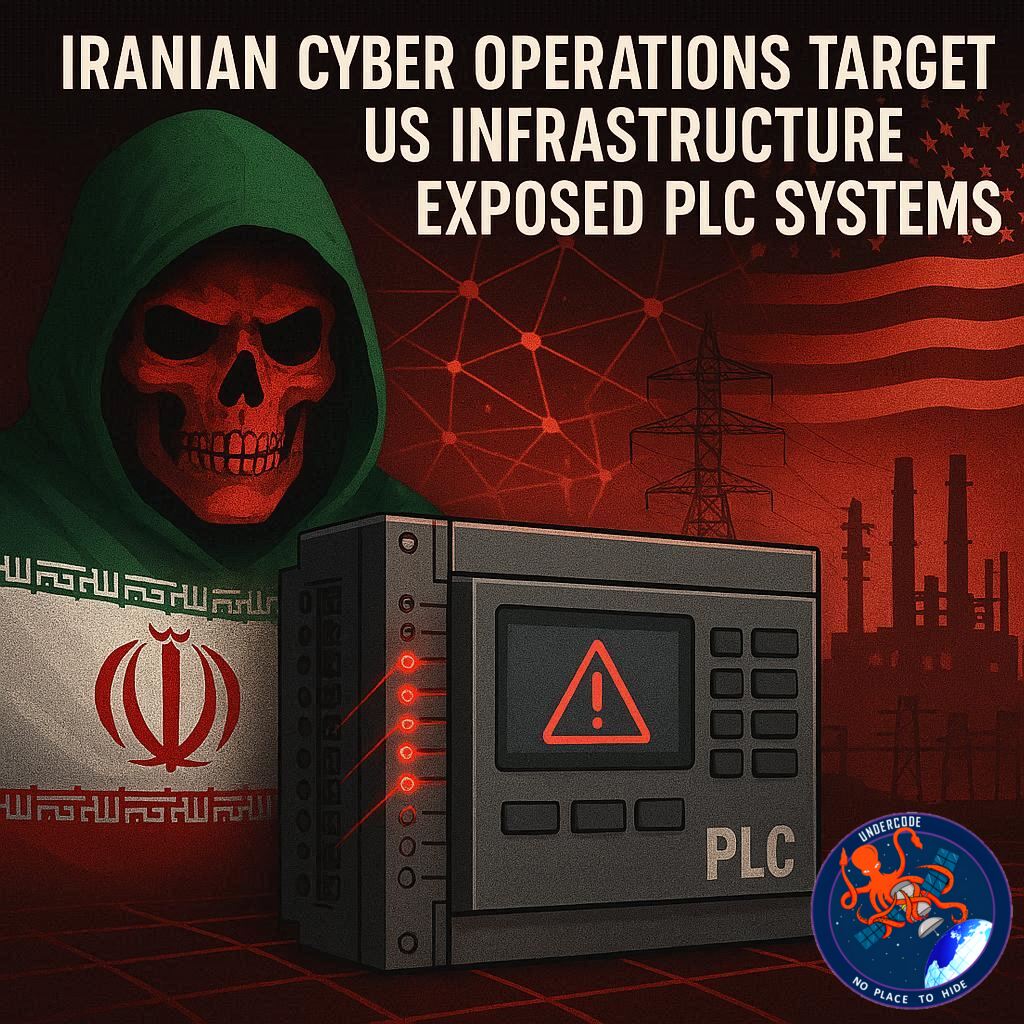
Iran-affiliated cyber actors have launched a campaign targeting operational technology devices across critical infrastructure sectors in the United States. These attacks specifically focus on programmable logic controllers, commonly known as PLCs, which are essential for controlling industrial processes in sectors such as energy, water management, and government facilities. The campaign emerged shortly after joint military actions by the US and Israel against Iran, indicating a possible retaliatory motive tied to ongoing geopolitical tensions.
According to a joint advisory from multiple US agencies including cybersecurity and intelligence bodies, attackers successfully infiltrated Internet-facing PLC systems, particularly those manufactured by Rockwell Automation under the Allen-Bradley line. By exploiting exposed devices, attackers were able to manipulate PLC project files and interfere with human-machine interface and SCADA displays. These disruptions directly impacted operations, in some cases halting processes and causing measurable financial damage.
The techniques used by these threat actors demonstrate a high level of sophistication. They leveraged third-party hosted infrastructure and legitimate industrial configuration software to establish trusted connections with targeted devices. By mimicking authorized activity, they avoided immediate detection while gaining deep access to operational environments. Their methods included directing malicious traffic through commonly used industrial ports and deploying remote access tools like Dropbear SSH to maintain persistent control over compromised systems.
Although the advisory does not officially attribute the campaign to a specific group, the behavior closely resembles previous operations linked to CyberAv3ngers, an Iranian threat group associated with the Islamic Revolutionary Guard Corps. This group has a history of targeting industrial control systems, including a previous attack in 2023 where dozens of US-based PLC devices were compromised, particularly in wastewater systems.
The issue is compounded by a long-standing vulnerability within industrial environments. Many organizations continue to expose operational technology directly to the public internet, either due to legacy system design or insufficient security architecture. Experts emphasize that this is not merely a nation-state threat but a fundamental flaw in infrastructure design that creates opportunities for any capable attacker.
US authorities are now urging immediate action. Organizations are advised to remove PLCs from direct internet exposure, implement secure gateways, monitor suspicious traffic across known industrial ports, and review logs for indicators of compromise. Additional guidance includes enforcing stricter access controls and coordinating with manufacturers and federal agencies if suspicious activity is detected.
What Undercode Say: Structural Weaknesses Are the Real Threat
The narrative surrounding this incident may focus on Iran, but the deeper issue lies elsewhere. What we are witnessing is not just a cyberattack, but the exposure of systemic weaknesses that have existed for years within critical infrastructure environments. The attackers did not rely on zero-day exploits or groundbreaking techniques. Instead, they took advantage of something far more predictable, poor visibility and exposed systems.
Operational technology has historically been designed with functionality in mind, not security. PLCs were never meant to be accessible over the internet. Yet modernization efforts, remote management demands, and cost-cutting decisions have gradually pushed these systems online without adequate safeguards. This transformation created a dangerous hybrid environment where legacy systems meet modern threats.
The use of legitimate software like industrial configuration tools highlights another critical insight. Attackers are increasingly blending in rather than breaking in. By using trusted applications and mimicking normal behavior, they bypass traditional detection mechanisms that rely on identifying anomalies or malicious signatures. This shift makes defense significantly more complex, requiring behavioral analysis rather than simple rule-based monitoring.
Another overlooked factor is attribution bias. While geopolitical narratives emphasize nation-state actors, the techniques used in this campaign are not exclusive to highly advanced groups. With enough resources and knowledge, similar attacks could be executed by independent cybercriminal organizations. This means the threat is not limited to international conflict scenarios but extends to any actor capable of exploiting exposed infrastructure.
The reliance on internet-facing PLCs also reflects a broader industry failure to prioritize segmentation. Proper network architecture should isolate operational technology from external networks. The fact that attackers could directly access these devices suggests that many organizations still lack basic segmentation practices. This is not an advanced security requirement, it is foundational.
Moreover, the financial impact mentioned in the advisory signals a shift in attacker objectives. Disruption alone is no longer the goal. By targeting industrial processes, attackers can cause cascading effects that lead to downtime, regulatory penalties, and reputational damage. This transforms cyber incidents into full-scale business risks.
The timing of the attacks is equally significant. Occurring during heightened geopolitical tensions, they demonstrate how cyber operations can act as strategic tools for pressure and retaliation. Unlike traditional warfare, these attacks are deniable, scalable, and capable of causing disruption without immediate physical consequences. This makes them an attractive option for state actors navigating complex political landscapes.
Ultimately, this situation exposes a critical truth. The greatest vulnerability is not the attacker’s capability but the defender’s complacency. Until organizations treat operational technology security with the same urgency as IT systems, these incidents will continue to escalate.
Fact Checker Results
✅ US agencies officially confirmed disruptions caused by PLC-targeted cyber activity
✅ Attack methods involving exposed OT systems and remote access tools are technically consistent with known threats
❌ No direct public attribution conclusively proves a specific Iranian group executed this exact campaign
Prediction
📊 Cyber attacks on industrial systems will increase as geopolitical tensions persist
📊 Organizations will accelerate investment in OT security and network segmentation strategies
📊 Future attacks will rely more on stealth techniques using legitimate tools rather than obvious exploits
▶️ Related Video (88% Match):
🕵️📝✔️Let’s dive deep and fact‑check.
References:
Reported By: www.darkreading.com
Extra Source Hub (Possible Sources for article):
https://www.linkedin.com
Wikipedia
OpenAi & Undercode AI
Image Source:
Unsplash
Undercode AI DI v2
Bing
🔐JOIN OUR CYBER WORLD [ CVE News • HackMonitor • UndercodeNews ]
📢 Follow UndercodeNews & Stay Tuned:
𝕏 formerly Twitter 🐦 | @ Threads | 🔗 Linkedin | 🦋BlueSky | 🐘Mastodon

