
Listen to this Post
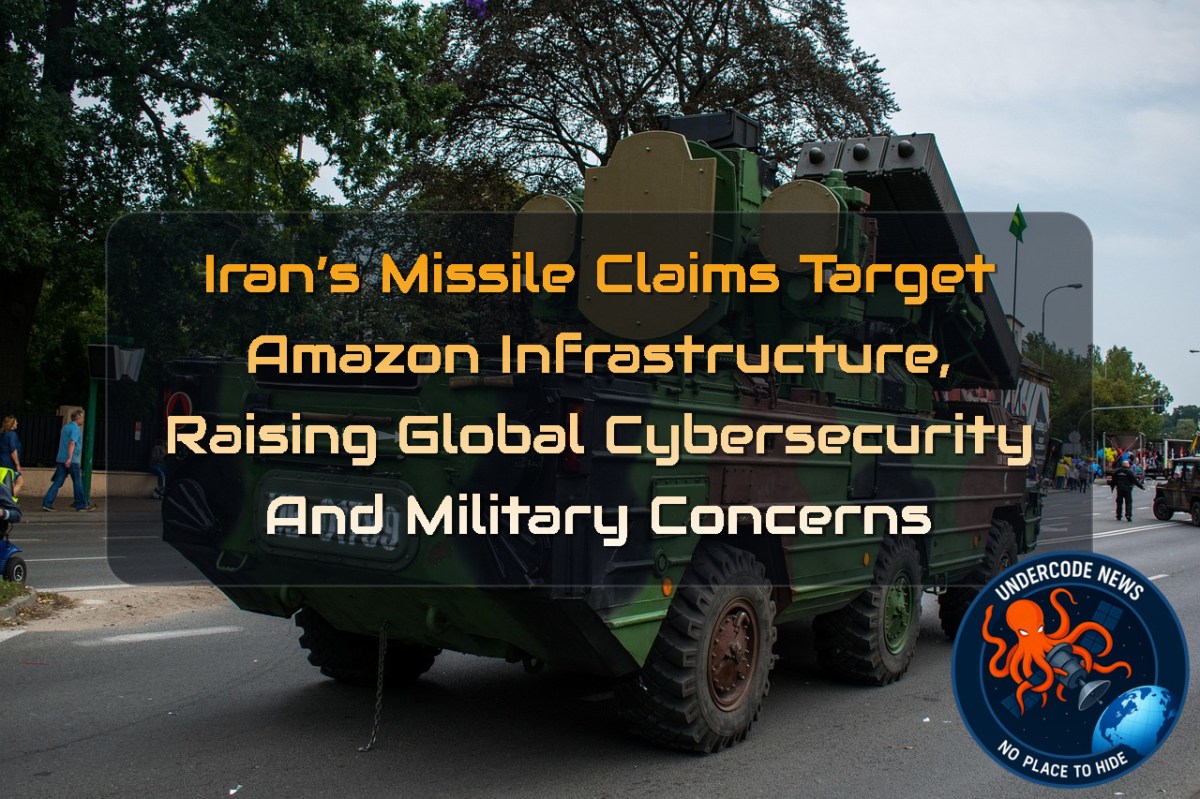 Introduction: A New Front in the Digital Battlefield
Modern conflicts are no longer fought only across physical borders. They now extend into cyberspace, cloud infrastructure, satellite networks, energy systems, and global technology platforms. A recent statement from Iran’s Islamic Revolutionary Guard Corps (IRGC) has intensified fears that critical digital infrastructure could become a target during escalating military tensions.
The IRGC claimed that its Aerospace Force launched cruise missiles that destroyed what it described as Amazon’s central data infrastructure in Bahrain, while also striking US air defence systems and radar facilities. However, the claims have not been independently verified, and neither Amazon, Bahraini authorities, nor US officials have publicly confirmed that such an attack occurred.
The allegation arrives during a period of increasing confrontation between Iran and the United States, where military operations, political warnings, and strategic threats are creating uncertainty across the Middle East. Beyond the immediate military implications, the reported attack highlights a growing concern: the vulnerability of cloud computing and technology infrastructure during geopolitical conflicts.
IRGC Claims Cruise Missile Attack Destroyed Amazon Data Infrastructure
The Islamic Revolutionary Guard Corps announced that its Aerospace Force had targeted what it called the “central data infrastructure” of Amazon in Bahrain using several cruise missiles. According to the statement, the operation was part of a wider response to US military actions against Iranian facilities.
The IRGC also claimed that US air defence systems and radar installations located in Bahrain’s Muharraq and Riffa regions were targeted during the operation.
At this stage, these claims remain unverified. No technical evidence, satellite imagery, independent military confirmation, or corporate statement has been released to confirm that Amazon facilities were destroyed or significantly damaged.
Amazon, Bahrain, and US Officials Remain Silent
The absence of official responses has created uncertainty around the incident. Amazon has not confirmed whether any of its cloud infrastructure, data centres, or regional operations were affected.
Bahraini authorities and US officials have also not issued statements confirming damage to military installations or defence systems.
In situations involving military claims, especially during active conflicts, governments and organisations often delay public statements while conducting internal assessments. Verification may require intelligence analysis, satellite monitoring, infrastructure inspections, and cybersecurity investigations.
The Strategic Importance of Cloud Infrastructure During Conflict
The alleged targeting of Amazon infrastructure reflects a broader reality: technology companies have become part of national security discussions.
Cloud providers operate some of the world’s most important digital systems, supporting governments, businesses, financial institutions, healthcare organisations, and critical services. A successful attack against major cloud infrastructure could create consequences far beyond a single company.
A disruption could potentially affect:
Government applications
Financial transactions
Business operations
Communication platforms
Artificial intelligence systems
Military logistics networks
Even when cloud providers are not directly involved in military operations, their infrastructure may become strategically valuable because modern societies depend heavily on digital services.
Iran’s Warning Against Regional Infrastructure Used by the US
The reported missile strike follows previous Iranian warnings that facilities and infrastructure in neighbouring countries could become targets if they are used to support American military operations.
Iran has repeatedly argued that regional bases, airfields, and support facilities connected to US forces could be considered legitimate targets.
The United States, meanwhile, has increased military pressure against Iran following attacks that resulted in American casualties in Iraq and Jordan. Washington has warned Tehran against further escalation.
The situation creates a dangerous balance where military responses could expand beyond direct confrontation into economic, technological, and infrastructure-based attacks.
Rising Risk of Digital Warfare in Military Conflicts
Although the IRGC statement focused on physical missile strikes, the incident highlights the relationship between traditional warfare and cybersecurity.
Modern military campaigns increasingly involve:
Cyberattacks against infrastructure
Information warfare
Disruption of communication systems
Attacks on satellites
Digital espionage operations
A country does not necessarily need to destroy a facility physically to cause significant damage. A cyberattack against cloud systems, networks, or operational technology could create major disruption at a lower cost and with greater uncertainty.
Dark Infrastructure Concerns: Why Data Centres Matter
Data centres have become the backbone of the digital economy. They store information, process applications, and provide computing power for millions of users.
Large technology companies operate highly protected facilities with backup systems, geographic redundancy, and security layers designed to prevent major failures.
However, geopolitical instability introduces new risks. Physical attacks, supply chain disruptions, insider threats, and cyber operations could all threaten availability.
The alleged Bahrain incident demonstrates why governments and companies increasingly treat digital infrastructure as a strategic national asset.
The Nuclear Facility Dispute Behind the Escalation
The IRGC stated that the missile operation was conducted in response to what it described as a US military attack against civilian facilities at the under-construction Darkhovin nuclear power plant.
Iran’s Permanent Mission to international organisations in Vienna called on the International Atomic Energy Agency (IAEA) and the United Nations Security Council to condemn the reported attack.
The IAEA said it was reviewing reports related to the incident but had not provided an independent assessment.
The dispute adds another layer of complexity because nuclear facilities remain among the most sensitive targets in international conflicts.
Cybersecurity Lessons From Military Escalation
Even if the Amazon-related claim is eventually proven inaccurate, the situation provides important lessons for organisations operating critical technology systems.
Companies must prepare for scenarios where geopolitical conflicts create unexpected risks.
Security teams should focus on:
Infrastructure redundancy
Zero-trust security models
Continuous monitoring
Incident response planning
Supply chain security
Backup protection
The modern battlefield is no longer limited to soldiers and weapons. Networks, servers, and data systems have become strategic assets.
What Undercode Say:
The Future Battlefield Will Include Data Centres and Digital Infrastructure
The claim surrounding Amazon infrastructure in Bahrain represents a larger transformation in global conflict.
Military power is no longer measured only by aircraft, missiles, and troops. Digital dominance has become equally important.
Cloud infrastructure has become part of the critical foundation of modern economies.
If a nation wants to weaken an opponent, attacking digital systems can create disruption without requiring traditional battlefield victories.
The alleged targeting of Amazon highlights a significant question: are private technology companies becoming unintended participants in international conflicts?
The answer is increasingly yes.
Large technology firms operate infrastructure that supports governments, defence contractors, financial institutions, and critical industries.
This creates a complicated security environment where commercial systems may become strategically important.
From a cybersecurity perspective, organisations should assume that geopolitical tensions can directly affect technology operations.
Security teams should monitor:
Unusual network activity
Regional infrastructure threats
Supply chain risks
Cloud account compromise attempts
Advanced persistent threats
A physical missile strike and a cyberattack can achieve similar objectives: disruption, fear, and economic damage.
The next generation of conflicts will likely combine traditional military operations with cyber warfare campaigns.
Attackers may attempt to disable services, steal intelligence, manipulate information, or create uncertainty.
Companies operating internationally must understand that cybersecurity is now connected to global politics.
A data centre is no longer simply a building filled with servers.
It is a strategic location containing economic power, government information, and technological influence.
The future security model requires cooperation between governments, cloud providers, and cybersecurity professionals.
Digital resilience will become as important as military defence.
The strongest organisations will not be those that prevent every attack.
They will be those capable of surviving attacks, recovering quickly, and maintaining trust.
Deep Analysis: Investigating Infrastructure Threats With Security Commands
Linux Network Monitoring Commands
Security teams can monitor suspicious activity using:
sudo netstat -tulpn
This command displays active network connections and listening services.
ss -tulnp
A modern replacement for netstat that provides detailed socket information.
System Log Investigation
Administrators can review security events with:
journalctl -xe
This helps identify unusual system behaviour.
grep "failed" /var/log/auth.log
Searches authentication failures that may indicate intrusion attempts.
File Integrity Monitoring
Critical infrastructure should monitor unexpected changes:
sha256sum important_file
Creates a cryptographic fingerprint for verification.
find /etc -type f -mtime -1
Shows recently modified configuration files.
Network Security Analysis
Security analysts can inspect traffic:
tcpdump -i eth0
Captures network packets for investigation.
nmap -sV target_ip
Checks exposed services and versions.
Incident Response Preparation
Organisations should maintain:
backup --verify
Regular backup validation procedures.
systemctl list-units --type=service
Review running services for suspicious activity.
The key lesson is simple: infrastructure visibility is the first step toward infrastructure protection.
✅ The IRGC publicly claimed it targeted Amazon-related infrastructure and US defence systems in Bahrain.
✅ The article correctly states that Amazon, Bahrain, and US officials had not confirmed the claim at the time of reporting.
❌ There is no independently verified evidence proving that Amazon’s data infrastructure was destroyed.
Prediction
(+1) Positive Outlook:
Cloud providers and governments will likely increase cooperation on infrastructure protection as geopolitical cyber risks continue growing.
Companies will invest more heavily in redundancy, regional backups, and advanced threat detection.
International cybersecurity partnerships may expand to protect critical digital services.
Negative Outlook:
Military tensions could increase the risk of cyberattacks against commercial technology providers.
Private companies may increasingly become targets during international conflicts.
False claims and information warfare may create additional uncertainty during crises.
Conclusion: The New Era of Hybrid Conflict
The IRGC’s claim about striking Amazon infrastructure in Bahrain remains unconfirmed, but the broader message is clear: digital infrastructure has become a major factor in global security.
Whether through missiles, malware, or information operations, future conflicts will increasingly involve technology systems that connect modern society.
The protection of data centres, cloud platforms, and communication networks will become one of the defining security challenges of the coming decade.
▶️ Related Video (84% Match):
🕵️📝Let’s dive deep and fact‑check.
🎓 Live Courses & Certifications:
Join Undercode Academy for Verified Certifications
🚀 Request a Custom Project:
Secure, high-velocity infrastructure and disruptive technological engineering. Contact our engineering team for high-tier development and proprietary systems:
[email protected]
💎 Smart Architecture | 🛡️ Secure by Design | ⭐ Trusted by Thousands
References:
Reported By: www.euronews.com
Extra Source Hub (Possible Sources for article):
https://www.pinterest.com
Wikipedia
OpenAi & Undercode AI
Image Source:
Unsplash
Undercode AI DI v2
🔐JOIN OUR CYBER WORLD [ CVE News • HackMonitor • UndercodeNews ]
📢 Follow UndercodeNews & Stay Tuned:
𝕏 formerly Twitter 🐦 | @ Threads | 🔗 Linkedin | 🦋BlueSky | 🐘Mastodon | 📺Youtube


