
Listen to this Post
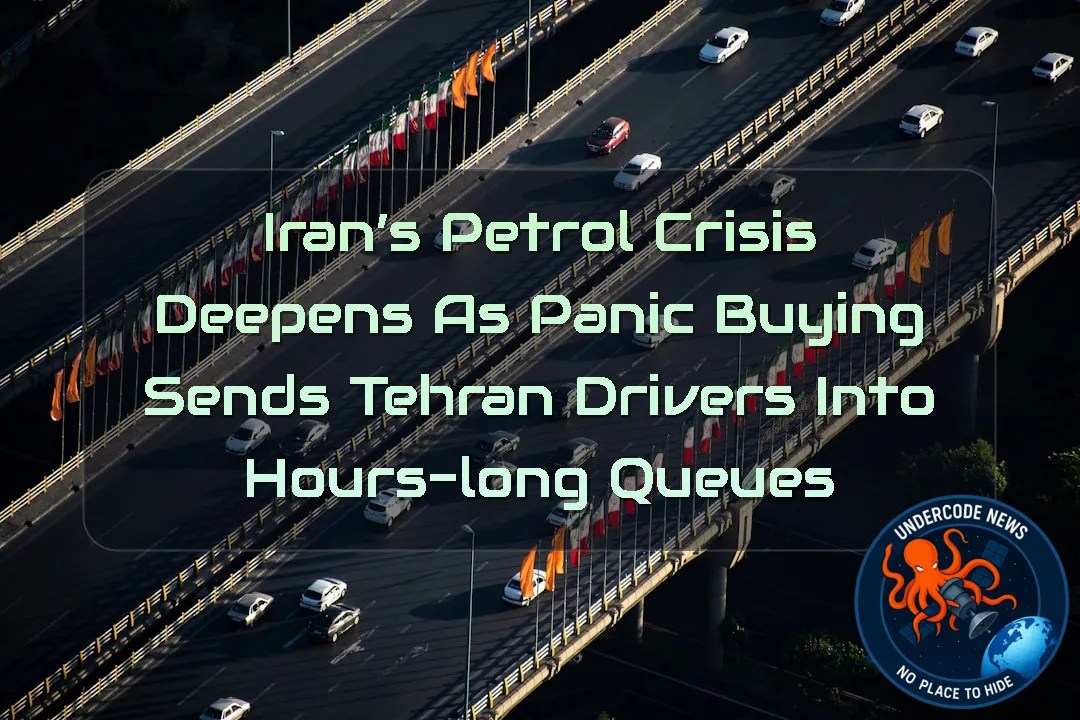 A Fuel Shortage Is Becoming a Political Problem
Tehran was still awake long after midnight as thousands of drivers lined up outside petrol stations, some waiting for hours in queues that stretched across roads and into neighboring streets. What might normally be a routine stop for fuel suddenly became a symbol of a much deeper problem: Iran’s fuel system is under growing pressure, while public confidence in the government’s ability to guarantee supplies appears increasingly fragile.
The immediate trigger was a wave of panic buying. Social-media videos showed long lines forming across Tehran and the nearby city of Karaj, with some petrol stations reportedly closing after they were unable to keep up with demand. Officials insisted that there was no nationwide fuel shortage and urged motorists not to rush to filling stations.
At the same time, however, senior government officials acknowledged that Iran’s petrol and diesel pricing system needs to change. They stopped short of announcing a date or explaining exactly how much prices could increase.
That combination — officials denying an immediate shortage while simultaneously warning that the fuel system must be reformed — has created an uncomfortable contradiction for the Iranian government.
For ordinary drivers, the distinction between a technical supply problem and a shortage may matter little. If a person reaches a petrol station and finds hundreds of vehicles ahead of them, the crisis feels very real.
Tehran’s Petrol Demand Suddenly Surges
According to the information provided in the original report, petrol consumption in Tehran province increased by approximately 30 percent as motorists reacted to fears of shortages.
Mohammad Sadegh Azimifar, managing director of the National Iranian Oil Products Refining and Distribution Company, said the supply chain remained stable and attributed the rush largely to rumors.
His message was straightforward: people were buying fuel because they feared fuel would disappear, and that behavior was itself creating additional pressure on petrol stations.
But the numbers tell a more complicated story.
Keramat Veis-Karami, managing director of the National Iranian Fuel Distribution Company, said average daily fuel distribution increased from around 138 million liters in Mordad to approximately 150 million liters on Wednesday.
That represents a substantial jump in demand.
The significance is not simply that more fuel was being distributed. Panic buying can temporarily transform a manageable supply system into one that looks dangerously close to collapse.
When consumers believe a shortage is coming, they fill their tanks earlier than necessary. Some may return to stations repeatedly. Others may fill containers or attempt to secure additional reserves.
The result is a self-reinforcing cycle.
Fear creates higher demand, higher demand produces longer queues, longer queues create more fear, and the resulting panic can make a temporary imbalance appear much larger.
Officials Try to Calm the Public
Iranian officials have attempted to prevent the panic from becoming a nationwide run on petrol.
Veis-Karami described reports of an impending fuel shortage as baseless and urged drivers not to visit petrol stations unless their vehicles genuinely needed refueling.
That appeal makes economic sense.
Fuel distribution networks are designed around relatively predictable consumption patterns. They become significantly harder to manage when millions of consumers suddenly change their behavior at the same time.
The problem for authorities is that reassurance only works when people trust the information being provided.
When motorists see enormous queues with their own eyes, official statements denying a shortage can struggle to overcome what people are experiencing on the ground.
The Price Question Changes Everything
The most politically sensitive part of the situation is not necessarily the queues themselves.
It is the prospect of higher fuel prices.
Mohammad Jafar Ghaempanah, Iran’s vice president for executive affairs, said petrol and diesel prices would need to change but emphasized that the government had not yet decided the timing, scale or precise structure of the increase.
That uncertainty could become almost as important as the price increase itself.
If people believe prices are about to rise sharply, they have a financial incentive to purchase subsidized fuel before the increase takes effect.
In other words, even an announcement without a specific implementation date can encourage stockpiling.
The government therefore faces a difficult communication problem. Announcing a price increase too early could encourage panic buying, while delaying the announcement could increase uncertainty and speculation.
Iran’s Fuel Subsidy System Is Under Pressure
Iran has maintained heavily subsidized fuel prices for years, making petrol significantly cheaper than in many other countries.
That system has political advantages because inexpensive fuel reduces transportation costs and provides direct economic support to motorists.
But subsidies also create distortions.
People who own multiple vehicles can potentially benefit more from subsidized fuel than people who do not own cars. Ghaempanah reportedly acknowledged precisely this imbalance when discussing the need to change the current system.
There is also the broader issue of government finances.
Maintaining artificially low domestic fuel prices can become increasingly expensive when the country faces external economic pressure, declining revenues, infrastructure damage or restrictions affecting imports.
The government may therefore view pricing reform as unavoidable.
The political challenge is that “economically necessary” does not automatically mean “politically survivable.”
Iran Has Seen the Political Cost of Fuel Price Increases Before
Iran’s leadership has painful historical experience with fuel-price reform.
In November 2019, a sudden petrol price increase triggered widespread protests across the country. The unrest was met with a severe security crackdown and became one of the most significant episodes of domestic unrest in the Islamic Republic’s history.
That history makes any new fuel-price increase politically explosive.
The government knows that petrol is not simply another commodity.
It affects commuting, food distribution, transportation, household budgets, businesses and virtually every part of the economy.
A price increase can therefore quickly become a broader protest issue.
The government may be particularly cautious about introducing major changes while the population is already facing economic pressure.
The Economic Pressure Behind the Petrol Problem
Iran’s fuel difficulties cannot be understood by looking only at petrol stations.
The larger issue is the resilience of the country’s energy system.
Iran possesses enormous oil and gas resources, but having abundant underground reserves does not automatically guarantee an uninterrupted supply of refined fuel.
Crude oil must be extracted, transported, processed and distributed. Refineries require functioning infrastructure, spare parts, investment and reliable logistics.
Sanctions can complicate each of these stages.
Restrictions on international trade can make it harder to obtain equipment, secure financing, access foreign technology or move petroleum products through international markets.
The result can be a strange contradiction: an oil-rich country can still experience difficulties supplying its own population with refined petrol.
War and Infrastructure Damage Add Another Layer
The original report attributes part of the reported fuel shortfall to damage and disruptions associated with the ongoing war, including attacks affecting Iranian refining infrastructure and restrictions involving Iranian ports.
These are extremely consequential claims because damage to refining capacity can have an immediate effect on domestic fuel availability.
Refineries are not interchangeable machines that can always be replaced overnight.
A major disruption at one facility can force the wider network to compensate, increasing pressure on other refineries and distribution routes.
If transportation infrastructure is also disrupted, even available fuel may become difficult to move to the locations where it is needed most.
This creates an important distinction between having fuel somewhere in the country and having enough fuel available at the petrol station around the corner.
Fuel Smuggling Adds to the Pressure
Another problem highlighted in the report is fuel smuggling.
Iran has historically faced significant fuel-smuggling activity, partly because heavily subsidized domestic fuel can be sold at a much higher price across borders.
The greater the gap between domestic and international prices, the stronger the economic incentive to move fuel illegally.
Iranian media recently reported the discovery of a buried pipeline extending roughly six kilometers beneath beach sand and seawater that was allegedly being used to smuggle fuel out of the country.
Authorities in Bandar Abbas also reportedly seized more than 12,000 liters of diesel.
These incidents illustrate the difficulty of maintaining a heavily subsidized fuel system.
The cheaper fuel becomes domestically, the more attractive it can become to smugglers.
The government therefore faces a balancing act: reduce subsidies enough to discourage waste and smuggling, but not so aggressively that ordinary citizens face a sudden and politically destabilizing increase in transportation costs.
The Strategic Fuel Reserve Question
The reported disagreement surrounding Iran’s strategic fuel reserves introduces another layer of uncertainty.
According to the original report, Iranian media have suggested that the Islamic Revolutionary Guard Corps and the government may disagree over the use of strategic fuel stockpiles.
Neither side has publicly confirmed such a dispute.
If accurate, however, the issue would be strategically important.
Fuel reserves exist precisely because governments sometimes need to absorb temporary disruptions.
But strategic reserves are not unlimited.
Using them aggressively can solve an immediate shortage while leaving the country less protected against another disruption.
That creates a difficult decision for policymakers: preserve reserves for a potentially larger emergency or release them to stabilize the market now.
Why Panic Buying Can Become a Crisis of Its Own
The most interesting aspect of the current situation may be the psychology of scarcity.
People do not need to know that petrol is actually running out to behave as though it is.
A rumor spreading through social media can be enough.
One driver sees a queue and tells a relative. The relative fills their tank. Another driver sees the longer queue and assumes something serious has happened. They then fill up immediately.
Within hours, demand can move dramatically above normal levels.
The physical amount of fuel in the country may not have changed significantly, yet petrol stations can still experience temporary shortages because demand has been pulled forward.
This is why government messaging matters.
A credible reassurance campaign can prevent a temporary disruption from becoming a nationwide panic.
But if people distrust official statements, the same messaging can have the opposite effect.
The Tehran Queues Are a Warning Signal
The long queues in Tehran should therefore not automatically be interpreted as proof that Iran has completely run out of petrol.
They are better understood as a warning signal.
They demonstrate that the system is vulnerable to sudden changes in consumer behavior.
They also reveal how sensitive the public may be to rumors of fuel shortages.
That vulnerability becomes particularly important when the government is simultaneously discussing price reform.
The public may reasonably interpret a price increase as evidence that fuel is becoming scarce or that the government is preparing for tougher economic conditions.
The relationship between price expectations and physical supply could therefore become increasingly important in the days ahead.
A Difficult Decision for the Pezeshkian Government
President Masoud Pezeshkian’s government now faces a complicated political equation.
It needs to prevent panic, maintain fuel distribution, protect strategic reserves, address smuggling, manage subsidies and potentially raise prices.
Every decision affects another part of the problem.
A sharp price increase could discourage excessive consumption and reduce the financial burden of subsidies.
But it could also trigger inflation and public anger.
Keeping prices unchanged could preserve short-term stability.
But it could worsen government finances, encourage smuggling and increase consumption.
Using strategic reserves could calm the immediate market.
But it could reduce the
There is no easy solution.
The Inflationary Consequences Could Be Significant
Fuel prices have an unusually broad impact on an economy.
When transportation becomes more expensive, companies may increase the price of goods transported by road.
Food distribution can become more expensive.
Public transportation operators may face higher operating costs.
Delivery services can become more expensive.
Manufacturers may face higher logistics bills.
Even businesses that do not directly consume large quantities of petrol can eventually feel the impact through transportation and supply chains.
For a country already experiencing significant economic pressure, this can create another inflationary shock.
The government therefore cannot treat petrol pricing as an isolated energy-policy decision.
It is also a decision about inflation.
Why the Government May Prefer a Gradual Reform
If Iran ultimately raises fuel prices, policymakers may attempt to reduce the shock through a phased approach.
One possible strategy would be maintaining a lower price for a limited amount of consumption while applying higher rates to additional usage.
Another possibility would involve targeted compensation for lower-income households.
Such approaches could reduce the political impact compared with a single dramatic increase.
However, complicated subsidy systems also create opportunities for fraud, corruption and administrative mistakes.
The success of any reform would depend heavily on implementation and public trust.
The Bigger Issue Is Confidence
At the heart of the story is not simply petrol.
It is confidence.
A functioning fuel system depends partly on physical infrastructure and partly on public expectations.
When people believe fuel will remain available, they buy what they need.
When they believe fuel may disappear tomorrow, they try to buy everything today.
That difference can transform the same supply system from stable to chaotic within hours.
Iran’s government therefore needs to manage both the physical fuel supply and the psychology surrounding it.
What Happens If Prices Rise Suddenly?
A sudden increase could initially produce another wave of panic buying.
Drivers may attempt to fill their tanks before the new prices take effect.
Petrol stations could experience another temporary surge.
Transportation costs could then begin moving upward.
The government would likely need to monitor inflation closely and potentially introduce measures to protect vulnerable households.
The political reaction would be equally important.
Given Iran’s history of protests following fuel-price increases, officials will be aware that even a technically rational economic reform can become a major political crisis if implemented poorly.
What Happens If Prices Do Not Rise?
Keeping prices unchanged would avoid the immediate political risk.
But it would not necessarily solve the underlying problems.
Subsidies would remain expensive.
Smuggling incentives would continue.
Consumption could remain high.
And any further disruption to refining capacity, imports or transportation infrastructure could produce another shortage scare.
The government could therefore find itself postponing rather than eliminating the problem.
Iran’s Fuel System Is Becoming a Strategic Pressure Point
Energy has always been strategically important to Iran.
But under intense economic and geopolitical pressure, domestic fuel distribution becomes even more critical.
A country can tolerate temporary disruptions in many areas.
Fuel is different.
Modern economies depend on constant transportation.
Hospitals, emergency services, factories, farms, delivery companies and households all rely directly or indirectly on fuel.
That makes petrol availability a matter of national stability rather than merely consumer convenience.
The Risk of a Self-Fulfilling Shortage
The greatest short-term danger may be a self-fulfilling shortage.
If enough people believe that petrol will become unavailable, they will consume more fuel immediately.
That additional consumption can genuinely empty individual stations faster than normal.
The resulting empty pumps then appear to confirm the original rumor.
More people panic.
Demand rises again.
The cycle continues.
Breaking that cycle requires credible information, stable distribution and enough visible supply to convince the public that waiting is safe.
Deep Analysis: The Commands Behind Iran’s Fuel Crisis
Command 1: Watch the Queues
The length and geographic spread of petrol-station queues will be one of the clearest indicators of whether panic buying is fading or expanding.
Command 2: Track Daily Distribution
A sustained distribution level above normal consumption would indicate that the authorities are still responding to unusually high demand rather than simply dealing with isolated station-level disruptions.
Command 3: Monitor Official Pricing Statements
The most important political signal will be whether Tehran announces a specific timetable, price structure or implementation mechanism for petrol and diesel reform.
Command 4: Watch for Subsidy Reform
Changes to fuel subsidies could reveal whether the government is pursuing a structural solution rather than simply attempting to stabilize the current crisis.
Command 5: Follow Refinery Operations
Any additional disruption affecting Iranian refining capacity could rapidly increase pressure on domestic petrol supplies.
Command 6: Monitor Port Activity
Restrictions affecting ports and maritime transportation could influence the country’s ability to import, export or redistribute petroleum products.
Command 7: Track Strategic Reserve Releases
If authorities begin using emergency fuel reserves more aggressively, that could indicate that policymakers are trying to bridge a larger supply gap.
Command 8: Watch IRGC Statements
Any public comments from the Revolutionary Guard regarding strategic fuel reserves or energy security would be important because of the reported disagreement described in the source material.
Command 9: Follow Smuggling Enforcement
Large seizures or the discovery of additional fuel-smuggling infrastructure could indicate that authorities are intensifying efforts to protect subsidized domestic supplies.
Command 10: Monitor Border Regions
Fuel shortages can become particularly visible near borders because price differences create strong incentives for illegal exports.
Command 11: Track Tehran Consumption
A continued surge in consumption would suggest that panic buying has not yet normalized.
Command 12: Compare Tehran With Other Provinces
If queues remain concentrated around Tehran, the problem may be largely localized. If they spread across multiple provinces, the situation becomes considerably more serious.
Command 13: Watch Social Media
Videos showing queues can provide useful early warning signals, although individual videos should not be treated as definitive evidence of a nationwide shortage.
Command 14: Separate Rumors From Supply Data
A rumor can be influential without being accurate. Reliable assessment requires comparing public claims with distribution figures and official supply information.
Command 15: Examine Price Differentials
The larger the difference between subsidized domestic prices and external market prices, the stronger the incentive for fuel smuggling.
Command 16: Watch Inflation
If petrol prices increase, transportation costs may become an important contributor to broader inflationary pressure.
Command 17: Monitor Public Protests
Any demonstrations linked to fuel prices would be a major political indicator because of Iran’s previous experience with fuel-related unrest.
Command 18: Watch Government Messaging
Contradictory statements from different officials could increase uncertainty and encourage additional panic buying.
Command 19: Track Station Closures
Temporary station closures are not automatically proof of a national shortage, but widespread closures would be a more serious warning sign.
Command 20: Monitor Rationing
Any return to stricter fuel rationing would represent a significant change in government policy and could indicate that authorities are attempting to control consumption.
Command 21: Examine Import Requirements
If domestic refining capacity remains under pressure, the government may need to rely more heavily on imports or alternative supply arrangements.
Command 22: Watch Refinery Recovery
Restoration of damaged or disrupted refining capacity would be one of the strongest indicators that the physical supply problem is improving.
Command 23: Track Diesel Separately
Petrol and diesel are closely connected to transportation, but their supply situations can differ. Diesel availability is particularly important for commercial logistics.
Command 24: Watch Commercial Transport
Truck and delivery activity can reveal fuel stress before it becomes obvious in household consumption data.
Command 25: Monitor Agricultural Demand
Fuel availability is also important for agriculture, especially during periods of intensive planting, harvesting or transportation.
Command 26: Examine Black-Market Prices
A widening gap between official fuel prices and unofficial market prices would indicate increasing scarcity or strong demand outside the formal distribution system.
Command 27: Watch for Emergency Measures
Government decisions such as temporary ration increases, restrictions or emergency distribution policies could reveal how seriously authorities view the situation.
Command 28: Follow Regional Energy Markets
Iran’s fuel problems cannot be separated entirely from the broader regional energy environment, especially if geopolitical disruptions affect shipping and petroleum trade.
Command 29: Monitor Currency Pressure
Exchange-rate instability can make imported fuel, equipment and refinery components more expensive, adding another layer of pressure to the system.
Command 30: Track Consumer Behavior
The most important question is whether drivers return to normal refueling patterns or continue buying fuel earlier and in larger quantities.
Command 31: Watch for a Second Panic
Even if the current queues disappear, another rumor could trigger a fresh surge unless confidence in the supply system improves.
Command 32: Examine Subsidy Alternatives
A carefully designed subsidy system could reduce waste while protecting lower-income households, but poorly implemented reforms could intensify economic hardship.
Command 33: Measure the Political Temperature
The closer the government gets to a major price increase, the more important public sentiment becomes.
Command 34: Assess Reserve Sustainability
Emergency reserves can buy time, but they cannot permanently compensate for structural shortages.
Command 35: Track Smuggling Routes
The discovery of pipelines and large fuel seizures suggests that illegal fuel movement remains an issue that policymakers cannot ignore.
Command 36: Watch for International Pressure
Further sanctions or restrictions could make an already difficult supply situation considerably more complicated.
Command 37: Compare Official Claims With Independent Evidence
The most reliable picture will emerge when official statements, distribution statistics, refinery activity, station reports and credible independent reporting are considered together.
Command 38: Identify the Real Bottleneck
The crucial question is whether
Command 39: Watch the Timing of Reform
The
Command 40: Follow the Confidence Cycle
Ultimately, the crisis will be easier to control if authorities can convince the public that fuel will remain available and that any pricing reforms will be predictable rather than sudden.
What Undercode Say:
The Queues Matter Even If There Is No National Shortage
The most important distinction in this story is between an actual nationwide fuel shortage and a temporary distribution crisis caused by panic buying. Long queues alone cannot prove that Iran has exhausted its petrol supplies. However, they demonstrate that the fuel-distribution system is vulnerable to sudden changes in demand.
Panic Can Become a Physical Supply Problem
Even if the original shortage rumor is false, mass purchasing can create genuine local shortages. A petrol station that normally serves predictable daily demand can quickly run out if thousands of drivers arrive earlier than expected.
The Price Announcement Is the Bigger Story
The
Iran Has a Dangerous Historical Precedent
The 2019 fuel-price protests demonstrate why the government is likely to move cautiously. Fuel reform is economically important, but it can rapidly become a political issue involving inflation, inequality and public dissatisfaction.
Subsidies Are Both a Benefit and a Vulnerability
Cheap fuel protects consumers from higher transportation costs, but it also creates incentives for excessive consumption and smuggling. The government therefore faces a structural dilemma rather than a simple supply problem.
Smuggling Shows the Limits of Cheap Fuel
The reported discovery of an underground smuggling pipeline highlights how large price differences can turn subsidized fuel into an attractive commodity for illegal trade. Cutting smuggling without addressing the underlying price gap may be difficult.
The Strategic Reserve Question Could Become Critical
If the reported dispute over strategic fuel reserves is accurate, it would indicate that Iran’s leadership is confronting a difficult resource-allocation decision. Emergency reserves can stabilize the market today, but they also provide protection against tomorrow’s crisis.
The Public Trust Problem Is Harder to Solve
Officials can tell motorists that supplies are stable, but visible queues can undermine those assurances. The government therefore needs not only fuel but credible communication.
The Economic Risk Extends Beyond Petrol
Any significant increase in fuel prices could affect transportation, logistics, food prices and inflation. That means a petrol reform could produce consequences throughout the economy.
The Next Announcement Could Define the Crisis
The situation may remain manageable if the government successfully calms demand and introduces gradual reforms. But a sudden price increase combined with continuing supply disruptions could create a much more serious political and economic shock.
The Most Likely Scenario Is Controlled Pressure
The strongest indication from the information available is that Iranian authorities are likely to attempt to stabilize petrol distribution while preparing the public for some form of pricing reform. The government has a strong incentive to avoid repeating the shock of 2019.
The Worst-Case Scenario Is a Feedback Loop
The most dangerous outcome would be a combination of refinery disruption, panic buying, higher prices, inflation and public protests. Each factor could reinforce the others, turning a temporary fuel problem into a broader national crisis.
❌ The claim that the reported 15-million-liter daily shortfall is entirely caused by sanctions, military strikes and a naval blockade requires independent verification; the supplied article does not provide enough evidence to establish that complete causal chain.
✅ The supplied report supports the claim that Iranian officials acknowledged unusually high fuel distribution and that Tehran province experienced a significant increase in consumption.
✅ The supplied report also supports the claim that senior Iranian officials discussed changing petrol and diesel prices while saying that the exact timing and scale had not yet been determined.
❌ Reports of an internal dispute between the IRGC and the government over strategic fuel reserves should be treated as unconfirmed because the article itself says neither side has publicly confirmed the alleged dispute.
Prediction
(-1) If fuel queues continue spreading beyond Tehran and Karaj, Iran could face a substantially more difficult domestic fuel-management problem, particularly if panic buying remains elevated.
(-1) A sudden petrol-price increase would carry significant political and inflationary risks, especially if consumers perceive the move as evidence that the government’s economic situation is deteriorating.
(+1) If authorities maintain stable distribution, release credible supply information and introduce any price reforms gradually, the current panic could fade without developing into a nationwide fuel crisis.
(+1) Stronger enforcement against fuel smuggling, combined with targeted subsidy reform, could reduce some of the structural pressure on Iran’s fuel system over the longer term.
(-1) The greatest danger would be a combination of supply disruption and declining public confidence. If people stop believing that fuel will be available tomorrow, even a manageable shortage could rapidly become a much larger crisis.
▶️ Related Video (82% Match):
🕵️📝Let’s dive deep and fact‑check.
🎓 Live Courses & Certifications:
Join Undercode Academy for Verified Certifications
🚀 Request a Custom Project:
Secure, high-velocity infrastructure and disruptive technological engineering. Contact our engineering team for high-tier development and proprietary systems:
[email protected]
💎 Smart Architecture | 🛡️ Secure by Design | ⭐ Trusted by Thousands
References:
Reported By: www.euronews.com
Extra Source Hub (Possible Sources for article):
https://www.digitaltrends.com
Wikipedia
OpenAi & Undercode AI
Image Source:
Unsplash
Undercode AI DI v2
🔐JOIN OUR CYBER WORLD [ CVE News • HackMonitor • UndercodeNews ]
📢 Follow UndercodeNews & Stay Tuned:
𝕏 formerly Twitter 🐦 | @ Threads | 🔗 Linkedin | 🦋BlueSky | 🐘Mastodon | 📺Youtube


