
Listen to this Post
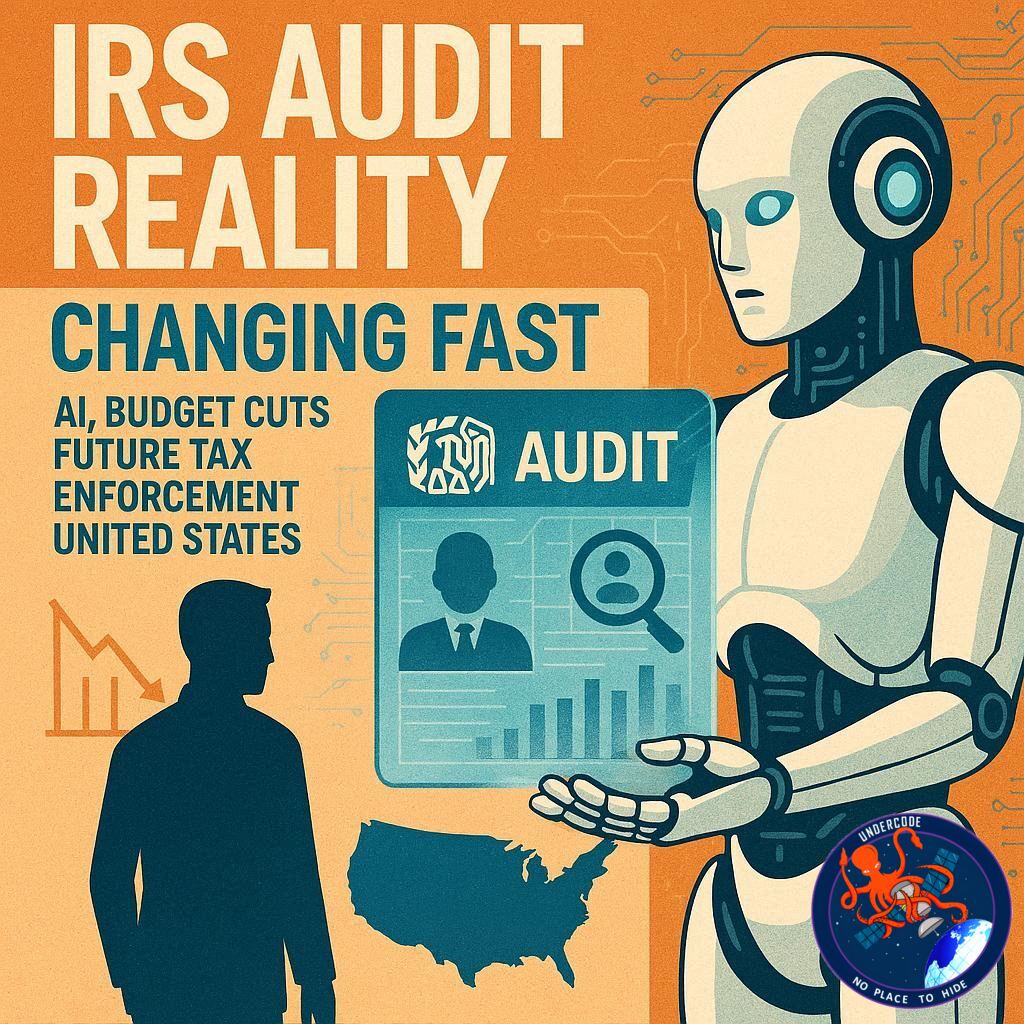 Introduction: A Quiet System That Is Undergoing a Major Shift
For years, the idea of being audited by the IRS has felt like a statistical rarity for most taxpayers. The chances were so low that many filers never seriously considered it as part of their financial planning. However, beneath this calm surface, the internal structure of the IRS is undergoing significant transformation. With shrinking staff, shifting political priorities, and the rapid adoption of artificial intelligence, the enforcement landscape is entering a new phase. While audit rates remain historically low, the tools and strategies used by the IRS are evolving in ways that could reshape future compliance and enforcement.
the Original Audit Rates, AI, and Institutional Change
The IRS has historically audited a very small percentage of taxpayers. In recent years, the overall audit rate has stayed below 1%. For example, in tax year 2021, only about 0.3% of all filers were audited. Even in higher-risk categories, audit rates generally remain below 10%, and in most cases are still under 1%.
However, the internal structure of the IRS has changed significantly in the past year. A large number of experienced employees, including tax examiners and revenue agents, left the agency due to layoffs and resignations. According to a July 2025 report from the Treasury Inspector General for Tax Administration, more than a quarter of enforcement-related staff exited their roles.
At the same time, political decisions have reduced funding that was previously allocated under the Inflation Reduction Act, and further budget cuts have been proposed. These changes have created concerns about the agency’s capacity to maintain effective enforcement.
Despite these challenges, the IRS is investing heavily in modernization and artificial intelligence. According to IRS leadership, AI is being used to detect high-risk tax returns, identify fraud patterns, and improve enforcement efficiency. Officials argue that AI will help the agency better target noncompliance and reduce wasted audits on compliant taxpayers.
Experts, however, remain divided. While AI can improve detection of suspicious tax returns, it still requires experienced human staff to interpret results and conduct actual audits. The departure of experienced personnel raises concerns about whether the agency can effectively act on AI-generated insights.
There is also uncertainty about how AI will evolve in the coming years. Some experts believe that future versions of these systems could dramatically increase the IRS’s ability to detect tax issues, potentially changing audit risk over time. Others warn that without proper oversight and staffing, technological improvements may not translate into better enforcement.
The IRS typically has up to three years to audit a tax return, and in cases involving suspected fraud, this period can be extended further. This means that changes in technology and staffing today could influence audits several years into the future.
What Undercode Say: The Hidden Shift Behind IRS Enforcement
The IRS is entering a transitional phase that is less about current audit numbers and more about future enforcement capability.
On the surface, audit rates are extremely low, giving taxpayers a sense of stability.
But stability in numbers does not reflect stability in infrastructure.
The agency is simultaneously shrinking its experienced workforce while increasing dependence on automation.
This creates a structural imbalance that is rarely visible in public statistics.
AI is being positioned as a solution to enforcement gaps, not just an upgrade.
That distinction matters because replacement is not the same as enhancement.
Human auditors interpret context, intent, and financial nuance.
AI identifies patterns but does not fully understand them.
This means the IRS is moving toward a hybrid model that is not yet mature.
If staffing shortages persist, AI recommendations may outpace the agency’s ability to act on them.
That could create enforcement bottlenecks rather than efficiency gains.
At the same time, political budget reductions reduce the margin for error in modernization efforts.
Less funding means fewer experts to validate AI outputs.
This increases reliance on automated decision-making systems.
The risk is not just false positives, but also missed violations.
Correspondence audits may become more common because they are cheaper to process.
However, complex audits could slow down due to lack of experienced personnel.
This creates a two-tier enforcement system that is uneven in practice.
Taxpayers with simple issues may face faster automated scrutiny.
High-income or complex filers may experience delays or inconsistent review quality.
AI’s effectiveness also depends on data quality, which is not always uniform in IRS systems.
Legacy infrastructure may limit how effectively new tools operate.
In the long term, audit rates may not rise significantly, but audit precision could change.
That means fewer random audits and more targeted enforcement.
However, “targeted” does not always mean “accurate.”
There is also a psychological shift: perceived risk may increase even if actual audit probability remains low.
Tax compliance behavior is often influenced more by perception than statistics.
If AI is perceived as highly capable, voluntary compliance could rise.
But if errors or inconsistencies occur, trust in the system may decline.
Ultimately, the IRS is not just modernizing, it is restructuring how enforcement decisions are made.
The outcome will depend on whether technology and human expertise can be balanced effectively.
Fact Checker Results
Audit rates remain historically below 1% in recent years.
AI is actively being introduced into IRS enforcement systems.
Staff reductions and funding cuts may impact future audit capacity.
Prediction: What Could Happen Next
In the coming years, audit rates are likely to stay low on paper but become more selective in practice.
AI-driven systems will increasingly determine which tax returns are flagged, while human auditors focus on validation and execution.
If staffing shortages continue, correspondence audits may increase while complex audits slow down.
By the late 2020s, the IRS may become more predictive than reactive, relying heavily on pattern recognition rather than manual review.
However, the effectiveness of this system will depend on whether the agency can rebuild enough expert human capacity to match its growing technological ambitions.
🕵️📝✔️Let’s dive deep and fact‑check.
References:
Reported By: edition.cnn.com
Extra Source Hub (Possible Sources for article):
https://www.facebook.com
Wikipedia
OpenAi & Undercode AI
Image Source:
Unsplash
Undercode AI DI v2
Bing
🔐JOIN OUR CYBER WORLD [ CVE News • HackMonitor • UndercodeNews ]
📢 Follow UndercodeNews & Stay Tuned:
𝕏 formerly Twitter 🐦 | @ Threads | 🔗 Linkedin | 🦋BlueSky | 🐘Mastodon


