
Listen to this Post
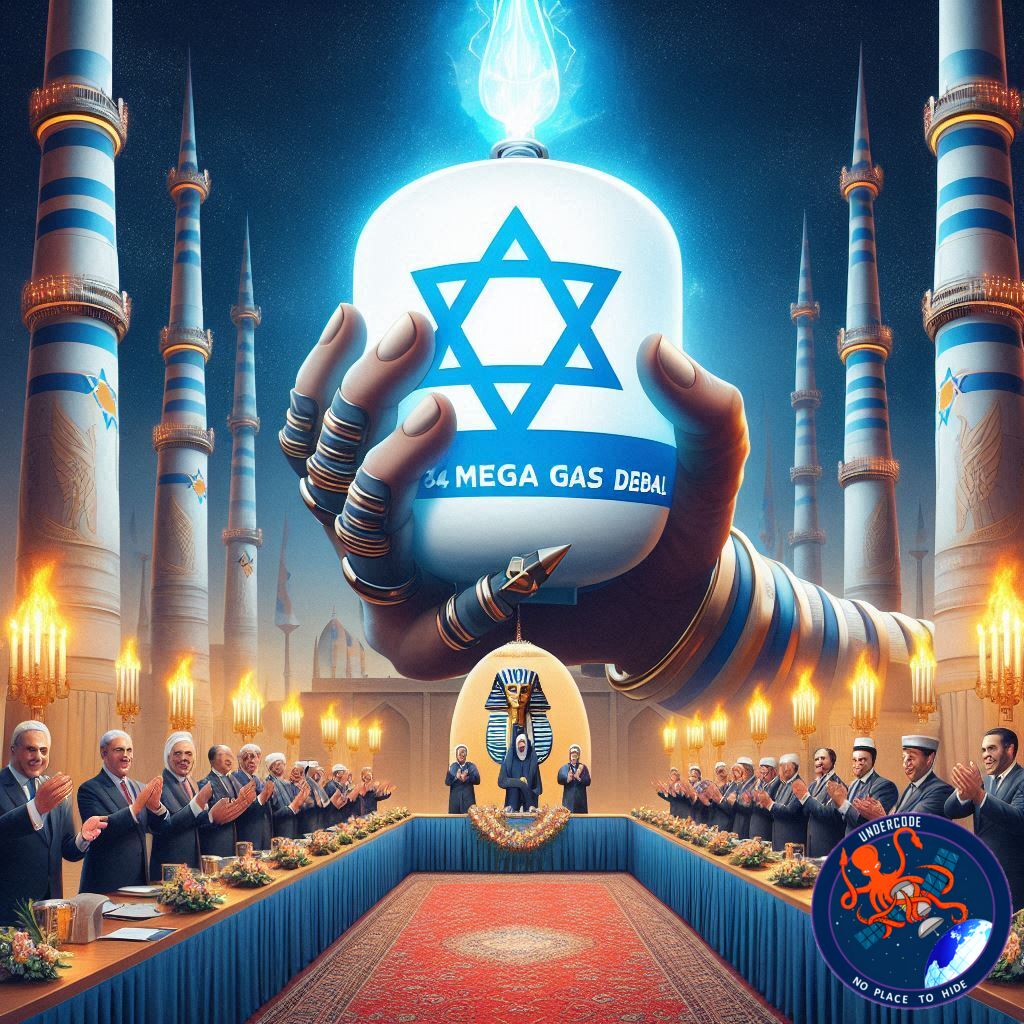
A Landmark Agreement That Reshapes the Middle East’s Energy Landscape
In a historic breakthrough for regional energy cooperation, Israel and Egypt have signed the largest natural gas export deal in Israel’s history — a massive \$35 billion agreement that signals deepening economic ties and shifting geopolitical dynamics in the Eastern Mediterranean. The contract, finalized between Leviathan reservoir partners (Ratio and NeoMed Energy, part of Yitzhak Tshuva’s Delek Group) and Egypt’s Blue Ocean firm, marks a transformative moment not just for both nations, but for global energy markets increasingly focused on reliable natural gas supply chains.
Spanning until 2040, the agreement ensures the export of a staggering 130 billion cubic meters (BCM) of natural gas from Israel’s Leviathan field to Egypt. This export will take place in two distinct phases — the first beginning in 2026 with 20 BCM, and the second phase involving the remaining 110 BCM once crucial infrastructure developments are completed, such as the Leviathan expansion project and the Ramat Hovav–Nitzana pipeline.
This new deal follows and significantly expands upon a 2019 export agreement (worth \$15 billion) that saw Israel begin gas exports to Egypt in 2020. With this new arrangement, Israel will eventually be supplying 12 BCM of gas annually to Egypt, making it a cornerstone in Egypt’s domestic energy strategy.
The expansion of the Leviathan gas field is expected to boost Israel’s annual production capacity by around 30%, reaching approximately 21 BCM per year, thereby satisfying both domestic consumption and export commitments. The agreement was structured carefully to prioritize Israel’s own energy security while leveraging surplus gas for regional export.
What Undercode Say:
This deal is a textbook example of energy diplomacy playing out in real time, with economic logic intersecting with strategic geopolitics. For Israel, this is a validation of its natural gas exploration strategy, which has transformed the nation from a resource-scarce state to a regional energy powerhouse within just over a decade. Leviathan, along with the Tamar field, now positions Israel as a central energy hub in the East Mediterranean.
From Egypt’s standpoint, the deal comes at a critical time. As a country juggling high domestic consumption and ambitions to re-export LNG to Europe, securing consistent and affordable gas supply is vital. Egypt already operates two liquefied natural gas (LNG) export terminals and seeks to become a Mediterranean energy bridge — with Israeli gas helping fulfill this vision.
This deal
Infrastructure is key here. The second phase of exports depends on completion of expansion projects, particularly the Ramat Hovav–Nitzana pipeline, which will create a more direct and scalable route for gas flows. This ensures capacity matches demand and infrastructure meets export volume commitments.
The deal also reflects global energy trends. With the world pivoting away from coal and oil, natural gas is becoming a crucial “bridge fuel” in the transition to renewables. This puts Israel in a highly favorable position as a supplier of cleaner-burning fossil fuels, especially to energy-hungry Europe, which is actively seeking to replace Russian gas sources post-Ukraine invasion.
Critically, this agreement may also encourage more regional collaboration. Cyprus, Lebanon, and even Turkey have shown interest in tapping East Med gas potential. This Leviathan-Egypt agreement could become a model for similar energy deals across borders — both economically beneficial and politically stabilizing.
On the downside, such reliance on fossil fuels could slow down domestic renewable energy efforts if not managed properly. Moreover, expanding fossil fuel infrastructure is a double-edged sword — providing short- to medium-term gains but risking long-term climate goals.
deal is not just a \$35 billion export story — it’s a strategic rebalancing of power and energy in a volatile but resource-rich region.
🔍 Fact Checker Results:
✅ The deal is confirmed as the largest natural gas export agreement in Israeli history, totaling \$35 billion.
✅ The volume and timeline — 130 BCM through 2040, starting in phases — are aligned with statements from Ratio and NeoMed.
✅ Infrastructure elements like the Ramat Hovav–Nitzana pipeline and Leviathan expansion are officially part of the planned rollout.
📊 Prediction:
Expect further energy diplomacy in the East Mediterranean in the next 2–3 years. Cyprus and Lebanon may ramp up exploration, while Egypt could seek similar long-term deals with Cyprus or Libya. European interest in East Med gas will intensify, especially amid ongoing efforts to replace Russian energy. Also, climate and activist pressure will grow louder as fossil infrastructure expands — possibly influencing local policies by 2030.
🕵️📝✔️Let’s dive deep and fact‑check.
References:
Reported By: calcalistechcom_03f21828ef983367279e67ba
Extra Source Hub:
https://www.github.com
Wikipedia
OpenAi & Undercode AI
Image Source:
Unsplash
Undercode AI DI v2
🔐JOIN OUR CYBER WORLD [ CVE News • HackMonitor • UndercodeNews ]
📢 Follow UndercodeNews & Stay Tuned:
𝕏 formerly Twitter 🐦 | @ Threads | 🔗 Linkedin | 🦋BlueSky | 🐘Mastodon


