
Listen to this Post
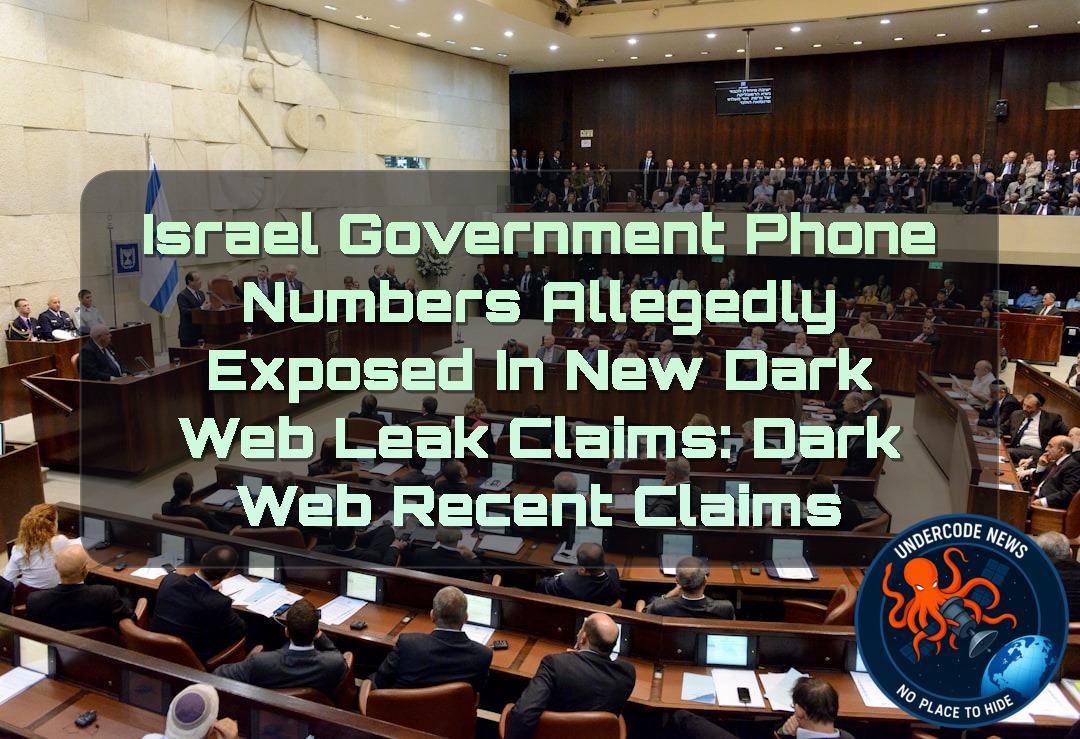 A New Cybersecurity Alarm Raises Questions Over Government Data Exposure
A new cybersecurity claim circulating online has triggered concern after a dark web monitoring account alleged that Israeli government phone numbers were leaked and made available through underground channels. The report, shared by the account Dark Web Intelligence, did not provide publicly verifiable evidence confirming the authenticity, source, or scale of the alleged data exposure.
The claim highlights a growing challenge faced by governments worldwide: even limited leaks of official contact information can create opportunities for phishing campaigns, social engineering attacks, impersonation attempts, and targeted intelligence operations. In an era where phone numbers can become gateways to digital identities, seemingly small datasets may carry significant security implications.
The Original Dark Web Claim and What Is Known So Far
According to a post published on June 22, 2026, Dark Web Intelligence stated that Israeli government phone numbers were allegedly leaked online. The post gained attention among cybersecurity observers, but at the time of reporting there was no independent confirmation from Israeli authorities, cybersecurity researchers, or major threat intelligence organizations.
The wording of the report remains important. The leak is described as an allegation rather than a confirmed breach. Cybersecurity communities frequently monitor underground forums where criminals publish stolen databases, but many claimed leaks turn out to be exaggerated, recycled, incomplete, or fabricated to gain attention.
Why Government Phone Number Leaks Matter
Government phone numbers may appear less sensitive than passwords, classified documents, or financial records, but they can still represent valuable intelligence. Attackers often use contact information as the first step in more advanced operations.
A confirmed exposure could allow threat actors to identify government employees, map internal communication structures, launch convincing phishing attempts, or impersonate officials. In targeted cyber operations, basic information often becomes the foundation for larger attacks.
The Growing Role of Dark Web Monitoring
Dark web intelligence platforms have become an important part of modern cybersecurity awareness. These services continuously scan criminal marketplaces, underground forums, and leaked databases to identify possible exposures before they become widespread.
However, dark web monitoring requires careful analysis. A screenshot, username, or short message claiming a leak does not automatically prove that a breach occurred. Security researchers typically require samples, verification methods, timestamps, and technical evidence before confirming a cyber incident.
Possible Sources Behind the Alleged Leak
If the claim eventually proves accurate, several scenarios could explain how government-related phone numbers became exposed. The information could originate from an external service provider, compromised employee accounts, outdated databases, leaked contact lists, or previous breaches that were repackaged.
Not every leaked dataset represents a direct government intrusion. Attackers often combine information from multiple sources to create collections that appear more valuable than the original data.
The Human Risk Behind Digital Information Exposure
Cybersecurity incidents are not only technical problems. Human behavior remains one of the biggest factors in successful attacks. A leaked phone number can become the starting point for manipulation through fake calls, fraudulent messages, and carefully designed social engineering campaigns.
Officials and organizations must treat communication details as security assets. Modern attackers frequently exploit trust rather than technology alone.
Deep Analysis: Linux Commands for Investigating Potential Data Exposure
Using Linux Tools to Analyze Cybersecurity Evidence
Security analysts often rely on Linux environments because they provide powerful open-source tools for investigating suspicious files, network activity, and leaked information. While a public claim alone does not prove a breach, analysts can use controlled methods to examine available evidence.
Basic File Identification Commands
file suspicious_dataset.txt
This command helps determine the actual file type and can reveal whether a file extension has been manipulated.
Checking File Integrity
sha256sum suspicious_dataset.txt
Hash values allow researchers to compare files and identify whether datasets are identical copies or modified versions.
Searching Data Patterns
grep -i "gov" suspicious_dataset.txt
Security researchers may search for keywords, domains, identifiers, or organization references during controlled analysis.
Extracting Metadata
exiftool suspicious_file
Metadata analysis can reveal information about file creation, modification history, or possible origins.
Reviewing Network Indicators
whois example-domain.com
Analysts use registration information to investigate suspicious infrastructure connected to cyber activity.
Monitoring System Connections
ss -tulpn
This command helps administrators review active listening services and unexpected network connections.
Checking Authentication Logs
sudo journalctl -xe
System logs can help identify unusual access attempts or suspicious activity.
Searching for Indicators of Compromise
grep -R "malicious-string" /var/log/
Security teams often search logs for known indicators associated with attacks.
Building a Defensive Investigation Process
Technical tools are only one part of cyber investigations. Analysts must combine evidence verification, threat intelligence, human review, and responsible reporting before reaching conclusions.
A claim appearing on an underground monitoring channel should be treated as an alert requiring investigation, not immediate proof of compromise.
What Undercode Say:
The alleged Israeli government phone number leak represents another example of how modern cyber conflicts increasingly involve information warfare, reputation attacks, and psychological pressure.
The most important detail in this incident is not simply whether phone numbers appeared online. The bigger question is whether the data is authentic, current, and connected to a real compromise.
Threat actors frequently publish alleged leaks to create fear, attract attention, or increase their reputation inside underground communities.
Government institutions are attractive targets because even basic information can support larger intelligence campaigns.
A phone number can become a bridge between digital and physical targeting.
Attackers may use exposed numbers for impersonation, fake emergency communications, identity manipulation, or attempts to gain access to protected systems.
The cybersecurity industry has repeatedly shown that attackers rarely begin with highly advanced techniques.
Many successful campaigns start with publicly available information combined with human manipulation.
If the reported information is genuine, Israeli agencies would likely focus on assessing whether affected numbers belong to active personnel, public offices, contractors, or outdated databases.
The response would likely include monitoring suspicious communications, warning employees, and reviewing access controls.
However, if the claim is false or exaggerated, it demonstrates another challenge: misinformation within cyber threat reporting.
The dark web contains both real criminal activity and fabricated claims designed to influence public perception.
Security researchers must maintain a balance between awareness and verification.
Publishing every underground claim as confirmed can create unnecessary panic and damage trust.
Ignoring such claims completely can also create security risks.
The correct approach is investigation, evidence collection, and measured communication.
Governments worldwide face similar problems because communication data is increasingly valuable.
Phone numbers, email addresses, employee directories, and organizational structures are becoming intelligence assets.
Cybersecurity is no longer only about protecting servers and networks.
It is also about protecting information relationships.
The connection between people, devices, and organizations creates a large attack surface.
Future cyber conflicts will likely involve more attempts to expose personal and administrative information.
Artificial intelligence may increase the effectiveness of these operations by helping attackers create more convincing messages.
Organizations must strengthen employee awareness, identity protection, and monitoring systems.
Multi-factor authentication, secure communication platforms, and continuous threat intelligence will remain essential.
The alleged leak should serve as a reminder that small pieces of information can have strategic value.
Whether confirmed or not, the incident reflects the continuing importance of cyber vigilance.
Digital exposure often begins quietly before becoming a major security event.
Prepared organizations are those that investigate early and respond carefully.
✅ The post claiming Israeli government phone numbers were leaked exists as an online cybersecurity claim.
The available information indicates the report originated from a dark web monitoring account, but the claim itself requires independent verification.
❌ There is currently no confirmed public evidence proving that a successful breach of Israeli government systems occurred.
No official confirmation or technical validation has been provided with the claim.
✅ Dark web leak claims require verification before being classified as genuine cyber incidents.
Cybersecurity researchers commonly examine samples, origins, and technical indicators before confirming exposure.
Prediction
(+1) Governments will continue increasing investment in dark web monitoring, threat intelligence, and employee-focused cybersecurity training as information leaks become more common.
(+1) Security teams may improve protection of contact databases because attackers increasingly use basic information for advanced social engineering campaigns.
(+1) More organizations will adopt automated monitoring systems capable of detecting leaked credentials and sensitive information earlier.
(-1) False or exaggerated dark web claims will continue spreading and may create confusion between real cyber incidents and online misinformation.
(-1) Attackers may continue targeting communication information because phone numbers and identity details remain powerful tools for manipulation.
(-1) Public trust could suffer if organizations fail to communicate clearly during alleged cyber incidents.
▶️ Related Video (76% Match):
🕵️📝Let’s dive deep and fact‑check.
🎓 Live Courses & Certifications:
Join Undercode Academy for Verified Certifications
🚀 Request a Custom Project:
Secure, high-velocity infrastructure and disruptive technological engineering. Contact our engineering team for high-tier development and proprietary systems:
[email protected]
💎 Smart Architecture | 🛡️ Secure by Design | ⭐ Trusted by Thousands
References:
Reported By: x.com
Extra Source Hub (Possible Sources for article):
https://www.instagram.com
Wikipedia
OpenAi & Undercode AI
Image Source:
Unsplash
Undercode AI DI v2
🔐JOIN OUR CYBER WORLD [ CVE News • HackMonitor • UndercodeNews ]
📢 Follow UndercodeNews & Stay Tuned:
𝕏 formerly Twitter 🐦 | @ Threads | 🔗 Linkedin | 🦋BlueSky | 🐘Mastodon | 📺Youtube


