
Listen to this Post
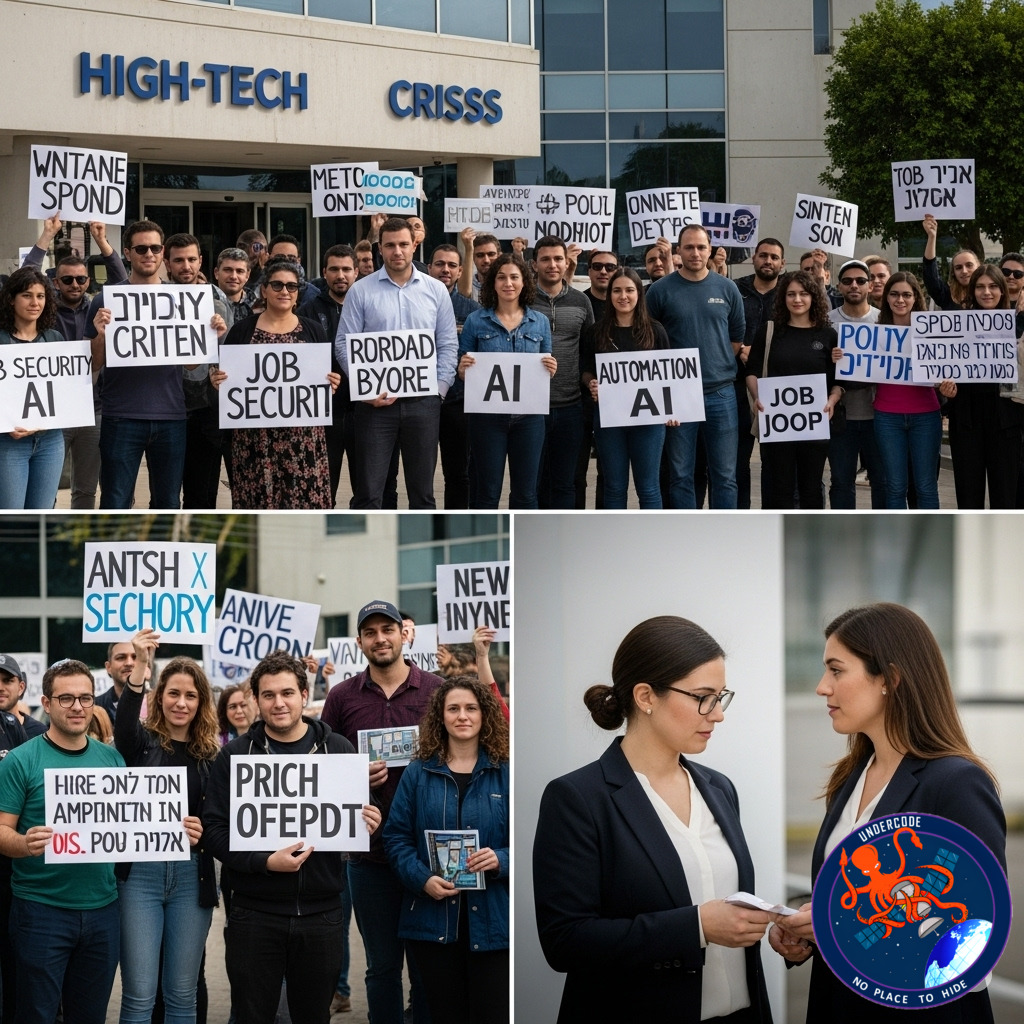
A Nation at the Crossroads of Innovation and Unemployment
Israel’s high-tech industry, long hailed as the engine of its economy and innovation, is facing an unprecedented employment crisis. Despite record capital inflows and rising GDP, the country’s once-booming sector is shedding experienced talent at a shocking rate. This paradox—of more funding but fewer jobs—is sending tremors through the ecosystem that once symbolized Israel’s startup dominance.
This special report, originally crafted by CTech and Calcalist, unveils alarming data and critical insights into how productivity pressures, AI disruption, and shifting employer priorities are redefining the very structure of Israel’s tech workforce.
💥 Summary: The Great Tech Displacement Unfolding in Israel
A detailed review of employment trends in Israel’s high-tech sector shows a dramatic rise in layoffs and job seekers, particularly among seasoned professionals. Between January 2019 and April 2025, the number of unemployed tech workers jumped 112%, from 7,000 to almost 15,000—while non-tech job seekers declined by 4%. The largest surge was among professionals aged 36–45, contradicting the belief that junior workers are the most affected.
Key technical roles such as software developers, network engineers, and database administrators saw a spike in unemployment, with the number of job seekers in these fields rising by 147% to 223%. Notably, nearly 40% of unemployed workers now come from the high-salary bracket (₪25,600–₪43,800/month), up from 15% just three years ago.
This is not a result of voluntary exits. Layoffs increased 2.5 times between Q1 2022 and Q1 2025, shifting the market from employee-favorable to employer-dominated. In 2019, each job seeker had 1.6 openings to choose from. By 2025, that figure dropped below 1—only 0.9 openings per person. This dissonance deepens as overall tech employment still rose 22.5%, illustrating a growing productivity-per-worker trend instead of hiring expansion.
Startups and giants alike are prioritizing lean, AI-optimized teams. Where growth once meant hiring, success now looks like achieving more with fewer people. The once-glorified image of a 50-person tech team is being replaced by the dream of a “one-person unicorn.”
Contributing factors include global layoffs from companies with Israeli R\&D centers, over-expansion during VC-fueled boom years, and burnout-related exits—exacerbated by prolonged reserve duty obligations due to geopolitical instability. While the defense sector is absorbing some displaced talent, this may only offer a temporary cushion. A downturn in defense demand could trigger another wave of layoffs.
Adding insult to injury, hiring processes have become increasingly off-putting, especially for experienced professionals. Companies are losing top candidates due to time-consuming, unpaid assignments required as part of interviews. Many view this trend as exploitative and disrespectful, potentially tarnishing company reputations and pushing skilled professionals further from the labor market.
Attorney Inbal Meshesh, head of Israel’s Employment Service, underscores that these laid-off professionals represent a critical national resource that must be protected and re-engaged before Israel’s innovation edge is permanently dulled.
🧠 What Undercode Say:
Israel’s high-tech employment crisis is not just another industry hiccup—it’s a red flag signaling structural transformation. For years, the startup ecosystem here was fueled by aggressive hiring, VC abundance, and a culture of hustle. But the rise of AI has flipped the equation. Companies are no longer scaling through people; they’re scaling through machines.
From an economic perspective, Israel’s dilemma is eerily similar to that of the U.S. Rust Belt in the 1980s: technological evolution outpacing employment adaptation. What’s different today is speed—AI is replacing skilled labor far faster than governments and institutions can retrain or reallocate. The fact that core professionals, many of them in their peak productive years (36–45), are now jobless highlights just how fast the tide has turned.
The 112% surge in high-tech unemployment, coupled with a drop in job openings, paints a clear picture: the Israeli tech bubble hasn’t popped, but it has condensed—into a tighter, leaner circle of AI-augmented, investor-efficient operations. This will widen the digital class divide. The middle-class tech engineer, once the symbol of Israeli economic upward mobility, is now at risk of becoming obsolete without rapid intervention.
Companies prioritizing AI output over human contribution are also reshaping corporate culture. Hiring practices have become dehumanizing, with time-consuming take-home assignments that screen out not just underqualified candidates but top-tier ones who don’t have the time—or patience—to work for free. In a labor-surplus market, this might seem logical, but it risks alienating the very people who could revitalize struggling teams.
On the geopolitical front, Israel’s ongoing security crisis and reliance on reserve troops is draining talent. Extended absences, emotional fatigue, and an uncertain future are pushing skilled workers to early retirement or emigration.
And while defense contractors are providing a stopgap, this is far from a sustainable fix. The minute demand slows, the defense sector could shed thousands, creating a second wave of shock. Meanwhile, GDP growth remains strong—another illusion of stability fueled by AI-driven efficiency, not actual human employment.
Israel’s tech sector needs more than capital. It needs a renewed social contract between talent, companies, and the state. Public-private reskilling programs, hiring reform, AI ethics frameworks, and greater incentives for junior roles are no longer optional—they’re urgent. Because without its people, even the Startup Nation can become obsolete.
🔍 Fact Checker Results:
✅ Verified: High-tech job seekers in Israel more than doubled from 2019 to 2025.
✅ Verified: AI-driven productivity has replaced traditional employee growth models.
❌ Misleading: GDP growth is healthy—it masks a deeply unhealthy employment structure.
📊 Prediction: Tech Will Recover, But Fewer Will Be Invited In
In the next 3–5 years, Israel’s high-tech sector will rebound financially, bolstered by AI breakthroughs, cybersecurity exports, and defense innovation. However, this growth will benefit fewer people. Entry-level roles and generalist positions will continue to shrink, while niche AI, quantum computing, and defense-integrated tech will dominate.
Veteran professionals may be forced to upskill or shift into adjacent industries (education, biotech, climate tech). The talent pyramid will become more top-heavy, and unless government policy actively intervenes, the tech industry risks becoming an exclusive club—profitable but disconnected from the society it once uplifted.
References:
Reported By: calcalistechcom_ee4e47bbdc7161d169f04ef8
Extra Source Hub:
https://www.medium.com
Wikipedia
OpenAi & Undercode AI
Image Source:
Unsplash
Undercode AI DI v2


