
Listen to this Post
A Strategic Push to Build the Future of Innovation
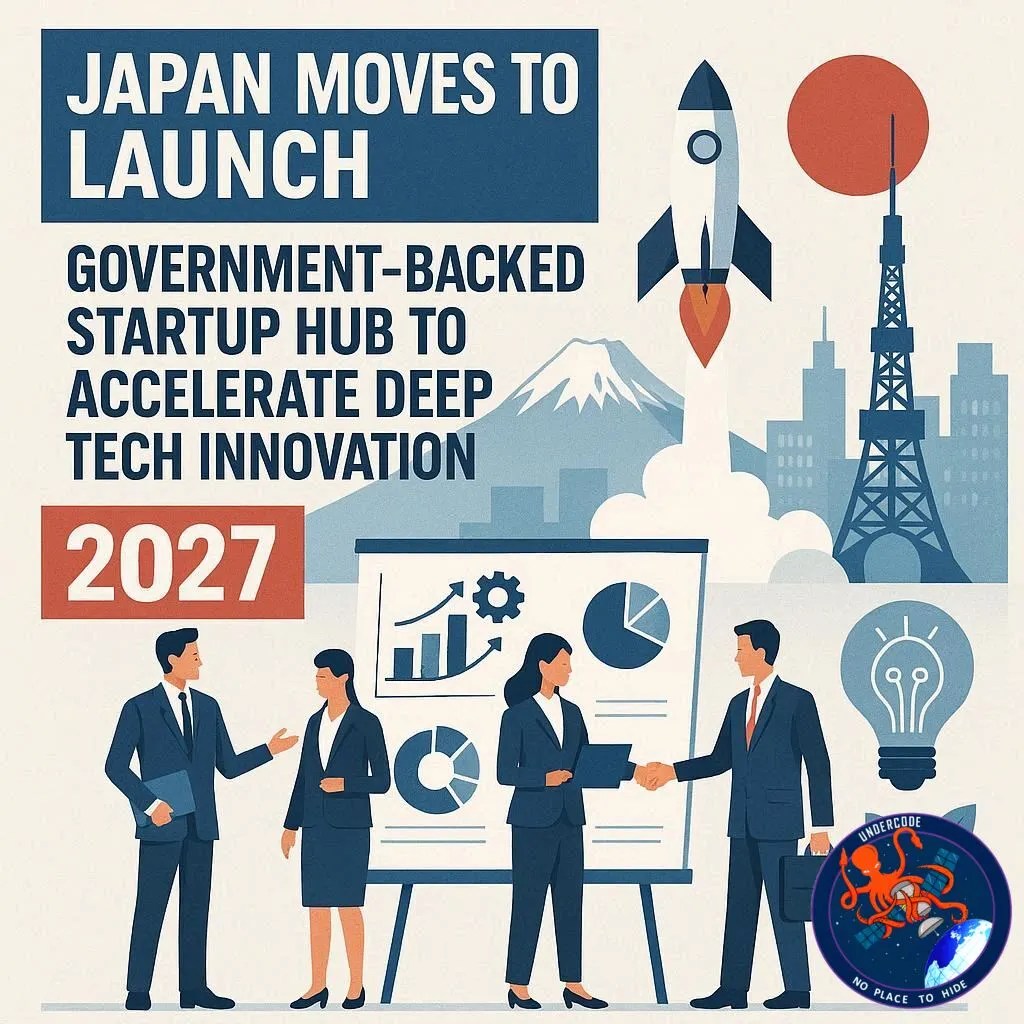
Japan is taking a decisive step toward strengthening its startup ecosystem with a bold new legislative move. On March 31, the government approved a bill to revise the “Act on Strengthening the Creation of Science, Technology, and Innovation.” At the heart of this revision lies a transformative idea: establishing an authorized corporation dedicated to supporting startups, particularly those working in cutting-edge “deep tech” fields such as artificial intelligence and semiconductors.
The proposed bill, expected to be submitted during the current parliamentary session, reflects a growing urgency within Japan to remain competitive in a rapidly evolving global innovation race. With the rise of AI-driven economies and semiconductor dominance shaping geopolitical influence, Japan is positioning itself to nurture homegrown innovators and entrepreneurs capable of leading the next technological wave.
Government-Driven Ecosystem for Deep Tech Growth
The centerpiece of this initiative is the creation of a government-approved organization tasked with building and managing a central innovation hub in Tokyo. This hub will serve as a convergence point for universities, research institutions, startups, and venture capital firms. By bringing these key players together in one physical and collaborative space, the government aims to eliminate fragmentation and accelerate the commercialization of advanced technologies.
This organization is expected to begin operations by fiscal year 2027. Its responsibilities will go beyond infrastructure development, extending into talent cultivation, research support, and fostering meaningful collaboration between academia and industry. The vision is clear: create an environment where ideas can move seamlessly from research labs to real-world applications.
Integration Under the Global Startup Campus Vision
This initiative is not an isolated policy but part of a broader national strategy known as the Global Startup Campus (GSC). Through this framework, Japan seeks to transform itself into a global hub for innovation by attracting talent, capital, and groundbreaking ideas from around the world. The legal reform serves as a foundational step in enabling this vision, ensuring that the institutional support needed for startups is both robust and sustainable.
By focusing on deep tech sectors, the government is targeting industries that require significant research investment and long development cycles but promise high-impact outcomes. These include AI, quantum computing, biotechnology, and next-generation semiconductors—fields that define technological leadership in the 21st century.
Bridging Academia, Capital, and Entrepreneurship
A critical challenge in many innovation ecosystems is the disconnect between academic research and commercial application. Japan’s new initiative directly addresses this issue by promoting interaction and joint research between scientists and business professionals. The planned hub will actively encourage networking, partnerships, and knowledge exchange, ensuring that breakthroughs in laboratories do not remain confined to academic papers.
Additionally, venture capital firms will play a key role within this ecosystem, providing the financial backing necessary to scale promising ideas into viable businesses. By embedding investors within the same environment as researchers and entrepreneurs, the government hopes to create a dynamic feedback loop that accelerates decision-making and innovation.
Long-Term Vision for Economic Revitalization
Beyond technological advancement, this policy carries significant economic implications. Japan has faced challenges in fostering globally competitive startups compared to ecosystems like Silicon Valley. By investing in infrastructure, talent, and institutional support, the government is signaling a long-term commitment to economic revitalization through innovation.
The establishment of this authorized corporation represents more than administrative reform; it is a structural shift aimed at redefining how innovation is cultivated in Japan. If successful, it could serve as a model for other nations seeking to strengthen their startup ecosystems through coordinated public-private collaboration.
What Undercode Say:
Japan’s move is not just policy, it is a strategic correction of a long-standing weakness. For years, the country has been known for its strong research output but relatively weak startup commercialization. The gap between invention and market execution has allowed other nations to dominate sectors that Japan once led. This new initiative appears designed to close that gap with precision.
The focus on deep tech is particularly telling. Unlike consumer startups that can scale quickly, deep tech ventures require patience, capital, and a highly specialized talent pool. Governments often hesitate to invest heavily in such sectors due to the long return cycles. Japan, however, is signaling a willingness to play the long game, recognizing that control over foundational technologies like AI and semiconductors determines future economic power.
Another important angle is geographic centralization. By creating a physical hub in Tokyo, the government is essentially attempting to replicate the density advantage seen in places like Silicon Valley. Innovation thrives in proximity. When researchers, investors, and entrepreneurs share the same space, ideas evolve faster, partnerships form organically, and execution accelerates. This is not just about infrastructure; it is about engineering serendipity.
However, there are risks. Government-led innovation ecosystems often struggle with bureaucracy and slow decision-making. The success of this initiative will depend heavily on how independently and efficiently the authorized corporation operates. If it becomes overly regulated or politically constrained, it could stifle the very innovation it aims to promote.
The integration of venture capital into the ecosystem is a strong positive signal. Japan has historically had a more conservative investment culture, with lower risk tolerance compared to the United States. Embedding VC firms directly into the innovation hub could gradually shift this mindset, encouraging more aggressive investment strategies and higher-risk, higher-reward ventures.
Talent will be another critical factor. Japan faces demographic challenges, including an aging population and a shrinking workforce. To truly compete globally, the country will need to attract international talent and create an environment that appeals to foreign entrepreneurs and researchers. This means not only financial incentives but also cultural and regulatory openness.
The Global Startup Campus concept adds an international dimension to the strategy. It suggests that Japan is not just looking inward but aiming to position itself as a global destination for innovation. If executed well, this could lead to increased foreign investment, cross-border collaborations, and a stronger global presence for Japanese startups.
Ultimately, this initiative reflects a broader shift in how governments view their role in innovation. Rather than acting as passive regulators, they are becoming active participants and facilitators. Japan’s approach combines policy, infrastructure, and ecosystem design into a single coordinated effort. The real test will be execution, because in the world of startups, speed and adaptability often matter more than planning.
🔍 Fact Checker Results
✅ Japan’s government did approve a bill to revise the science and innovation law to support startups.
✅ The initiative includes establishing a centralized hub in Tokyo by around 2027.
❌ No guarantee exists yet that the project will successfully replicate Silicon Valley–level outcomes.
📊 Prediction
🚀 Japan will gradually emerge as a stronger player in deep tech startups, especially in AI and semiconductors.
📈 Increased collaboration between academia and industry will lead to more commercialized research breakthroughs.
🌍 If global talent is successfully attracted, Japan could become a competitive international innovation hub by the early 2030s.
🕵️📝✔️Let’s dive deep and fact‑check.
References:
Reported By: xtechnikkeicom_03c4f0d13b102a8e752d6e57
Extra Source Hub (Possible Sources for article):
https://www.pinterest.com
Wikipedia
OpenAi & Undercode AI
Image Source:
Unsplash
Undercode AI DI v2
Bing
🔐JOIN OUR CYBER WORLD [ CVE News • HackMonitor • UndercodeNews ]
📢 Follow UndercodeNews & Stay Tuned:
𝕏 formerly Twitter 🐦 | @ Threads | 🔗 Linkedin | 🦋BlueSky | 🐘Mastodon


