
Listen to this Post
Introduction: A Growing Safety Risk Hidden in Everyday Waste
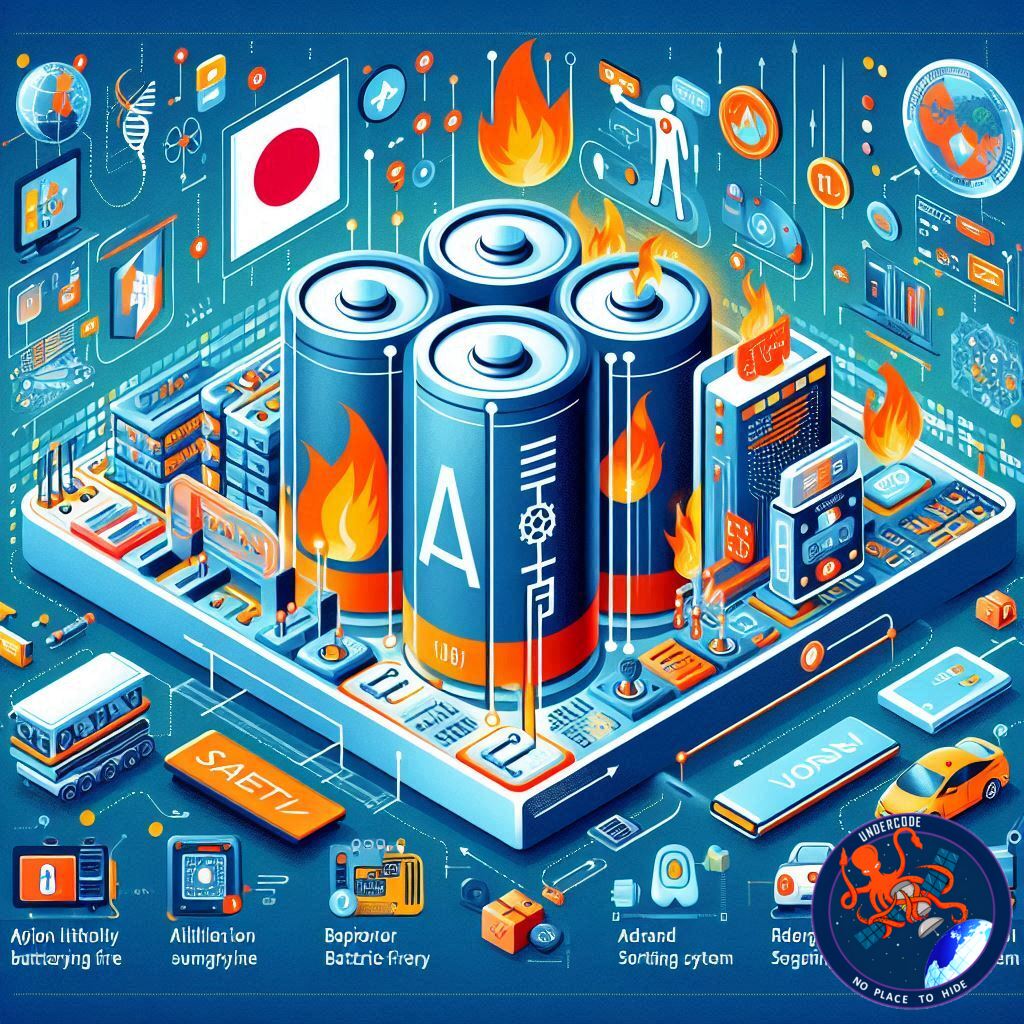
Lithium-ion batteries power modern life, from smartphones and laptops to electric tools and portable chargers. Yet once discarded, these same batteries have become a serious safety threat. Fires caused by improperly disposed lithium-ion batteries are increasing across Japan, especially inside waste treatment facilities where batteries are crushed, compacted, or exposed to heat. Recognizing the urgency of the issue, the Japanese government has announced a comprehensive policy package designed to prevent fires, strengthen recycling systems, and improve public awareness. The initiative combines financial support, advanced technology, regulatory transparency, and inter-ministerial coordination, signaling a decisive shift from reactive damage control to long-term prevention.
Government Unveils Fire Prevention Package for Lithium-Ion Battery Disposal
On the 23rd, the Japanese government officially released a policy package aimed at preventing fires caused by discarded lithium-ion batteries. The plan focuses on strengthening disposal and recycling infrastructure while reducing the risk of ignition at waste processing facilities. A key pillar of the initiative is the introduction of subsidies within fiscal year 2025 to support private waste treatment operators.
These subsidies will help facilities install advanced sorting equipment capable of detecting lithium-ion batteries mixed in with general waste. The technology includes artificial intelligence systems and X-ray scanning devices designed to identify batteries before they enter crushing or incineration processes. By intercepting hazardous items early, the government aims to drastically reduce fire incidents.
The announcement was made by Environment Minister Hirotaka Ishihara during a press conference following a cabinet meeting. The policy package sets an ambitious national target: by 2030, Japan aims to reduce serious fires caused by lithium-ion batteries to zero. Alongside fire prevention, the government also seeks to establish a stable domestic recycling framework for these batteries.
Funding for the subsidy program has already been allocated in the fiscal year 2025 supplementary budget, although operational details are still being finalized. In addition to private-sector support, the government will assist municipalities and prefectures in jointly developing dedicated battery collection hubs. These coordinated efforts are expected to standardize collection practices and reduce improper disposal at the local level.
The package also includes a nationwide survey to examine how deteriorated and swollen lithium-ion batteries are currently being handled. Such batteries pose an especially high risk of ignition, and the lack of consistent disposal methods has been a persistent concern.
Beyond infrastructure, the government is tightening oversight of manufacturers and sellers. Authorities have begun publicly naming businesses that produce or distribute potentially unsafe battery-equipped products and cannot be contacted for follow-up or recalls. Public awareness campaigns will also be expanded, informing citizens about safe usage practices, recall notices, and proper disposal of products such as mobile batteries.
Data shows that both lithium-ion battery ignition incidents and fires at waste processing facilities are on the rise. In response, five government bodies, the Ministry of the Environment, the Ministry of Economy, Trade and Industry, the Fire and Disaster Management Agency, the Ministry of Land, Infrastructure, Transport and Tourism, and the Consumer Affairs Agency, have held joint coordination meetings since October to develop countermeasures.
Lithium-ion batteries contain not only lithium but also cobalt, nickel, and other strategically important minerals. Promoting recycling therefore carries economic security benefits, reducing dependence on foreign supply chains while supporting resource circulation.
The initiative also aligns with broader sustainability goals. The Sustainable Development Goals, adopted unanimously by the United Nations in September 2015, emphasize responsible consumption, waste reduction, and climate-conscious industrial systems. Government and private-sector actions related to battery safety and recycling directly support these global objectives.
What Undercode Say:
Japan’s approach reflects a critical evolution in how advanced economies must manage energy storage technologies. Lithium-ion batteries are no longer niche products; they are embedded in daily life, logistics, healthcare, and national infrastructure. Treating their disposal as a secondary concern has proven costly, both financially and in terms of public safety.
The decision to subsidize AI and X-ray sorting systems is particularly significant. Traditional waste sorting methods rely heavily on manual inspection or basic mechanical separation, neither of which is reliable for detecting small, damaged, or concealed batteries. By introducing intelligent detection systems, the government is effectively shifting risk management upstream, preventing accidents before they occur rather than responding after facilities catch fire.
Equally important is the emphasis on municipal collaboration. Fragmented collection systems have long been a weakness in battery disposal. When residents are unsure how or where to discard batteries, improper disposal becomes inevitable. Shared regional collection hubs offer economies of scale and clearer public guidance, reducing confusion and operational inefficiencies.
The inclusion of a survey on swollen and degraded batteries signals policy maturity. These batteries represent a hidden danger, often stored at home for long periods before disposal. Without standardized handling protocols, even well-intentioned consumers and waste operators face elevated risk.
From an economic standpoint, recycling lithium-ion batteries is no longer optional. Cobalt, nickel, and lithium are critical to industrial competitiveness, electric vehicle production, and energy transition strategies. Establishing a domestic recycling loop strengthens supply chain resilience and reduces exposure to geopolitical volatility.
Publicly naming unreachable manufacturers also marks a shift toward accountability. In a market flooded with low-cost battery products, many sold online with minimal traceability, enforcement has lagged behind technological growth. Transparency pressures manufacturers to improve safety standards and post-sale responsibility.
This policy package positions Japan as a case study in balancing technological dependence with risk governance. Fire prevention, resource security, and consumer education are being treated as interconnected issues rather than isolated problems. If implementation matches intent, the initiative could become a blueprint for other countries facing similar battery-related hazards.
Fact Checker Results
The subsidy plan for AI and X-ray sorting equipment is officially backed by the fiscal year 2025 supplementary budget ✅
The national target aims for zero serious lithium-ion battery fire incidents by 2030 ✅
Rising fire incidents at waste facilities have been confirmed by multiple government agencies ❌
Prediction
Battery disposal regulations will tighten further as electric vehicle adoption increases 📊
AI-based waste sorting will become standard infrastructure rather than optional safety upgrades 📊
Domestic battery recycling will emerge as a core pillar of Japan’s economic security strategy 📊
▶️ Related Video (82% Match):
🕵️📝✔️Let’s dive deep and fact‑check.
References:
Reported By: xtechnikkeicom_336c72d2a26de1742216d447
Extra Source Hub (Possible Sources for article):
https://www.instagram.com
Wikipedia
OpenAi & Undercode AI
Image Source:
Unsplash
Undercode AI DI v2
Bing
🔐JOIN OUR CYBER WORLD [ CVE News • HackMonitor • UndercodeNews ]
📢 Follow UndercodeNews & Stay Tuned:
𝕏 formerly Twitter 🐦 | @ Threads | 🔗 Linkedin | 🦋BlueSky | 🐘Mastodon


