
Listen to this Post
Introduction
In recent years, Japan has faced a growing threat from an unwelcome intruder: the red imported fire ant, or Solenopsis invicta, known for its aggressive behavior and painful stings. Since its first appearance in 2017, sightings of the invasive species have increased, raising concerns about its potential to establish itself in Japan’s ecosystem. Now, in an unprecedented move, Japanese researchers are taking the battle indoors—by breeding the enemy. This unique approach aims to uncover the species’ weaknesses through controlled experiments, with a combination of traditional research and advanced artificial intelligence (AI) tools. The goal? To prevent the species from taking root in Japan permanently.
the Original
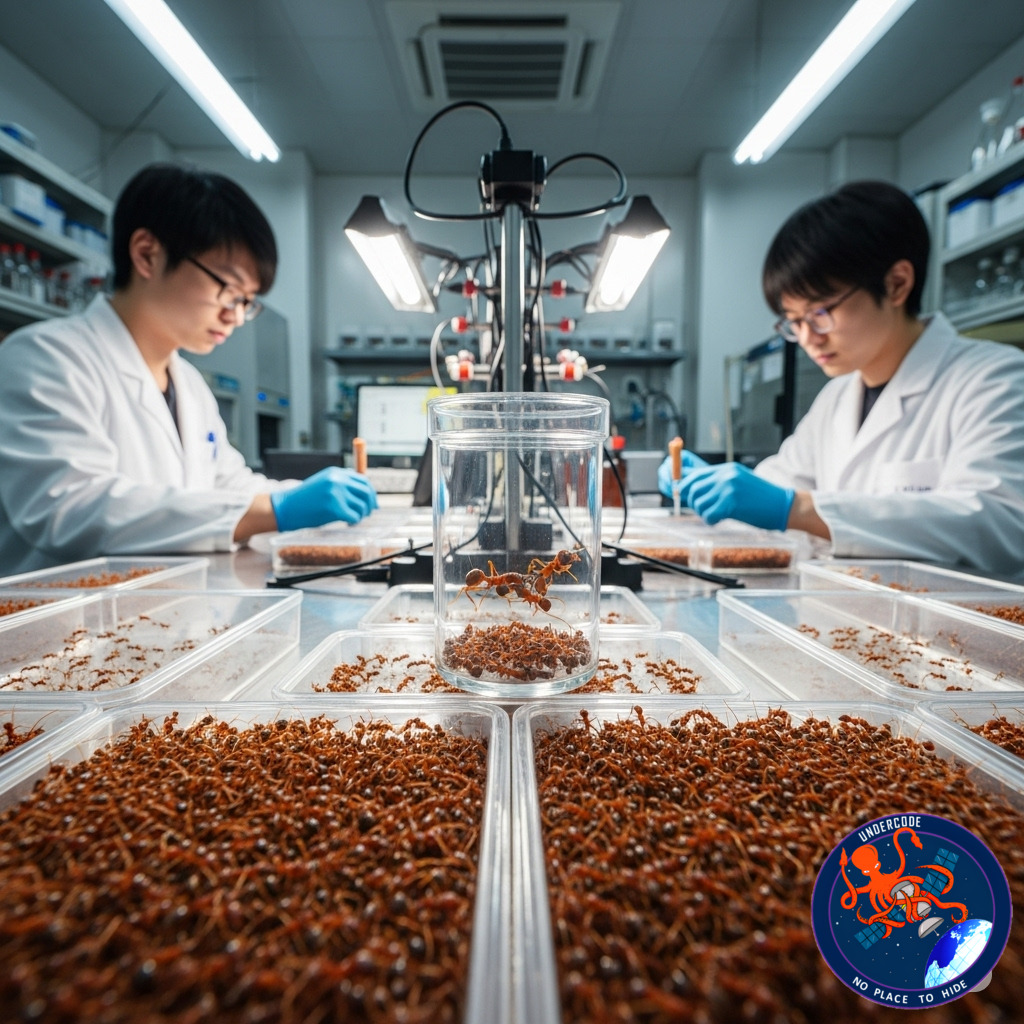
Since March, Japan’s National Institute for Environmental Studies has begun the country’s first experimental breeding of red imported fire ants (referred to as “hi-ari” in Japanese). The project, located in Tsukuba, Ibaraki Prefecture, involves housing five boxes containing 2,000 ants each. This carefully controlled environment allows researchers to study the ants’ biology, behavior, and vulnerabilities in detail.
The fire ant, known for its venomous sting, was first detected in Japan in 2017. Since then, authorities have recorded 14 sightings in the current fiscal year alone. These ants pose a significant threat not just to ecosystems but also to human safety and economic stability, especially around ports and logistics centers where they are often inadvertently imported via containers.
Led by senior researcher Hironori Sakamoto, the team is not only manually observing the ants’ lifecycle and colony behavior but is also utilizing AI to analyze data patterns. This could help develop predictive models and treatment strategies, particularly in identifying chemicals effective in extermination at early stages.
The experiments aim to enhance Japan’s “border defense” strategies, focusing on preventing the fire ants’ establishment within the country rather than responding after the fact. By observing how ants react to various chemicals and environmental stimuli, researchers hope to pinpoint an effective method of containment or eradication.
What Undercode Say:
Japan’s approach to tackling the red imported fire ant threat is refreshingly proactive and innovative, particularly for a country often cautious in its handling of invasive species. The decision to breed a dangerous pest species may seem counterintuitive at first glance, but it reflects a deep strategic understanding: knowing your enemy is key to defeating it.
By recreating ant colonies in a controlled lab environment, researchers can bypass the unpredictability of field studies and focus on accelerated learning. They can simulate multiple environmental conditions, test chemical responses, and gather real-time data across generations of ants—all in isolation from Japan’s natural ecosystems.
The use of AI in this experiment is especially notable. With AI’s pattern recognition capabilities, scientists can detect behavioral anomalies, identify weak points in colony structure, and even predict infestation pathways based on logistics and climate data. This tech-assisted surveillance, combined with hands-on entomological work, could set a precedent for future pest control worldwide.
Another important aspect is Japan’s emphasis on preventing establishment, rather than simply mitigating the aftermath. Globally, once fire ants establish a presence, they are nearly impossible to eradicate completely. Australia, the U.S., and China have all experienced the long-term economic and ecological damage that follows fire ant invasions. Japan, through this experiment, is choosing to act before the problem becomes endemic.
From an environmental ethics perspective, controlled breeding raises questions, particularly around accidental release or cross-contamination. However, Japan’s meticulous approach to biosafety protocols and containment facilities minimizes these risks. What’s more, the data collected can inform international strategies, adding to the global body of knowledge on invasive species management.
This project also signals a shift in Japanese research culture—an openness to AI integration and interdisciplinary collaboration. It’s not just a battle between human and insect, but a multi-layered war fought with science, algorithms, and foresight.
The stakes are high. If fire ants manage to establish themselves, the cost of control could skyrocket into billions. Their impact on agriculture, biodiversity, and public health would be severe. Japan’s current strategy, if successful, could become a global template for preemptive pest management.
🔍 Fact Checker Results
✅ Red imported fire ants were first discovered in Japan in 2017
✅ 14 cases have been reported in the current fiscal year
✅ Japan is using AI in conjunction with breeding studies to understand fire ant vulnerabilities
📊 Prediction
If Japan’s controlled breeding experiment continues successfully, it is likely that within 1–2 years, the country will develop targeted pesticides or biological control measures tailored specifically for fire ants. Moreover, the AI-backed analysis may lead to early-warning systems at major ports, drastically improving detection before ants ever leave their containers. As a result, Japan could set the gold standard for global fire ant management strategies.
References:
Reported By: xtechnikkeicom_8f63f9ac6c8f461cebed5578
Extra Source Hub:
https://www.stackexchange.com
Wikipedia
OpenAi & Undercode AI
Image Source:
Unsplash
Undercode AI DI v2


