
Listen to this Post
Introduction: A New Wave of Cyber Threats Targeting Governments
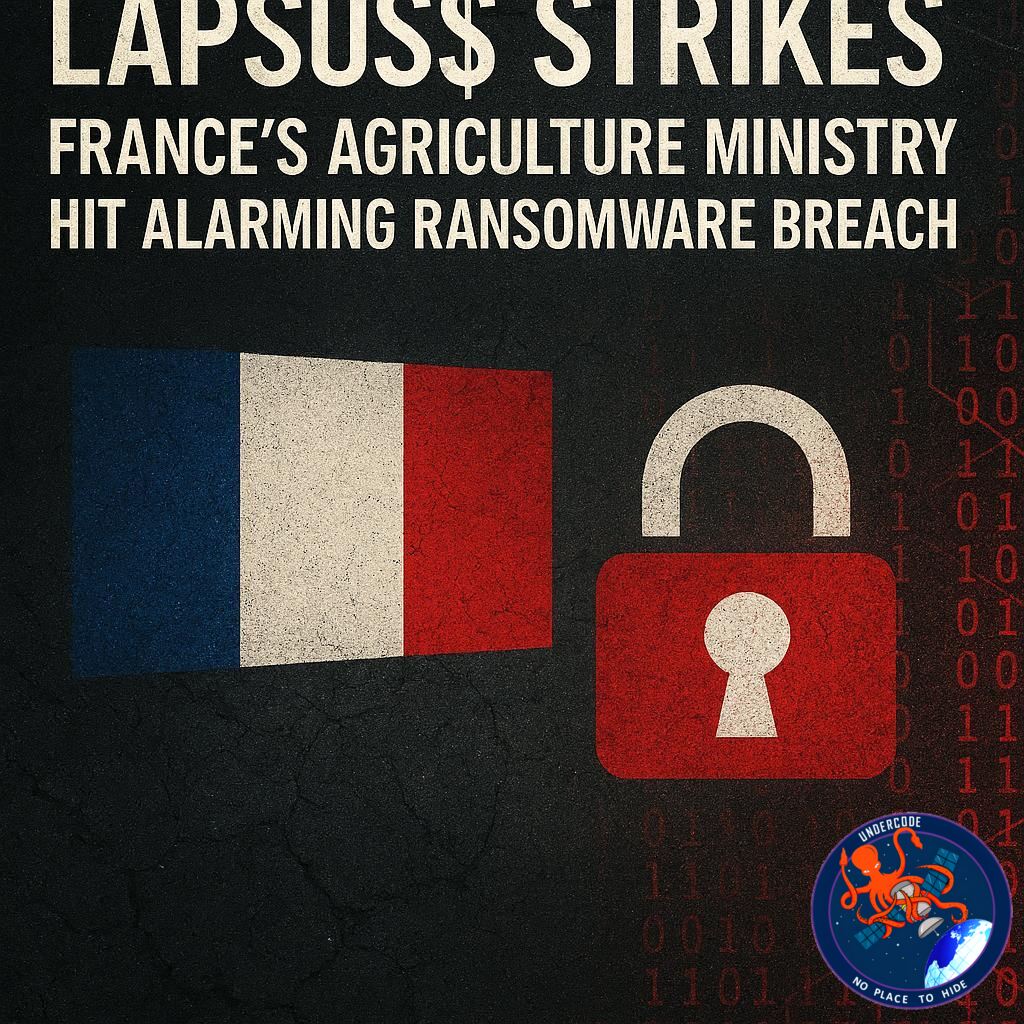
A fresh cybersecurity scare has emerged in Europe as the notorious hacking collective Lapsus$ reportedly launched a ransomware attack against France’s Ministry of Agriculture. The incident underscores a growing pattern of sophisticated cyberattacks aimed at government institutions, where sensitive data and critical systems are prime targets. While investigations are still ongoing, early reports suggest that internal systems may have been encrypted and confidential data potentially exfiltrated. This breach not only raises concerns about operational disruption but also highlights the evolving tactics of modern cybercriminal organizations.
the Incident: What Happened and Why It Matters
The ransomware attack attributed to Lapsus$ has reportedly compromised parts of France’s Ministry of Agriculture’s digital infrastructure. According to early disclosures, attackers managed to encrypt internal systems, effectively locking authorized users out of essential services. This type of disruption can have cascading effects, particularly in a ministry responsible for food supply chains, agricultural policy, and national resource management.
Beyond encryption, there are growing concerns that sensitive government data may have been exfiltrated during the attack. Data theft has become a hallmark of modern ransomware campaigns, where attackers not only demand payment to restore access but also threaten to leak confidential information publicly. If confirmed, such a breach could expose strategic documents, internal communications, or even personal data tied to government employees.
Authorities have launched an active investigation to determine the full scope of the attack, including how the threat actors gained access and what vulnerabilities were exploited. At this stage, officials have not disclosed whether ransom demands have been issued or if negotiations are underway.
Adding to the broader cybersecurity landscape, another critical vulnerability has been identified in Fortinet’s enterprise solutions. A flaw tracked as CVE-2026-35616 affects FortiClient EMS versions 7.4.5 through 7.4.6, enabling unauthenticated attackers to bypass API protections and potentially execute remote code. This vulnerability has already been patched in version 7.4.7, but it highlights how unpatched systems can become easy entry points for attackers.
Taken together, these developments illustrate the dual threat facing organizations today: targeted ransomware campaigns and exploitable software vulnerabilities. Both elements often intersect, as attackers leverage known flaws to gain initial access before deploying ransomware payloads.
The incident involving France’s Ministry of Agriculture is particularly concerning because it targets a government body tied to national stability. Agriculture ministries play a crucial role in food security, economic planning, and international trade. Any disruption, even temporary, can ripple across multiple sectors.
While the investigation continues, cybersecurity experts emphasize the importance of rapid response, system isolation, and forensic analysis to mitigate damage. Governments across the globe are likely watching closely, as this incident may serve as a blueprint—or warning—for future attacks.
What Undercode Says:
The Strategic Targeting of Government Infrastructure
Government institutions have become high-value targets for ransomware groups due to the sensitive nature of their data and their reliance on uninterrupted operations. The attack on France’s Ministry of Agriculture demonstrates a calculated move by cybercriminals to exploit critical infrastructure rather than random organizations.
Lapsus$ and the Shift Toward Data-Centric Extortion
Unlike traditional ransomware groups that focus solely on encryption, Lapsus$ is known for combining system disruption with aggressive data exfiltration tactics. This dual approach increases pressure on victims, as the consequences extend beyond downtime to potential public exposure.
The Role of Vulnerabilities in Modern Attacks
The simultaneous disclosure of the Fortinet vulnerability is not coincidental in the broader cybersecurity context. Attackers often rely on unpatched systems to gain initial footholds. Once inside, they escalate privileges and deploy ransomware, making vulnerability management a critical defense layer.
Operational Impact Beyond IT Systems
An attack on an agriculture ministry goes far beyond technical disruption. It can affect food supply monitoring, policy implementation, and even international trade communications. The real-world implications of such cyberattacks are becoming increasingly severe.
The Growing Complexity of Cyber Defense
Defending against modern threats requires more than traditional antivirus or firewall solutions. Organizations must adopt layered security strategies, including endpoint detection, threat intelligence, and rapid patch management.
Incident Response as a Critical Capability
How quickly and effectively an organization responds to a breach often determines the extent of damage. Governments must invest in incident response frameworks that allow for immediate containment and recovery.
The Psychological Element of Ransomware
Ransomware attacks are designed to create urgency and panic. By encrypting systems and threatening data leaks, attackers manipulate victims into making quick decisions, often leading to ransom payments.
International Implications of State-Level Attacks
Although groups like Lapsus$ are not officially state actors, their actions can have geopolitical consequences. Attacks on national institutions can strain international relations and trigger policy changes.
The Need for Cybersecurity Awareness at All Levels
Human error remains one of the most common entry points for cyberattacks. Training employees to recognize phishing attempts and suspicious activity is just as important as deploying technical defenses.
Future Outlook: Escalation is Likely
Given current trends, ransomware attacks targeting governments are expected to increase in frequency and sophistication. This incident may serve as a warning sign of more coordinated and large-scale operations in the future.
🔍 Fact Checker Results
Verification of the Attack Claim
✅ Reports confirm that ransomware groups like Lapsus$ have previously targeted government entities, making this claim plausible.
Data Exfiltration Risk Assessment
⚠️ While encryption is confirmed in similar attacks, actual data exfiltration in this specific case remains unverified and under investigation.
Vulnerability Disclosure Accuracy
✅ The Fortinet vulnerability (CVE-2026-35616) and its patch release are consistent with standard security advisories.
📊 Prediction
The attack on France’s Ministry of Agriculture signals a broader shift toward targeting essential government infrastructure. In the coming months, more public-sector organizations are likely to face similar threats, especially those with outdated systems or delayed patch cycles. Cybercriminal groups will continue refining their strategies, combining ransomware with data leaks to maximize leverage. Governments may respond by increasing cybersecurity budgets, enforcing stricter regulations, and accelerating the adoption of zero-trust architectures.
🕵️📝✔️Let’s dive deep and fact‑check.
References:
Reported By: x.com
Extra Source Hub (Possible Sources for article):
https://www.pinterest.com
Wikipedia
OpenAi & Undercode AI
Image Source:
Unsplash
Undercode AI DI v2
Bing
🔐JOIN OUR CYBER WORLD [ CVE News • HackMonitor • UndercodeNews ]
📢 Follow UndercodeNews & Stay Tuned:
𝕏 formerly Twitter 🐦 | @ Threads | 🔗 Linkedin | 🦋BlueSky | 🐘Mastodon


